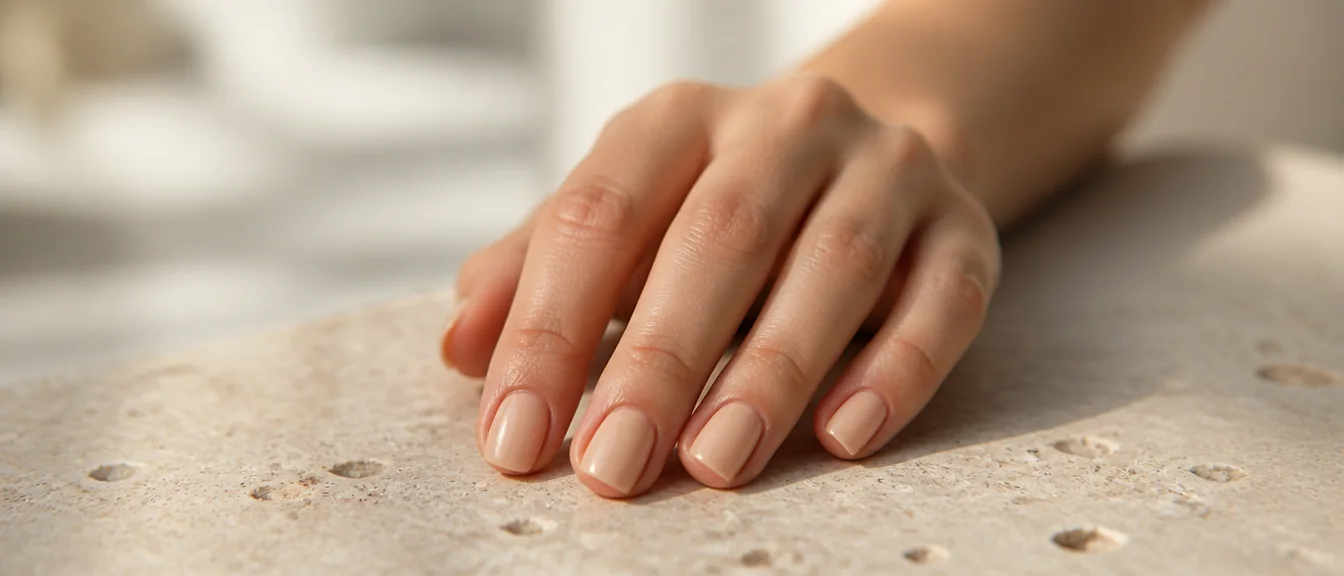
Squoval nails are a square with the corners taken off, and that small change is the whole reason the shape exists. A true square breaks at the corners because every knock lands on a 90 degree angle with nothing behind it. Round those two points off and the same nail lasts weeks longer.
Here are 18 squoval nail designs, plus how to file one properly at home, which nail beds it suits, and why it is the shape most salons will give you if you ask for square without specifying. If you are weighing up options, our nail shapes guide puts them all next to each other.
Editor’s picks
Browse all 18 designs
18 designs 1Short Squoval Nude
 2Squoval French Tip
 3Squoval Red
 4Squoval Chrome
 5Squoval Milky White
 6Squoval with Micro Tip
 7Squoval Matte Black
 8Squoval Ombre
 9Squoval Navy
 10Squoval Polka Dots
 11Squoval Leopard Accent
 12Squoval Glitter Accent
 13Squoval Cat Eye
 14Squoval Color Block
 15Squoval Burgundy
 16Squoval Toes
 17Squoval with Side Line
 18Long Squoval Gel
18 squoval nail designs
1. Short Squoval Nude
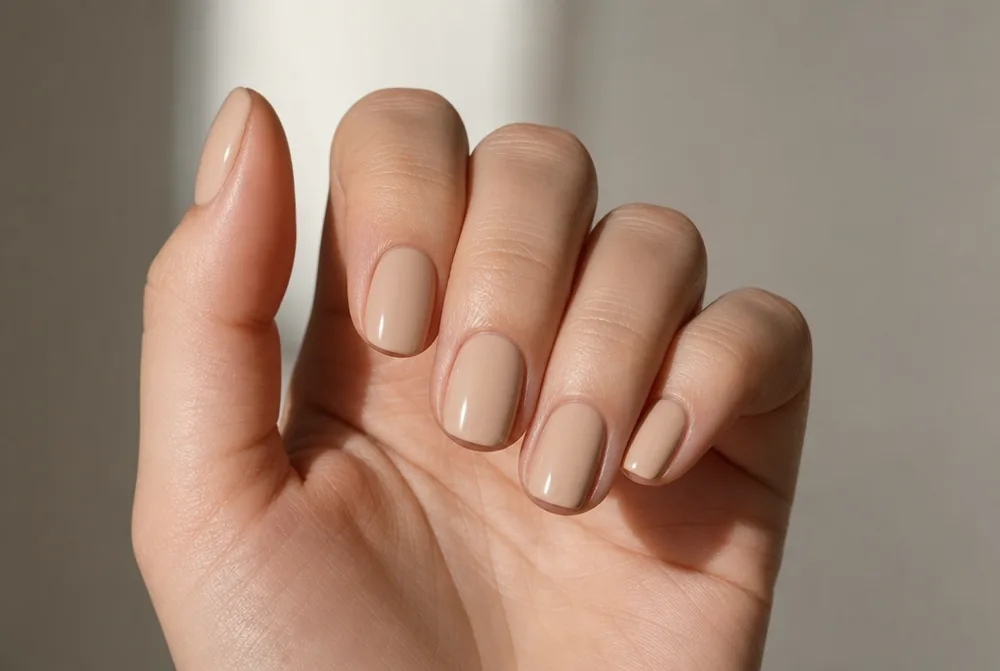

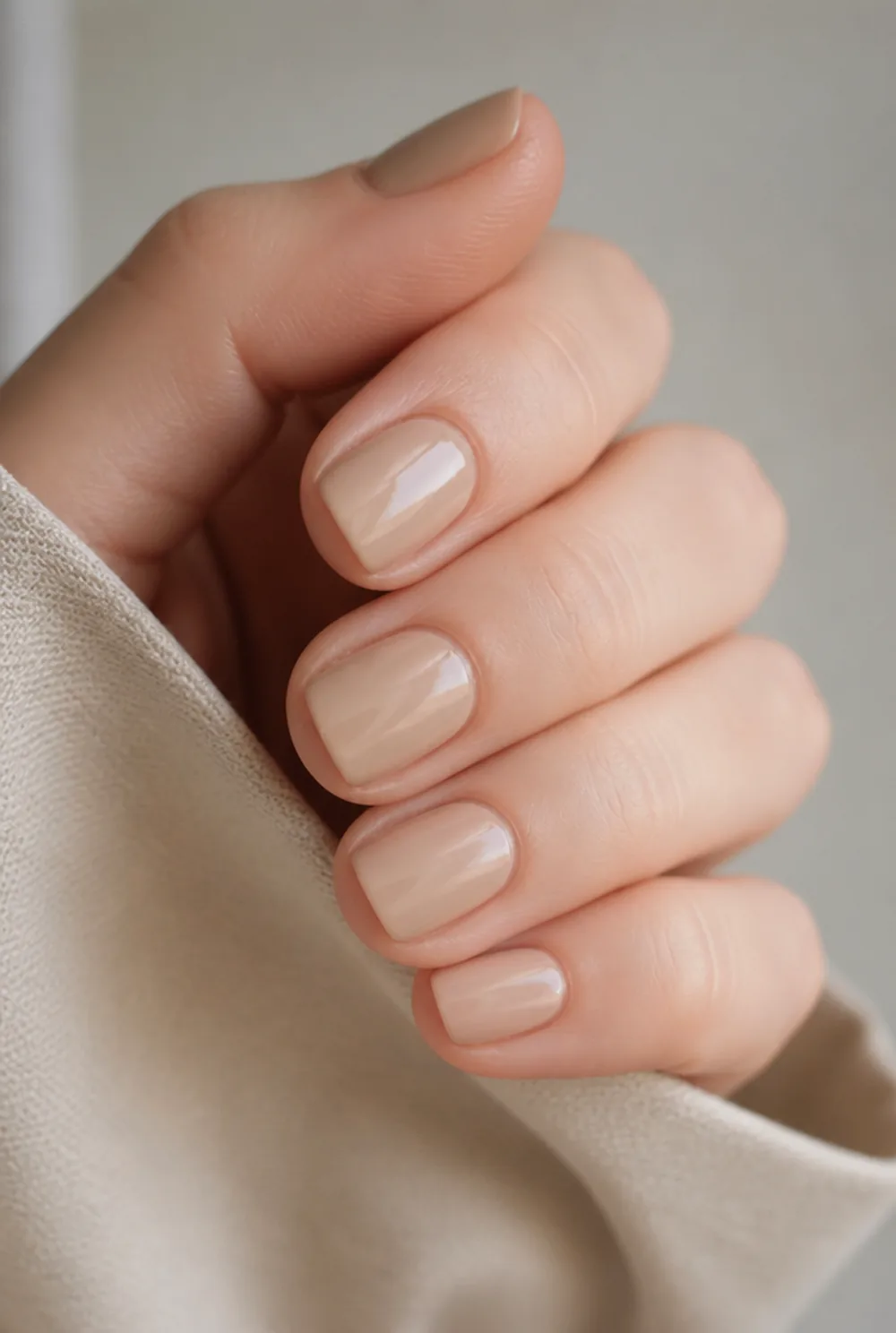
warm beige nude on short squoval
A warm beige nude on a short squoval is the most useful manicure you can own. It goes with everything and grow-out is nearly invisible. My nude nail designs post has the shade matching.
2. Squoval French Tip
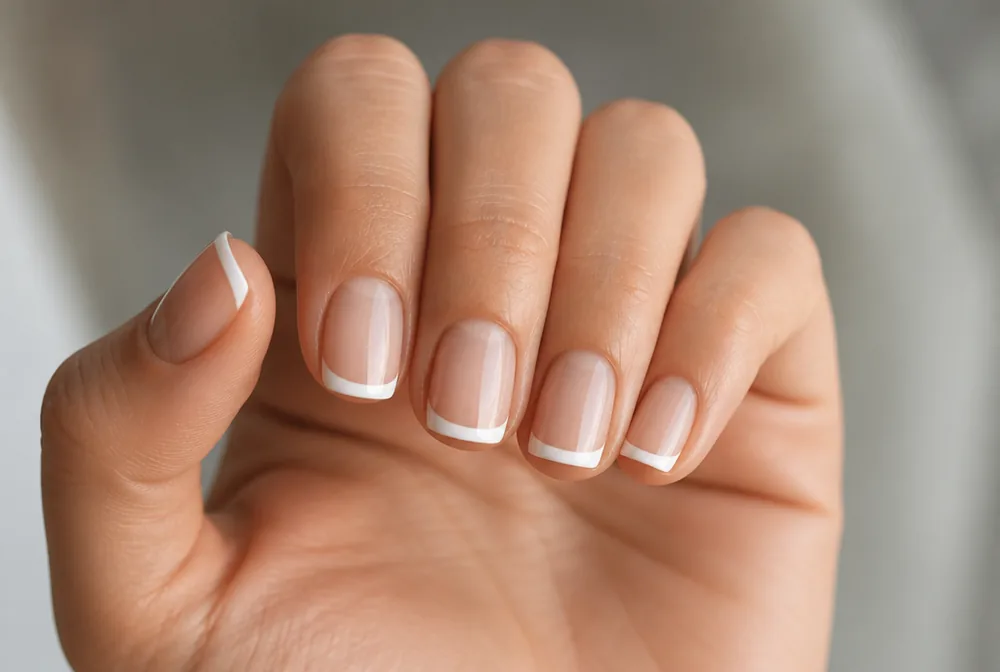
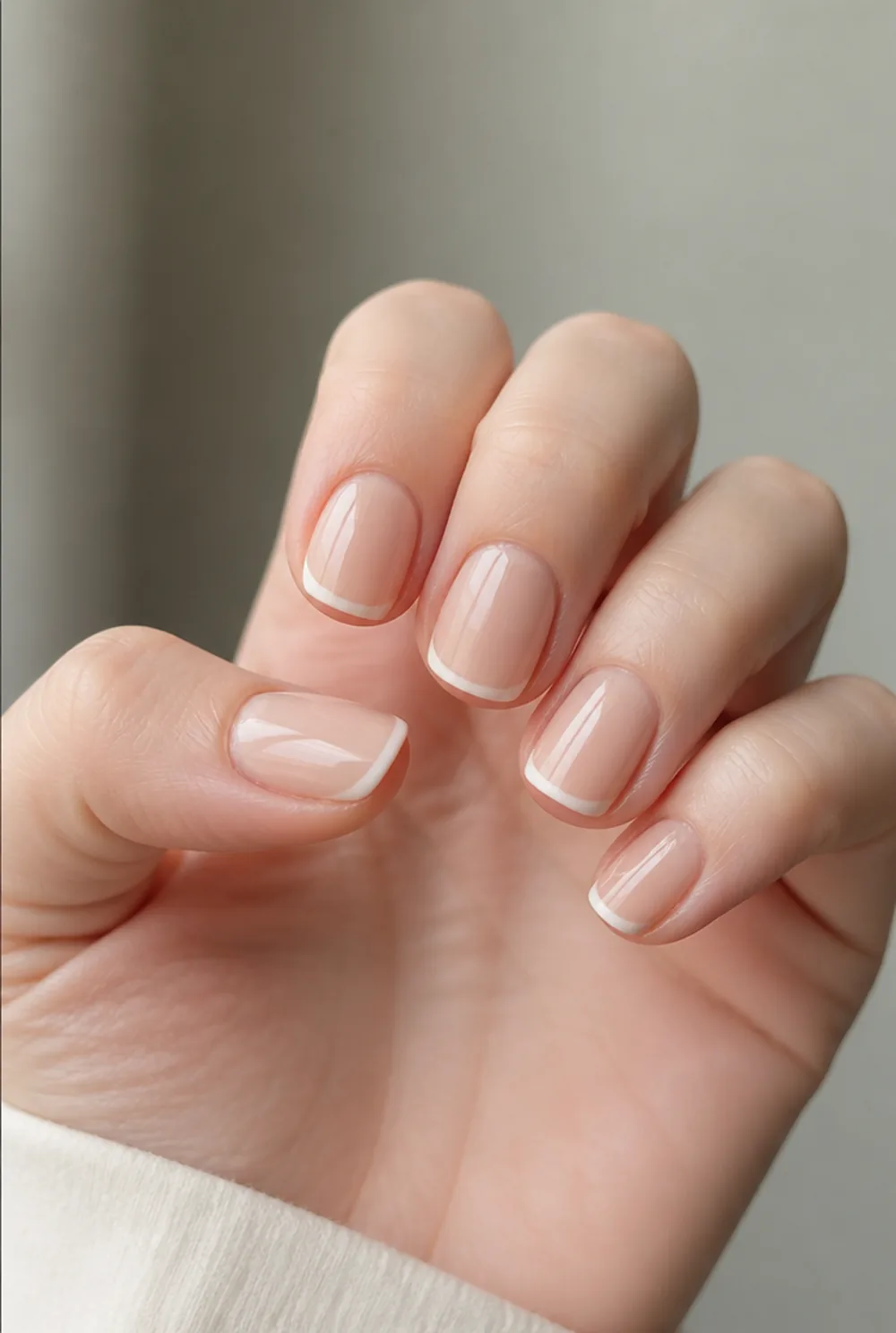
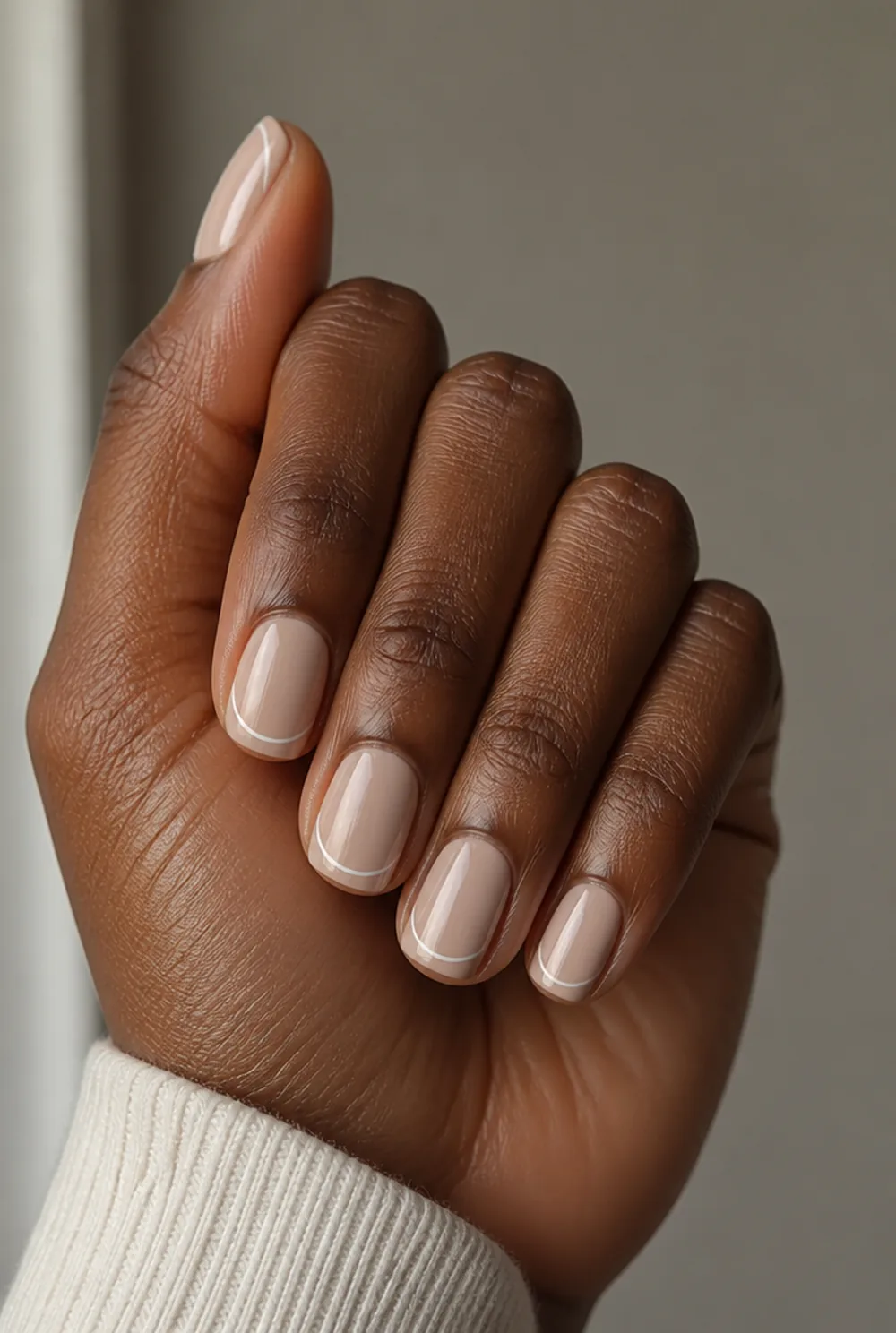
French tip with thin white smile line
The flat free edge gives you a straight line to work against, which makes a French easier here than on any curved shape. Keep the white thin and let the rounded corners soften it.
3. Squoval Red
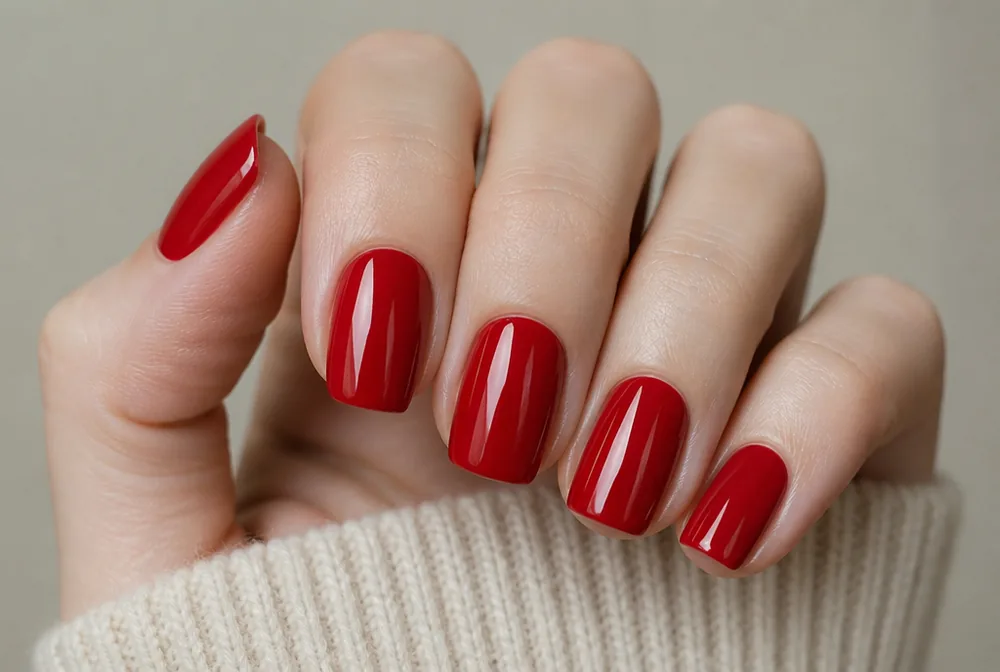
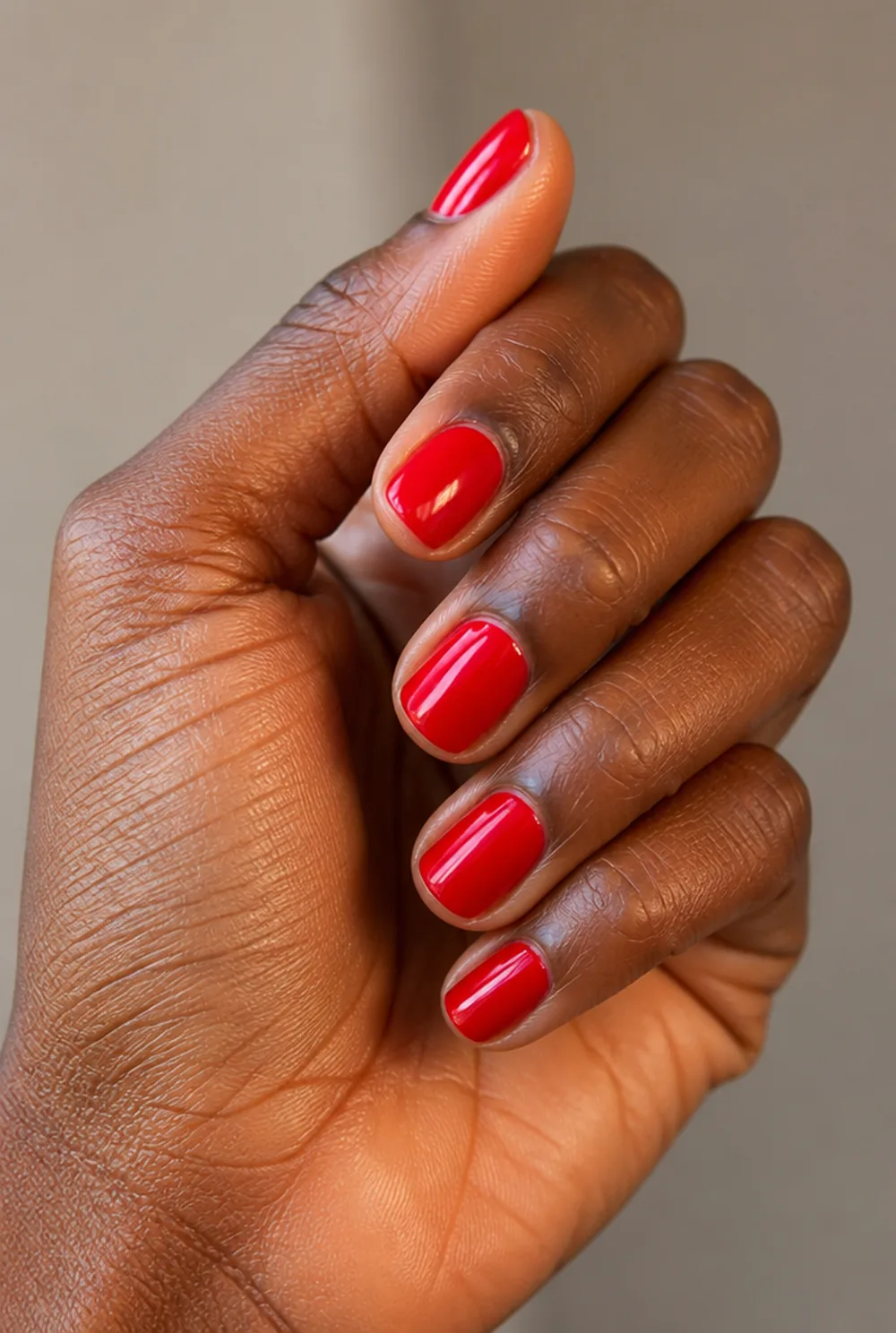
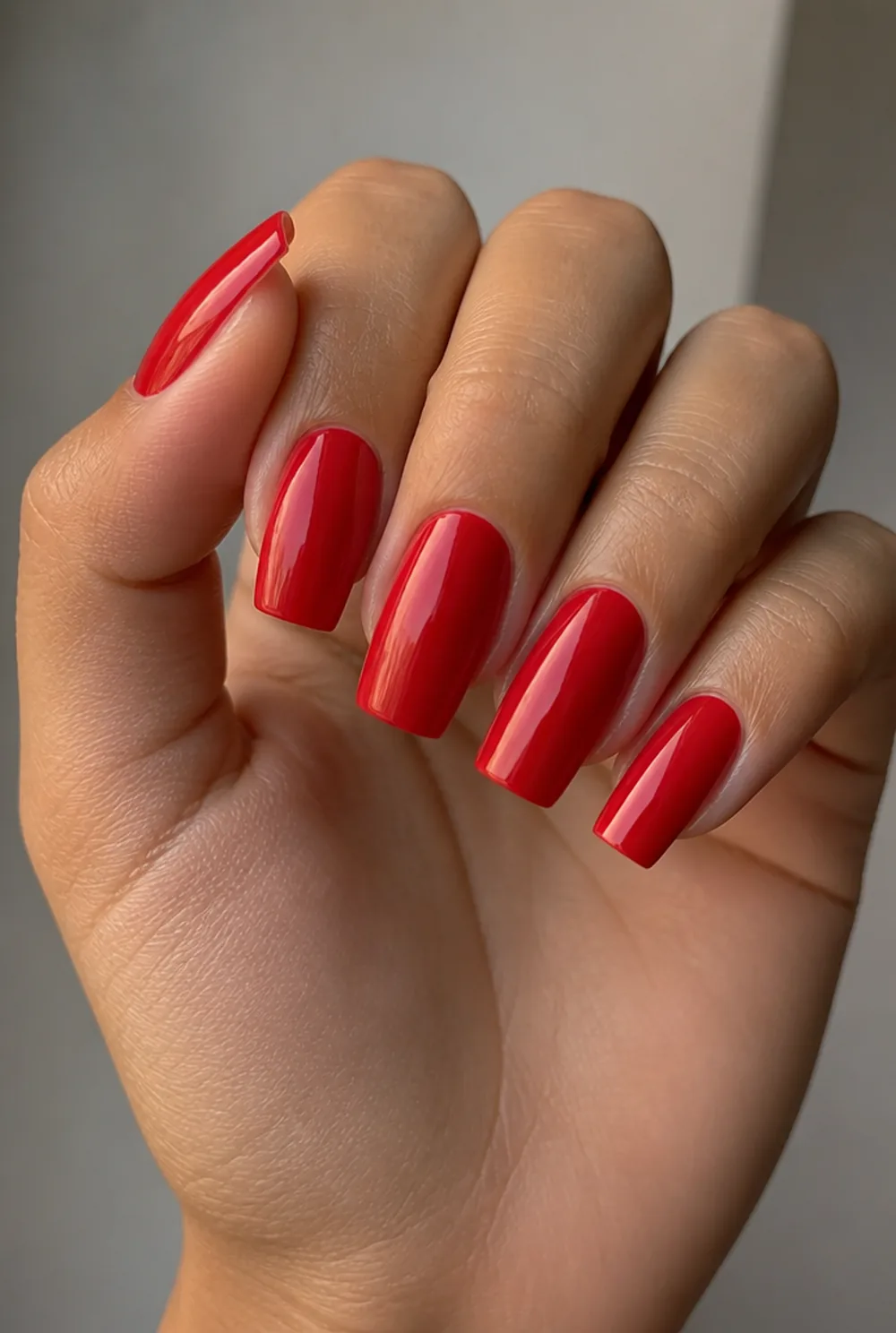
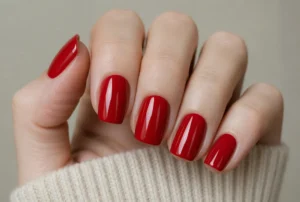
true red on squoval shape
A true red on a squoval reads polished and slightly retro. The flat tip gives the color a broad surface, so the shade looks richer than the same polish on an almond. See our red nail designs post.
4. Squoval Chrome

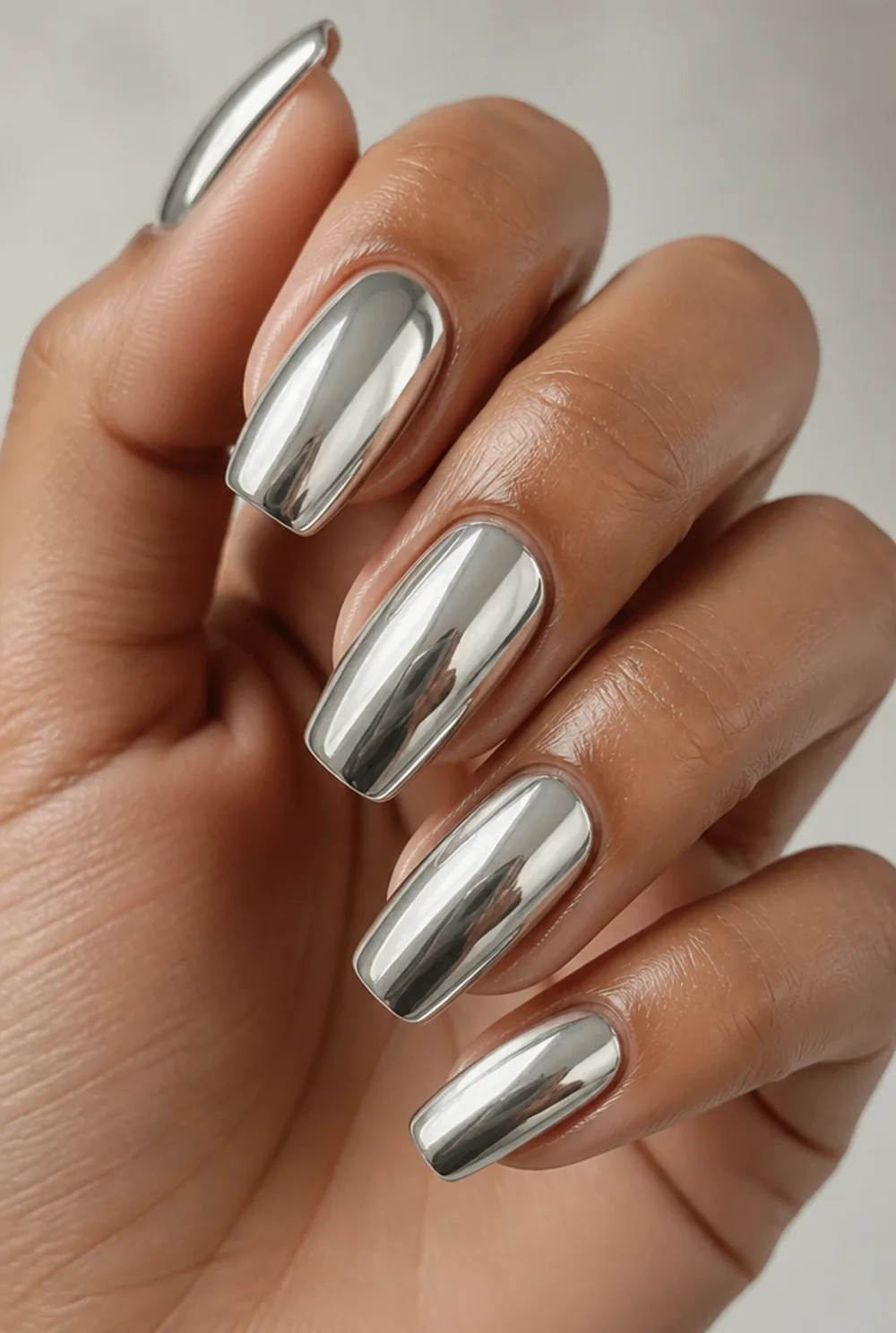
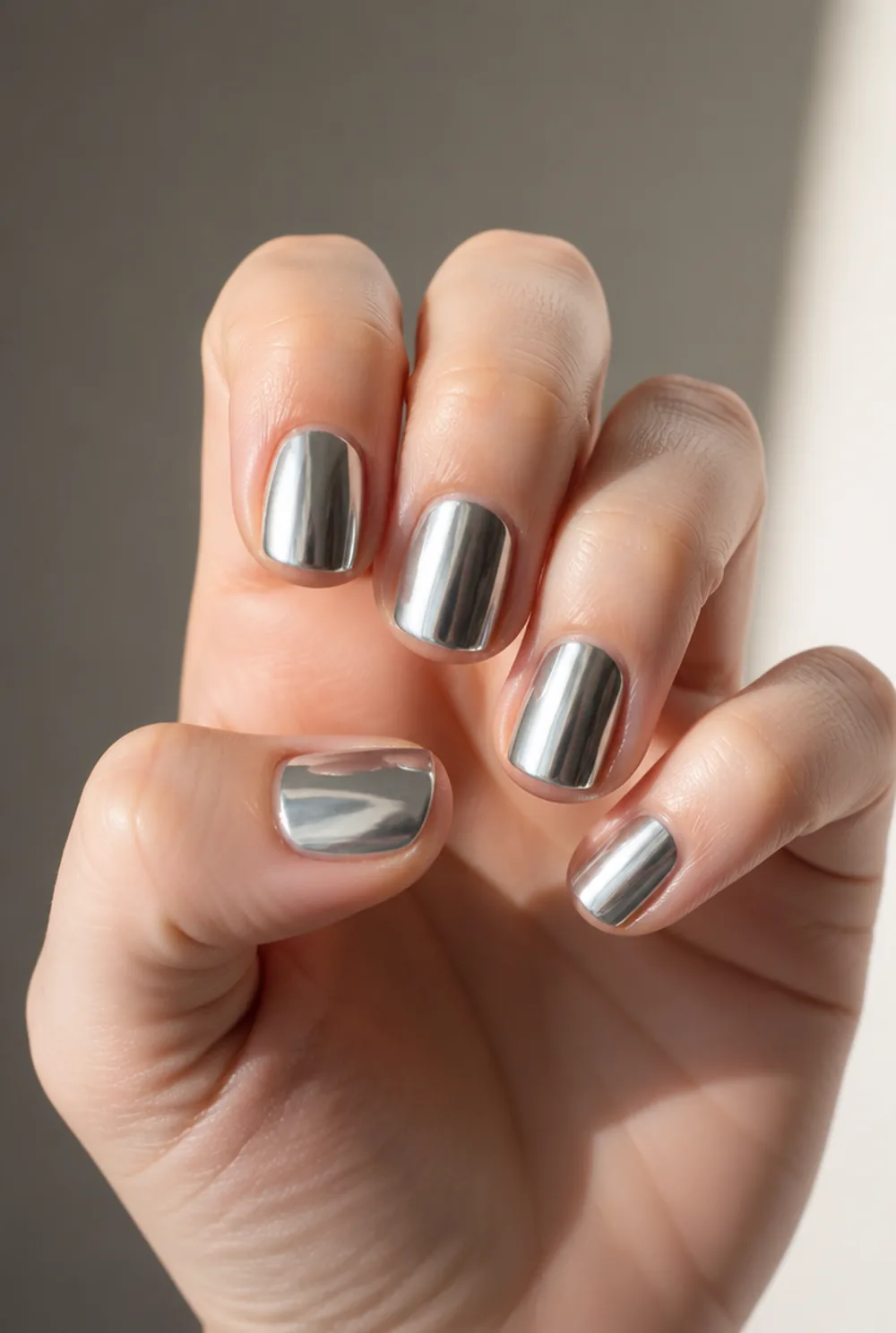
mirror chrome on squoval nails
Mirror chrome on a squoval looks like brushed hardware because the flat surface reflects in one plane rather than scattering. It is the shape chrome photographs best on. Method in our chrome nails guide.
5. Squoval Milky White
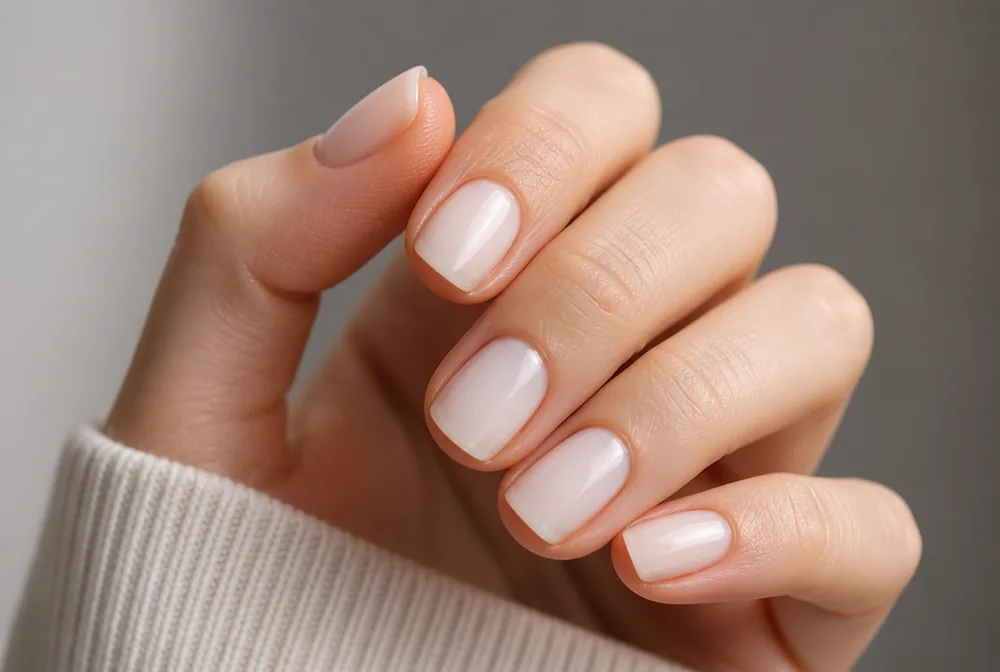
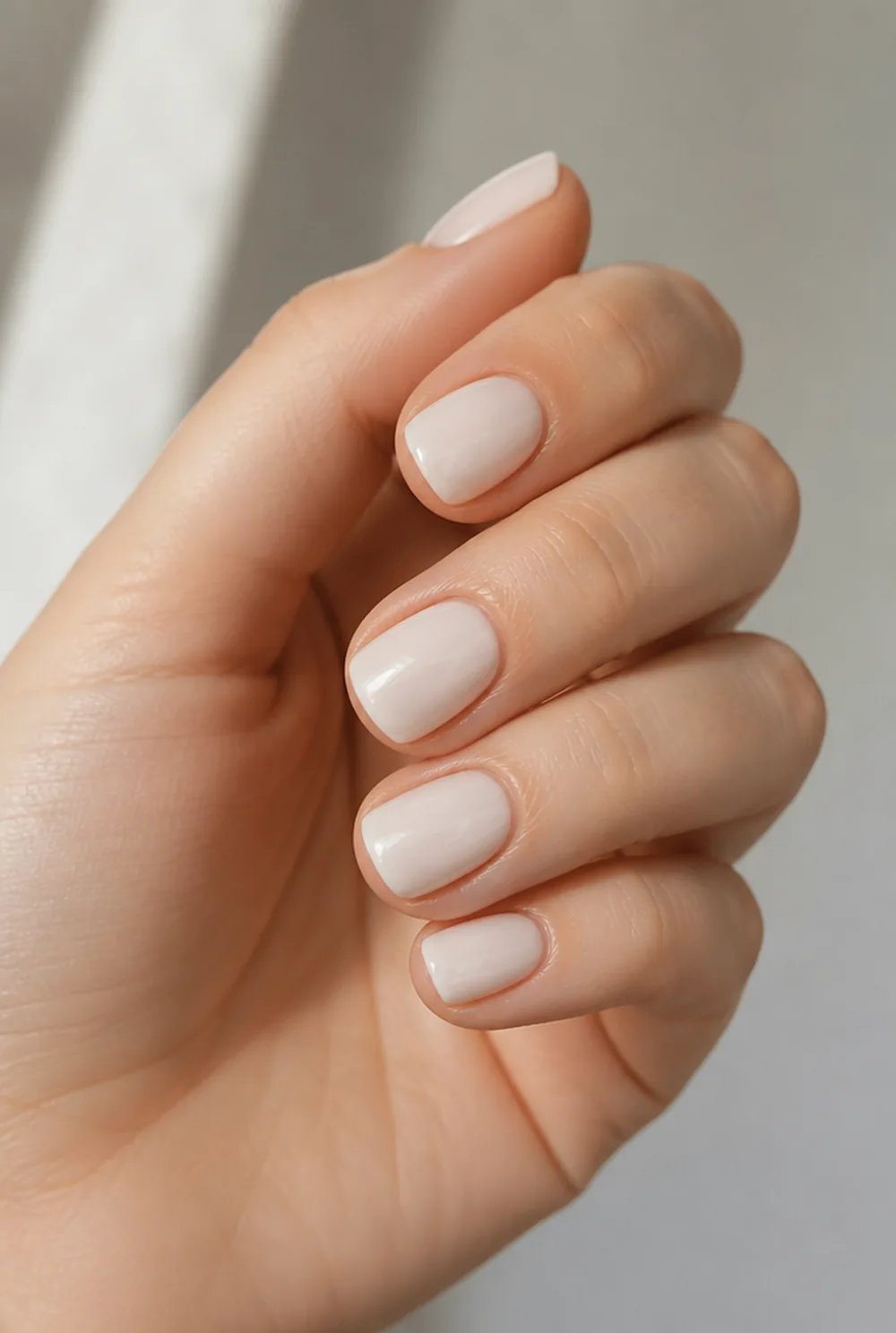
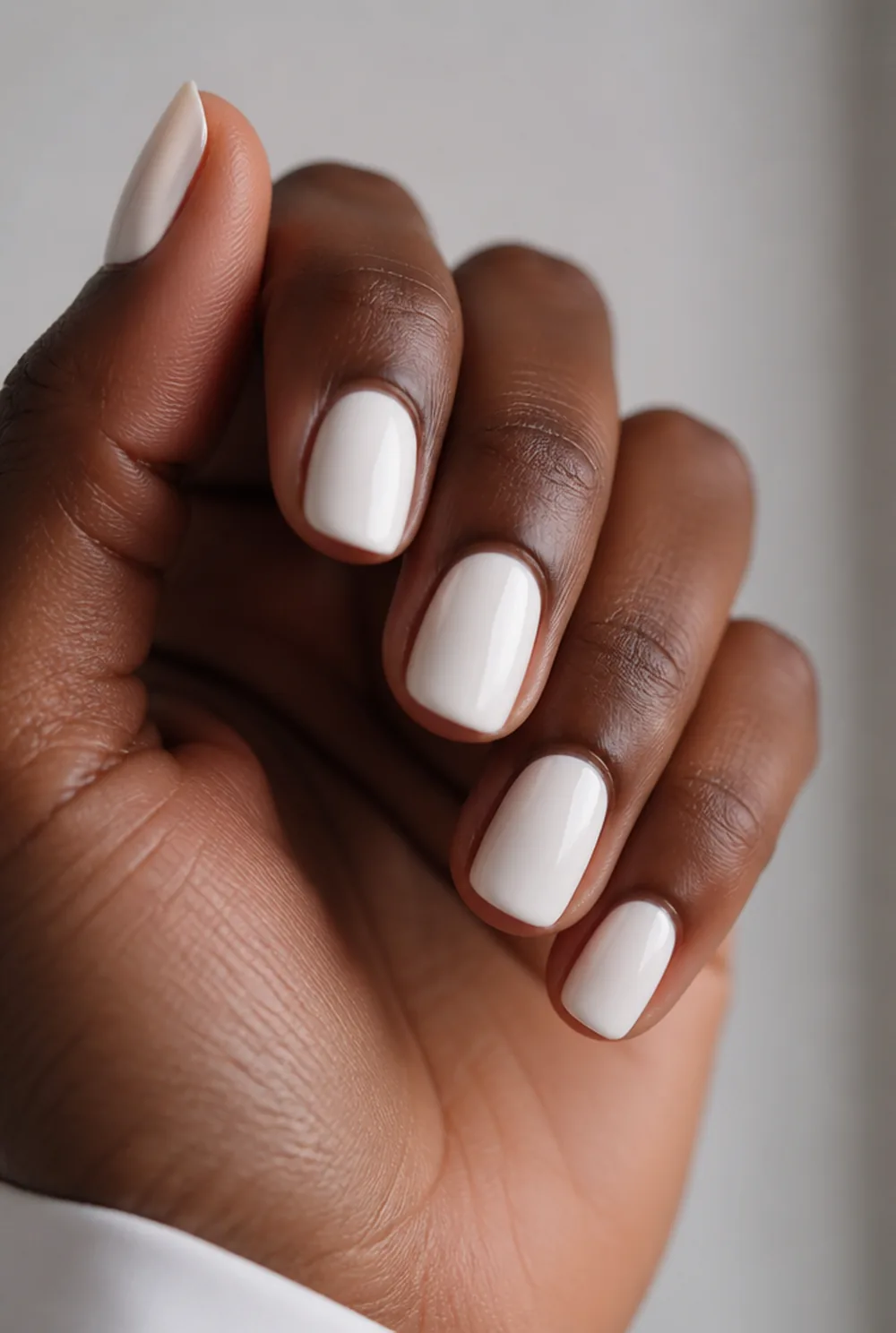
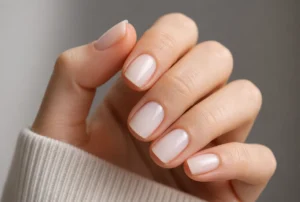
two coats milky white on squoval
Two thin coats of a milky white. On a squoval it looks clean rather than clinical, and it is the finish that makes short nails look deliberately short. More in our milky white nails post.
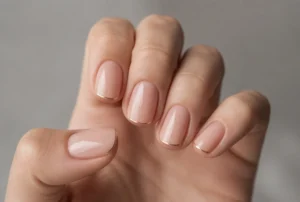
6. Squoval with Micro Tip

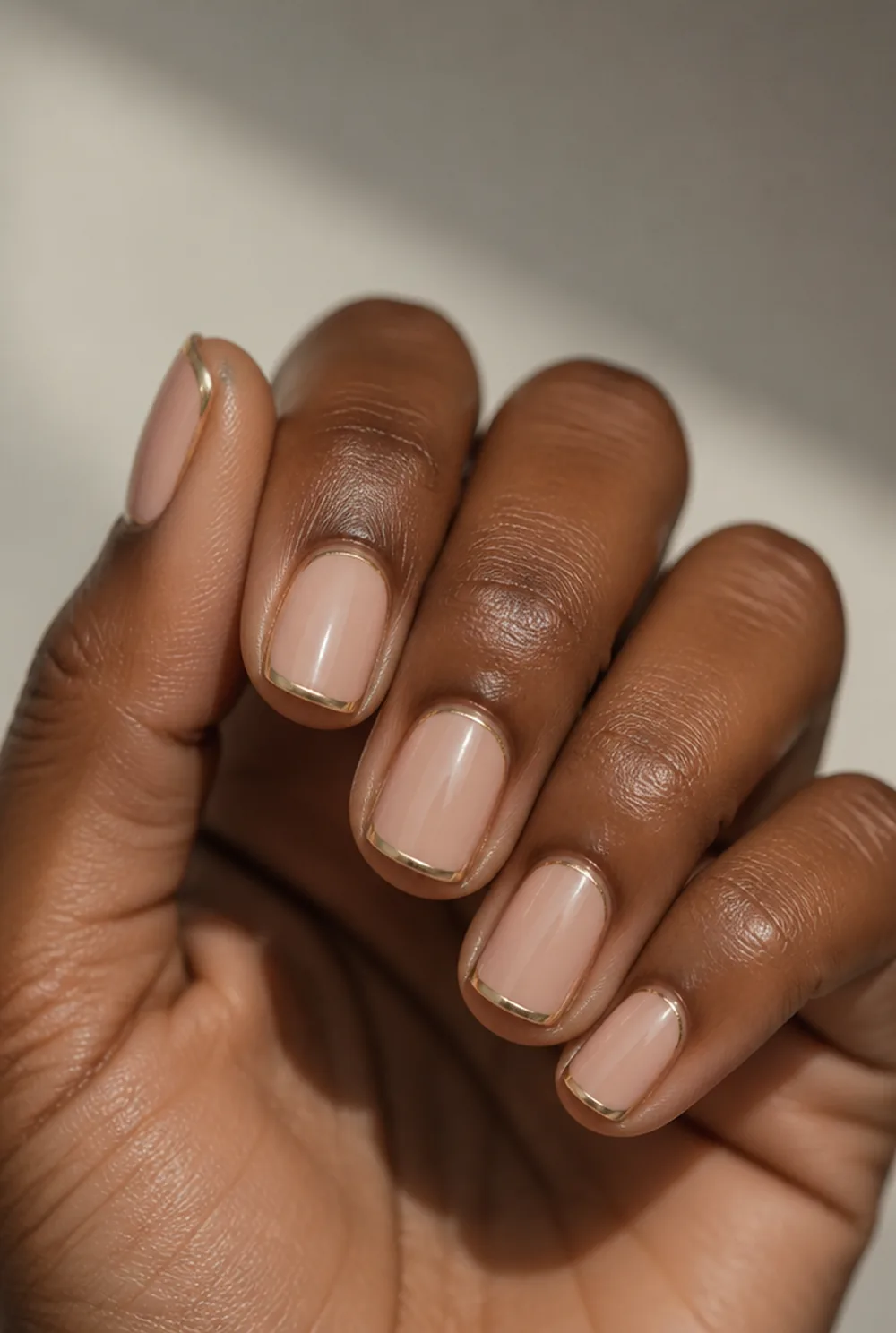
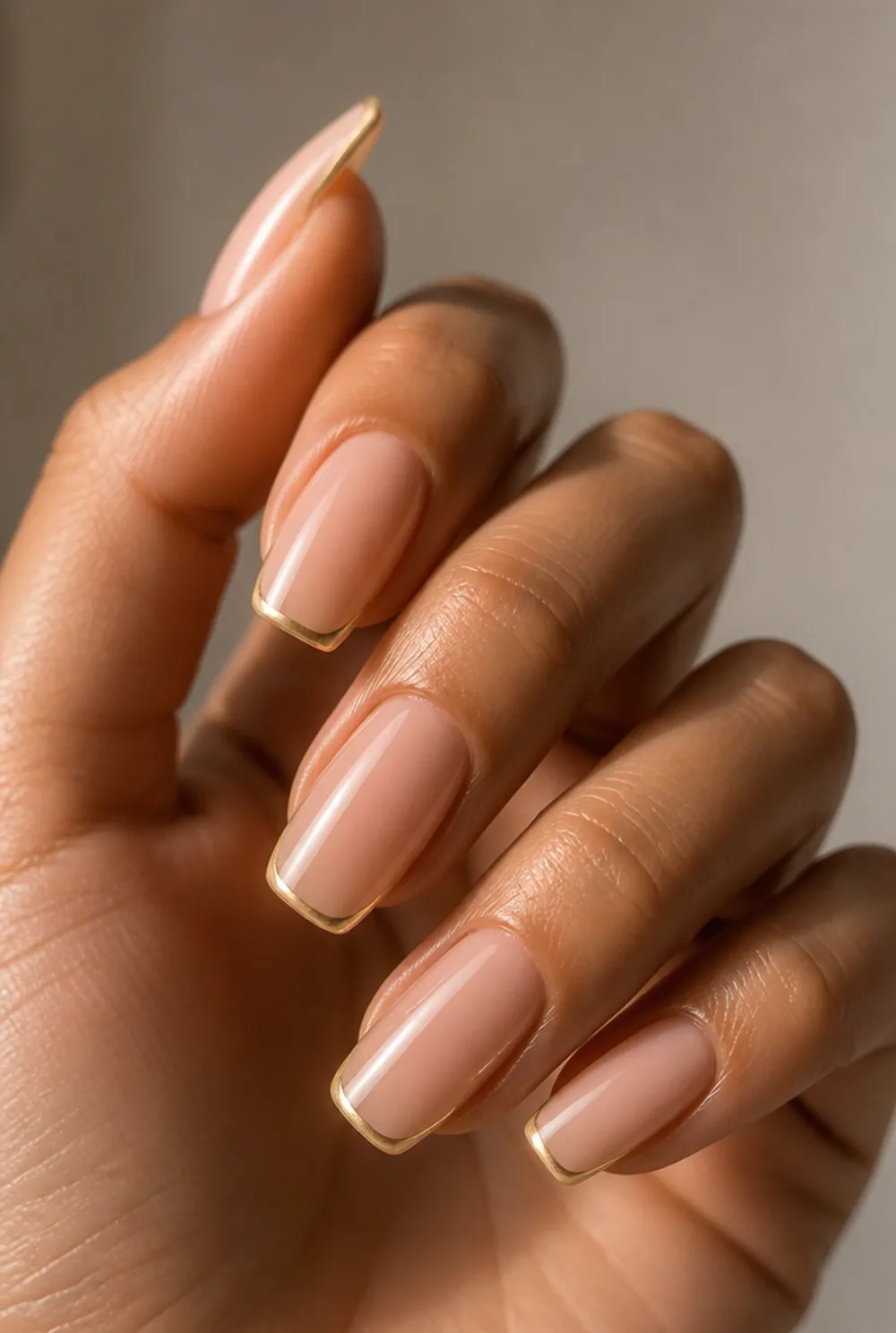
hairline gold or white along flat edge
A hairline of gold or white along the flat edge. The straight line is much easier to draw than a curved smile line, which makes this a good first attempt at nail art.
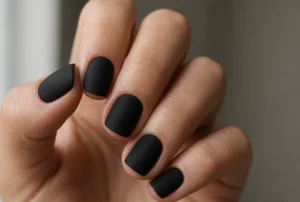
7. Squoval Matte Black
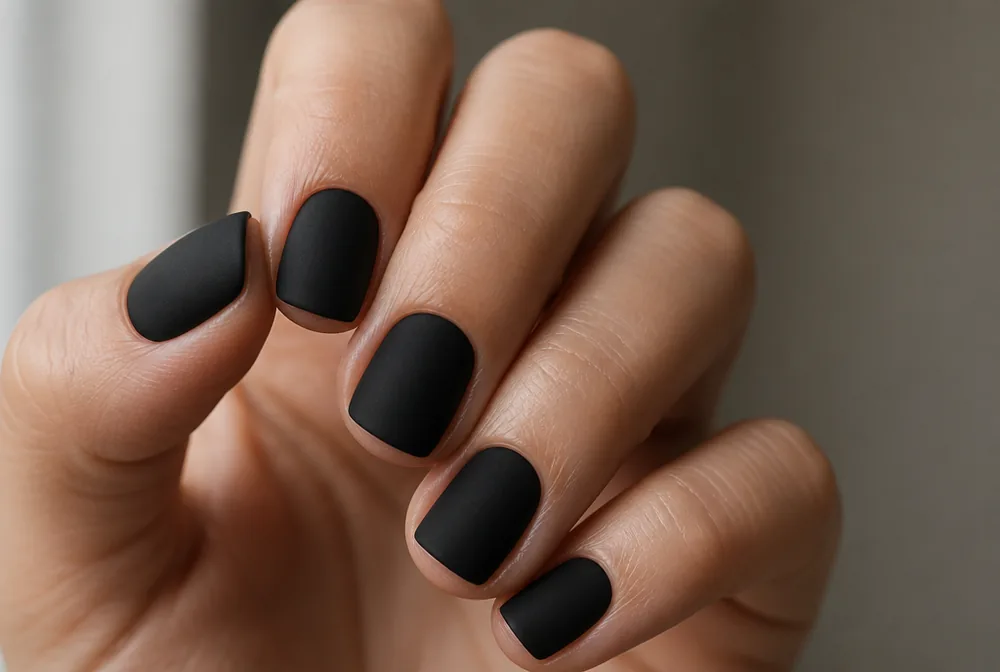

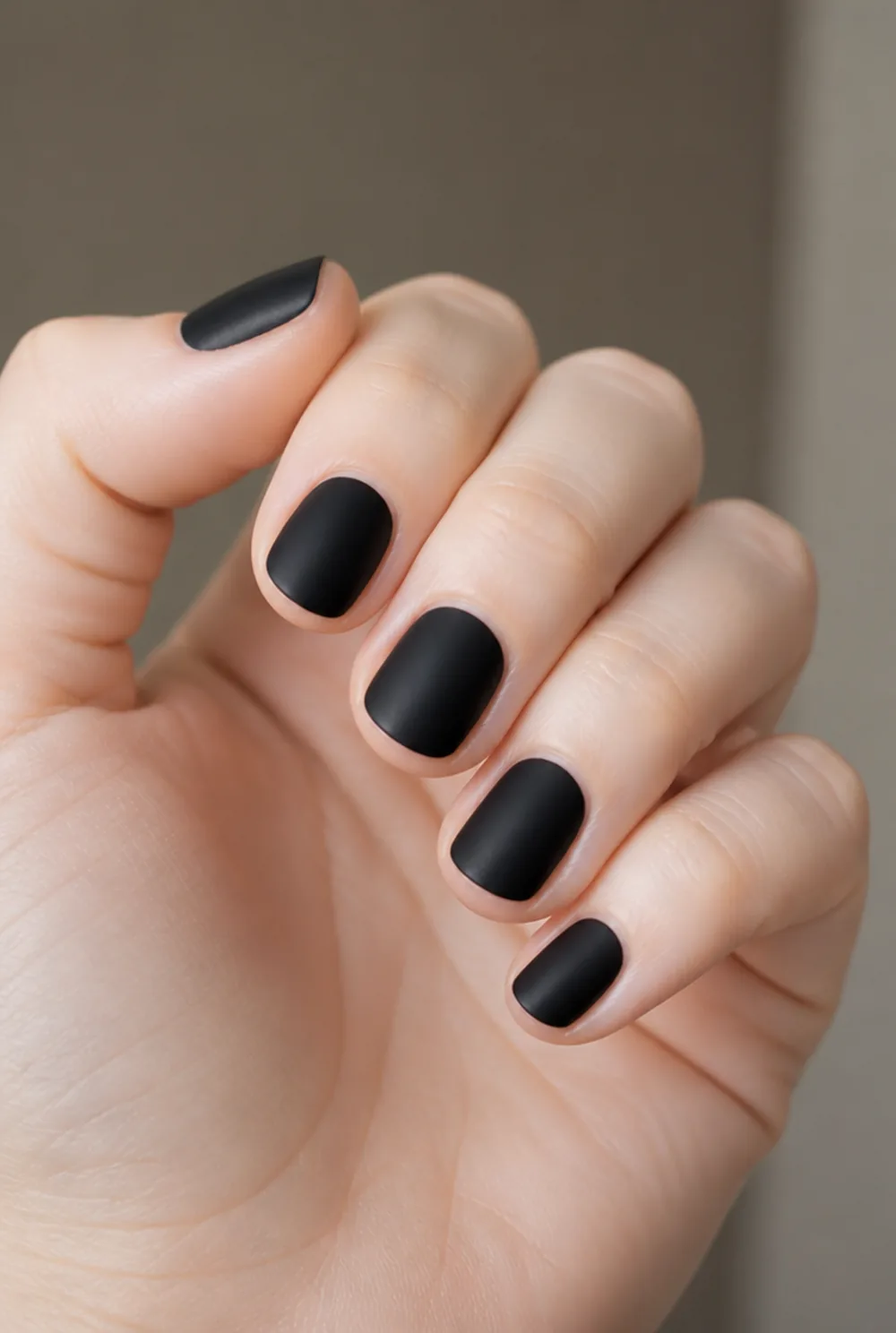
black under matte top coat
Black under a matte top coat on a short squoval. Matte removes the reflection that makes black look wet, and the flat shape keeps it graphic. See our matte nails guide.
8. Squoval Ombre

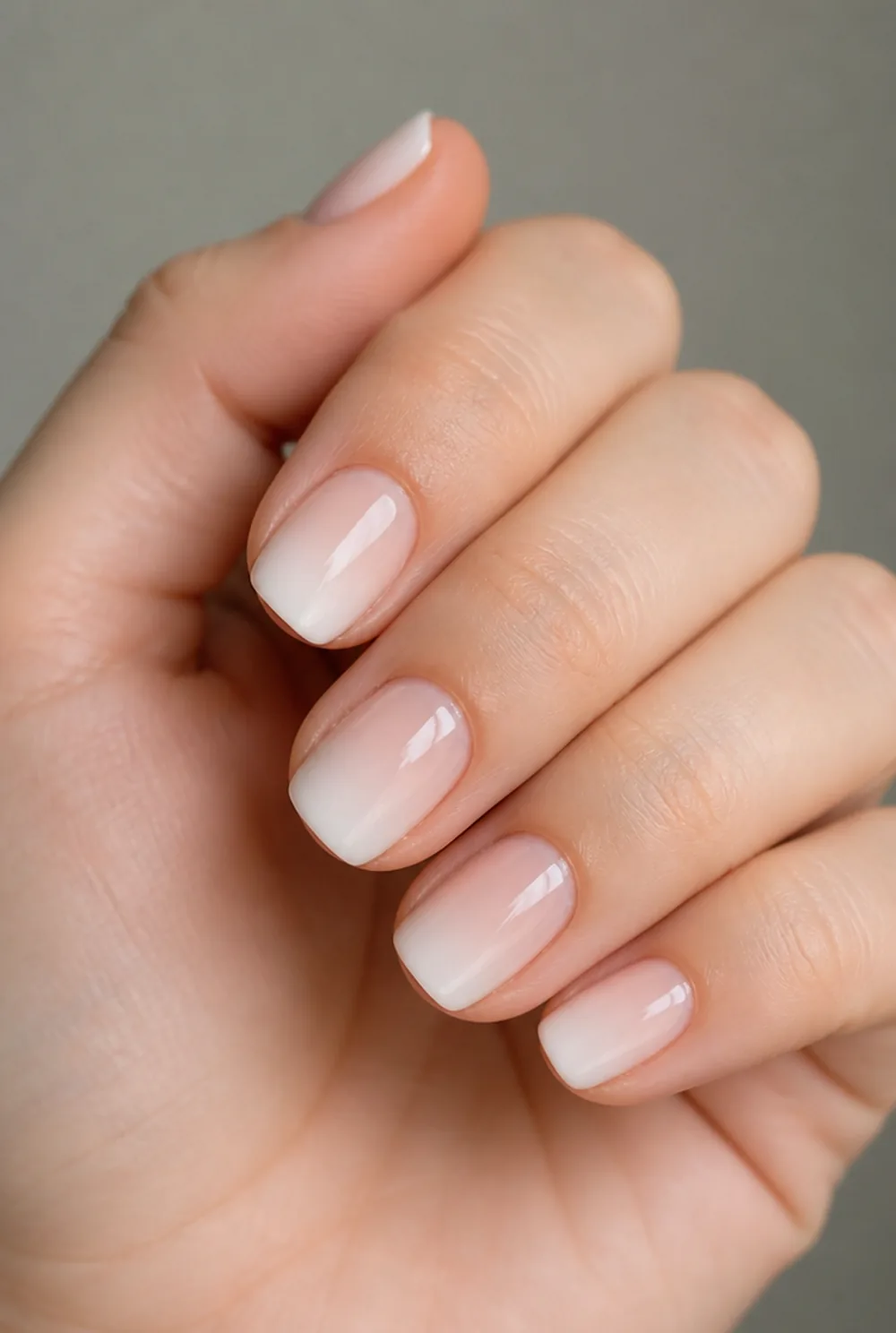
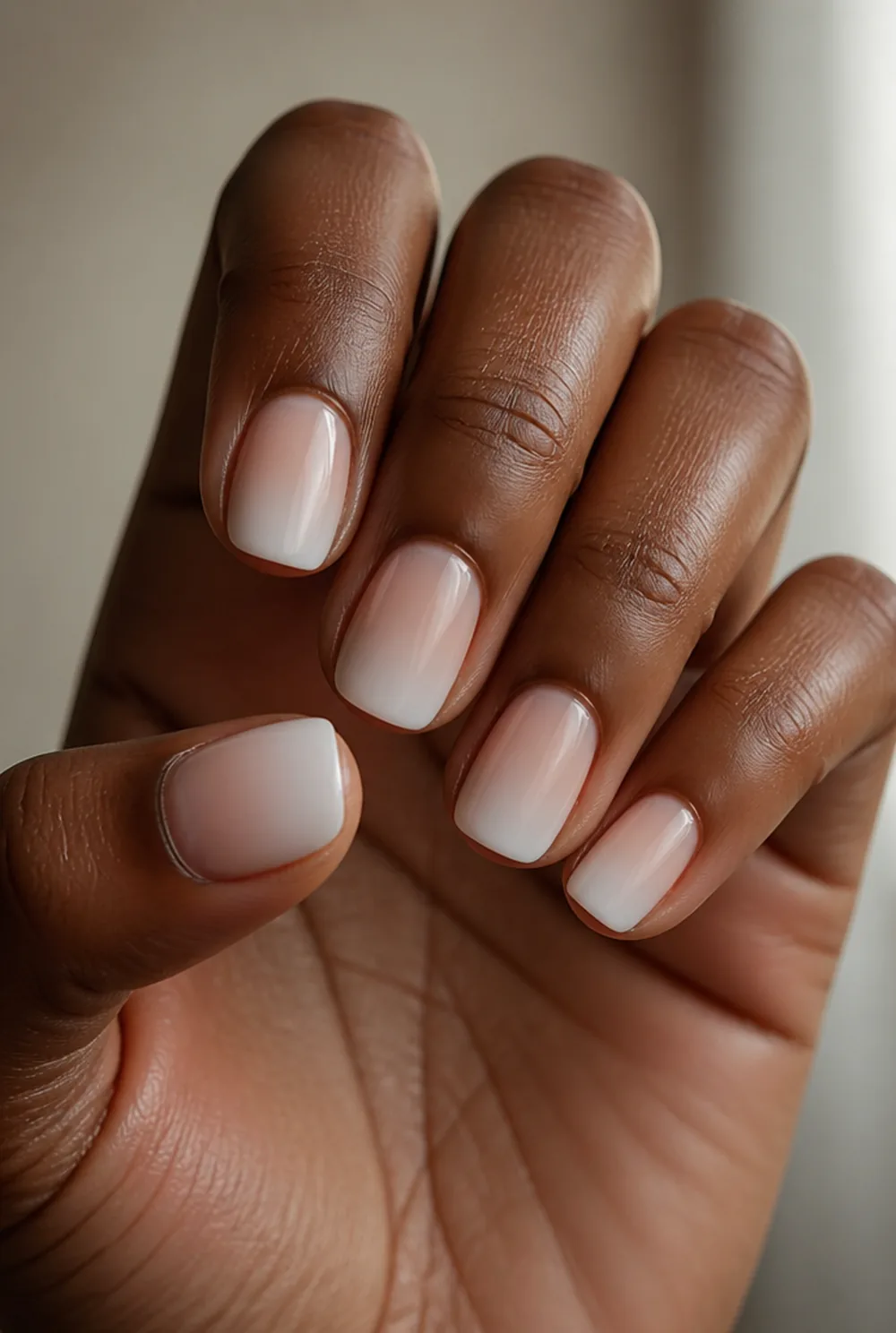
baby boomer fade from nude to white
A baby boomer fade from nude to white. The soft corners stop the gradient from ending in a hard point, so the blend looks continuous. Technique in our ombre nails post.
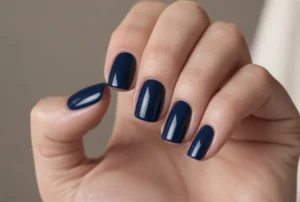
9. Squoval Navy

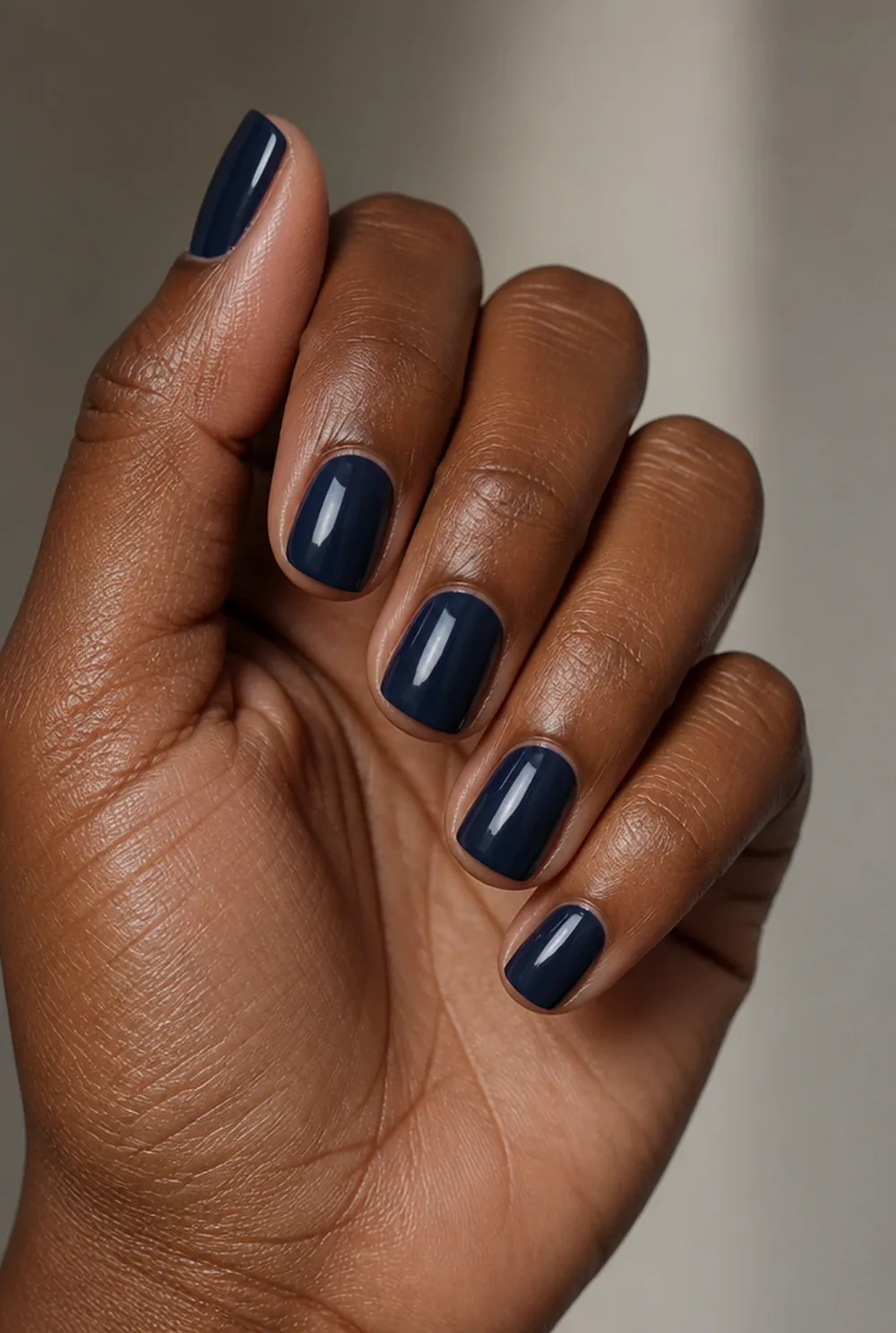
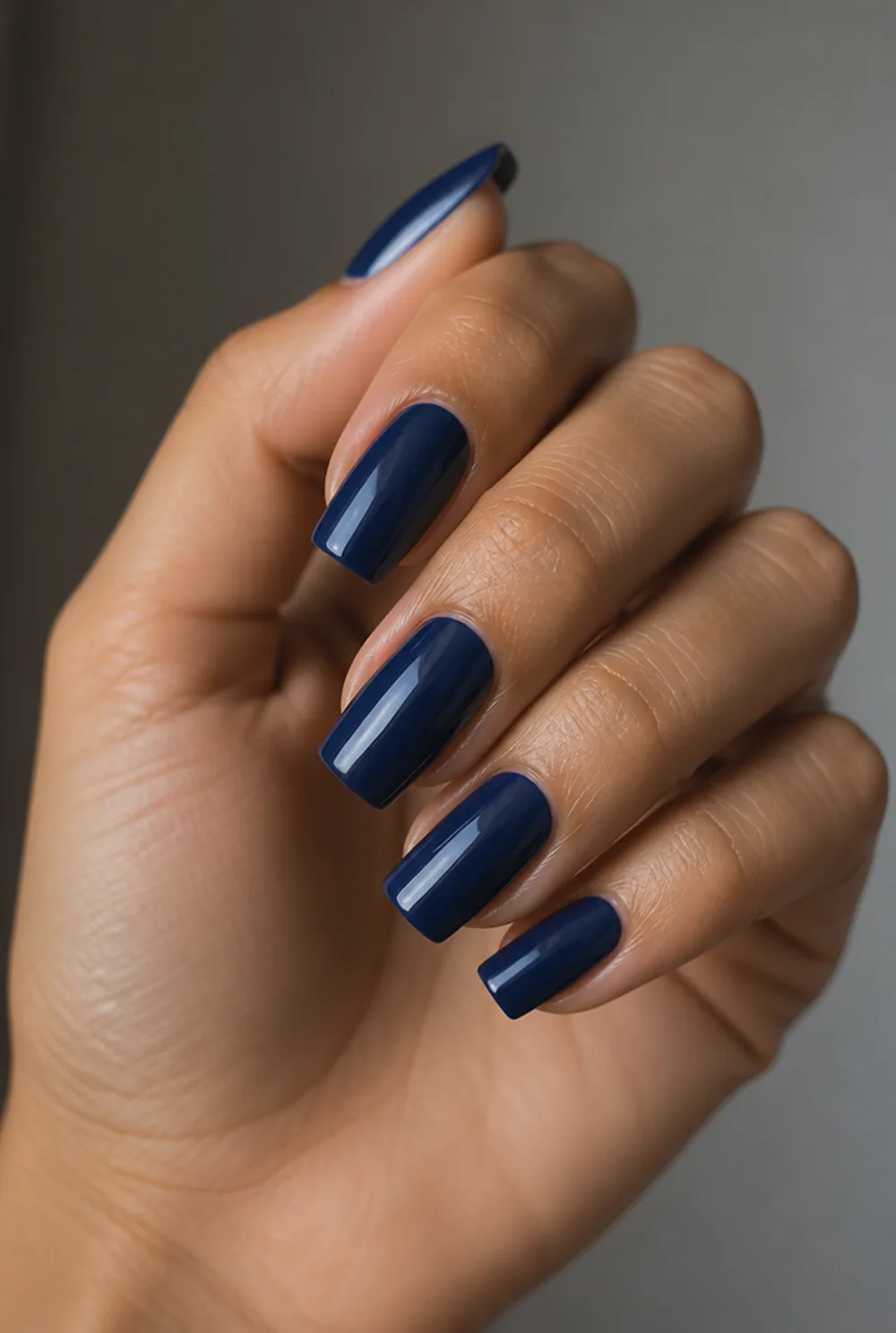
deep navy on squoval nails
Deep navy on a squoval is the shade to wear when you want something dark that still passes at work. It reads as a neutral in a way black does not. More in our blue nail designs guide.
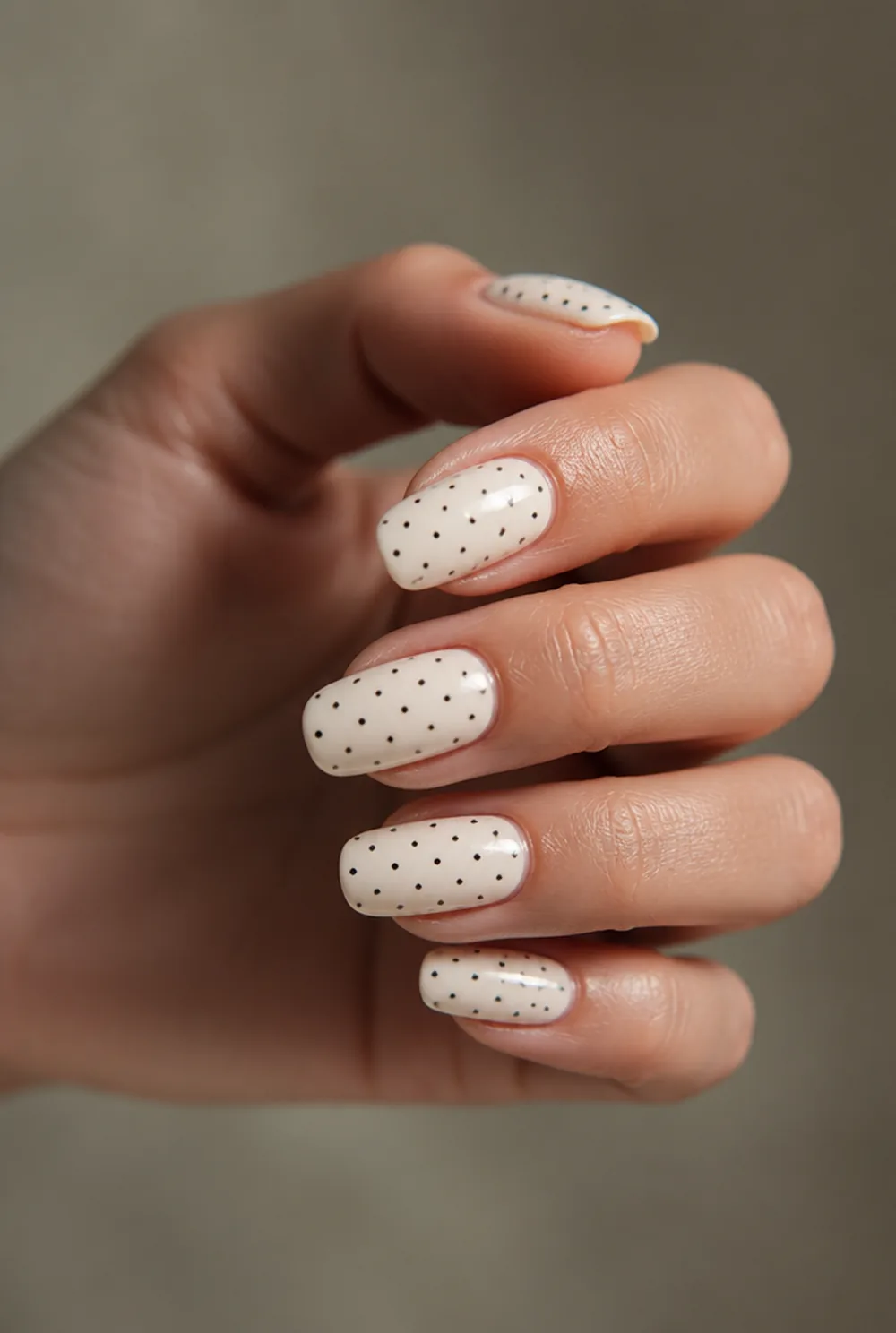
10. Squoval Polka Dots

small polka dots on cream base
Small dots on a cream base, made with a dotting tool or a bobby pin. The flat nail gives you an even surface to space them on, which is half the battle. See our polka dot nails post.
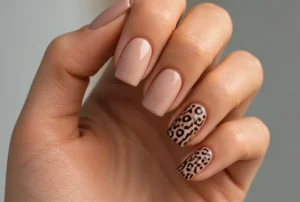
11. Squoval Leopard Accent
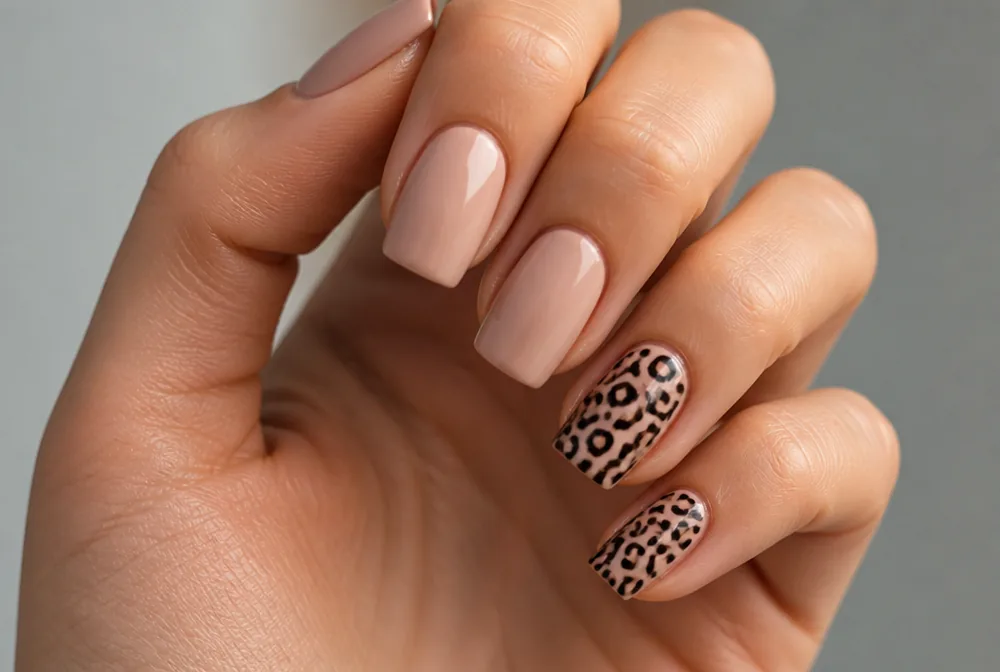
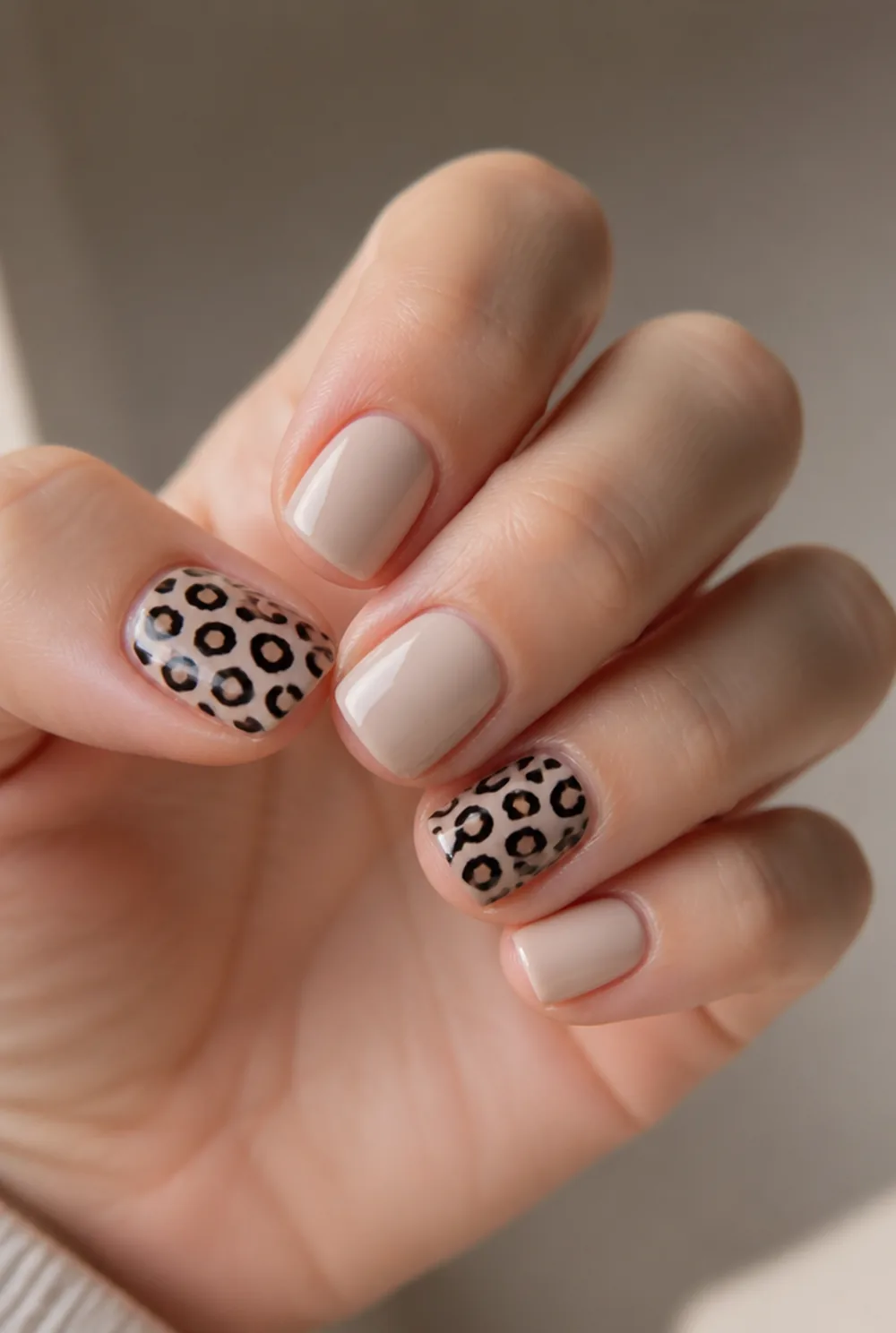
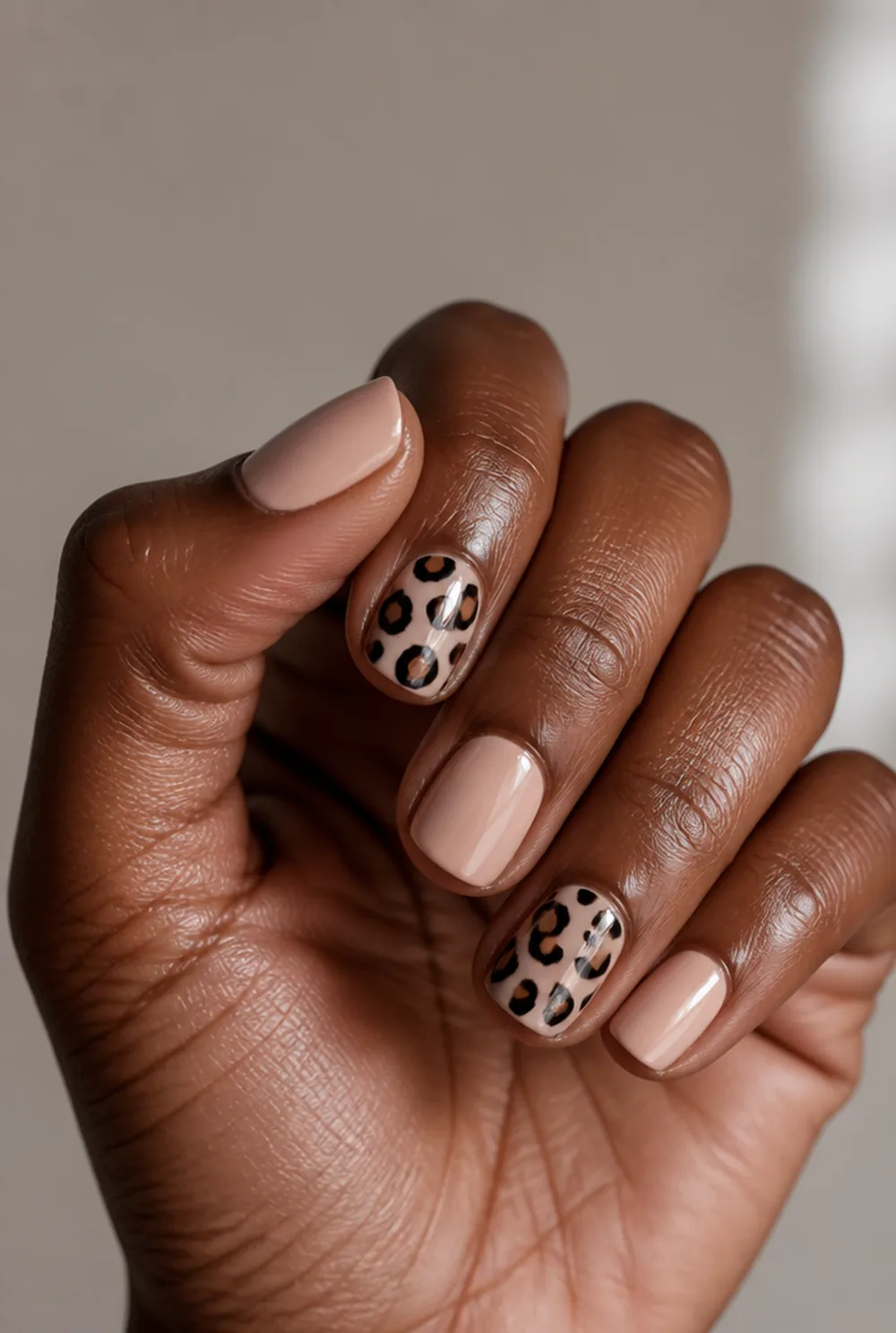
leopard print on two accent nails
Two nails printed, three left nude. Leopard needs a broad flat surface for the pattern to read, which is exactly what a squoval gives you. Full method in our leopard print nails guide.
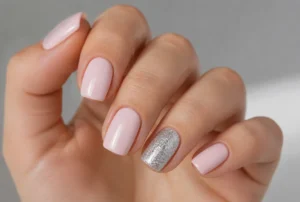
12. Squoval Glitter Accent
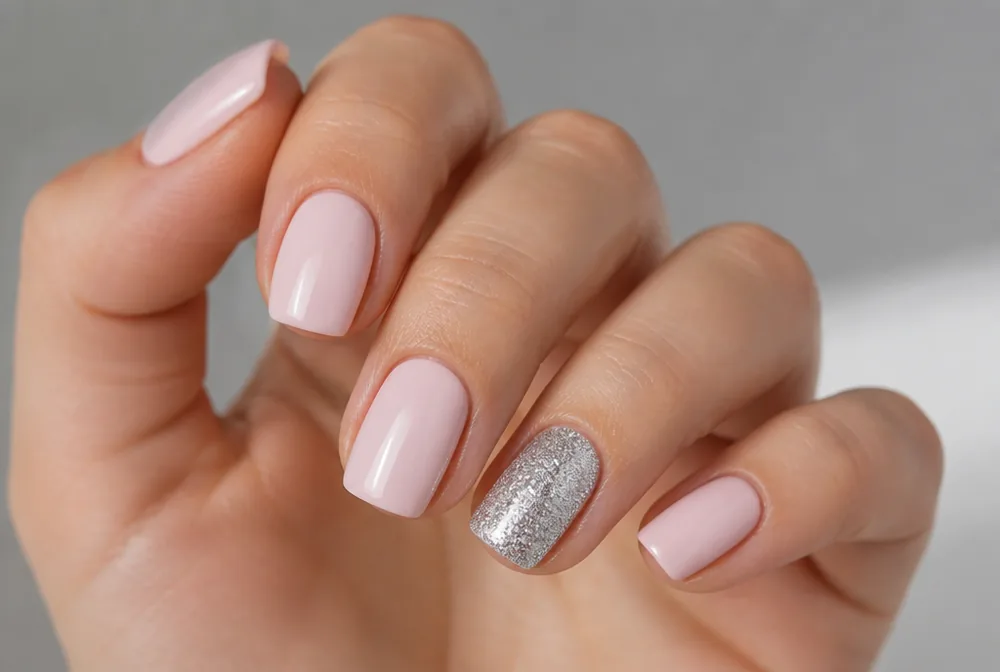

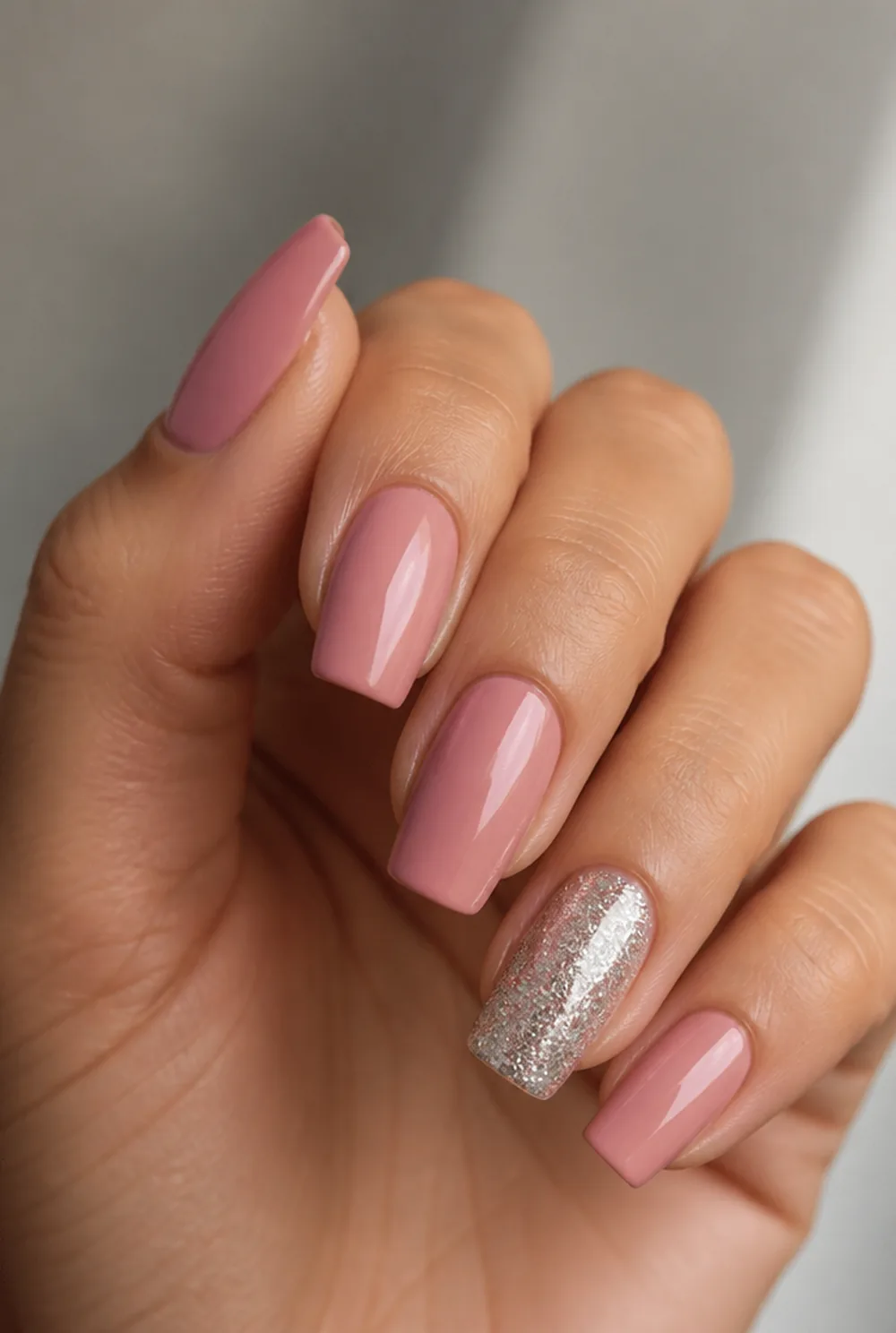
four pink nails one silver glitter accent
Four pink nails and one packed with silver glitter. One accent is the whole design and it costs nothing extra at the salon. More in our glitter nail designs post.
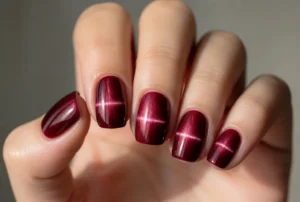
13. Squoval Cat Eye

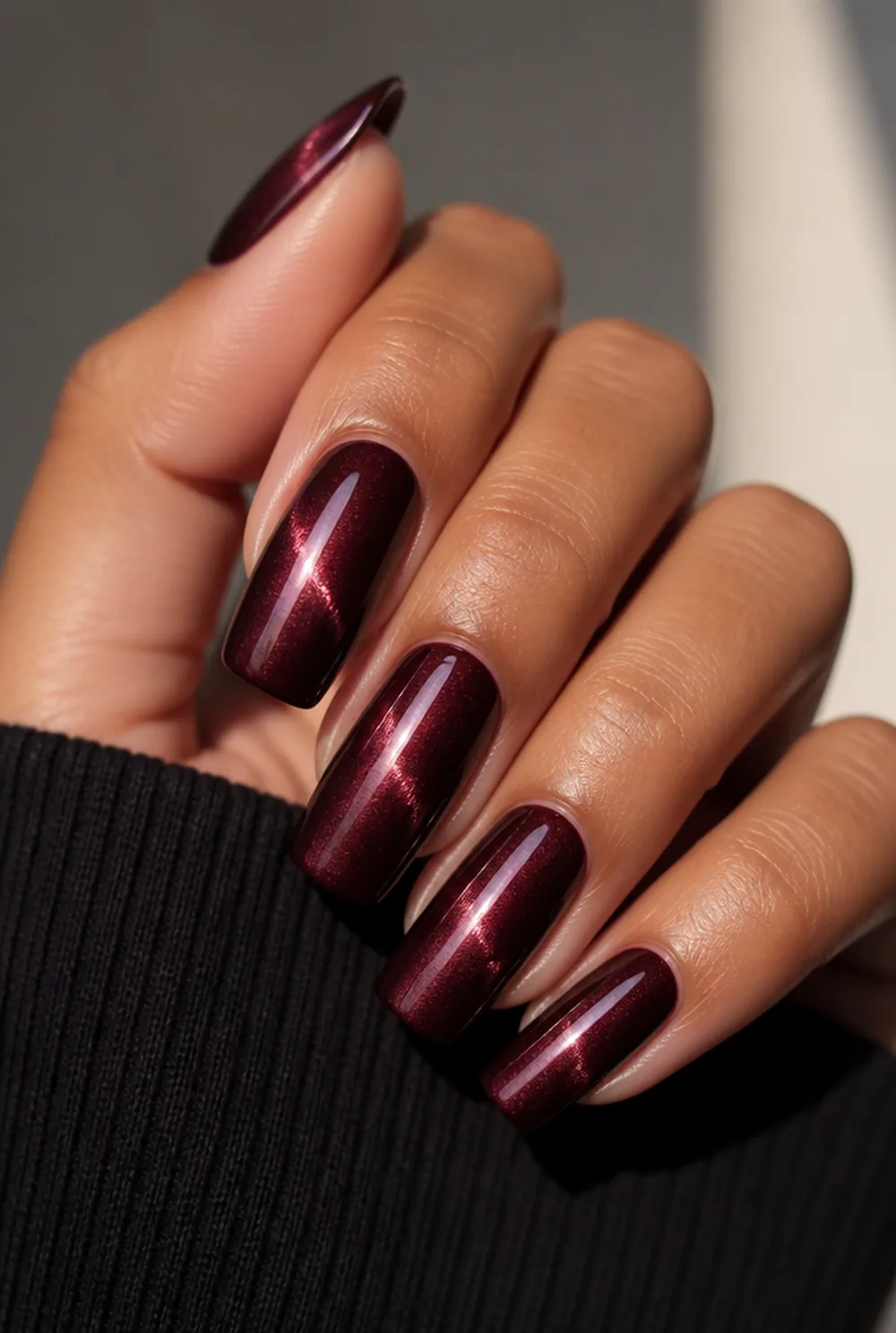

magnetic gel straight band across nail
Magnetic gel drawn into a straight band across the flat nail. On a squoval the band stays perfectly straight, which reads as a tiger’s eye stone. See our cat eye nails guide.
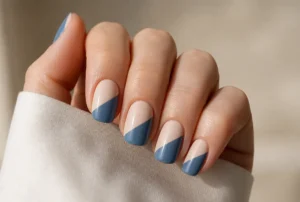
14. Squoval Color Block
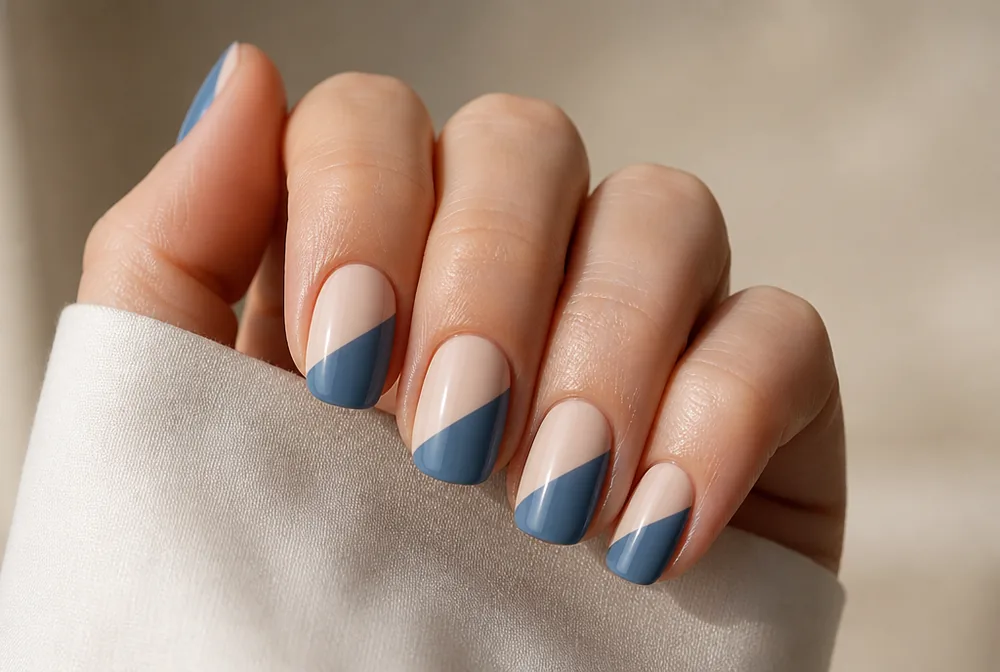
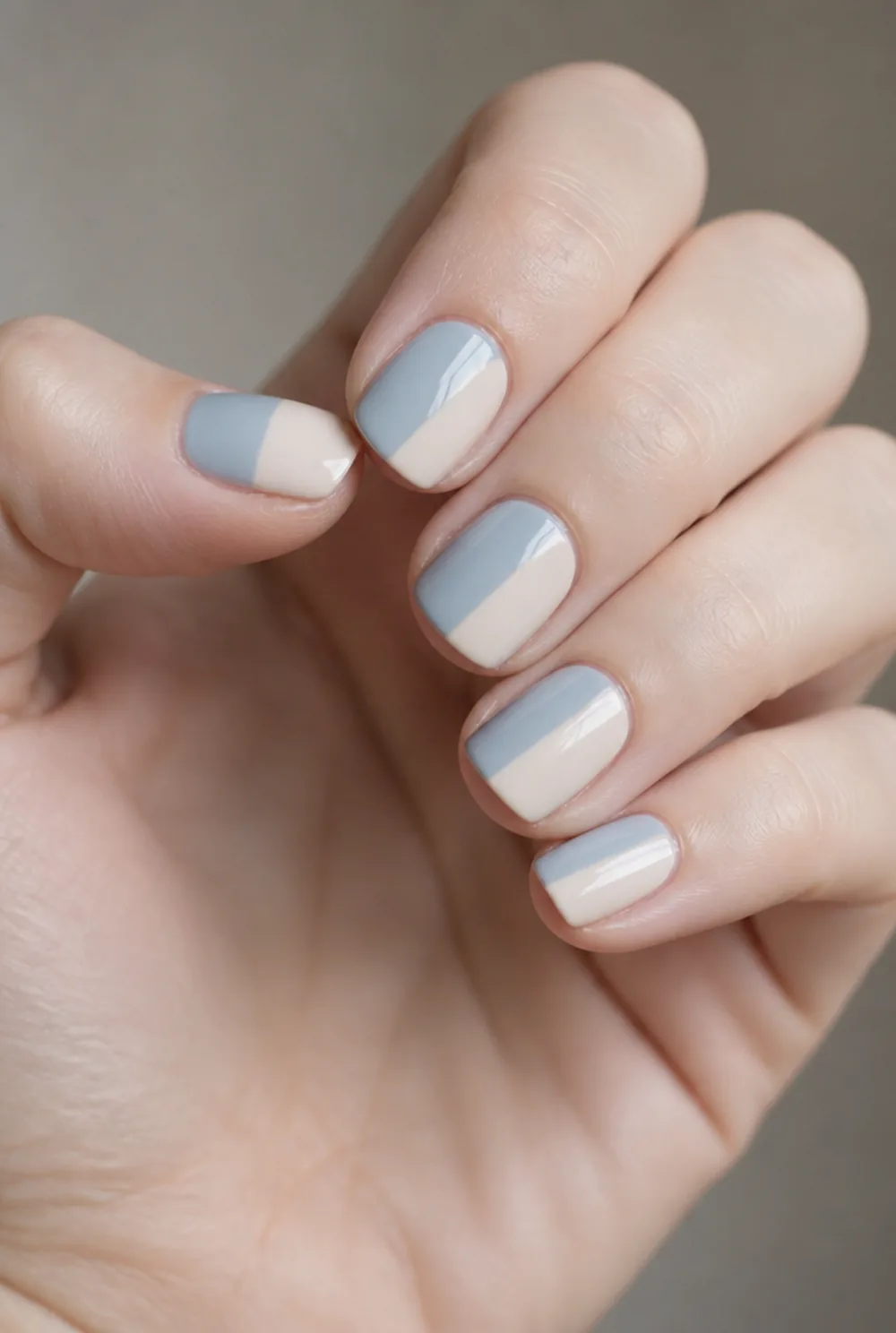
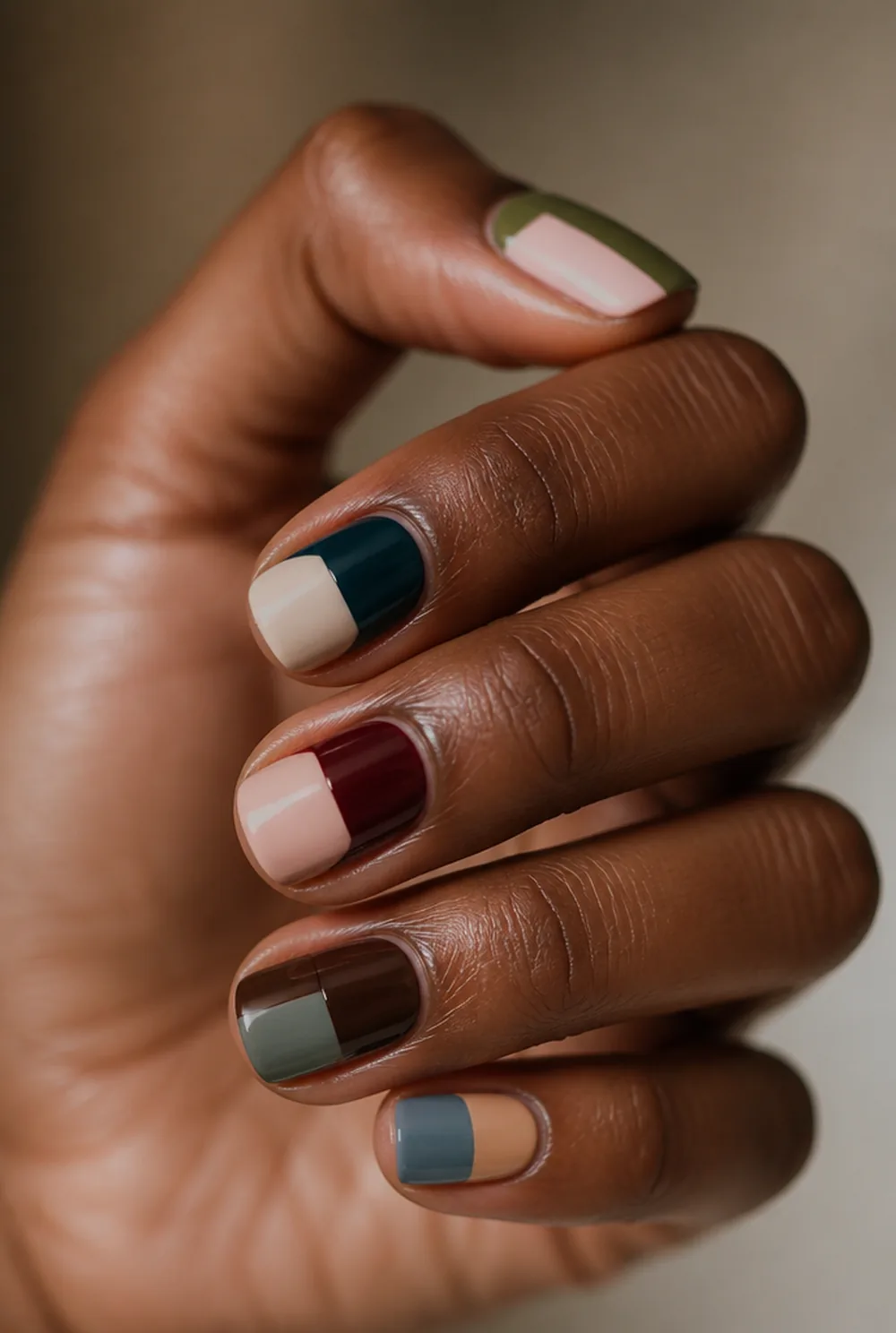
two color blocks split with striping tape
The nail split into two blocks with striping tape. Straight-edged art belongs on a straight-edged nail, and this is the shape it was designed for. Peel the tape while the polish is still wet.
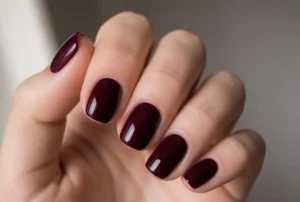
15. Squoval Burgundy

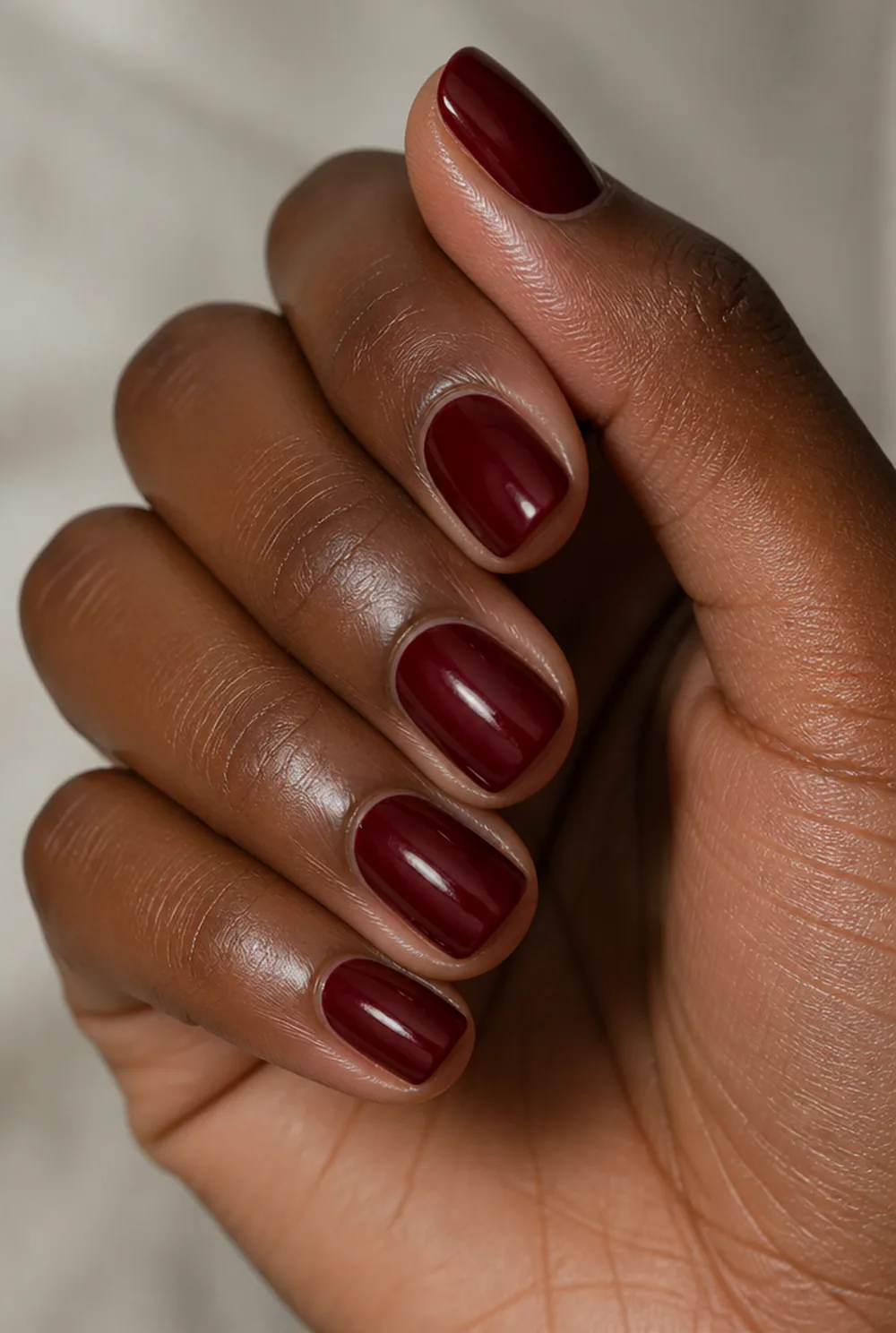

wine burgundy on medium squoval
Wine on a medium squoval is our pick for an October manicure. The flat tip makes a dark shade look solid rather than pointed. Our burgundy nails post covers the shade range.
16. Squoval Toes
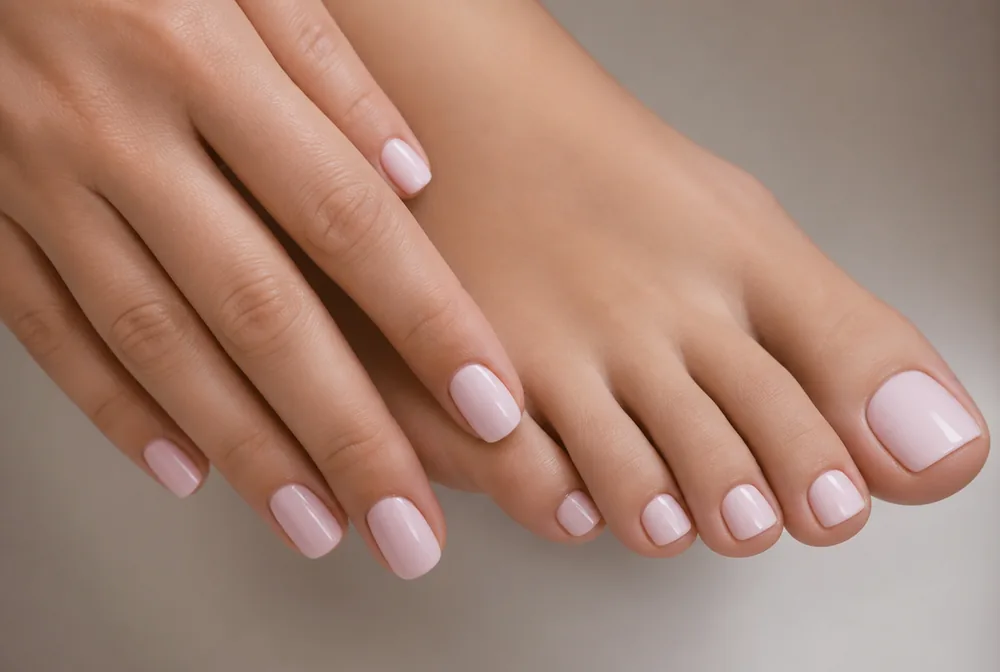

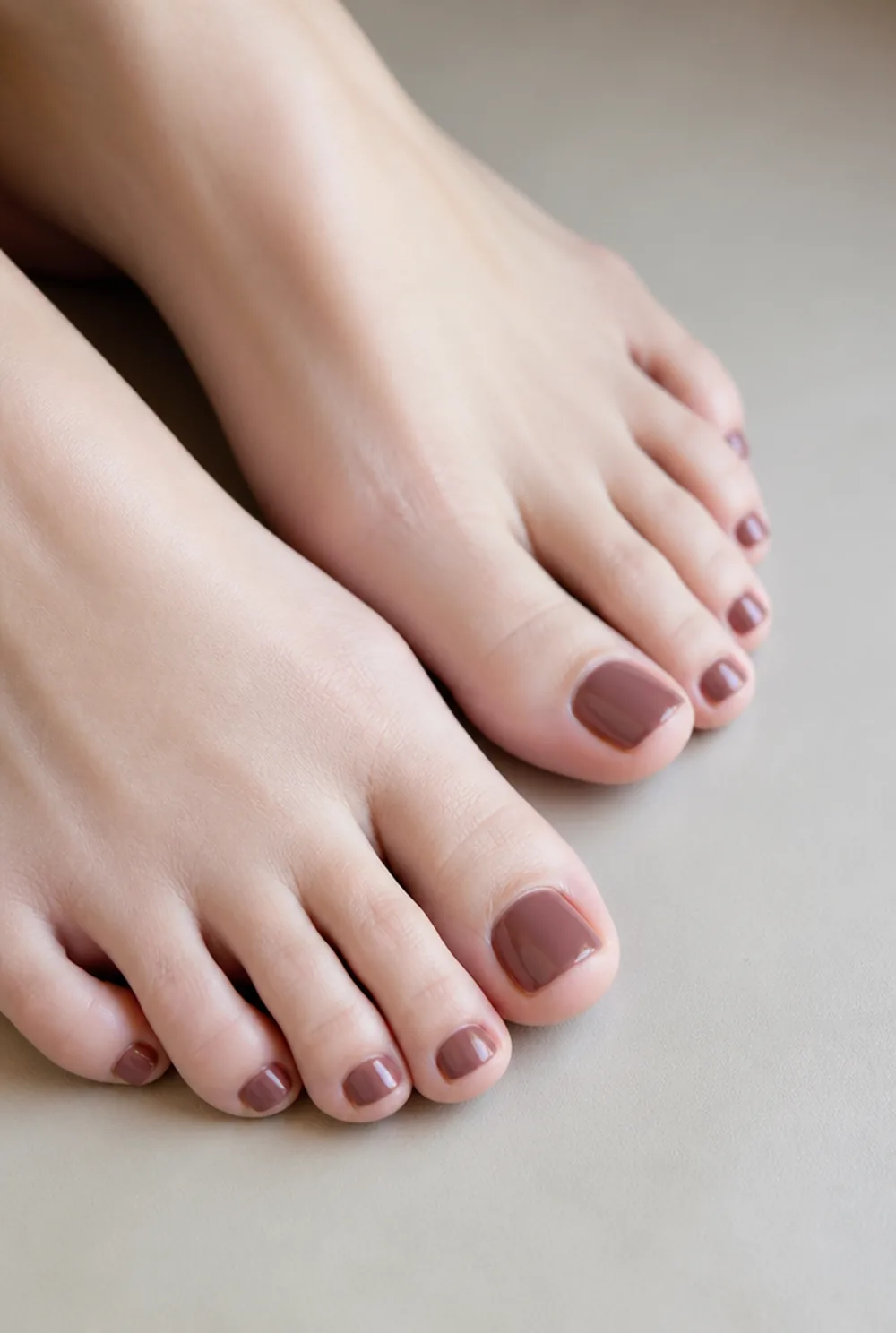
squoval pedicure shape straight with softened corners
Squoval is the correct pedicure shape, not because it looks better but because rounding toenail corners too hard invites ingrown nails. Straight across with the sharpness taken off is the rule. See our toe nail designs post.
17. Squoval with Side Line
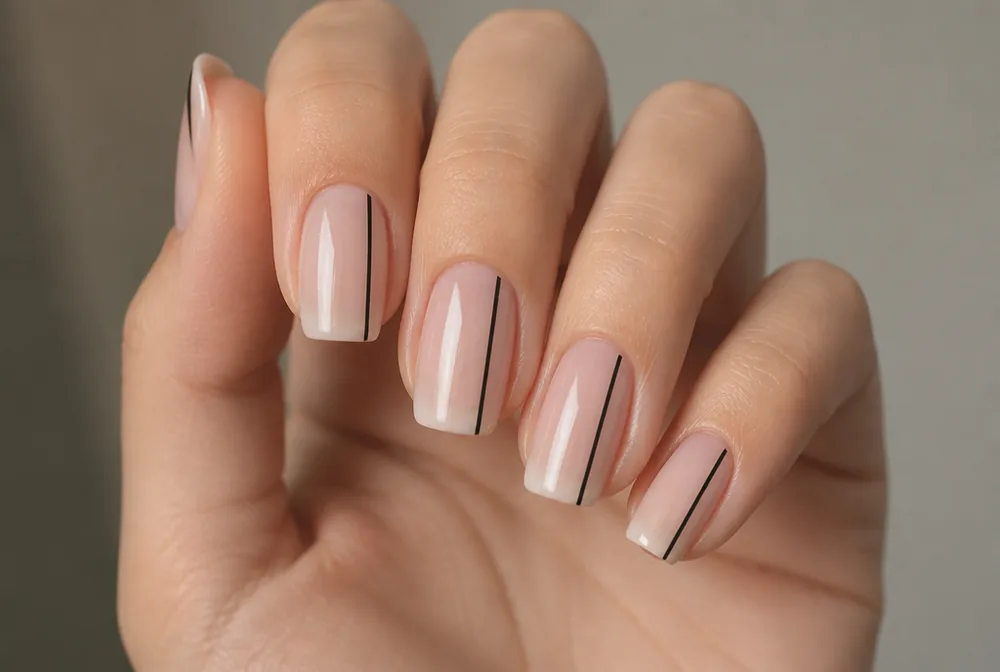

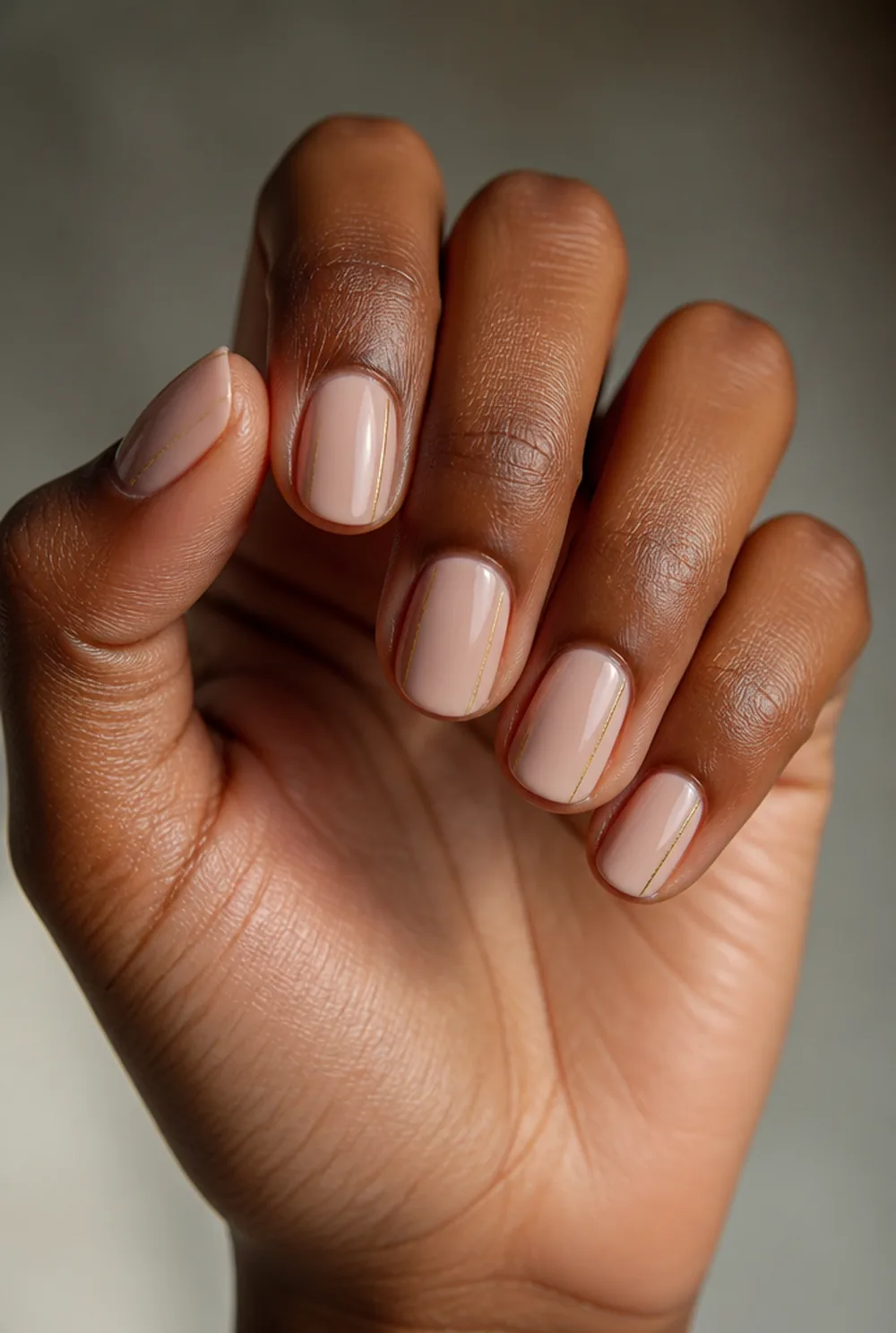
thin line down side of nail
One thin line running down the side of the nail rather than the center. It exaggerates the straight sidewall a squoval already has, which makes short nails read longer.
18. Long Squoval Gel
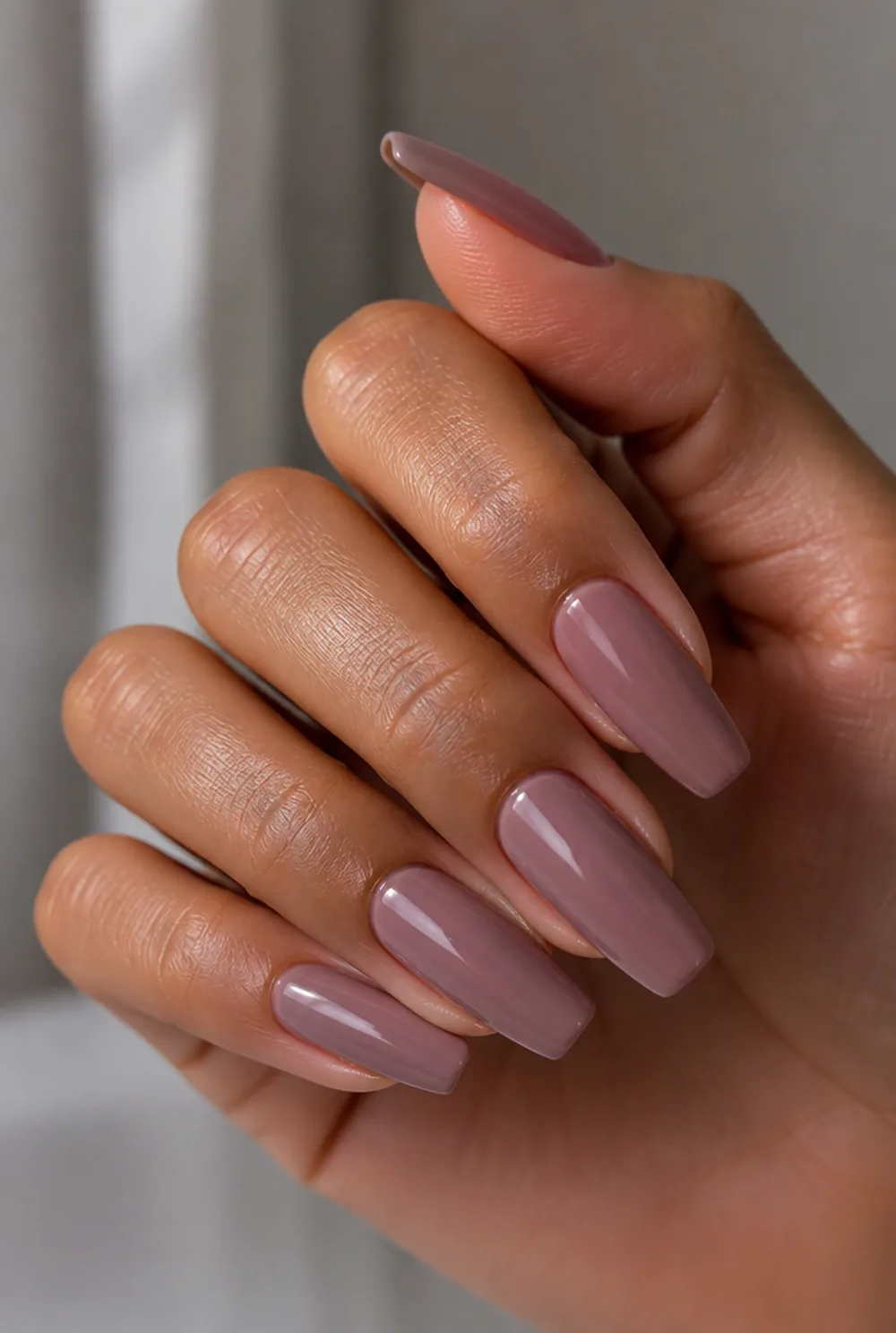
long squoval in gel or extension
A long squoval needs gel or an extension, because natural nails at that length flex and lift at the corners. Done in gel it is one of the strongest long shapes available. More in our long nail designs guide.

Why squoval nails outlast a true square
A square nail has two 90 degree corners sticking out past the finger with nothing supporting them.
Every time you catch one on a pocket, a car door, or the underside of a keyboard, that force lands on a single point. Nails are layered keratin, and a sharp corner splits along those layers rather than absorbing the knock. That is why square nails almost always fail at the same two places.
Rounding the corners spreads the same force across a curve. There is no single point for a crack to start from, and the nail flexes instead of splitting. In practice this is the difference between a manicure that survives two weeks and one that loses a corner on day four.
You lose almost nothing visually. From more than arm’s length a squoval still reads as a square nail, because the flat top edge is what the eye registers, not the corners.
Which nail beds squoval suits
Squoval is the best shape for a long, narrow nail bed, which is the one case where an oval falls down.
Narrow beds look thin under an oval because the shape tapers a nail that is already tapered. A squoval keeps the full width right to the tip, which balances the finger and stops it reading spindly.
It also works well on short fingers, provided you keep the length modest. The straight sidewalls draw a vertical line that adds apparent length, where a round shape draws attention across the nail instead.
Where it works least is a very wide nail bed. A squoval keeps every millimeter of that width and can make the nail look square in the literal sense. Those hands do better with an oval or a soft almond.
How to file a squoval at home
The order matters more than the technique, and most people do it backwards.
File the free edge straight across first, holding the file perpendicular to the nail. Take all five to the same length before you touch a single corner. If you shape one nail completely and then move on, they end up different lengths and it shows immediately.
Then turn the file to about 45 degrees and take two or three light strokes at each corner. That is genuinely all it takes. The goal is to remove the point, not to round the corner into a curve, and the most common home mistake is going too far and ending up with an oval by accident.
Finish by running the file flat along the very edge once to knock off any burr. Use 180 grit on natural nails and always file in one direction.

Squoval versus square versus coffin
These three all have a flat tip and they behave very differently.
Square keeps sharp corners and straight sides. It is the most fragile of the three on natural nails and it is mostly worn on acrylic, where the corner is reinforced by product. My square nail ideas post covers where it works.
Squoval keeps the straight sides but softens the corners. It is the natural-nail version and it survives without any product over the top.
Coffin tapers the sides inward before flattening the tip, so the nail narrows toward a small flat edge. It needs length and an overlay, and it is a very different look. See our coffin nail designs guide.
Keeping a squoval looking sharp
Squovals go blunt in a specific way, which is that the flat edge wears unevenly and starts to look slightly diagonal.
Check it by holding your hand flat with the fingers together and looking straight down the row of tips. Any nail whose edge is not parallel to its neighbors stands out instantly, and this is far easier to see than examining nails one at a time.
A weekly pass of two or three strokes across the flat edge keeps them level. Do not re-round the corners each week, or the shape creeps toward oval over a month.
Seal the free edge with top coat every time. On a flat tip there is a wide exposed edge, and unsealed it is where chips begin. My manicure longevity post has more.
Squoval on gel and press-ons
Gel changes what length a squoval can hold, and it changes it a lot.
On a bare natural nail, a squoval past about 5mm of free edge starts to flex at the corners when you press down, and that flexing is what lifts polish and eventually cracks the nail. A gel overlay stops the flex, which is why long squovals in salons are almost always gel rather than bare polish.
The trade-off is that gel is filed to shape after curing, so the technician is shaping product rather than your nail. Ask them to shape before the top coat rather than after, because filing a cured top coat leaves a dull edge that needs re-sealing.
Press-ons come in squoval more often than any other shape, and it is the easiest shape to fit because the flat tip hides a slightly wrong width better than a curve does. Buy the size up and file the sidewalls down rather than forcing a narrow one on. My press-on nails guide covers sizing.
What to ask for at the salon
Say squoval by name. If you ask for square, a lot of technicians will soften the corners anyway because they know a true square breaks, and you will get a squoval without knowing that is what it is called.
If you genuinely want a hard square, you have to specify sharp corners, and expect to be talked out of it on natural nails for good reason.
Ask them to keep the sidewalls straight rather than filing them in. That is what separates a squoval from a wide oval, and it is the detail that most often gets lost.
FAQ
What is a squoval nail shape?
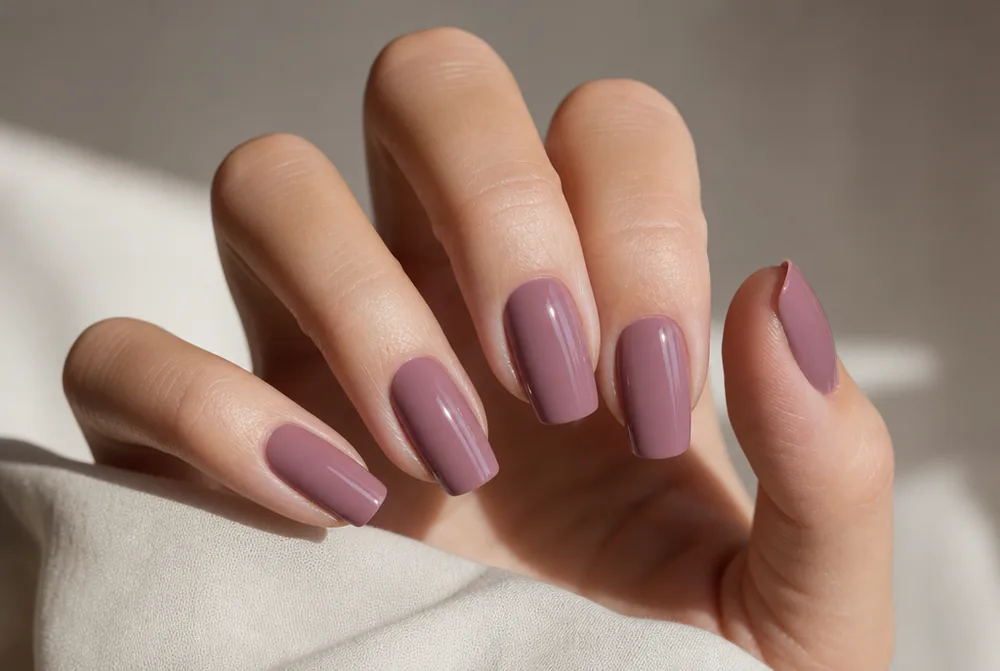
A square nail with the two sharp corners rounded off, keeping the straight sidewalls and the flat free edge. The name is a blend of square and oval. It was created specifically to stop square nails cracking at the corners, and it is now the default shape in most salons.
Is squoval better than square?
On natural nails, yes. A sharp corner concentrates every knock on one point and splits along the nail’s layers, while a rounded corner spreads that force and flexes instead. You keep nearly all of the square look and lose the failure point.
Does squoval suit short nails?
Very well, and it is one of the few shapes that looks deliberate at almost no length. Straight sidewalls draw a vertical line that makes a short nail read longer. Keep the free edge just past the fingertip and the corners barely softened.
How do I stop my squoval turning into an oval?
Only file the corners at the very tip, and never file the sidewalls. Two or three strokes at 45 degrees per corner is enough. Re-rounding the corners at every weekly touch-up is what gradually erodes the shape, so shorten the flat edge instead and leave the corners alone.
If square nails keep breaking on you, this is the fix and it costs nothing to try. My nail shapes guide covers what to move to if squoval still is not right.