
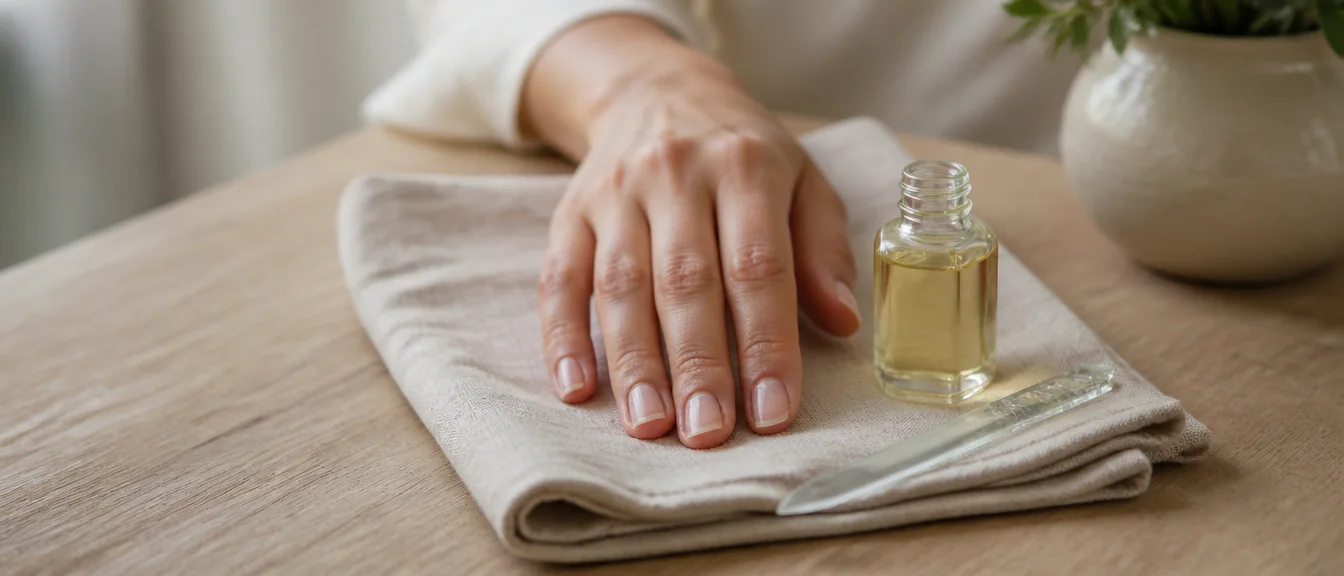
Brittle nails are the most common nail complaint there is, and almost everyone treats them for the wrong problem. The instinct is to reach for a hardener, because weak nails sound like they need strengthening. In most cases what they actually need is water and oil, and a hardener makes things worse rather than better.
Here’s what causes brittle nails, the difference between the two types and why it decides your treatment, what genuinely helps, what doesn’t, a routine that works, and when it’s worth seeing a doctor. We’re nail writers, not medical professionals, so the last section matters. If your nails are recovering from bad gel removal specifically, our gel removal guide covers that cause.
- What causes brittle nails?
- The two kinds of brittle
- What actually causes it
- What actually helps
- Why hardeners often backfire
- A routine that works
- Can you still wear polish?
- Does diet make a difference?
- How long recovery takes
- When to see a doctor
- What to buy, and what to skip
- Brittle nails in winter
- Shape and length while you recover
- FAQ
What causes brittle nails?
Most brittle nails are dry, not weak. The nail plate loses water and oil, and the usual causes are repeated wetting and drying from hand washing and dishes, solvents like acetone, cleaners and hand sanitizer, cold dry winter air, and mechanical damage from peeling off gel, over-buffing or filing back and forth.
The two kinds of brittle
Dermatologists split brittle nails into two types and the distinction decides what to do about it, so it’s worth working out which you have.
Dry and brittle nails snap and split across the free edge, and the nail feels hard and inflexible. This is by far the more common type and it’s caused by dehydration of the nail plate. Water and oil are the treatment.
Soft and brittle nails bend, peel in layers, and feel weak rather than hard. They tear rather than snap. This is more often caused by over-exposure to water and solvents, which softens the keratin layers and separates them.
The reason this matters: a hardener helps the soft type slightly and actively harms the dry type, because it makes an already inflexible nail more rigid and rigid things snap. Most people reaching for hardener have the dry type.
What actually causes it
The causes are unglamorous and mostly environmental, which is good news because environmental things are fixable.
Repeated wetting and drying is the biggest one. The nail plate absorbs water, swells, and shrinks again as it dries, and doing that several times a day separates the keratin layers. This is why nails get worse when you’re washing up a lot or washing your hands frequently.
The American Academy of Dermatology warns that too much water exposure can weaken nails and cause them to split, peel, or break, and recommends wearing gloves when cleaning or washing dishes.
Solvent exposure is the second. Acetone, household cleaners, and hand sanitizer all strip oil from the nail plate. Frequent gel removal without oiling afterward is a common version of this.
Cold dry air is the third, which is why nails are reliably worse in winter. And mechanical damage is the fourth: peeling gel off, over-buffing, and filing in a sawing motion all thin or tear the plate directly.
What actually helps
Three things, in order of how much difference they make, and none of them are expensive.
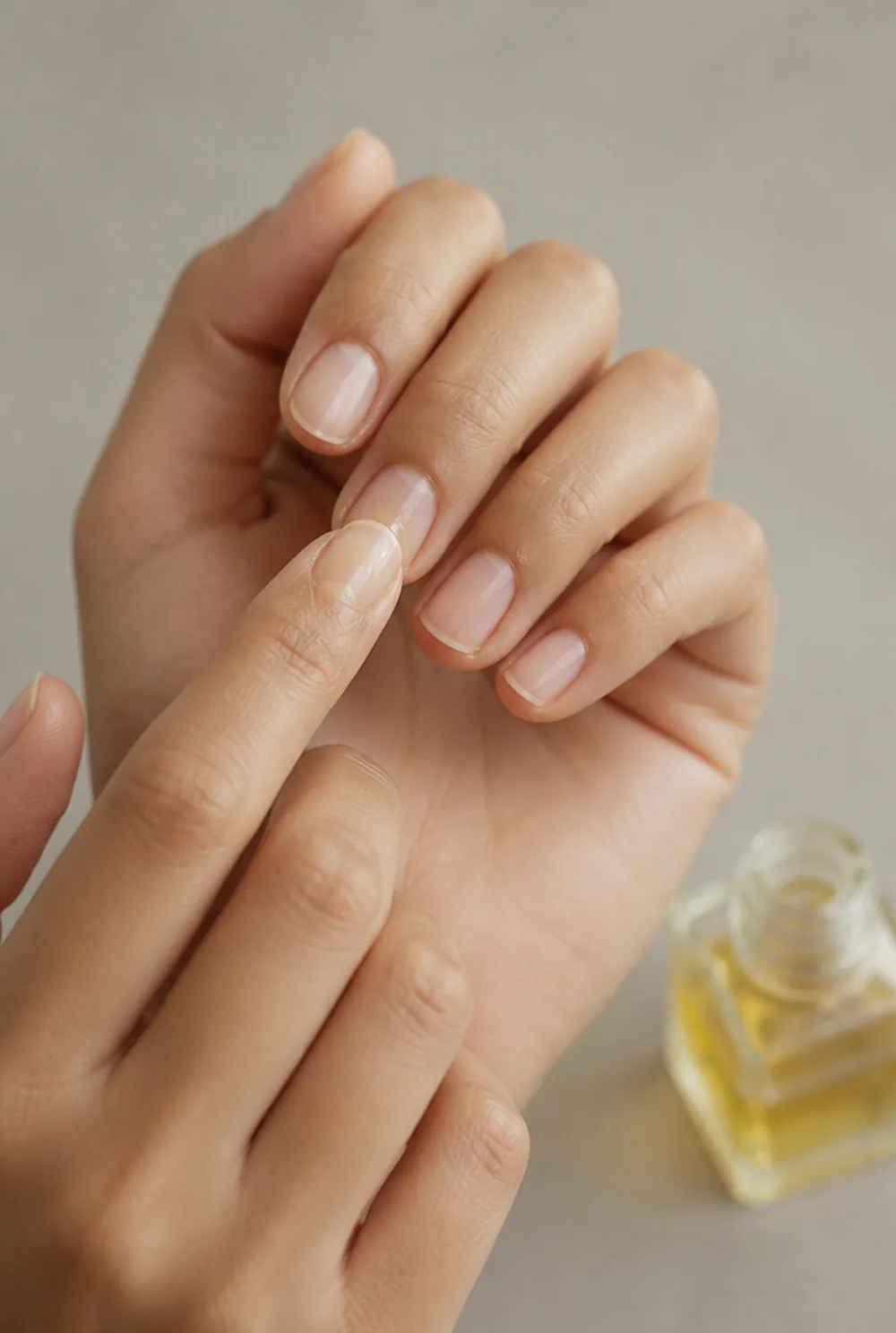
Cuticle oil twice a day is first and it isn’t close. Oil penetrates the nail plate and the surrounding skin and keeps the keratin layers flexible. A flexible nail bends where a dry one snaps, and flexibility is what you’re actually after rather than hardness.
Gloves for anything wet or chemical is second. Washing up, cleaning, gardening. This removes the single biggest cause rather than treating it, which is why it works better than any product.
Keeping them short is third, and it’s the one people resist. A short nail has less leverage, catches on less, and flexes less, so it survives long enough to grow out the damaged section. Length is the enemy of recovery.
Why hardeners often backfire

This is the most useful thing on this page because it’s the opposite of the instinct.
Most nail hardeners work by cross-linking the keratin, usually with formaldehyde or a related compound. That does make the nail harder. It also makes it more rigid, and rigidity is not strength.
A healthy nail is slightly flexible, which lets it absorb a knock by bending. A hardened nail can’t bend, so the same knock cracks it instead. People often report that a hardener worked brilliantly for two weeks and then their nails started snapping, and that’s exactly the mechanism.
A peer-reviewed medical review of common nail disorders advises caution with nail hardeners, because they can paradoxically make fragile nails worse (Optimal diagnosis and management of common nail disorders).
If you have the soft, peeling type, a short course of hardener can genuinely help. If your nails are dry and snapping, skip it entirely and use oil. And nobody should use a formaldehyde-based hardener continuously for months.
A routine that works
This is the routine to follow for three months to genuinely turn brittle nails around. Three months because that’s roughly how long it takes for meaningful new growth.
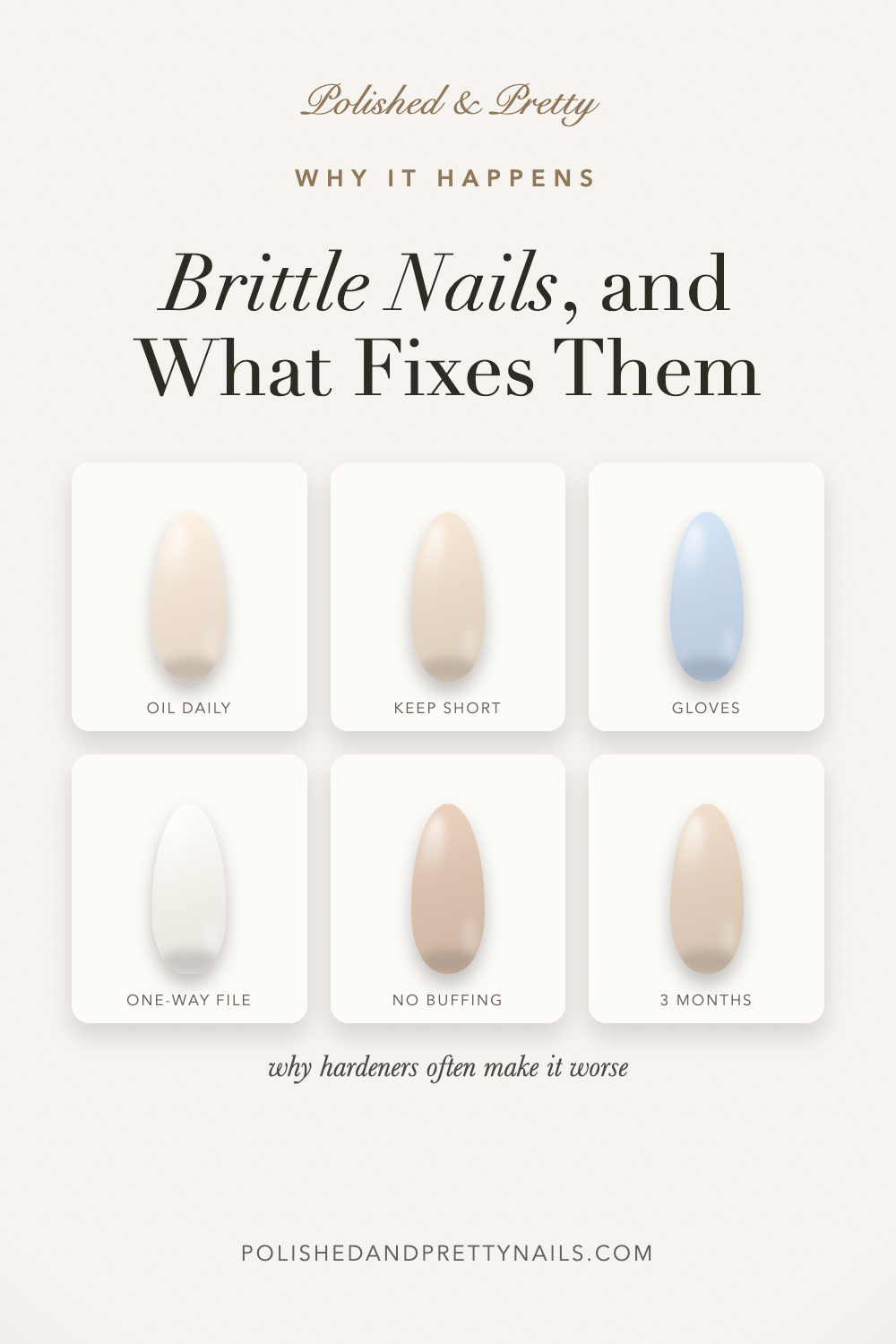
Cut them short and keep them there. File in one direction only with a glass file rather than sawing back and forth, since sawing creates micro-tears along the edge that split later. A glass file is about $10 and lasts years.
Oil twice a day, morning and night, into the skin around the nail rather than onto the surface. Keep a pen-style oil where you’ll see it. This is the habit that decides whether the other three months work.
Gloves for washing up and cleaning, hand cream after every hand wash, and no acetone unless you’re removing something. Skip buffing entirely, since a brittle nail cannot afford to lose any thickness.
Can you still wear polish?
Yes, and the received wisdom that nails “need to breathe” is not correct. Nails aren’t living tissue and they don’t take in oxygen from the air. The GelBottle Academy explains that nails get their nutrients and oxygen from the bloodstream, which supplies the matrix under the cuticle.
Polish is actually protective. A base coat and color shield the nail plate from water and mechanical damage, which are the two main causes of brittleness. A polished brittle nail often does better than a bare one.
What causes damage is the removal cycle, not the polish. Acetone every week strips oil faster than you can replace it. If you’re wearing polish while recovering, change it less often and oil generously each time.
Gel is a genuine option here too, and dip or builder gel even more so, since both add a protective layer that lets the nail underneath grow without splitting. My gel vs dip vs acrylic comparison covers which suits thin nails.
Does diet make a difference?
Less than the internet suggests, with one real exception.
Biotin is the supplement most often recommended for nails, and there is some evidence it helps in cases of genuine deficiency. Deficiency is uncommon in people eating a normal varied diet, so for most people the effect is small or absent.
Iron deficiency is the one that genuinely shows in nails, and it can cause them to become thin, brittle, or spoon-shaped. That’s a blood test rather than a guess, and it’s a reason to see a doctor rather than buy a supplement. Cleveland Clinic notes that spoon nails are most often a sign of iron deficiency anemia.
For everyone else, nails are made of keratin and adequate protein and general good nutrition cover it. If your nails got worse over one winter, it’s environmental rather than dietary, and no supplement fixes what gloves and oil would.
How long recovery takes
Setting expectations here saves a lot of frustration, because nails are slow.
Fingernails grow about three millimeters a month and take roughly six months to fully replace themselves. Damage that’s already in the nail plate cannot be repaired; it has to grow out. Nothing shortens that.
What you’ll notice first, usually within two to three weeks, is that the nail feels less dry and splits less at the edge. That’s the oil working on the section already grown.
Genuinely new, healthy nail takes three months to be visible as a clear section and six to reach the tip. If you start a routine and give up at four weeks because nothing looks different, you stopped before the part that shows.
When to see a doctor
Most brittle nails are environmental and respond to the routine above. A few things are worth getting looked at properly, and those need a doctor to assess them.
See a doctor if the change was sudden rather than gradual, if it affects all twenty nails including toes, or if it came with other symptoms like hair loss, fatigue, or changes in skin. Thyroid problems and iron deficiency both show up in nails and both are easily tested.
Also worth checking: nails that are separating from the nail bed, changing color, thickening, or crumbling, or any pain, swelling, or redness around the nail. Fungal infection and psoriasis both affect nails and neither is fixed by cuticle oil.
And if you’ve done the routine properly for three months with no change at all, that’s a reason to ask rather than to try a stronger product.
What to buy, and what to skip
The useful list is short and cheap, and most of the nail-strengthening aisle isn’t on it.
A pen-style cuticle oil at around $10 is the one genuinely worth buying, and the format matters more than the formula because it’s the one you’ll carry. Jojoba-based oils penetrate the nail plate better than heavier oils.
A glass file at about $10, rubber gloves at about $4, and a decent hand cream cover the rest. That’s the whole kit.
What to skip: formaldehyde-based hardeners if your nails are dry and snapping, buffing blocks, and anything promising results in a week. Nails grow three millimeters a month and no product changes that.
Brittle nails in winter
Nails get measurably worse between November and March for almost everyone, and knowing why makes it easier to head off.
Cold outdoor air holds very little moisture and indoor heating holds even less, so hands spend the whole season in a drying environment. On top of that, most people wash their hands in hotter water in winter, which strips oil faster.
The fix is to increase the oil rather than to change anything else. Three times a day through winter instead of twice, plus hand cream after every wash. Cleveland Clinic also suggests a heavy hand cream at bedtime and moisturizing between exposure to water or hand sanitizer. Gloves outdoors help more than people expect, since the cold air is doing real damage on its own.
This is also why a manicure that lasted three weeks in July fails in a fortnight in January, and our guide to making a manicure last longer covers the seasonal difference.
Shape and length while you recover
Shape does more for brittle nails than any product, and it is the one change that shows results within days rather than months.
Square and squoval are the strongest shapes, because the corners support the free edge rather than tapering away from it. If your nails split at the sides, an almond or oval shape is likely making it worse and switching to squoval will help immediately.
Keep the free edge short enough that it does not extend far past the fingertip. Every extra millimeter is more leverage on a nail that cannot take it, and length is the single most common reason a recovery routine fails.
Once the new growth is healthy you can go back to whatever shape you prefer. My nail shapes guide covers which suits your hands, and extra short nail ideas has designs that look deliberate at recovery length.
FAQ
What causes brittle nails?
Most commonly repeated wetting and drying, which separates the keratin layers, along with solvent exposure from acetone, cleaners, and hand sanitizer. Cold dry air and mechanical damage from peeling gel or over-buffing are the other main causes. Nutritional causes are much rarer, though iron deficiency genuinely does show in nails and is worth testing for.
Do nail hardeners work?
They help the soft, peeling type of brittle nail and often make the dry, snapping type worse. Hardeners cross-link the keratin, which makes nails more rigid, and rigid nails crack instead of bending under a knock. If your nails snap rather than peel, use cuticle oil instead.
How long does it take to fix brittle nails?
You’ll notice less splitting within two to three weeks, but genuinely new healthy nail takes about three months to be visible and six months to reach the tip. Existing damage can’t be repaired and has to grow out. Most people who conclude a routine isn’t working gave up before the new growth showed.
Should I stop wearing polish if my nails are brittle?
No. Nails aren’t living tissue and don’t need to “breathe”, and polish actually protects the nail plate from water and mechanical damage. What causes harm is frequent acetone removal, so change your polish less often and oil generously each time. Dip or builder gel can genuinely help by adding a protective layer while the nail grows.
If you do one thing, oil twice a day and keep them short for three months. It’s boring and it works better than anything you can buy in the strengthening aisle. And when they’re back, our short gel nails post has designs that suit the length you’ll be at.
Two related problems have their own guides. My nails for nail biters post covers what actually helps break the habit, and pushing back cuticles covers the weekly routine that keeps the skin healthy.