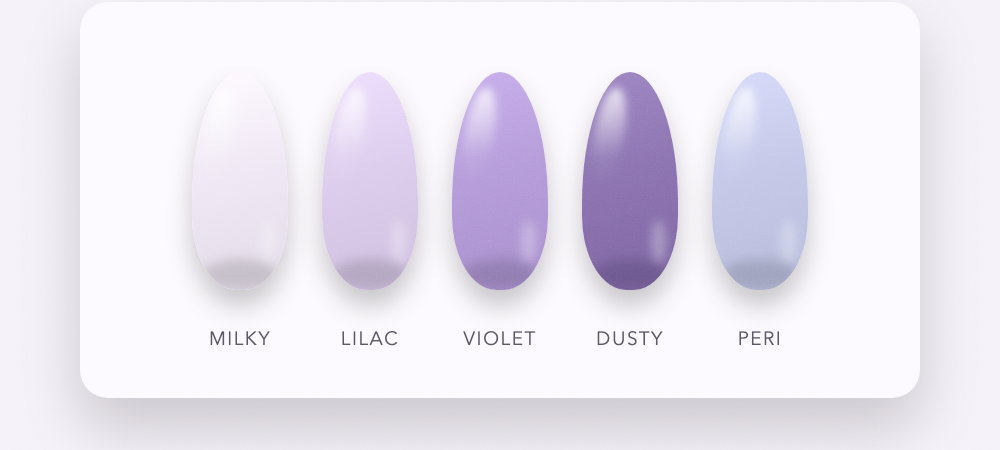
Lavender is the purple that converts people. Deep plum can feel like a commitment and bright violet can feel like a costume, but a soft lavender sits on the hand like a neutral with an opinion. It is also the shade most likely to go chalky, which is why so many people own one bottle of it and never reach for it twice.
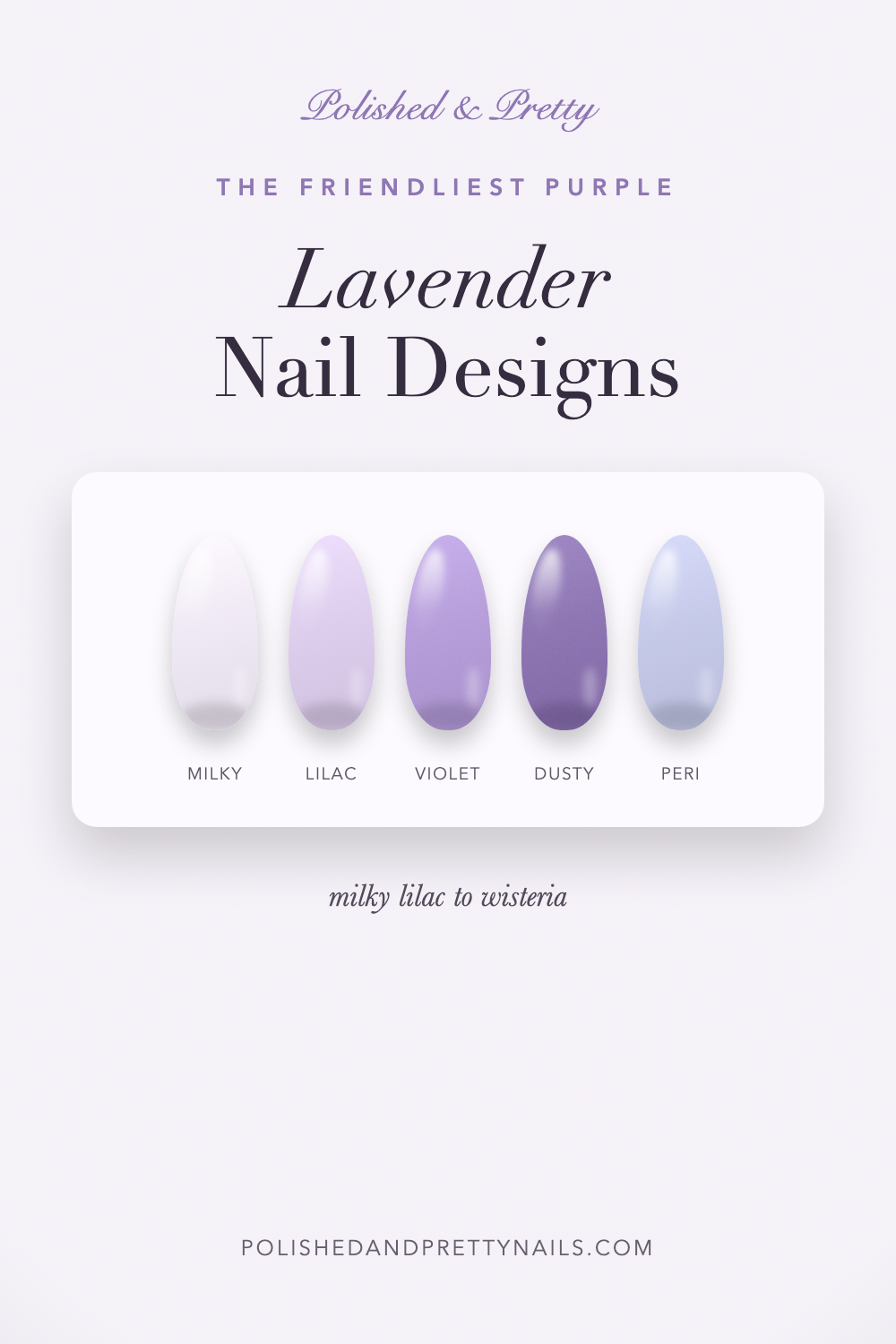
Here are 20 lavender nail designs from milky lilac to deep wisteria, plus the milky-versus-opaque rule that fixes chalkiness, which lavenders suit which hands, and where the shade sits in the year. If you want the deeper end of the family, my purple nail ideas guide covers plum and violet.
20 lavender nail designs
1. Milky Lilac
Lavender mixed with white so it is semi-opaque and blurs the nail underneath. It is the version that made this shade wearable and the one I would hand anyone first. Ask for milky, not pastel.
2. Lavender Creme
Full-opacity soft purple with a glossy top coat. It is a real colour rather than a wash, and it suits medium and short nails where a sheer version would disappear.
3. Wisteria
Lavender pushed deeper and slightly grey, closer to the flower it is named after. It is the grown-up version and the one that works in an office.
4. Lavender Chrome
Lavender under a pearl chrome powder, shifting between lilac and silver. It is the most expensive-looking thing here and it solves lavender’s flatness problem entirely. Needs gel.
5. Lavender French Tip
Sheer nude with the white swapped for lavender, kept thin. It is the softest coloured French there is. More in my colored French tip guide.
6. Periwinkle
Lavender pulled toward blue, soft and slightly dusty. It is the friendliest shade in either family and it suits cool undertones especially. More in my blue nail designs guide.
7. Lavender Aura
A blurred lavender halo on a nude base, edges fading to nothing. Purple is the easiest colour to blend because it sits between warm and cool. Technique in my aura nails guide.
8. Lavender and Sage
Alternating milky lavender and sage, both muted. Two soft shades from opposite sides of the wheel, which reads considered rather than random. More in my green nail designs guide.
9. Lavender Ombre
White at the base fading into lavender at the tip. It keeps the colour away from the cuticle where pastels are least flattering. Technique in my ombre nails guide.
10. Lavender Cat Eye
Magnetic lavender gel pulled into a vertical band of light, like amethyst catching a spotlight. Technique in my cat eye nails post.
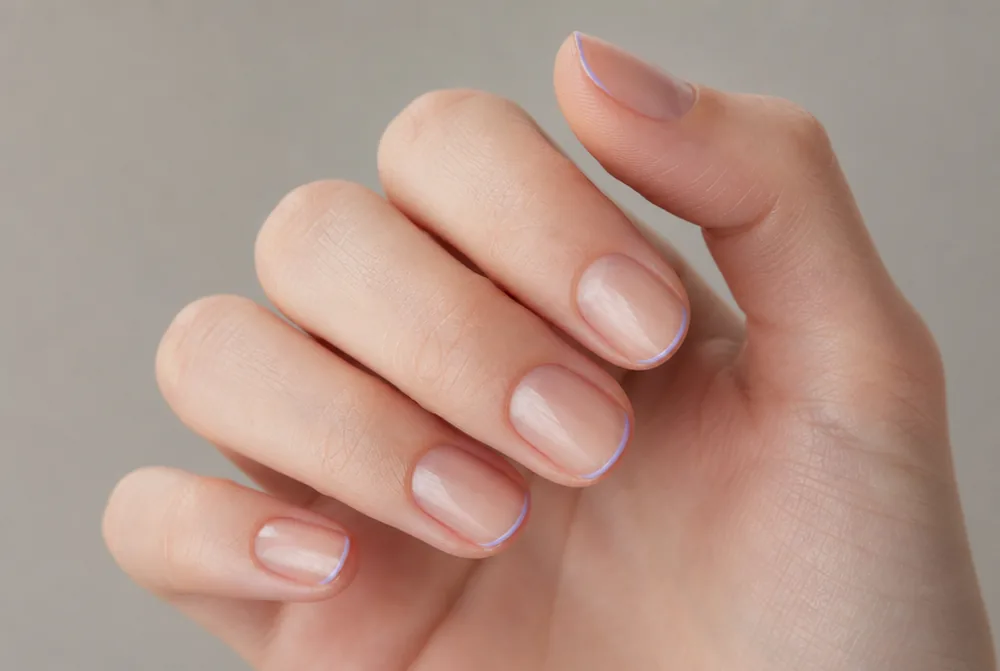
11. Lavender Micro French
A hairline of lavender at the very tip of a bare nail. It is the smallest possible amount of colour and it works when a full pastel would not. More in my minimalist nails guide.
12. Lavender Swirl
One curved lavender line sweeping across a milky base. Most of the nail stays neutral, which is why this flatters hands that a full pastel does not. More in my swirl nails guide.
13. Lavender Glazed Pearl
Milky lavender under a fine pearl powder, giving that wet-glazed finish. It shifts toward silver at the edges. Method in my chrome and glazed donut nails guide.
14. Lavender and Silver
A thin silver line down two lavender nails. Silver is the metal for this shade; gold makes lavender look slightly muddy. More in my silver nail designs guide.
15. Sheer Lavender Jelly
Three thin coats of a translucent lavender, so the nail reads through it. It needs nails in good condition since nothing hides. More in my jelly nails guide.
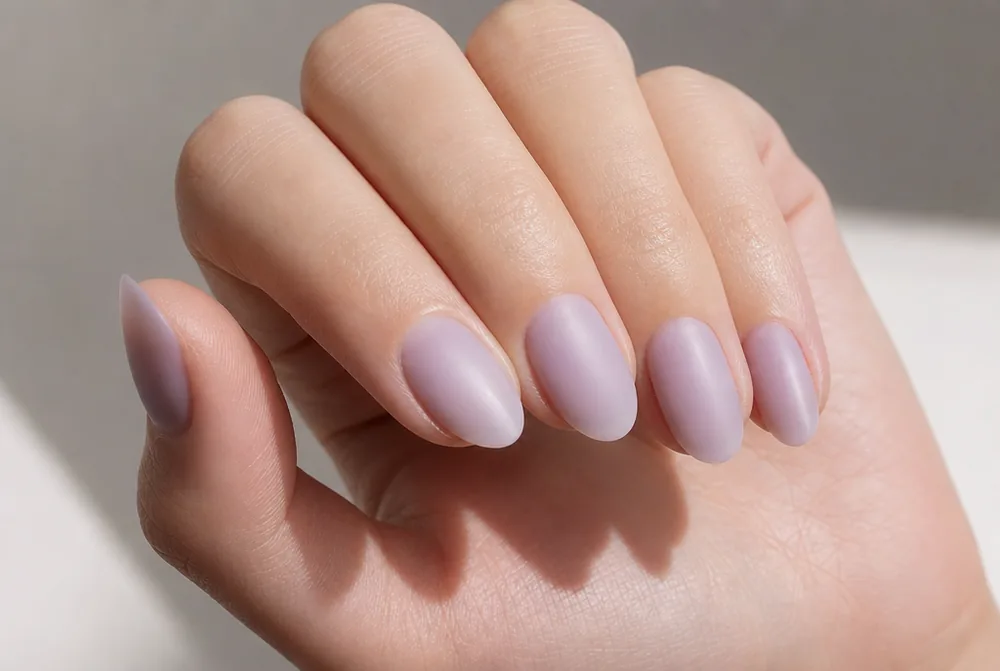
16. Lavender Matte
Lavender under a matte top coat, which reads chalky in the good way. It is the one pastel that gains from losing its shine rather than losing to it. More in my matte nails guide.
17. Lavender with Tiny Dots
Very small white dots scattered on a lavender base. At that scale they read as texture rather than as spots. More in my polka dot nails guide.
18. Lavender Toes
Lavender on a pedicure, where pastels last four to six weeks. Go opaque rather than milky on feet, since toenails are thicker and less translucent. More in my toe nail designs guide.
19. Short Lavender Squoval
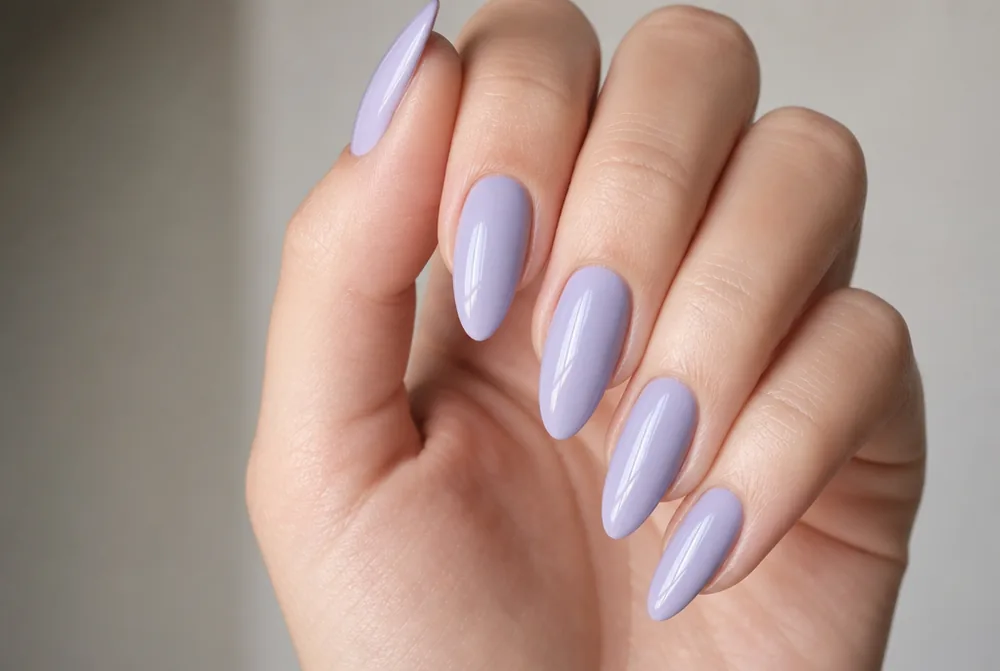
Very short, soft square corners, one milky lavender, high gloss. It is the most wearable version and the one that reads as a soft neutral rather than a pastel.
20. Long Lavender Almond
Long almond in a milky lavender, which is about as soft and editorial as nails get. Keep it milky rather than opaque at this length or it flattens. More in my almond nail designs guide.
Why lavender goes chalky, and the fix
This is the single most useful thing to know about the shade, and it applies to every pastel.
A pastel is a bright colour cut with white. When the formula is fully opaque, that white sits flat on the nail and reflects light evenly, which reads as poster paint against skin. On pale hands with little contrast to break it up, it looks especially chalky.
The fix is a milky semi-opaque formula rather than an opaque one. Letting some of the nail read through gives the colour depth and softens the edge between polish and skin. Ask for “milky lilac” rather than “lilac” and you get a completely different manicure.
Gloss is the other half. A high-shine top coat gives a pastel somewhere to catch light. The matte version on this page is the deliberate exception, and it works because it commits fully to chalk rather than landing halfway.
Which lavender suits your skin tone
Lavender is a cool colour, which makes it easier for some hands than others.
Cool undertones, meaning blue-ish veins and skin that burns before it tans, can wear the whole page including periwinkle and true lilac. This is the family where cool skin has the most options.
Warm and golden undertones do better in wisteria and the deeper dusty lavenders, where the grey content bridges the gap. A very cool pale lilac on golden skin can look slightly grey.
Deep skin tones look outstanding in saturated lavender and in the chrome version, where a very pale milky lilac can go ashy. Olive hands should go straight to wisteria, which is the version that suits them best.
Lavender through the year
Lavender reads as a spring colour and it has more range than that reputation suggests.
Milky lilac and periwinkle belong to spring, and they are among the few pastels that look right against pale hands in March before a tan arrives. My spring nails guide covers where they sit.
Saturated lavender and the chrome version carry through summer easily, especially against a tan. Wisteria is the autumn version, sitting comfortably next to plum and burgundy.
Winter is the one stretch where a pale lavender feels premature. The fix is the chrome or the glazed pearl version, both of which read icy rather than springlike and sit happily in a January palette.
Getting lavender to apply evenly
Pale purples streak more than almost anything, and most of it is the formula rather than your hands.
Two thin coats, two full minutes apart, brushed in the same direction. The first coat is supposed to look patchy, so resist fixing it while it is wet. Going back over a half-dry coat is what drags a pale colour into visible lines.
A ridge-filling base coat helps more here than with saturated colours, because a pastel has no pigment depth to hide texture underneath. Around $9 and it makes a cheap lavender look expensive.
Leave a hairline gap at the cuticle rather than painting into it. With a pale colour that margin is what makes a home manicure look professional, and it disappears visually at arm’s length.
Lavender by length and shape
Pastels behave differently by length in a way deep colours do not, and lavender is no exception.
Short and medium is where lavender looks best. At those lengths a milky lilac reads as a soft neutral rather than as a pastel, which is exactly what makes it wearable at work.
Medium almond is the most flattering single combination, since the taper stops a pale colour looking flat and gives the swirl and ombre versions room to travel.
Long nails plus an opaque pastel is the pairing to be careful with, because a pale colour over a lot of surface reads flat and slightly artificial. If you have length, go milky or sheer rather than opaque. My nail shapes guide covers shape selection.
What goes with lavender nails
Lavender is easier to place than most pastels, mostly because it behaves like a cool neutral.
Silver is the metal. Silver, pearl, and white gold all sit cleanly against lavender, while yellow gold tends to make it look slightly muddy. Rose gold works against the warmer wisteria end.
In clothing, lavender works with white, cream, grey, navy, denim, and every other pastel, which is unusual. Sage green and soft blue are its two best companions.
The pairing to avoid is lavender against a warm orange or a mustard, where the cool and warm undertones argue openly and neither wins.
The lavenders worth owning
One bottle covers most of what people actually wear from this family, and the formula matters more than the shade.
One milky lilac is the buy. Essie and Olive & June both sit at $9 to $12 and both go even in two coats, which is the test with a pale colour. Avoid anything that needs three.
A wisteria is worth adding if you have warm or olive undertones, or if you want a lavender that works in October rather than only in April.
For gel, DND and Beetles both make lavenders around $8, and the chrome, glazed, and cat eye versions all need gel regardless of brand since powder will not stick to dried polish.
FAQ
Does lavender suit every skin tone?
Milky lilac comes close, because the white cut into it softens the edge against skin. Cool undertones can wear the whole range including periwinkle; warm and olive hands do better in wisteria and the deeper dusty lavenders. Deep skin tones look best in saturated lavender or the chrome version rather than the palest milky one.
Why does my lavender polish look chalky?
Because the formula is fully opaque, so the white in the pastel sits flat on the nail and reflects evenly, reading as poster paint. Switch to a milky semi-opaque version of the same shade and finish with a high-shine top coat. A matte finish makes the chalky effect worse unless you commit to it fully as a deliberate look.
What is the difference between lavender and lilac nails?
In practice salons use them interchangeably, though lavender usually means the slightly greyer, dustier version and lilac the slightly pinker, brighter one. Both sit at the pale end of purple. Bring a photo if the exact shade matters, since the words are not used consistently.
Is lavender a spring colour only?
No. Milky lilac and periwinkle read spring, saturated lavender carries through summer, and wisteria works in autumn next to plum and burgundy. For winter, the chrome or glazed pearl version reads icy rather than springlike and sits well in a January palette.
If you buy one, make it a milky lilac and keep it short. And if you want to go deeper into the family, my purple nail ideas guide covers plum and violet.