
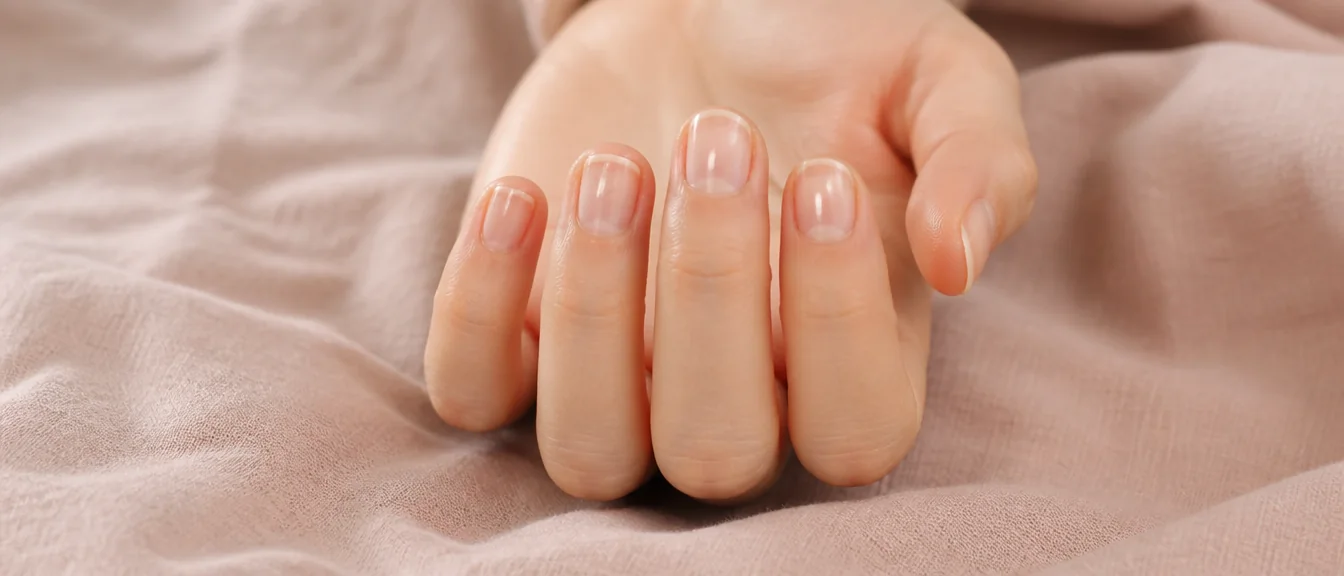
The thing that helps most nail biters is not willpower and it is not bitter polish. It is putting a physical barrier between your teeth and your nails that also looks good enough that you do not want to ruin it. Gel overlays and press-ons both do this, and they work better than anything sold specifically to stop biting.
Here is what actually helps, why bitter polish so often fails, and how to handle the awkward growing-out phase. This is about the practical nail side; persistent biting that causes real distress or damage is worth raising with a doctor, since it is a recognized body-focused repetitive behavior with proper treatment options.
Why bitter polish often fails
It is the first thing everyone tries and it does help many people, but not everyone, and the reason is worth knowing.
Bitter polish addresses taste. For most biters, taste was never the barrier. Nail biting is usually automatic, done while concentrating, reading, or feeling anxious, and often the hand is at the mouth before you notice. A bad taste registers after the behavior has already started.
Some people simply get used to the taste, and it wears off fastest on exactly the nails you bite most.
It is worth trying, because it does help some people and it is cheap. It is just not the whole answer, and failing with it is not a failure of willpower.
Keep the edges completely smooth
This is the highest-value habit and almost nobody is told about it.
Most biting is triggered by feeling something wrong. A rough edge, a tiny catch, a hangnail, or a snag on fabric. Your finger finds it, and once the hand is at the mouth the rest follows automatically. The trigger is tactile, not emotional, far more often than people assume.
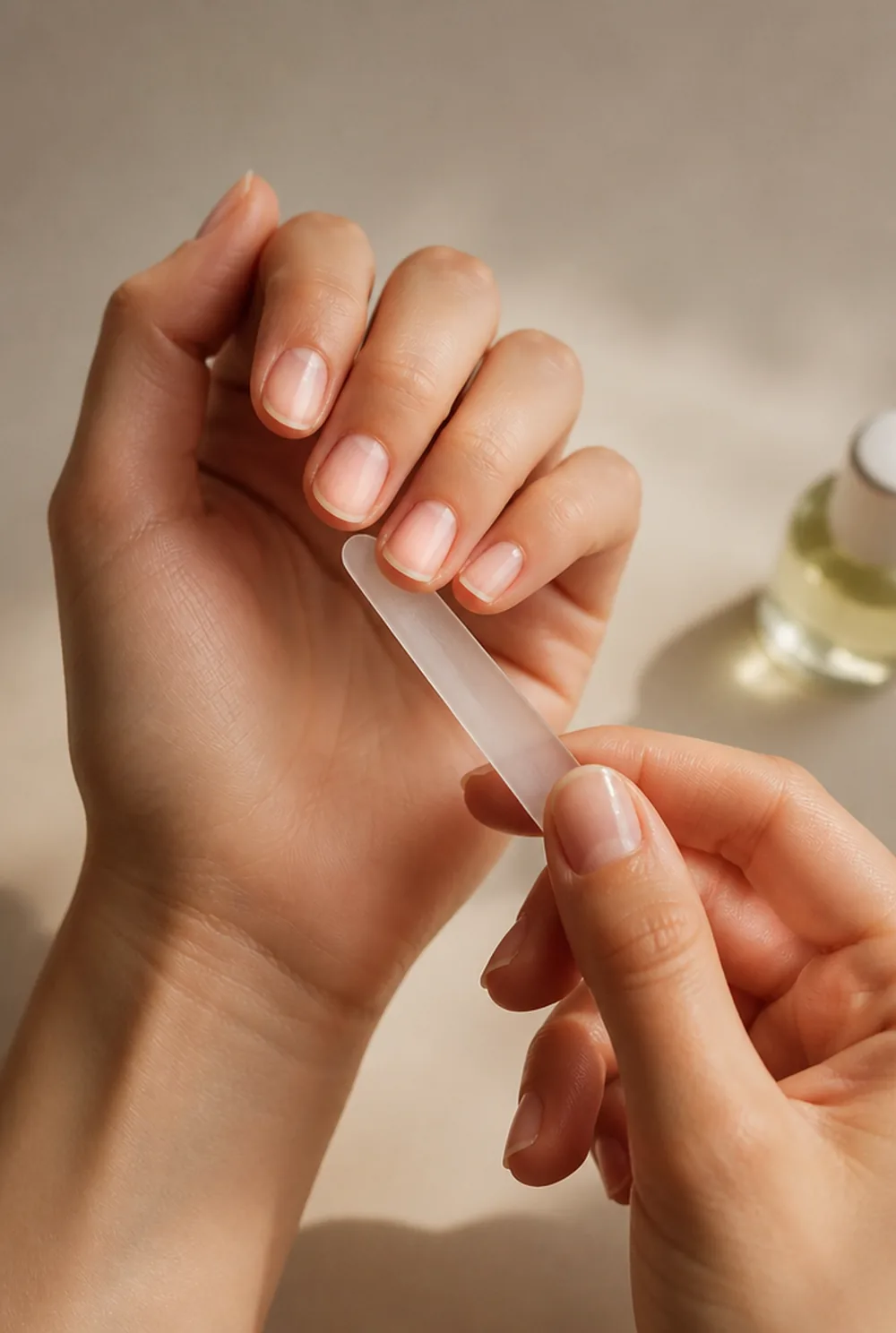
Carry a fine glass or 240 grit file and smooth any catch the moment you notice it. Fixing the trigger in five seconds removes the reason your hand went up in the first place.
Do the same with hangnails: clip them cleanly rather than pulling, and oil the skin daily so fewer form.
Gel overlays
This is the most effective single intervention for most people, and it works on two levels at once.
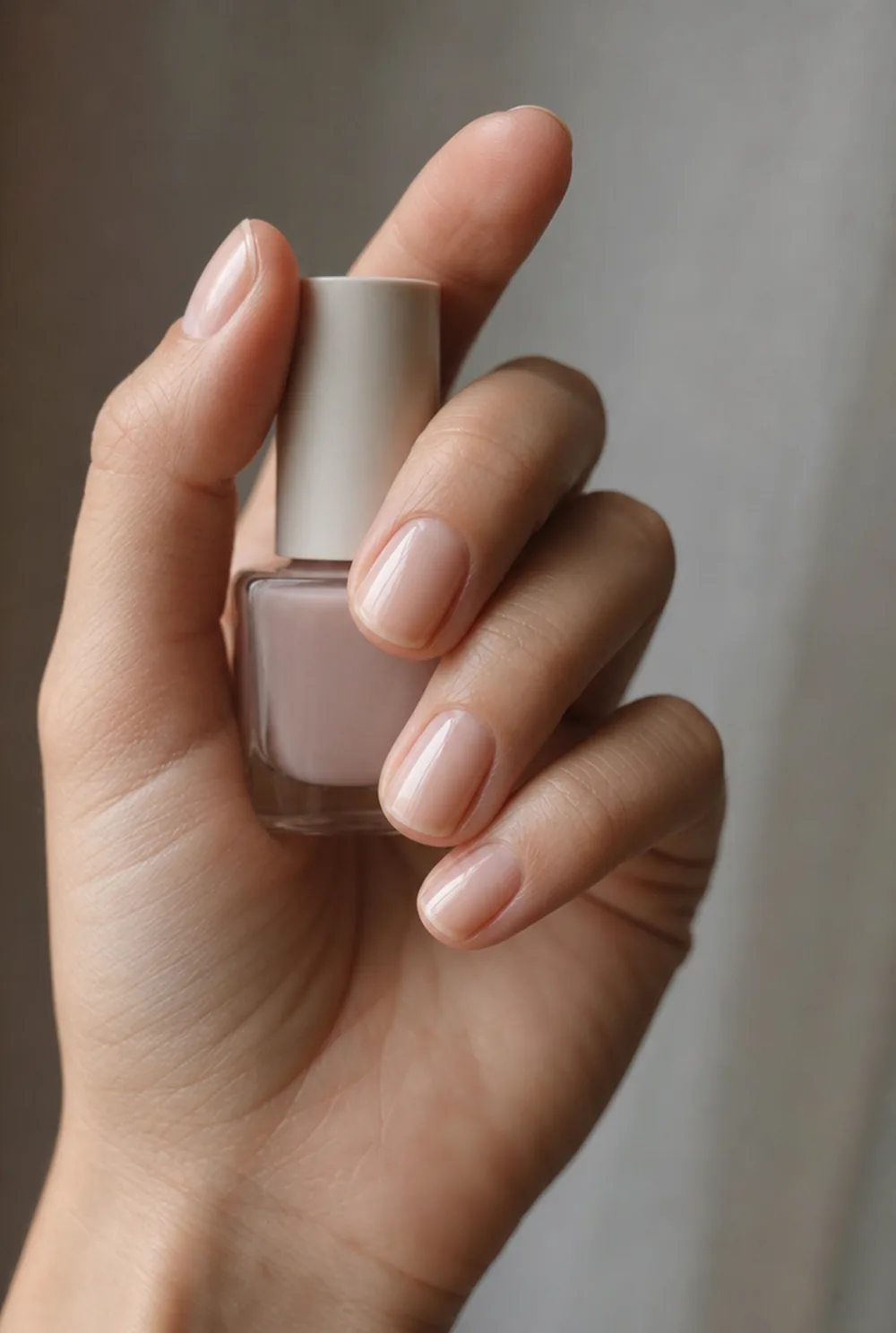
A clear gel overlay on your natural nails, however short they are, gives a hard surface that teeth cannot easily get through. Bitten nails are soft and tear readily; cured gel does not. The physical barrier alone breaks a lot of the habit.
The second effect matters just as much. Nails that look good are nails you do not want to wreck, and having paid for them adds a small useful barrier of its own. That combination does more than deterrence alone.
The American Academy of Dermatology makes the same point, noting that you are less likely to bite your nails if they look nice or you have paid to have them done in a salon.
Gel can be applied to very short nails, so you do not need to grow anything first. My short gel nails post covers it.
Press-ons
The cheaper version of the same idea, and better in one specific way.
A set costs a few dollars and takes fifteen minutes, so there is no appointment and no commitment. They cover the bitten nail completely, which removes both the rough edges and the sight of the damage, and that visual reminder is itself a trigger for a lot of people.
Fit is the thing to get right on bitten nails, since the nail bed is often wider than it is long. Size to the widest point and file the sides down rather than forcing a narrow one on.
Use adhesive tabs rather than glue while you are getting started, since removal is gentler on nails that are already fragile. My making press-ons last post covers both methods.
The awkward growing-out phase
This is where most attempts fail, and knowing what is coming helps.
Bitten nails have a short nail bed and a lot of skin built up around them, so the first few weeks of growth often look worse rather than better. The nail is uneven, the skin is ragged, and it is tempting to reset the whole thing with your teeth.
Two things get you through it. Keep them filed dead level with each other, even if that means very short, because uniform short nails look deliberate while uneven ones look bitten. And gently push the cuticles back after a shower, which reveals a little more of the nail plate and makes the nail look longer within days. My cuticle pushing guide covers it.
The American Academy of Dermatology advises never cutting or forcefully pushing back your cuticles, and only easing them back gently after a shower or bath.
Expect about three months for the nail bed to lengthen noticeably. It does come back.
Colors and shapes for recovering nails
What you put on a bitten nail changes how obvious the damage is, and some choices help considerably.
Pale shades close to your skin tone are the most forgiving, because they blur the line between fingertip and nail. On a short bitten nail that line is exactly what you do not want emphasized. A sheer pink, a milky white, or a matched nude all read as healthy nails rather than short ones. My milky white nails post covers that finish.
Dark and bright shades draw a hard boundary at both ends of the nail, which announces the length. They are worth saving until you have a few millimeters of free edge.
On shape, round is the only realistic option at first and it is also the strongest. Once you have 2mm you can move to a soft oval, which lengthens the finger visually. Do not file the sidewalls, since a bitten nail has no width to spare. My round nails post covers filing it.
Skin picking around the nail
Many people who bite also pick the skin around the nail, and that often causes more damage than the biting.
The mechanism is the same: dry skin lifts, you feel it, and you pull. The fix is to stop the skin lifting in the first place, which means oil rather than willpower. Cuticle oil twice a day is genuinely effective within about two weeks, because supple skin does not form the little tags that ask to be pulled.
Keep clippers rather than using teeth or fingers on a hangnail. Clip it flush; pulling tears live skin and creates a much bigger site that stays sore for days.
Broken skin around a nail can get infected, so keep it clean and see a doctor if an area becomes red, swollen, or painful.
Habit tactics that help
Alongside the nail side, a few behavioral things are worth trying.
Work out when you bite rather than trying to stop everywhere at once. Most people have two or three specific situations, usually screens, driving, or reading. Tackling one context is far more achievable than tackling the habit as a whole.
Give your hands something else in those moments. A textured ring, a fidget object, or simply holding a pen occupies the same impulse.
If biting is causing significant damage, pain, or distress, it is worth speaking to a doctor. Habit reversal training has good evidence behind it and is straightforward to access.
A 2022 medical review of nail biting treatments describes habit reversal training as an effective approach with long lasting results (Update on Diagnosis and Management of Onychophagia and Onychotillomania, International Journal of Environmental Research and Public Health (2022), via PubMed Central).
FAQ
Can you get gel nails on bitten nails?
Yes. Gel can be applied to very short nails, so there is no need to grow them first. A clear overlay gives a hard surface that teeth cannot easily damage and covers the appearance of bitten nails while they grow, which is why it is one of the most effective interventions.
Does bitter nail polish work?
For many people, though not everyone. Biting is usually automatic, so a bad taste registers after the behavior has already started, and some people simply get used to the taste. It is cheap enough to try, and it works better combined with a physical barrier than on its own.
How long do bitten nails take to grow back?
Fingernails grow roughly 3mm a month, so a visible free edge takes a few weeks and the nail bed itself lengthens noticeably over about three months. Gently pushing the cuticles back after a shower reveals a little more nail plate and shows progress sooner.
What nails are best for nail biters?
A clear gel overlay on your own nails, or press-ons if you would rather not commit. Both put a hard barrier between teeth and nail and cover the appearance while nails recover. Keep the edges filed perfectly smooth, since a rough catch is the most common trigger.
Carry a fine file and smooth every catch the moment you feel it. That one habit removes more triggers than anything else. My brittle nails post covers strengthening them as they grow.