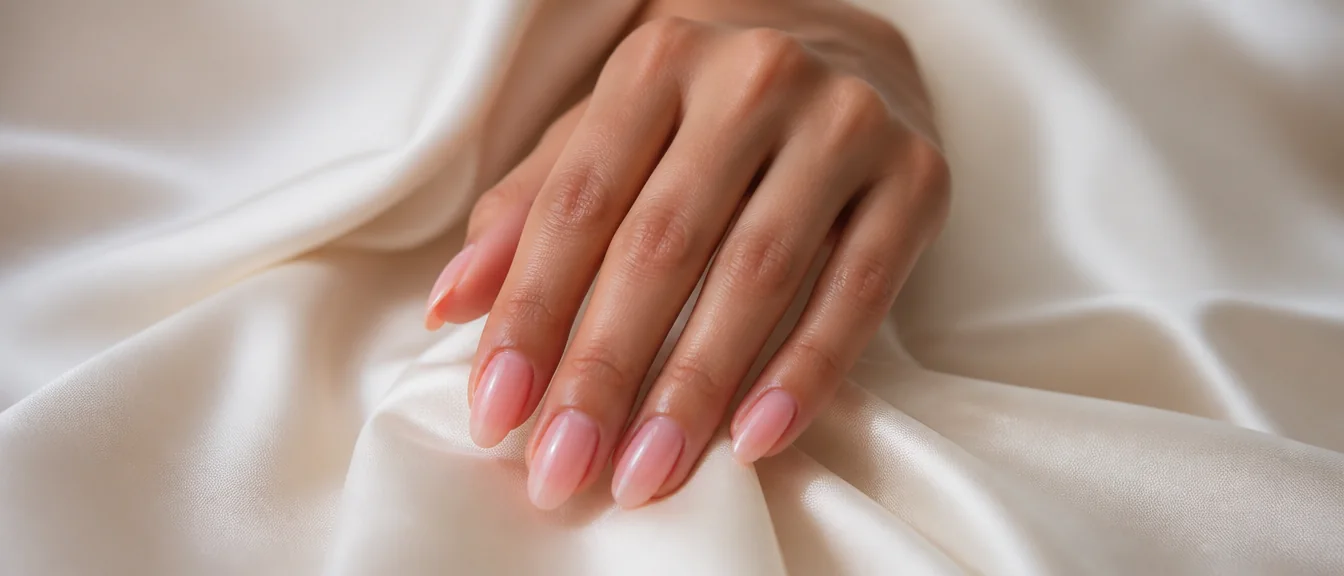
The best nail shape for short fingers is a soft almond, with oval a close second. Both taper toward the tip, which draws the eye lengthwise down the finger and makes the whole hand read longer. A square tip does the opposite, because a horizontal line at the end of a finger stops the eye and visually cuts the length.
Here is the reasoning behind that, how much length you actually need, what to do if you cannot grow nails, and the color choices that add as much as the shape does. My nail shapes guide covers all nine shapes side by side.
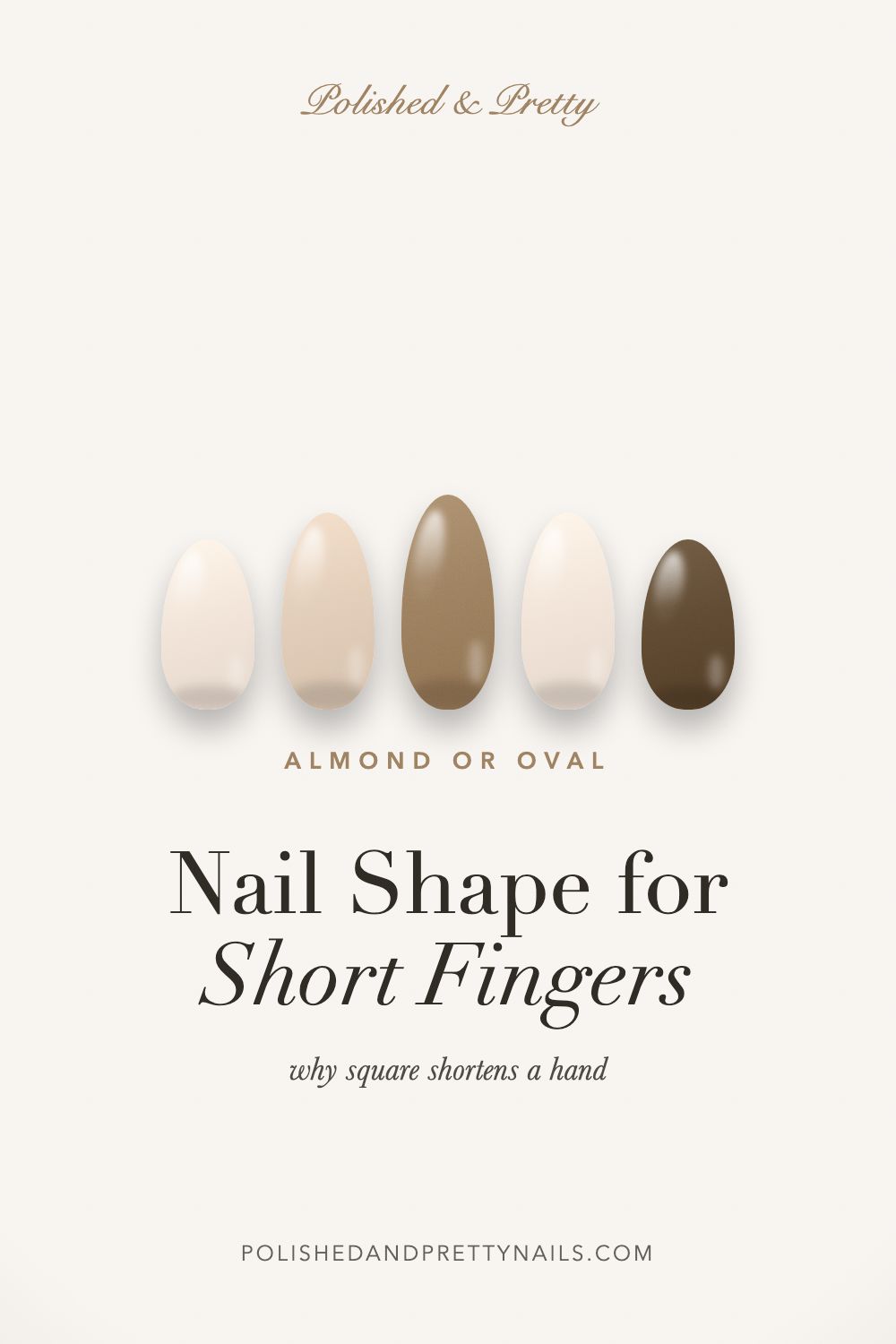
Why tapered shapes lengthen a finger
This is about where the eye stops rather than about the nail itself.
A finger reads as a single vertical line, and anything that continues that line extends it. A tapered nail narrows toward a point, which keeps the eye traveling in the same direction until it runs off the end. The finger and the nail become one shape.
A flat tip introduces a horizontal edge at right angles to that line. The eye hits it and stops, and the nail reads as a separate block sitting on the end of a finger rather than a continuation of it.
The same principle is why a pointed shoe lengthens a foot and a square-toed one shortens it.
Almond is the strongest choice
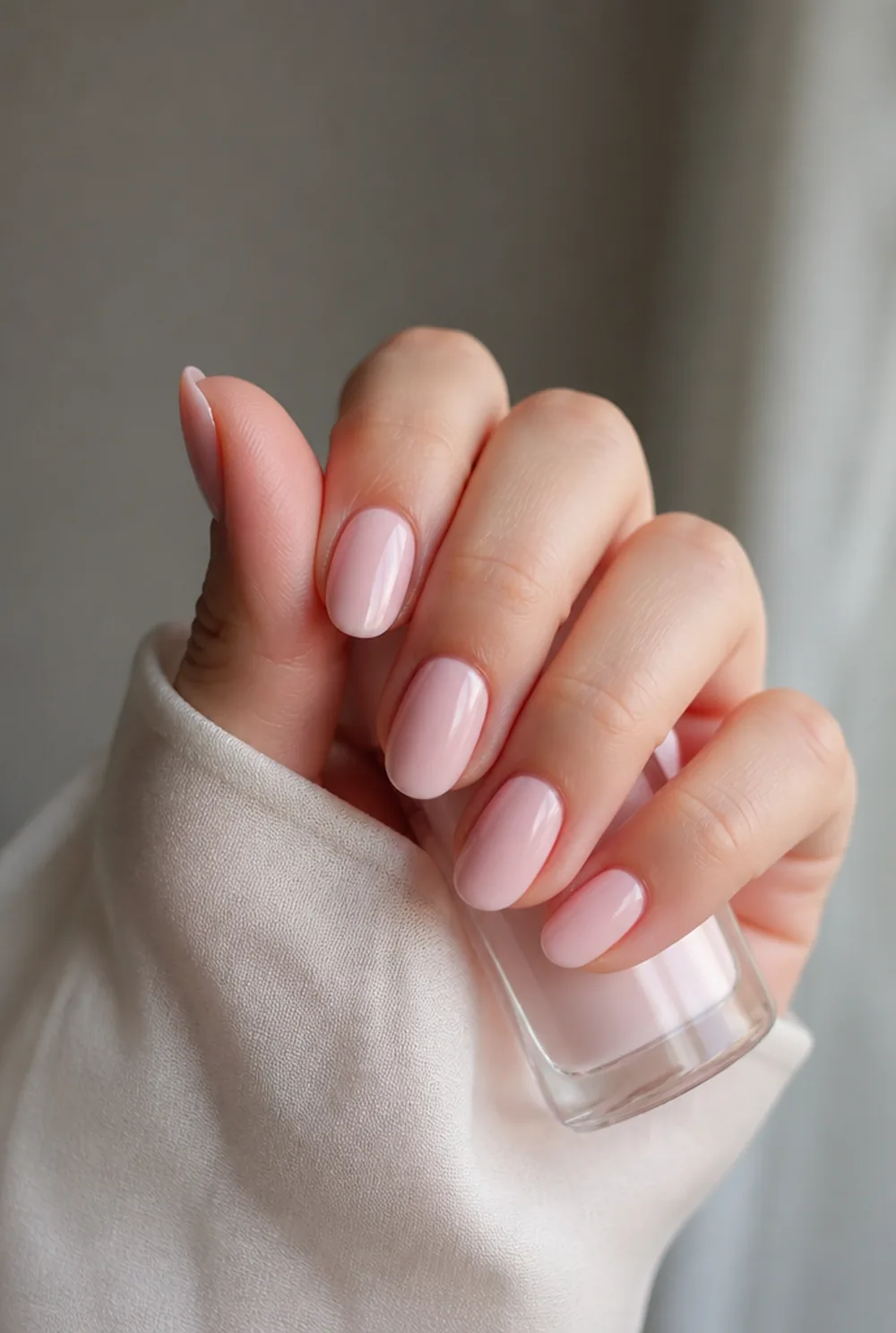
Almond does the most work of any shape, and it is what we recommend first.
The sides are filed inward and the tip comes to a soft rounded point, so the taper is pronounced enough to be obvious without looking severe. On a short finger it adds the impression of several millimeters that are not there.
The honest trade-off is durability. All the wear lands on a narrow tip, so almond breaks more than any rounded shape. On natural nails, keep it short and soft rather than long and sharp, and expect to reshape weekly.
If breakage is a problem, a gel overlay solves it without changing the look. My almond nail designs post covers the shape in detail.
Oval is the practical version
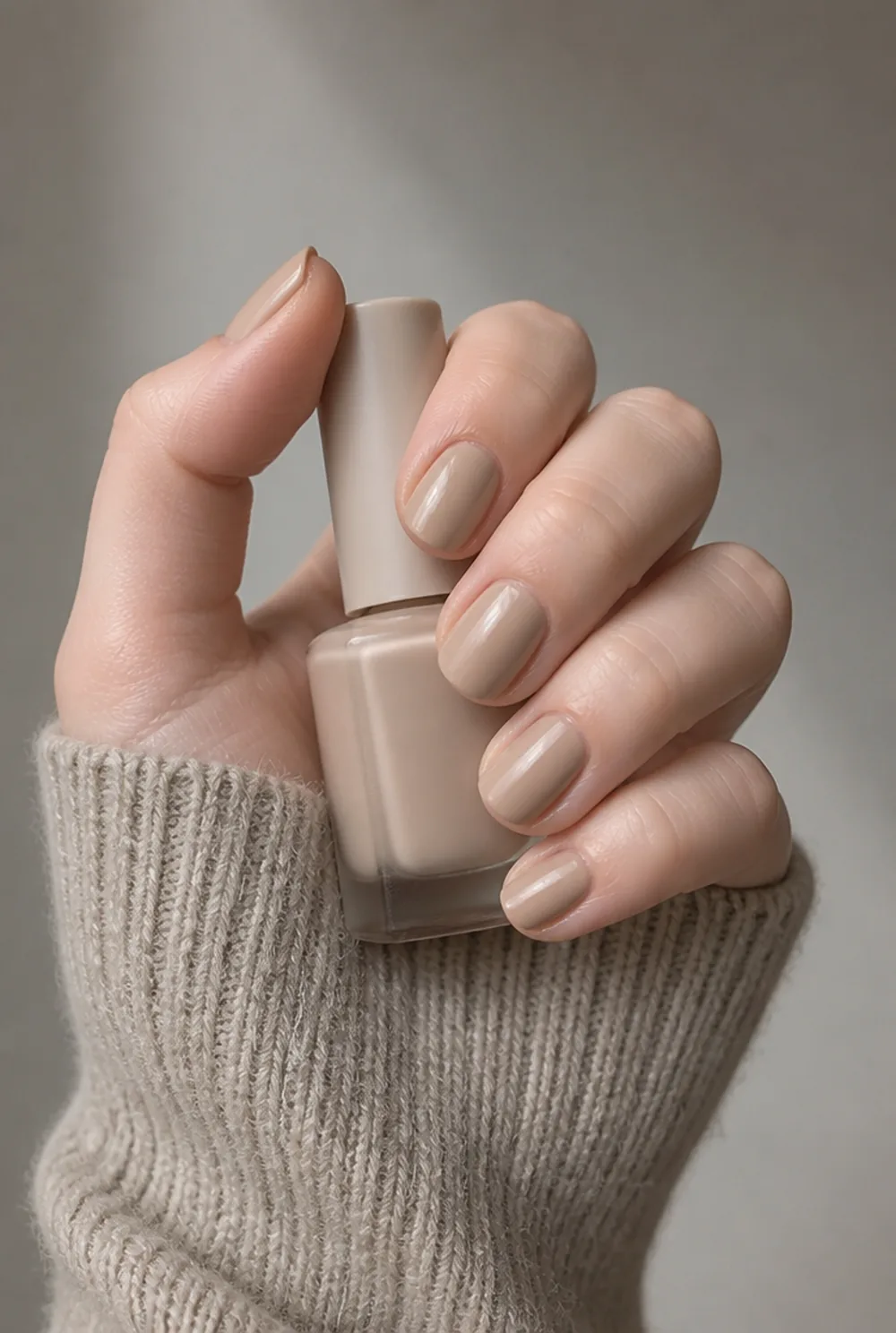
If almond feels like too much or keeps breaking, oval gets you most of the benefit.
An oval tapers at the sides like an almond but finishes in a full rounded curve instead of a point. The eye still travels lengthwise, and because the wear is spread across a curve rather than concentrated at a tip, it survives normal use far better.
It also narrows a wide nail bed, which often accompanies shorter fingers, and that narrowing adds to the lengthening effect.
Oval is the shape we would pick for anyone who wants this to be low maintenance. Our oval nails post covers filing one properly.
What to avoid
Two shapes work against short fingers and one is more of a problem than people expect.
A true square is the worst. Straight sides plus a flat tip and sharp corners create a hard horizontal line and keep the nail at full width right to the end, which emphasizes width rather than length.
Coffin is the surprising one. It looks long and dramatic, but it tapers inward and then finishes flat, so you get the horizontal stop anyway. On short fingers it tends to read stubby rather than elegant, and it needs real length to work at all.
Squoval sits in between. It is better than a true square because the softened corners break the hard line, and it is still not as flattering as a taper. My squoval nails post covers where it does work.
How much length you need
Less than most people assume, and going too long backfires.
Two to four millimeters past the fingertip is enough for a taper to read. Below about 2mm you cannot file a genuine almond or oval, because there is nothing to shape, and you are really wearing a round nail.
Very long nails on short fingers do not extend the hand, they draw attention to the contrast. The eye compares nail length against finger length, and a large ratio makes the finger look shorter by comparison. Proportion is what flatters, not maximum length.
Aim for the nail to be roughly a third of the length of the last segment of the finger.
If you cannot grow them
Plenty of people cannot get 3mm of free edge, and there is still a lot you can do.
The biggest lever at very short lengths is the cuticle, not the tip. Pushing cuticles back properly exposes more of the nail bed, and a longer-looking nail bed lengthens the whole nail without any growth at all. It is genuinely the highest-impact thing available. My cuticle pushing guide covers doing it safely.
Keep the sidewalls straight and clean rather than filing them in. At very short lengths, filing the sides just makes the nail smaller.
Press-ons are the other honest answer, and modern ones in almond are very good. My press-on nails post covers fitting them.
Colors that lengthen
Color does about as much work as shape and it costs nothing to change.
Shades close to your own skin tone are the most lengthening, because they blur the boundary between where the finger ends and the nail begins. The eye reads one continuous line instead of two segments. A matched nude, a sheer pink, or a milky white all do this.
Strong contrast does the opposite. A bright red or a black on a short nail creates a clear boundary and shortens the visual line, which is why those shades look best on longer nails.
If you want a dark color anyway, keep the shape tapered and it will still work. My nude nail designs post covers matching a shade to your hands.
Designs that help
A few design choices reinforce the same effect.
Vertical elements lengthen. A single thin line down the center of the nail, or a design placed lengthwise rather than across, pulls the eye in the right direction.
A thin French tip works, but only if it is genuinely thin, under 2mm. A thick white tip shortens the nail by cutting off the end visually, which is the most common mistake on short nails.
Avoid horizontal stripes, wide color blocks across the tip, and anything that draws a line across the nail. My making short nails look longer post covers this in more depth.
FAQ
What nail shape is best for short fingers?
A soft almond, with oval as the more durable alternative. Both taper toward the tip, which keeps the eye traveling lengthwise down the finger and makes the hand read longer. Two to four millimeters of free edge is enough for the shape to work.
Do square nails make fingers look shorter?
Yes. A flat tip creates a horizontal line at right angles to the finger, which stops the eye and makes the nail read as a separate block rather than a continuation of the finger. Square also keeps the nail at full width to the tip, emphasizing width over length.
Do long nails make short fingers look longer?
Only up to a point. Beyond about 4mm the eye starts comparing nail length against finger length, and a large ratio makes the finger look shorter by contrast. Proportion flatters more than maximum length, so aim for roughly a third of the last finger segment.
What nail color makes fingers look longer?
Shades close to your own skin tone, such as a matched nude, sheer pink, or milky white. They blur the line between finger and nail so the eye reads one continuous shape. High-contrast colors like bright red or black create a visual boundary and shorten the line.
Try a soft almond in a matched nude for a fortnight and compare. My nail shapes for wide nail beds post covers the related problem.