Oval nails are the shape I recommend more than any other, and it is not because they are trendy. An oval follows the natural curve of your cuticle, which means it looks like your own nail grown out well rather than like a shape imposed on it. That is also why it suits almost every hand.
Here are 18 oval nail designs, plus how to file a true oval at home without ending up with a claw, why it flatters wide nail beds, and where it beats almond for daily wear. If you are still deciding between shapes, my nail shapes guide compares all of them side by side.
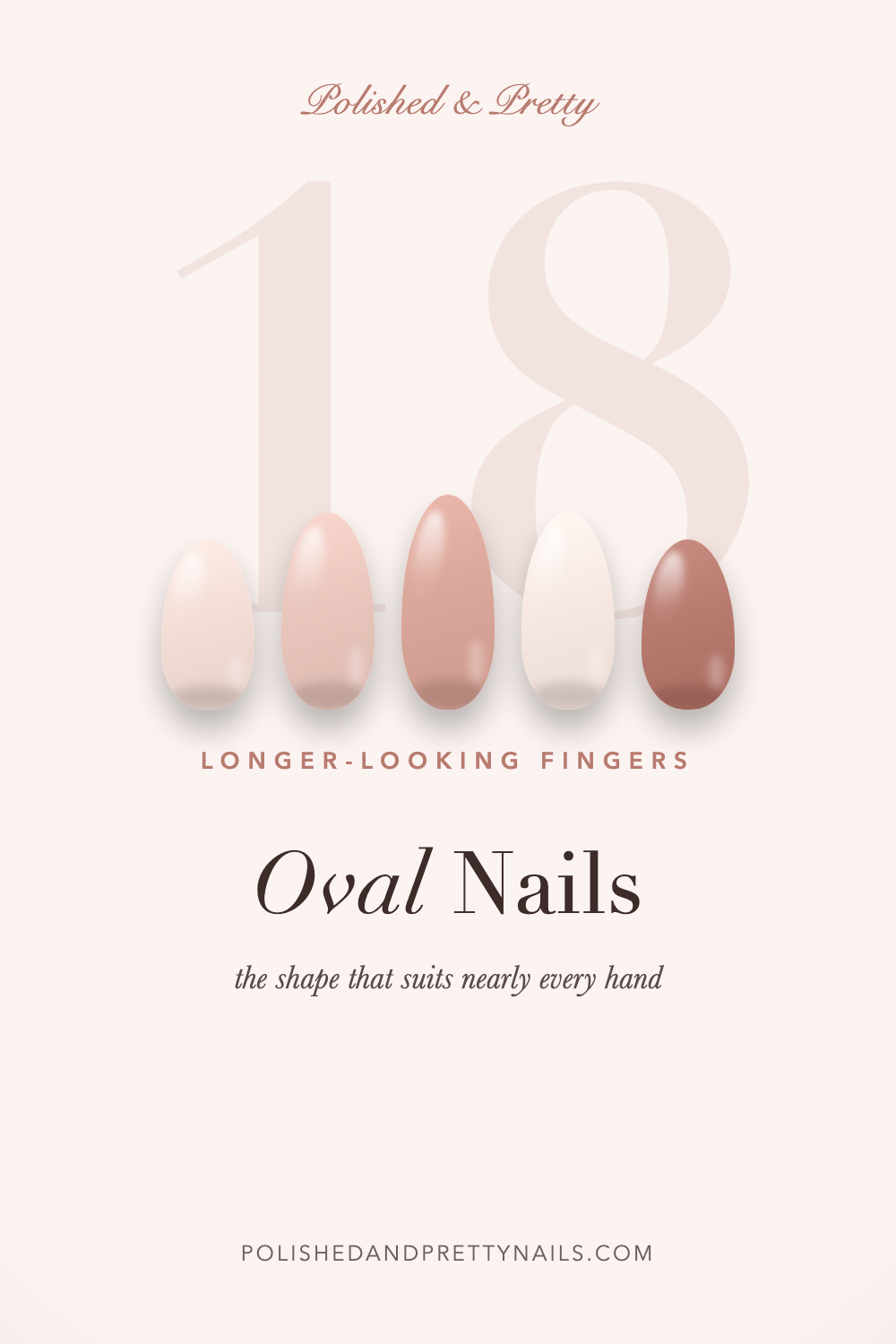
18 oval nail designs worth copying
1. Sheer Pink Oval
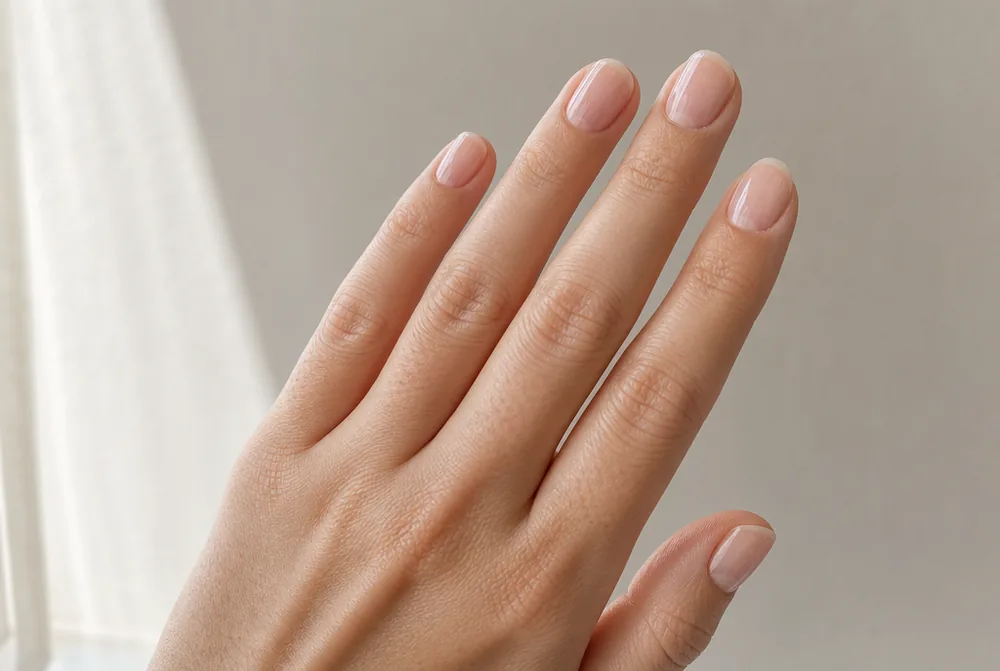
One coat of a sheer ballet pink over a well-filed oval. This is the version I wear most weeks. Essie Ballet Slippers is the shade people mean when they describe it, and one coat reads better than two.
2. Oval French Tip
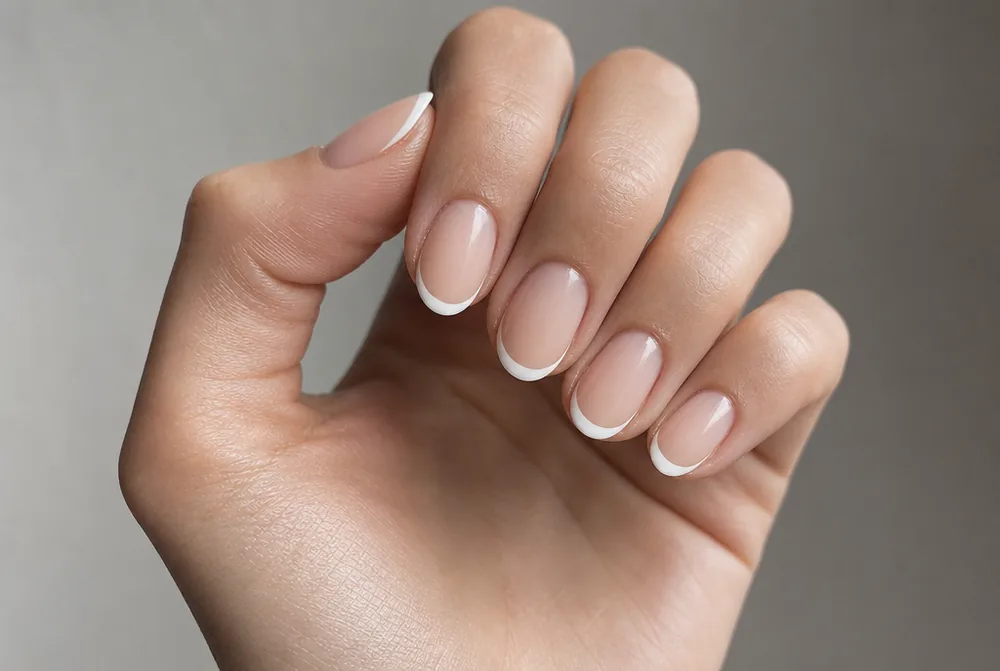
A French on an oval is easier than on a square because the smile line follows a curve you already have. Keep the white under 2mm. The French manicure guide covers getting the line even.
3. Milky White Oval
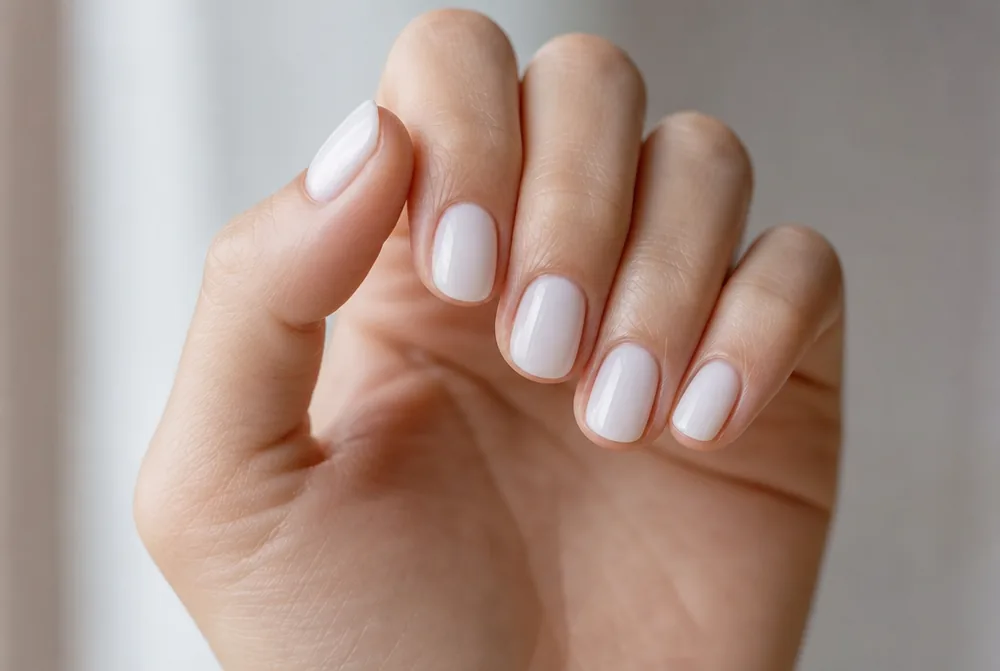
Two coats of a milky white until it turns from sheer to soft opaque. On an oval it looks expensive rather than stark. More shade options in my milky white nails post.
4. Oval Chrome
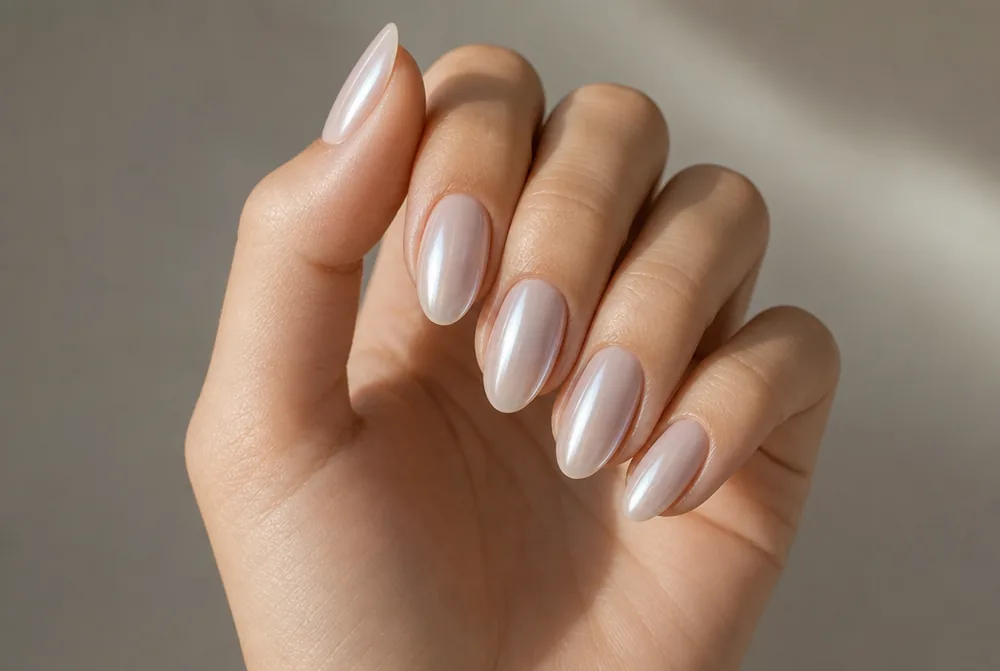
Pearl chrome powder buffed over a nude gel base. The oval curve catches light along its whole length, so chrome reads softer here than it does on a flat square. Method in my glazed donut nails guide.
5. Classic Red Oval
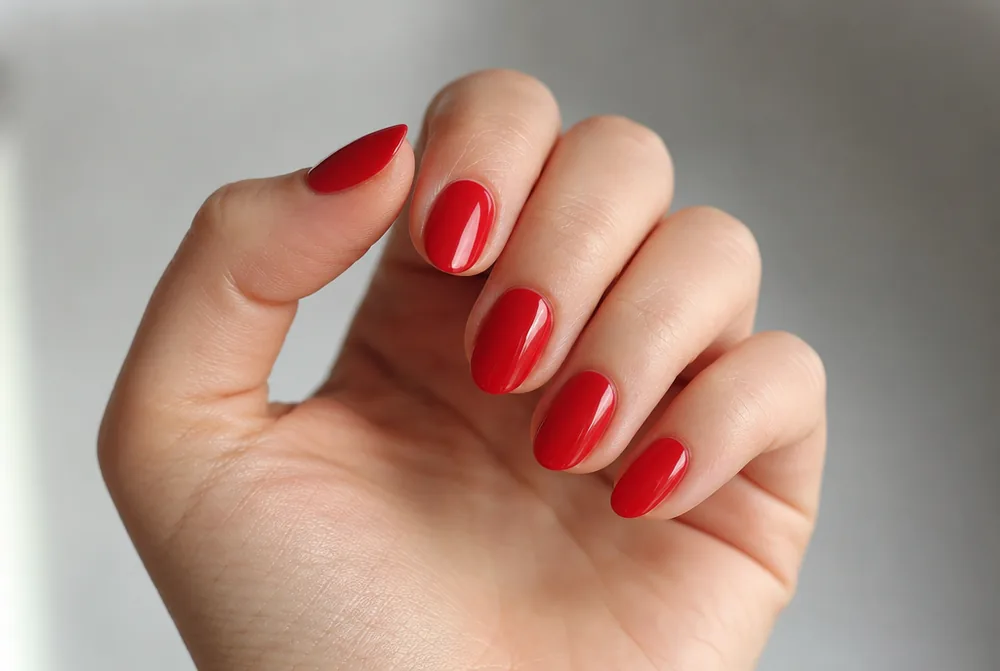
A true blue-red on a medium oval is the most timeless manicure there is. The shape keeps a strong red from reading aggressive. My classy red nail designs post has the shade breakdown.
6. Oval Nude with Micro French
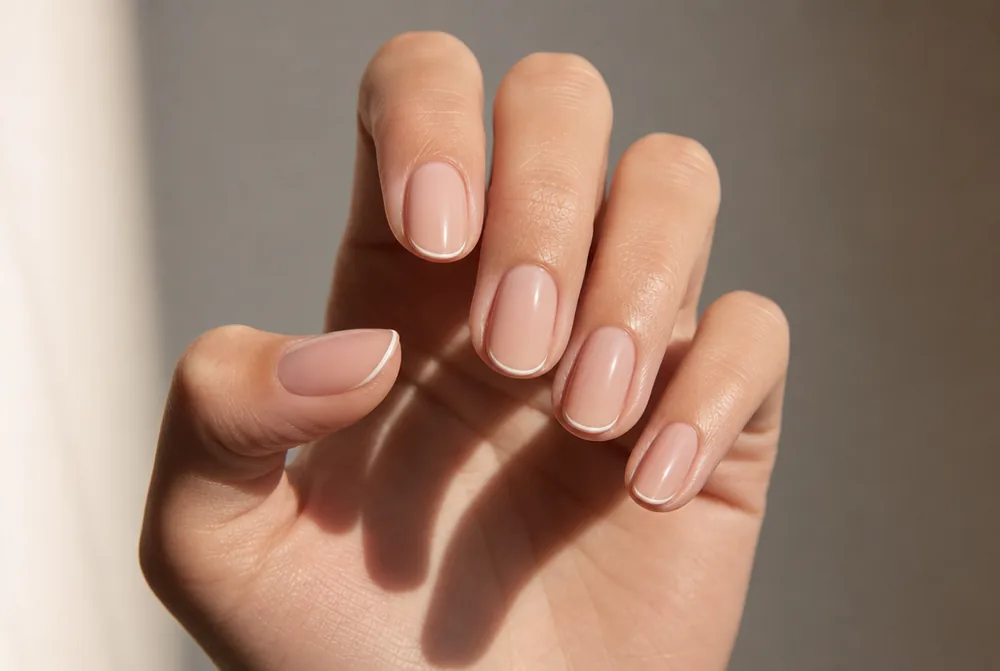
A hairline of white at the very edge of a nude oval. It defines the tip without adding visual length, which matters if your nails are short. Ten seconds a nail with a liner brush.
7. Oval Cat Eye
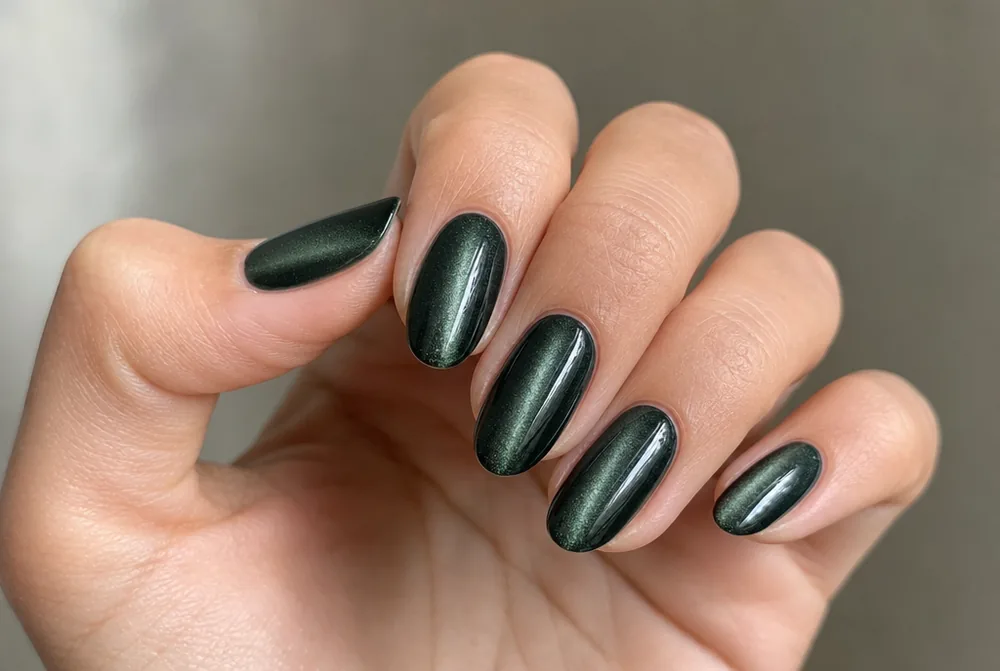
Magnetic gel pulled into a single band of light running the length of the nail. The oval curve makes that band bend slightly, which looks more like a gemstone than the straight line you get on a square. See my cat eye nails guide.
8. Short Oval Black
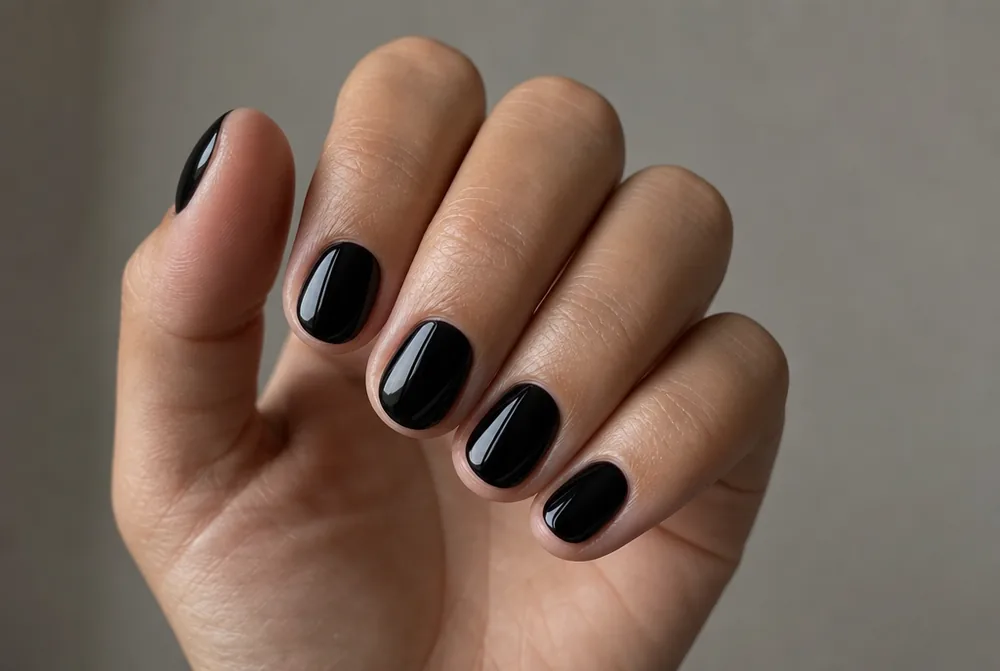
Glossy black on a very short oval. Black on a long pointed shape reads costume, but on a short oval it reads editorial. More in my black nail ideas post.
9. Oval Ombre
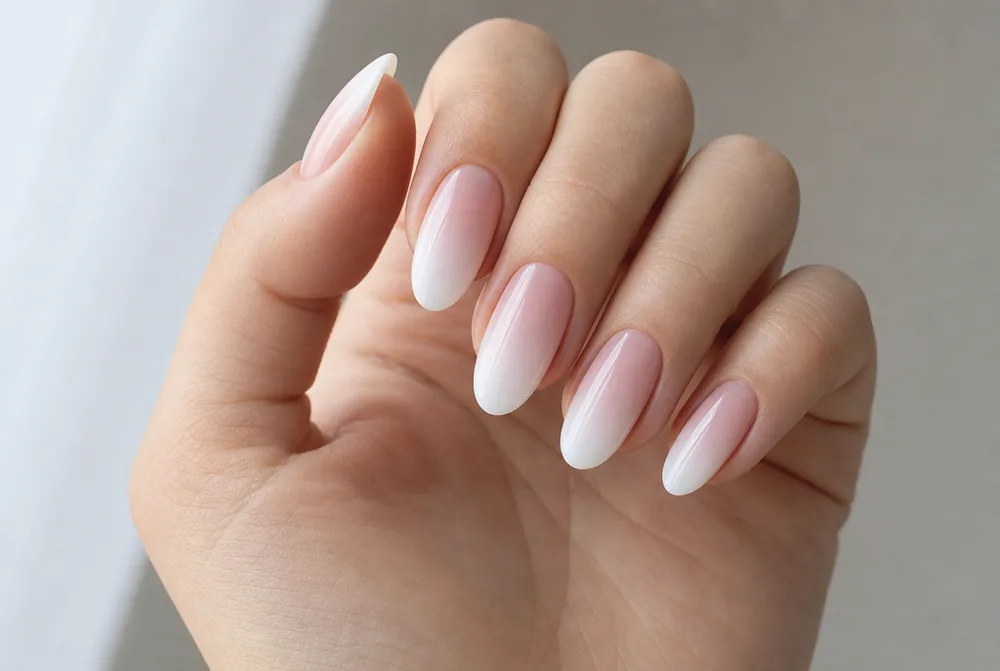
A soft pink-to-white fade sponged along the nail. The oval has no corners to interrupt the gradient, so it blends more smoothly than any other shape. Technique in my ombre nails guide.
10. Oval with One Gold Line
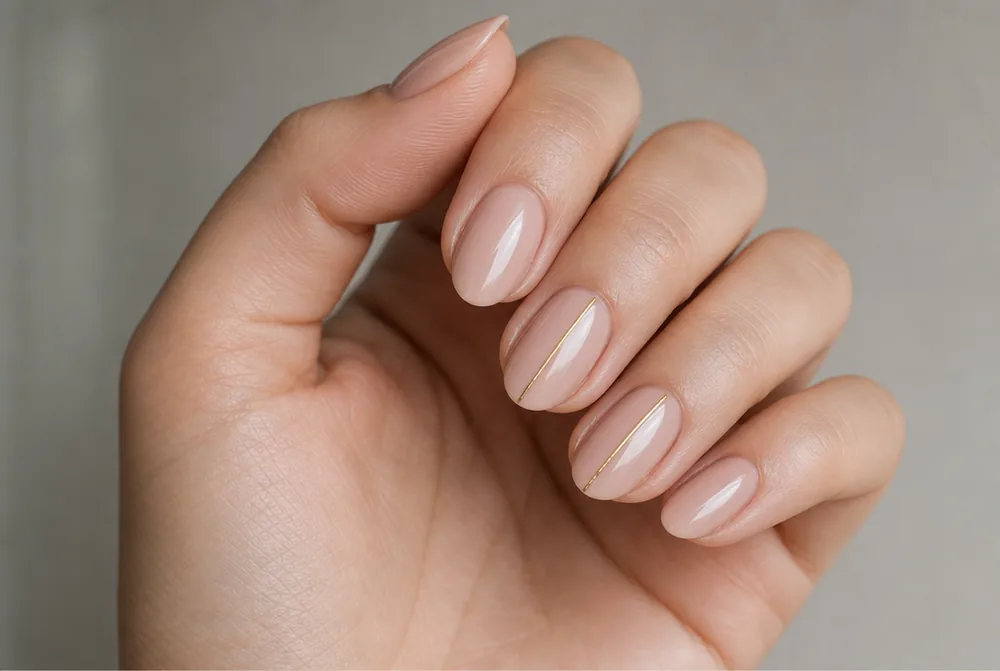
One thin gold line drawn down the centre of two nails. On an oval the line follows the curve and looks deliberate rather than crooked. A striper brush costs about $4.
11. Oval Jelly Red
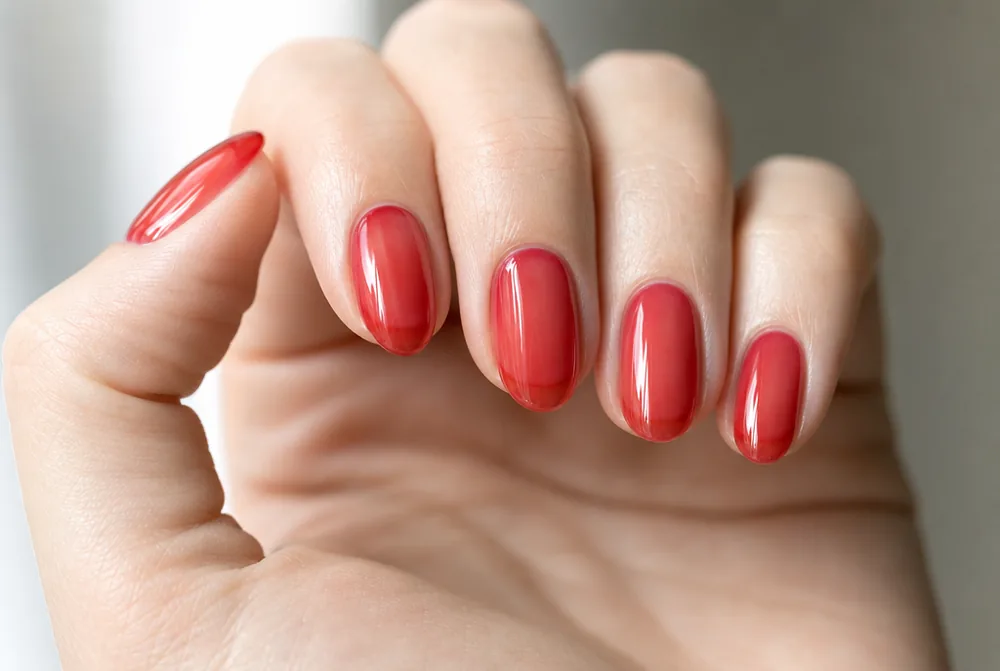
Three thin coats of a translucent red so it stays see-through rather than going opaque. The light passes through the whole curve, which is what gives it the boiled-sweet look.
12. Oval Aura Nails
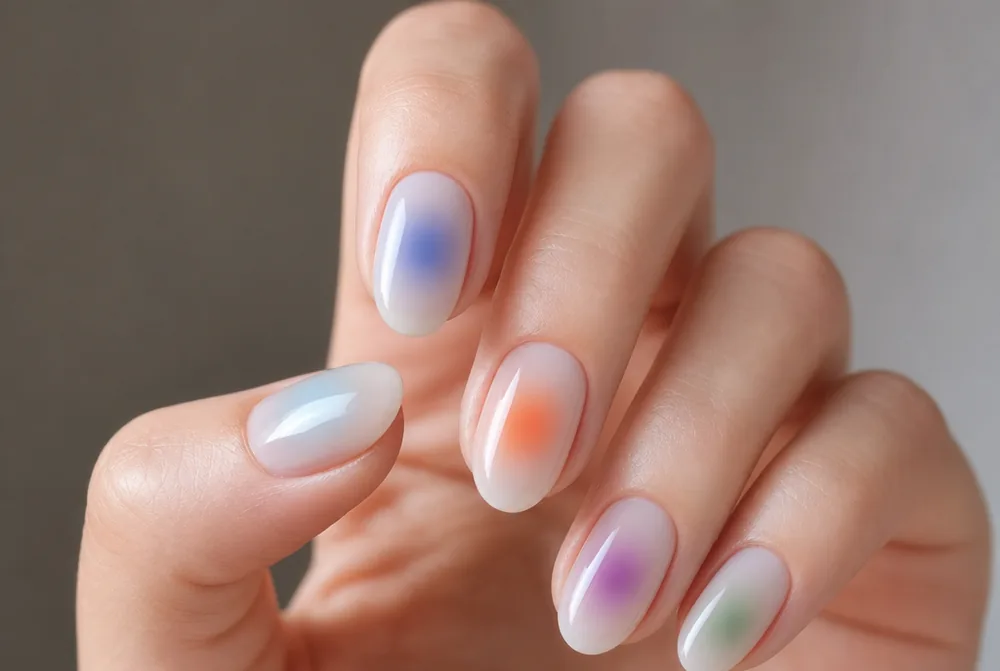
A soft halo of colour blurred into the centre of the nail. The oval shape frames a circular aura better than a square, where the halo fights the corners. See my aura nails post.
13. Oval Marble
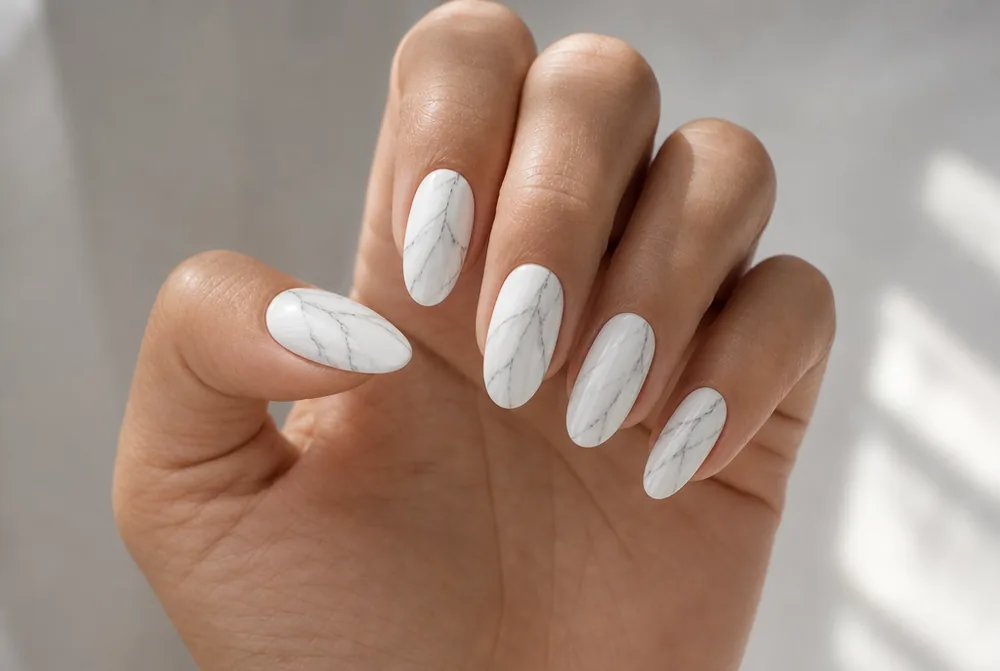
Fine grey veining pulled through a white base. Keep the veins running lengthwise so they follow the shape rather than cutting across it. My marble nails guide has the water-free method.
14. Oval Matte Taupe
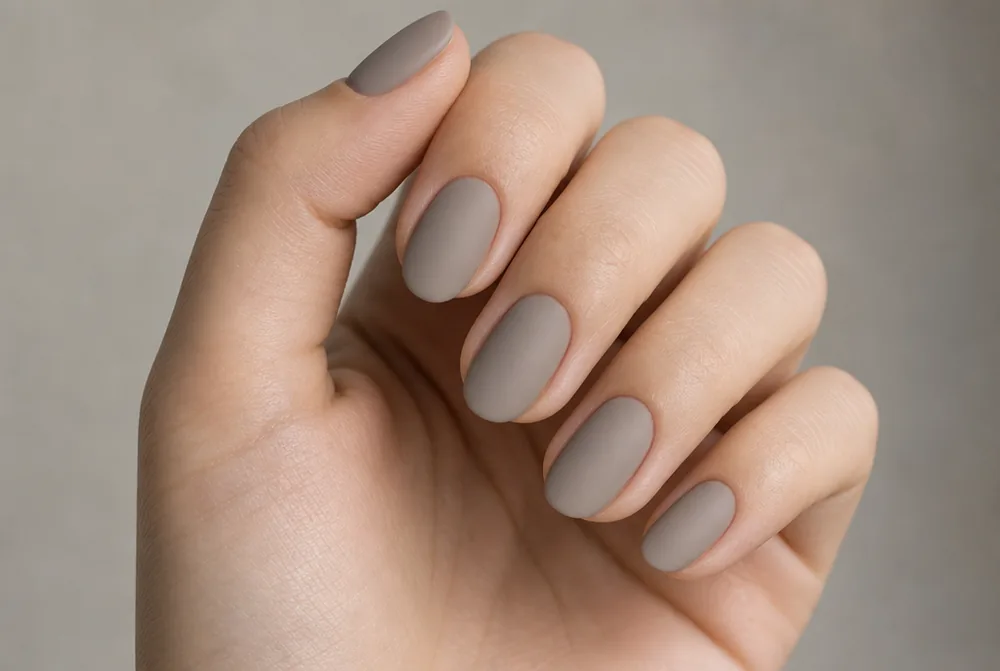
A greige taupe under a matte top coat. Matte hides ridges and length lines that gloss shows off, so it is a good pairing for a shape this soft. More in my matte nails post.
15. Oval with Cuticle Pearls
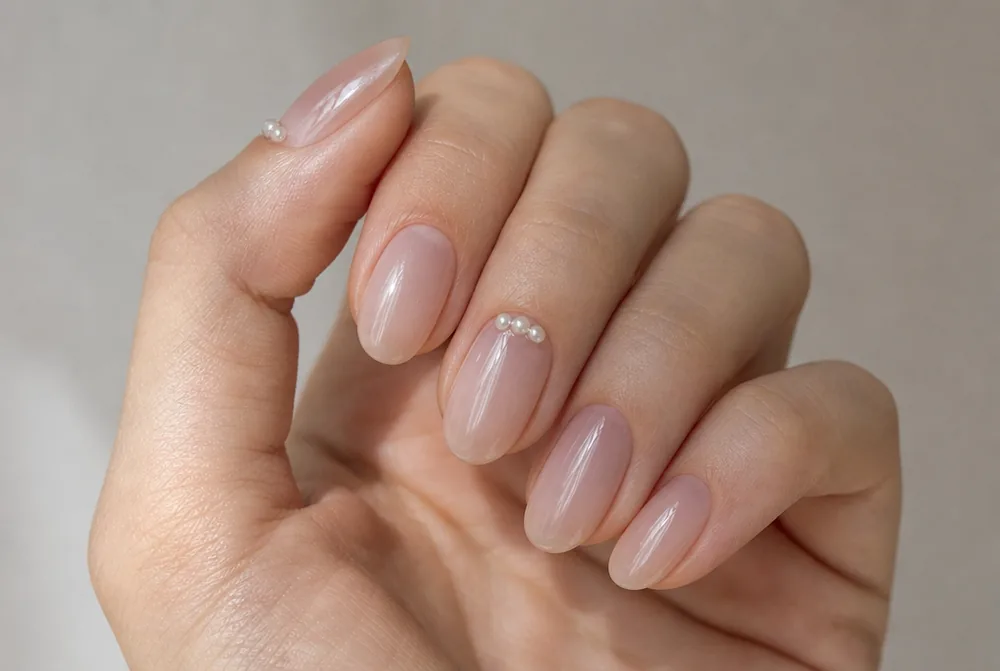
Three tiny flat-back pearls set in an arc at the base of two nails. Placing detail at the cuticle rather than the tip keeps it from catching on things. Gel is needed to hold them past a week.
16. Oval Navy
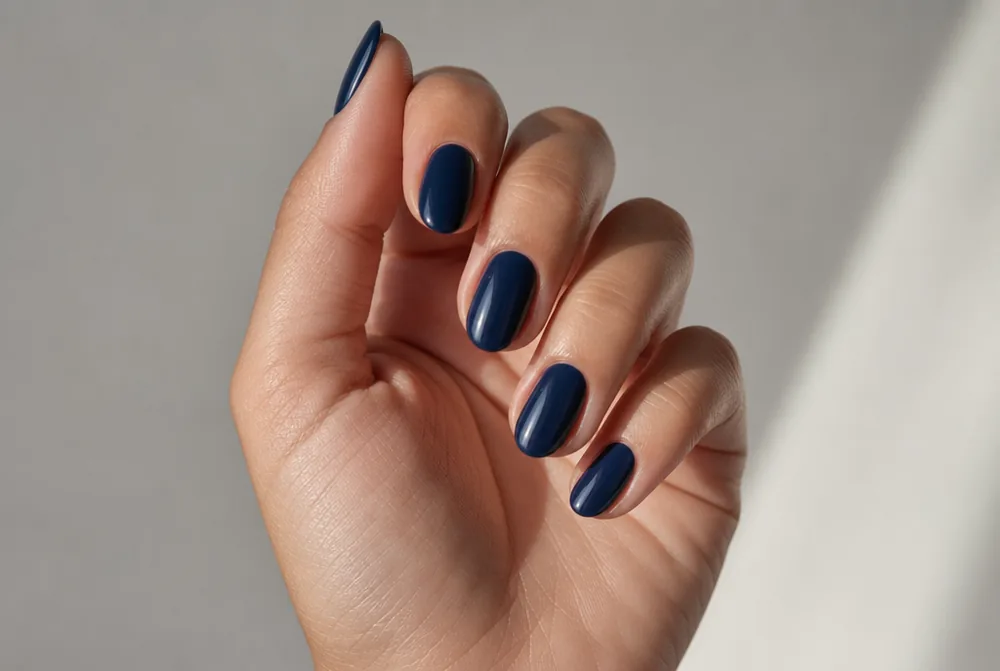
Deep navy on a medium oval is the shade I reach for when red feels like too much. It is dark enough to be a statement and neutral enough for work. More options in my blue nail designs guide.
17. Oval Glitter Tip
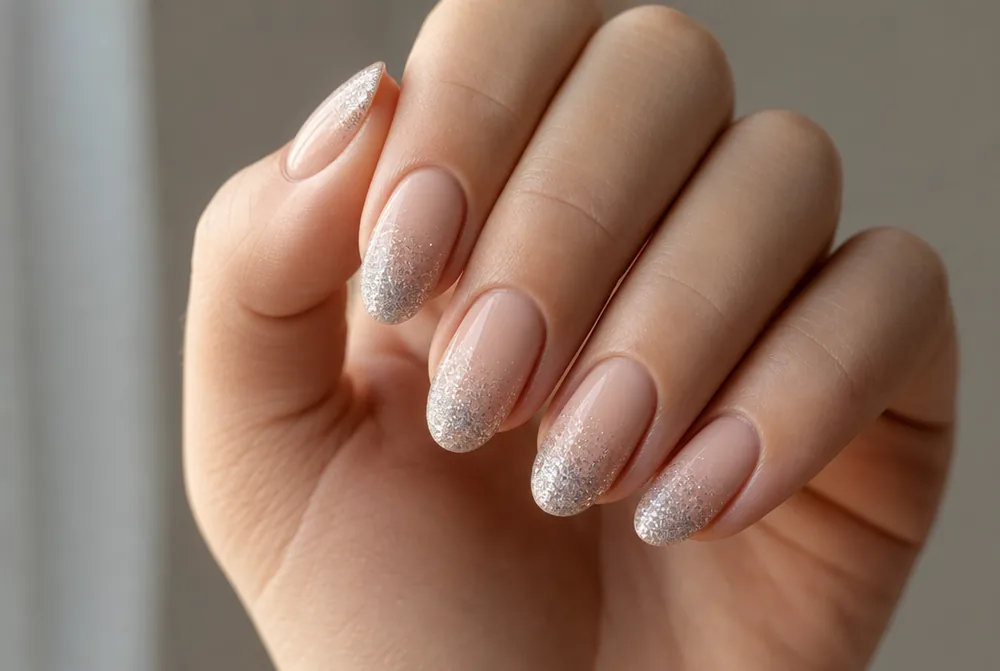
Silver glitter packed at the tip fading toward the middle. Grow-out is invisible because there is no hard line, which is why this one lasts three weeks and still looks intentional. See my glitter nail designs post.
18. Long Oval Burgundy
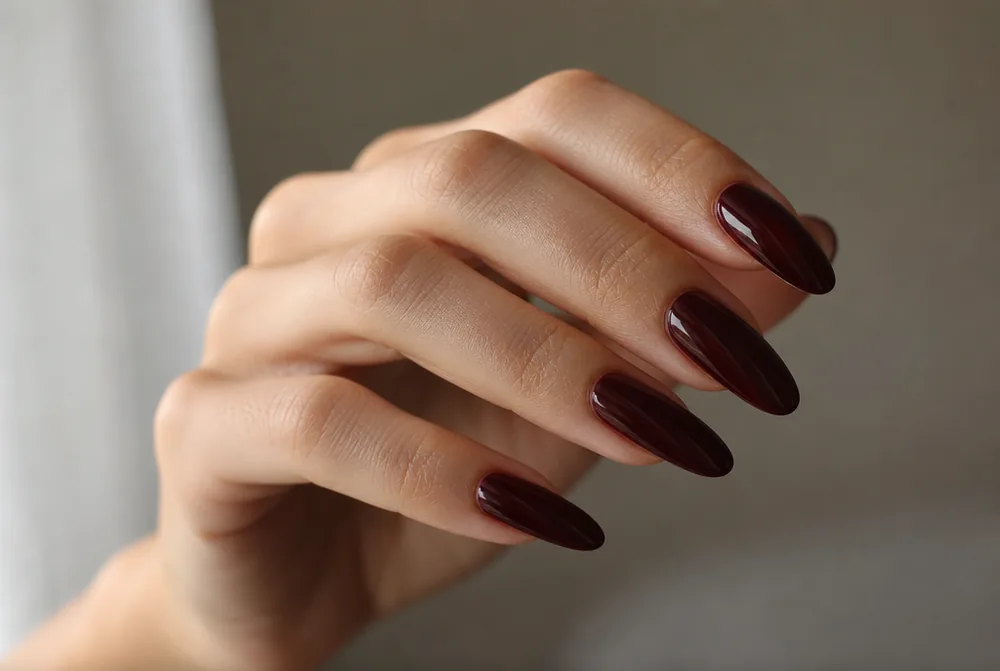
A long oval in deep wine is the most elegant version of a dark nail. Length exaggerates the curve, so this is where an oval starts reading as almond. My burgundy nails post has the shade list.
Why oval nails flatter almost every hand
An oval is the only shape that mirrors the curve already at your cuticle. Every other shape asks you to file against that curve rather than with it.
That matters visually. When the tip curve matches the cuticle curve, the eye reads the whole nail as one continuous shape and the finger looks longer than it is. When they disagree, as they do on a square nail with a rounded cuticle, the eye stops at the corners and the nail looks shorter and wider.
It also narrows a wide nail bed, which is the most common complaint I hear. Filing the sides in slightly and rounding the tip pulls the visual width toward the centre. A square does the opposite and emphasises exactly the width you were trying to lose.
The one hand it does less for is a very long, narrow nail bed, where an oval can look thin. Those hands usually do better with a squoval, which puts a little width back at the tip.
Oval versus almond versus round
These three get used interchangeably and they are not the same shape.
Round is the shortest. The sides stay straight and only the free edge is curved, following the fingertip. It is the lowest-maintenance shape and the one most men and most nurses wear.
Oval takes that further. The sides are filed in as well as the tip, so the whole nail tapers gently and the curve is a full egg rather than a half circle. It needs a little length past the fingertip to work, usually 2 to 4mm.
Almond is an oval with a point. The sides are filed in much harder and the tip comes to a soft peak. It is dramatic and it is fragile, because all the wear lands on a narrow tip. My almond nail designs post covers where that shape earns its keep.
If you like the idea of almond but keep breaking them, an oval is the version that survives a normal week.
How to file a true oval at home
Most home ovals go wrong in the same place, which is filing the sides too aggressively and ending up with a point.
Start with dry nails. Wet nails are soft and they fray rather than file cleanly, which is where peeling starts. Use a 180 grit file for natural nails and skip anything labelled 100 grit, which belongs on acrylic.
File from the outside corner toward the centre in one direction only, never sawing back and forth. Do three or four strokes on one side, then the same number on the other, so both sides stay even. Turn your hand over and look at the nail from underneath every few strokes, which is the only angle that shows you whether the two sides actually match.
Round the very tip last, with the file almost flat against it, using light strokes. Then hold your hand at arm’s length and look at all five together. Ovals look wrong when one is fatter than its neighbours, not when one is slightly imperfect on its own.
The mistake that turns an oval into a claw
Filing too far down the sidewall. It is the single most common error and it does more than change the shape.
The free edge should only start curving where the nail leaves the finger. If you file into the part still attached to the nail bed, you narrow the base of the nail, which weakens it at exactly the point that carries the most stress. That nail then breaks at the side within a fortnight.
The fix is to identify the stress point, which is where the pink of the nail bed ends, and never file above it. Keep the sidewalls straight up to that line and only shape what sits past it. You get a shorter-looking oval and a nail that survives.
Short oval nails
An oval does need a little free edge to read as an oval, but less than people assume. Two millimetres past the fingertip is enough.
Below that you are really wearing a round nail, which is still a good shape and is genuinely the most durable one on this page. If you type all day or work with your hands, short oval or round is the honest answer and no amount of gel changes that.
What makes a short oval look intentional rather than bitten down is the sidewalls. Clean, straight, well-pushed-back sides read as a deliberate shape at any length. My extra short nail ideas post has more on this.
Making an oval last
Ovals hold their shape better than almond or stiletto because the wear is spread across a curve rather than concentrated at a point.
Reshape once a week with three or four light strokes rather than waiting a fortnight and doing a full refile. Ovals drift toward square as the tip wears flat, and a weekly touch-up catches that before it becomes visible.
Seal the free edge every time you polish by running the brush along the tip. Unsealed edges chip first on a curved shape because there is no corner protecting them. My manicure longevity post covers the rest.
What to ask for at the salon
Ask for a soft oval and say the words “not almond”, because in a lot of salons those two get filed the same way by default.
Tell them to keep the sidewalls straight to the stress point. That one phrase gets you a nail that lasts, and technicians know exactly what it means even if clients rarely say it.
If you are getting gel over natural nails, ask them not to over-file the surface first. Oval is a shape that works on your own nail, so there is no reason to thin it down. A light buff is all a gel base needs to grip.
FAQ
Do oval nails make your fingers look longer?
Yes, more than any other shape, because the curve of the tip matches the curve of the cuticle and the eye reads the finger as one continuous line. Filing the sides in slightly also narrows a wide nail bed, which pulls the visual width toward the centre and adds to the effect.
What is the difference between oval and almond nails?
An oval is fully rounded at the tip like an egg, while an almond is filed to a soft point. Almond needs more length and more aggressive filing of the sidewalls, which makes it noticeably more fragile. Oval is the version that holds up to everyday use.
How long do oval nails need to be?
About 2mm past the fingertip is the minimum for the shape to read as oval rather than round. Anywhere from 2 to 6mm works well. Past that you are into long oval, which starts looking like almond and needs gel or a builder overlay to survive.
Are oval nails still in style?
Yes, and oval sits outside the trend cycle in a way that coffin and stiletto do not. It has been the standard salon shape for decades and it is what most short natural manicures default to. Current styling favours it short with a glossy or glazed finish.
If you have been wearing square out of habit, file one hand oval and compare them side by side for a week. Most people do not go back. My nail shapes guide covers what to try if oval is not the one.