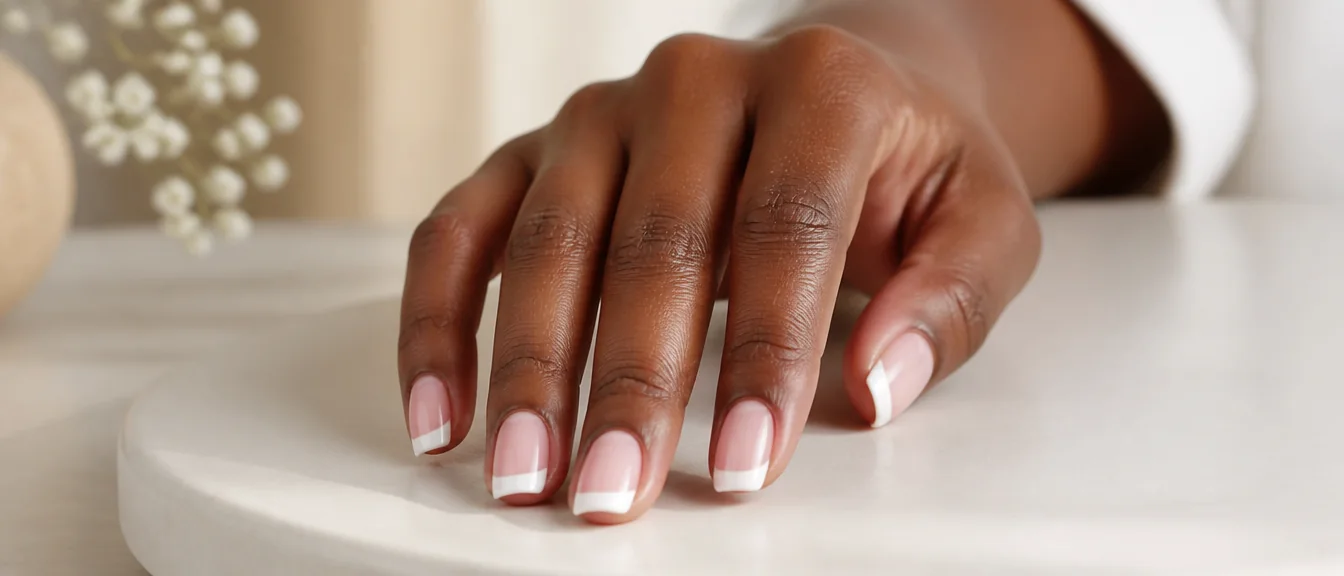
Two French manicures can use the same two polishes and look like they cost $30 apart. The difference is almost never the products. It’s the geometry of the line, the depth of the tip against the length of the nail, and how clean the edges are.
This is what techs are actually doing differently, and which parts of it you can copy at home.

The smile line is a curve, not a stripe
A good smile line is symmetrical around the center of the nail and meets the sidewalls at the same height on both sides. When a French looks off and you can’t say why, one side is usually meeting the wall a millimeter higher than the other.
Techs fix this by painting the line roughly, then cutting it straight with a flat brush and solvent. They’re sculpting it, not drawing it. Once you know that, home results improve immediately, because you stop trying to get it perfect in one stroke.
Depth has to scale with length
The tip should take up a similar proportion of each nail. On a short nail that’s 2 to 3 mm; on a long coffin nail it can be 8 mm and still look balanced. A deep tip on a short nail is the single most common thing that makes a French look cheap.
| Nail | Tip depth | Reads as |
|---|---|---|
| Short, deep tip | 5 mm+ | Stubby, dated |
| Short, thin tip | 2-3 mm | Neat, current |
| Long, thin tip | 2-3 mm | Unbalanced, disappears |
| Long, scaled tip | 6-9 mm | Expensive |
The base color does more work than the white
Salon Frenchies mostly use a sheer, slightly warm base that matches the nail bed rather than covering it. An opaque pink makes the nail look like two blocks of color stuck together. If you hold the bottle against your nail and can still see the nail through it, that’s the one.
Reverse and half-moon versions
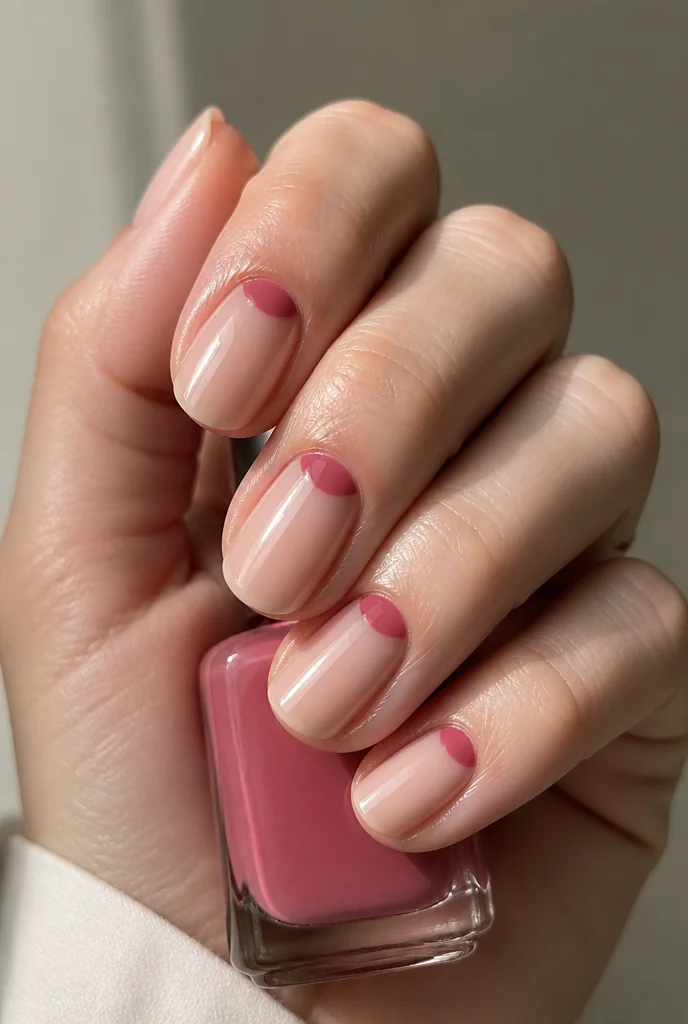
Moving the curve to the cuticle end is an old style that keeps coming back, and it has a practical advantage: nothing wears at the cuticle, so it doesn’t chip the way a tip does. It needs a very clean cuticle line, which is the trade.
Shape changes everything
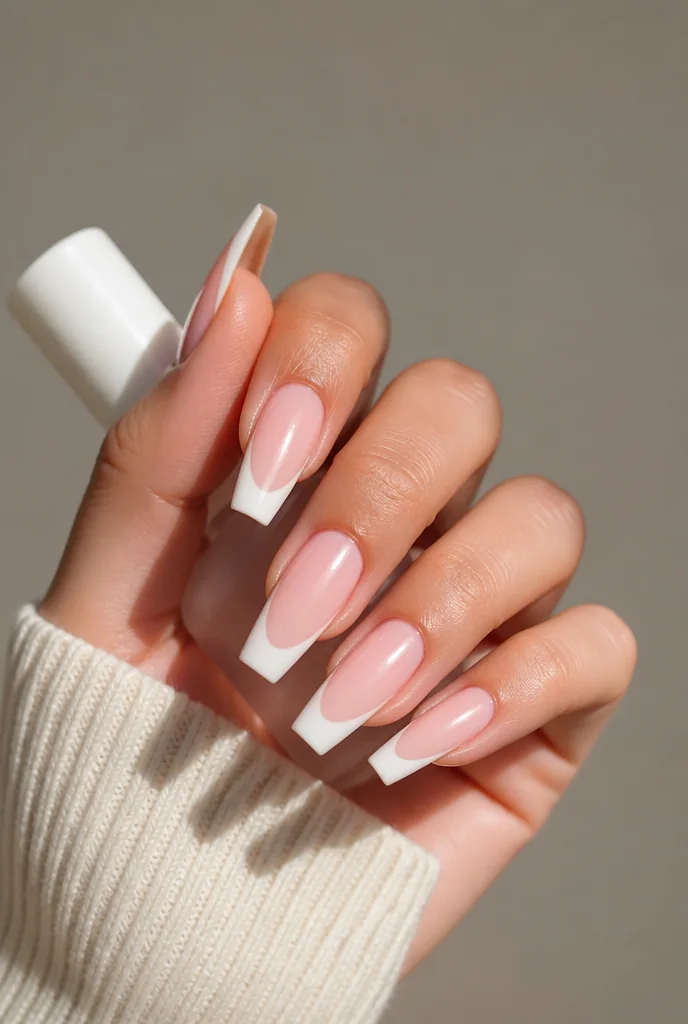
Square nails take a nearly straight line with a shallow dip. Almond and oval nails take a curve that follows the taper. Coffin nails carry the deepest tip of any shape. Copying a line shape between two different nail shapes is what produces the slightly wrong look in photos.
What to ask for
Name the depth in millimeters, the base as sheer or opaque, and the finish as crisp or blended. Bring a photo for the shape. Techs adjust to specifics much more reliably than to adjectives.
Keep the cuticle pushed back but uncut (American Academy of Dermatology). A tidy cuticle line frames the whole thing, and it’s the cheapest upgrade available.
For the painting technique itself, see our French tips guide, and 12 French nail styles for the variations.
FAQ
Why does my French manicure look cheap?
Usually the tip is too deep for the length of the nail, or the smile line meets the sidewalls at different heights on each side. Both are more visible than any difference in polish quality.
How do salons get such a sharp line?
They paint it approximately, then cut it straight with a flat brush dipped in solvent while the layer is still soft. The line is sculpted afterwards rather than drawn in one stroke.
What base color should I use?
A sheer, slightly warm pink or beige that lets the nail bed show through. Opaque bases make the nail look sectioned into two blocks.
Does the French tip have to be white?
No. Ivory reads more current than bright white, and colored tips follow exactly the same geometry. Colored polish is also easier to apply evenly because it’s more pigmented.
What is a half-moon manicure?
The reverse of a French: the curve is painted at the cuticle end instead of the tip. It wears better than a tip because nothing rubs against the cuticle.