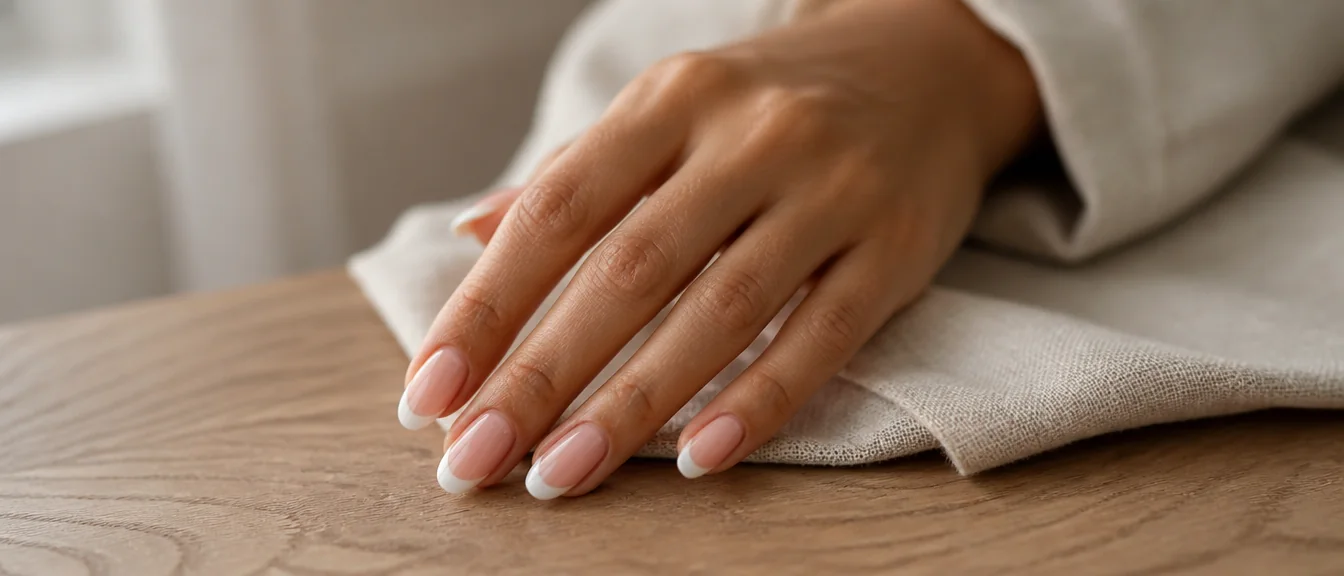
The French manicure stopped being one look about five years ago. What’s booked in salons now is a family of them: hairline tips, colored tips, chrome, tips that sit at the cuticle instead of the edge.
Here are the twelve versions worth knowing, what each one asks of your nail length, and the words to use at the desk so you get the one you meant.

Editor’s picks
Browse all 12 designs
12 designsThe classics
1. Classic white French
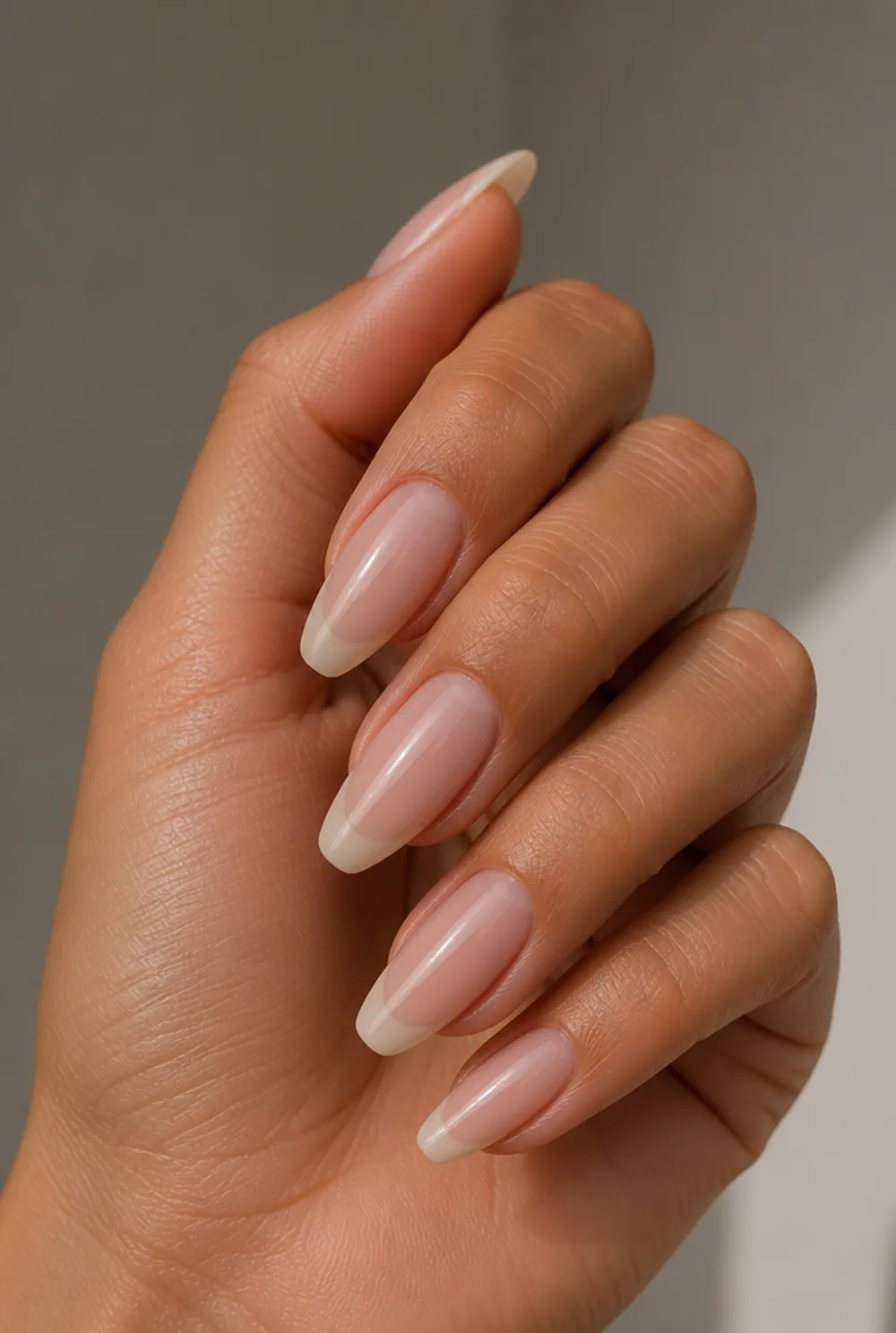
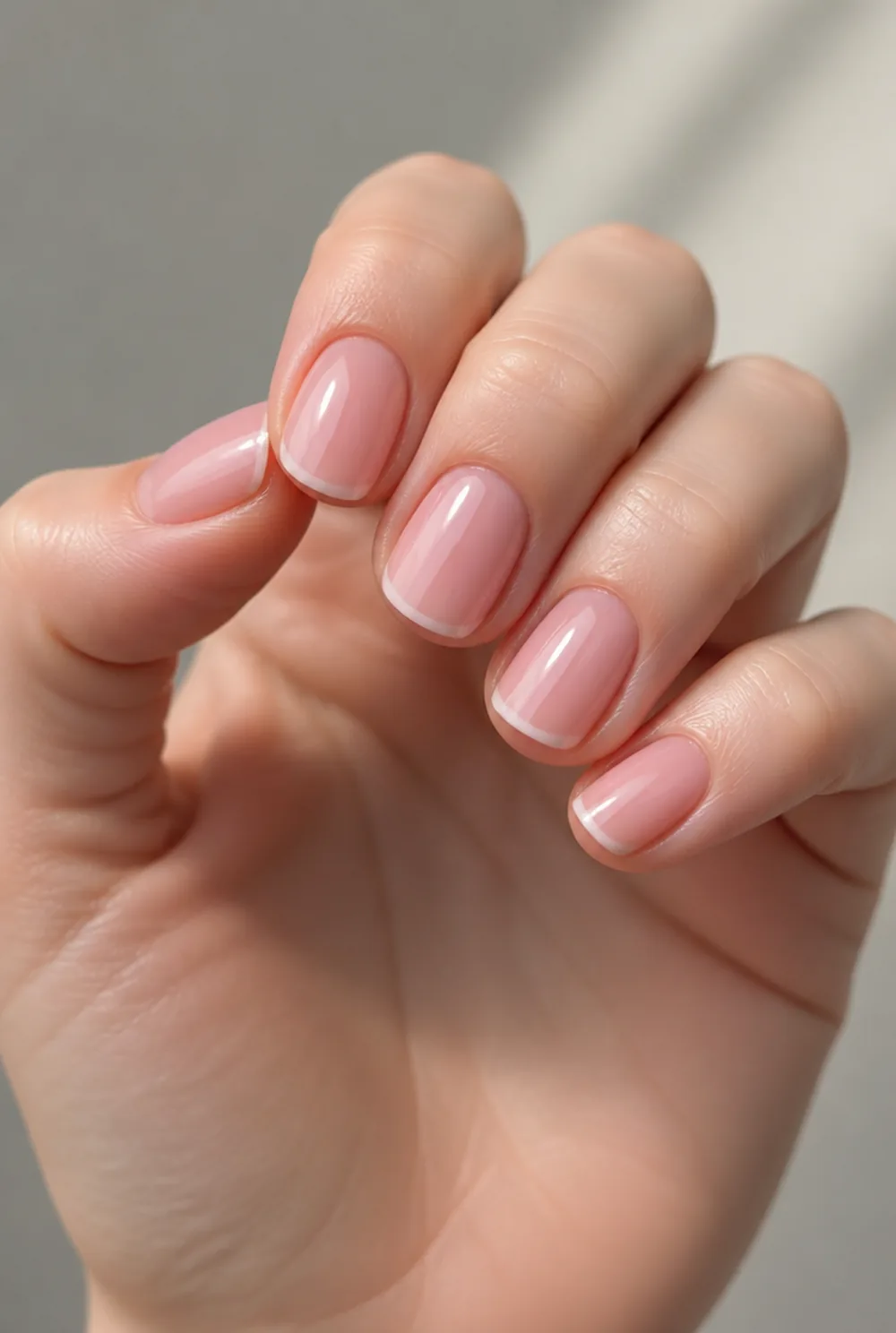
ivory French tip, thin line, sheer pink base
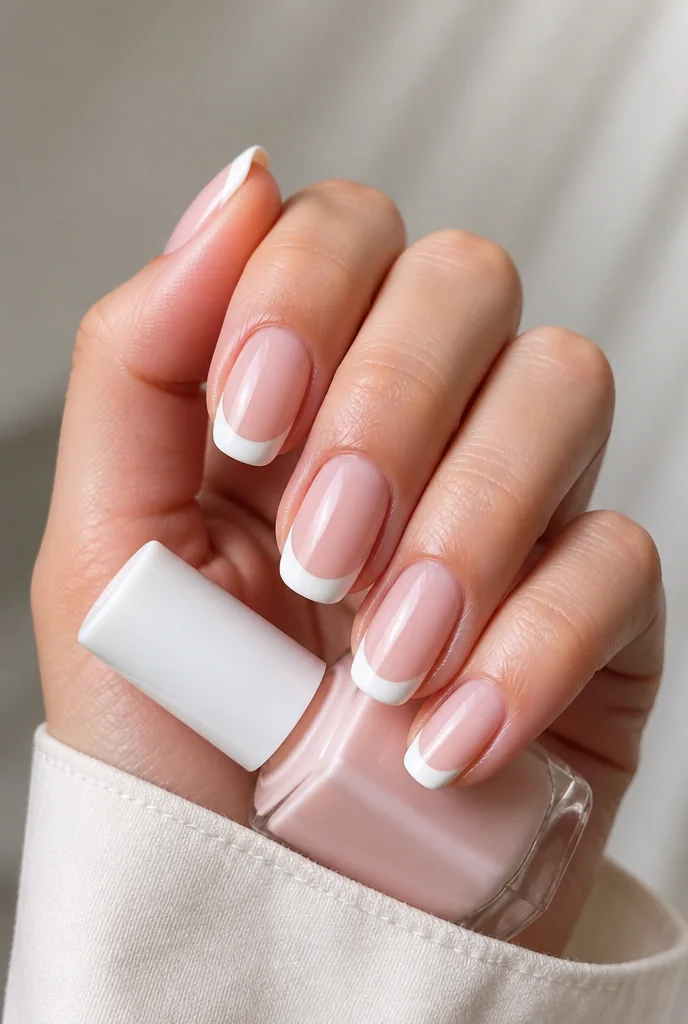
Ivory rather than bright white over a sheer pink base. Bright white reads dated; ivory doesn’t. Ask for a thin tip unless your nails are long. The look dates to 1976, when Orly founder Jeff Pink created the French manicure for a director who wanted one nail style to go with every outfit.
2. Micro French
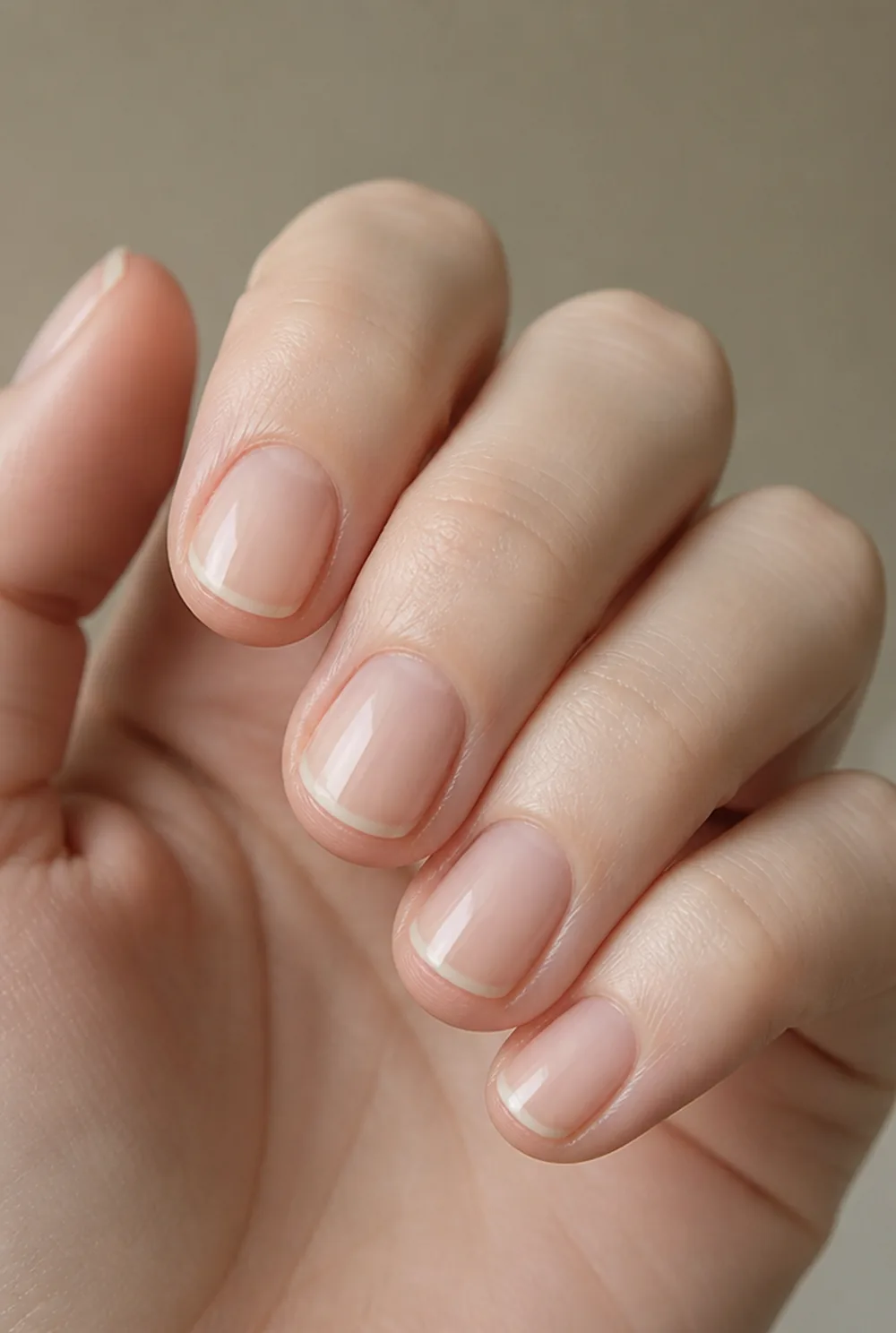
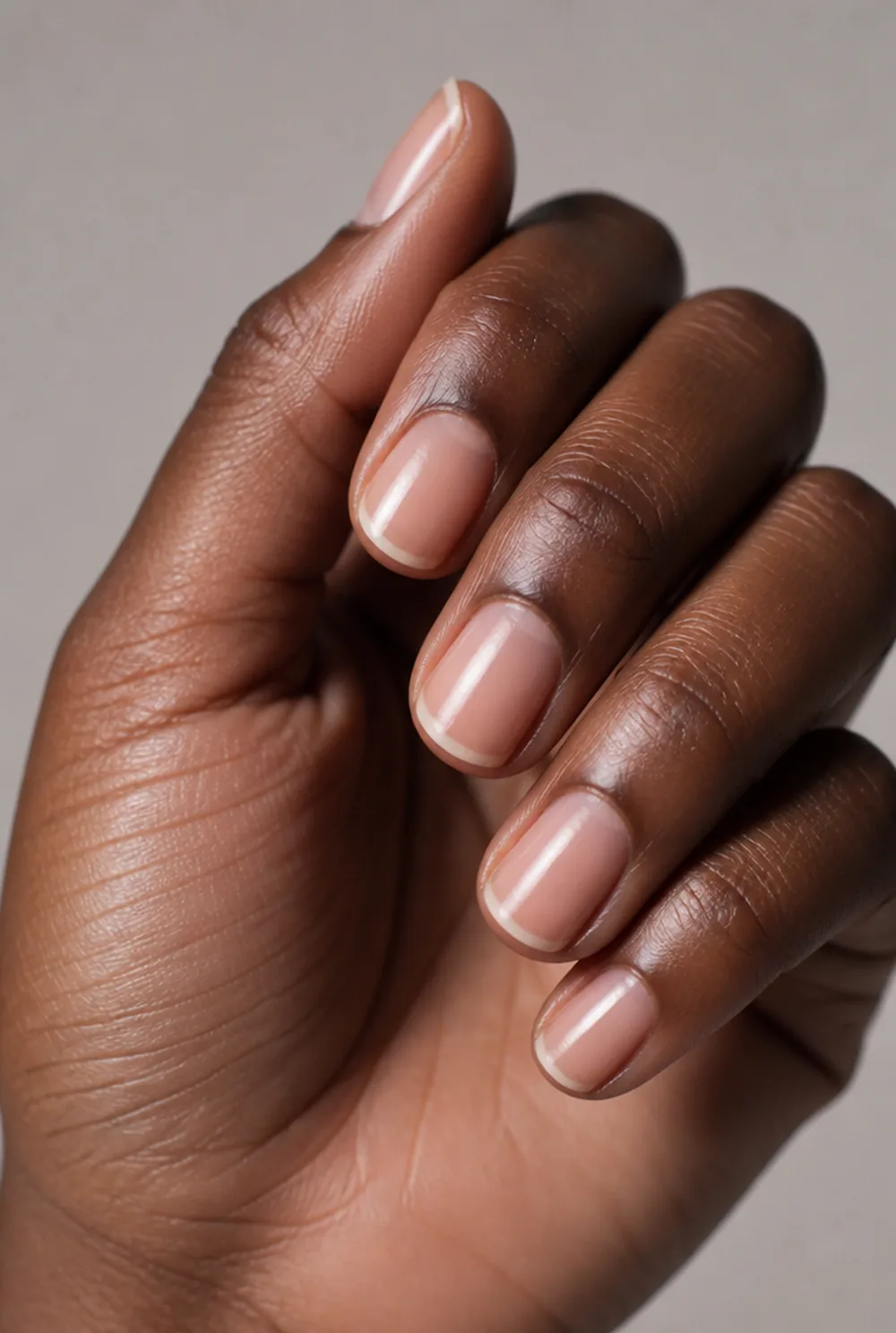
micro French, hairline tip, barely visible
A hairline tip, barely a millimeter deep. It’s the version that looks current on short nails and the easiest to wear in an office.
3. American French
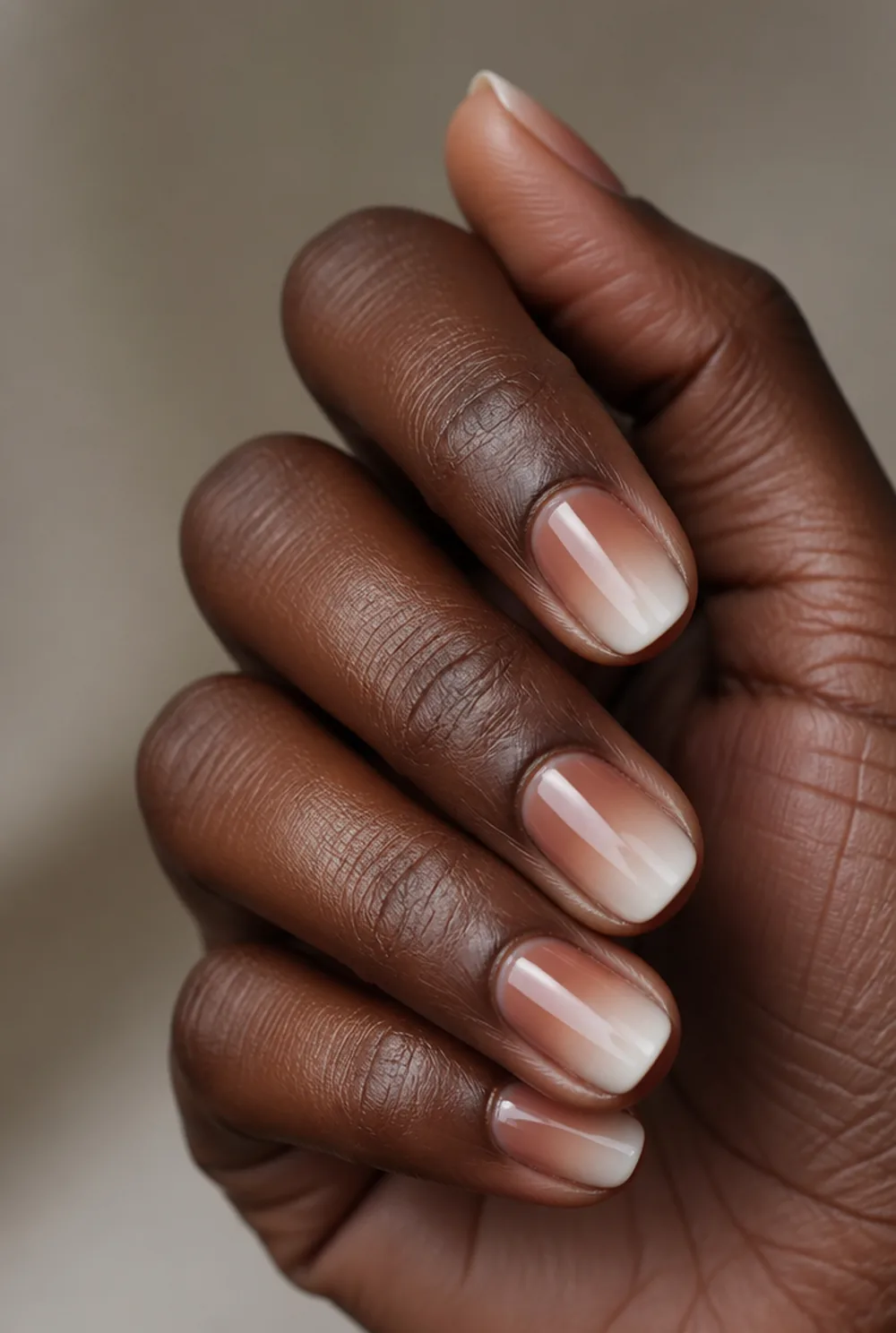
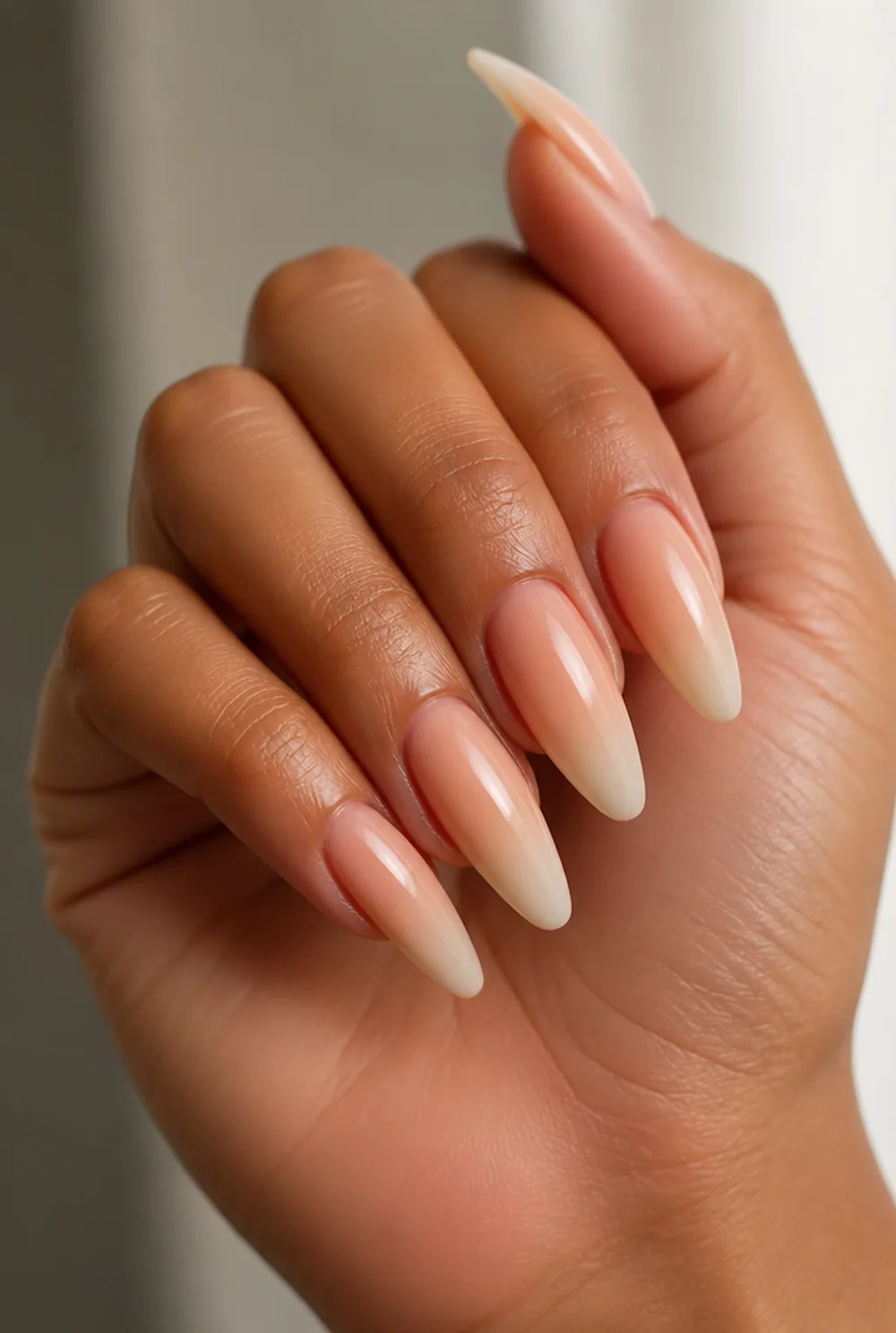
American French, soft blurry tip, cream and warm base
A softer, blurrier tip in cream over a warmer base. The line is deliberately less defined, which makes grow-out much less obvious in week two.
4. Squoval short French
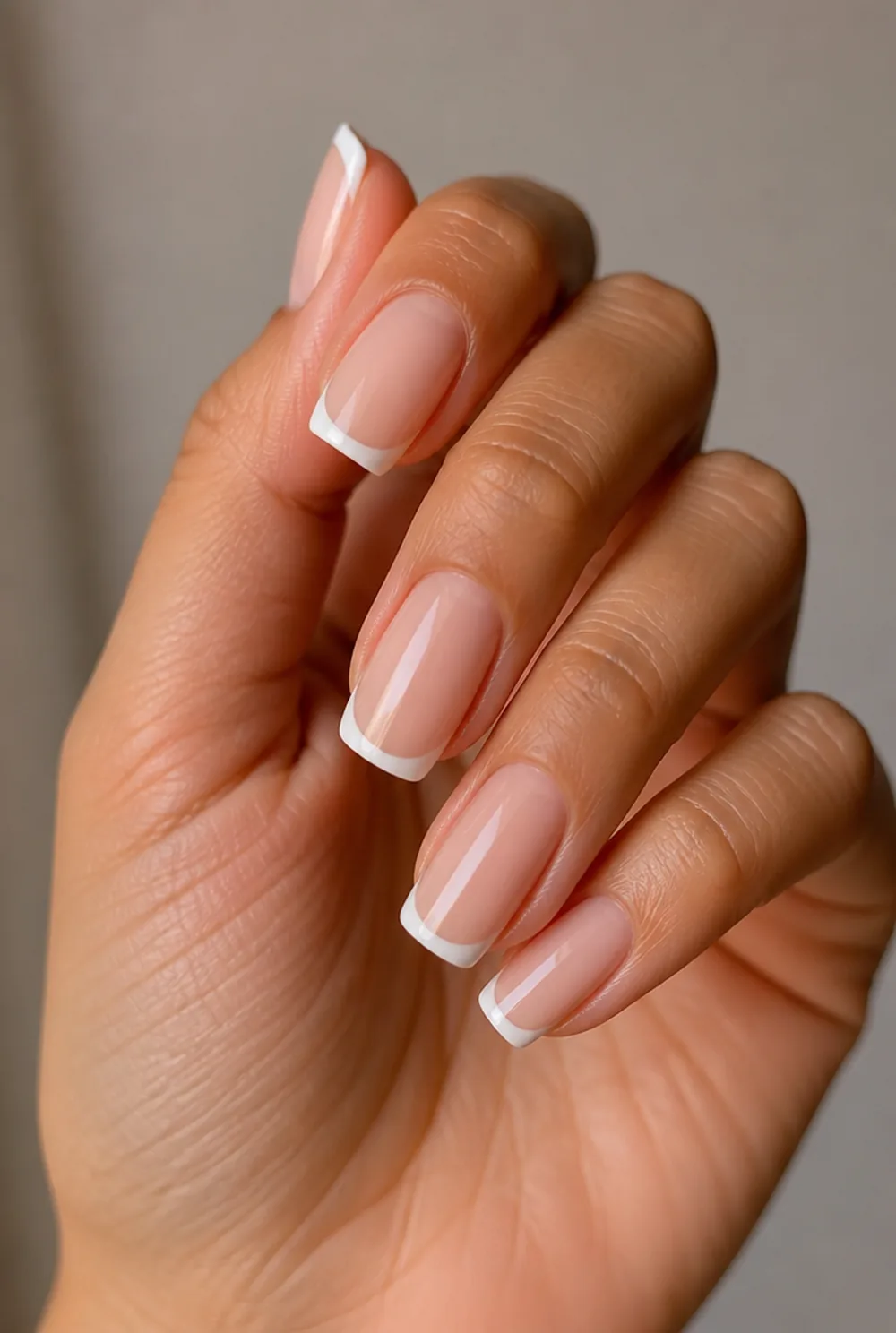
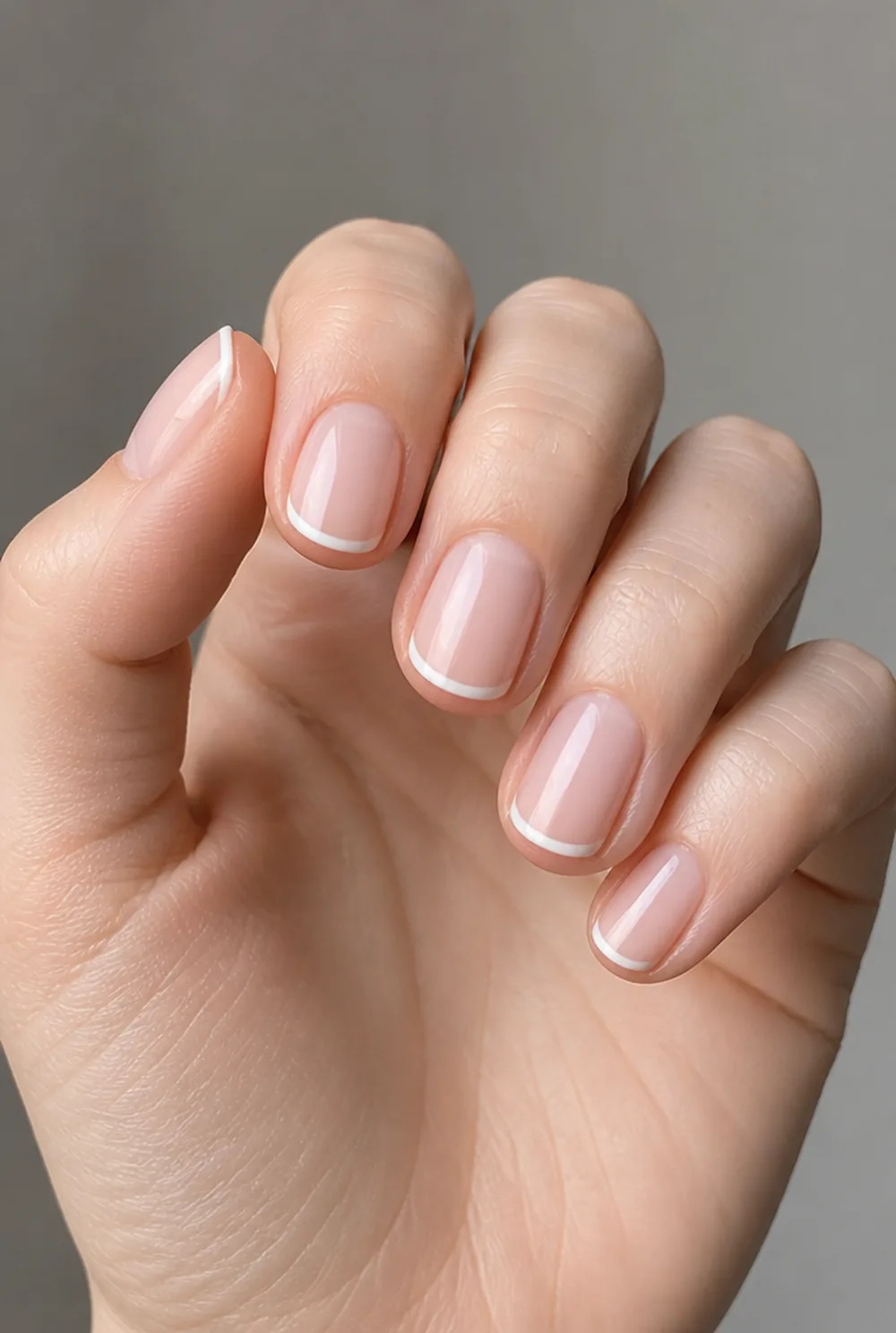
squoval short French, thin tip, sheer beige
The default on short nails. Thin tip, square-ish shape with rounded corners, sheer beige base.
Color versions
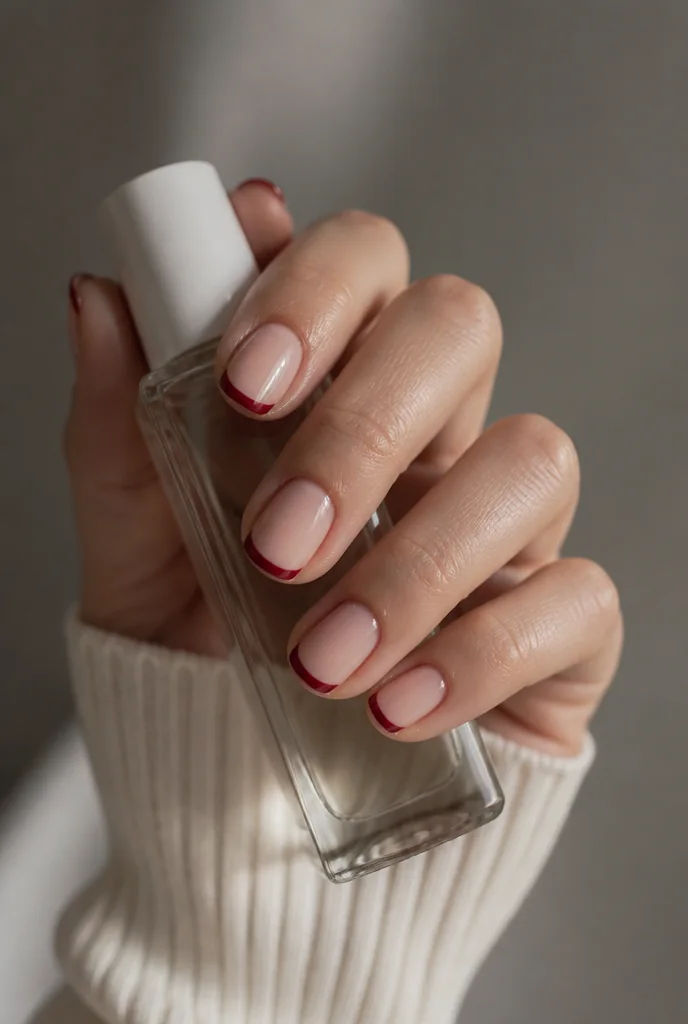
5. Colored French
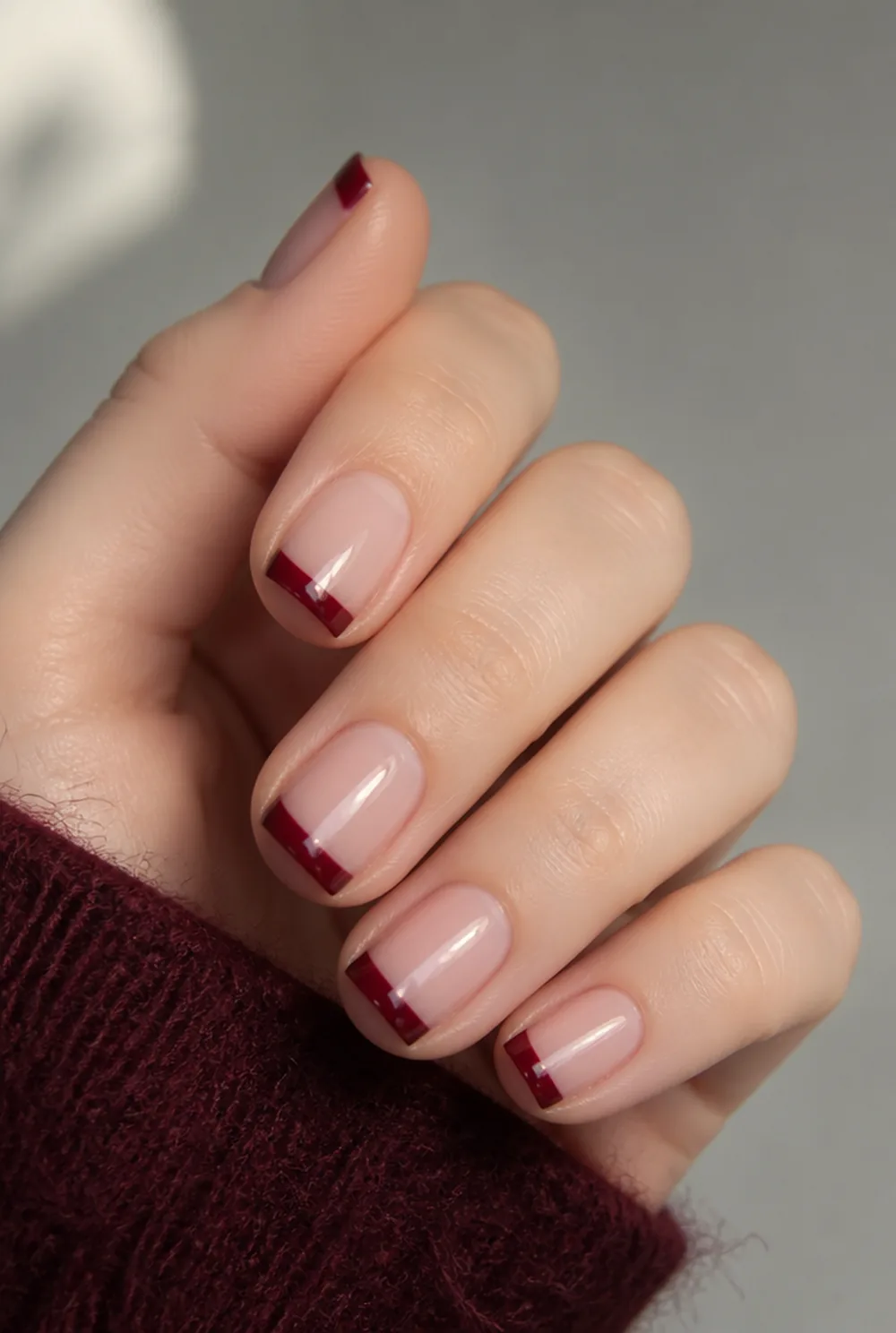
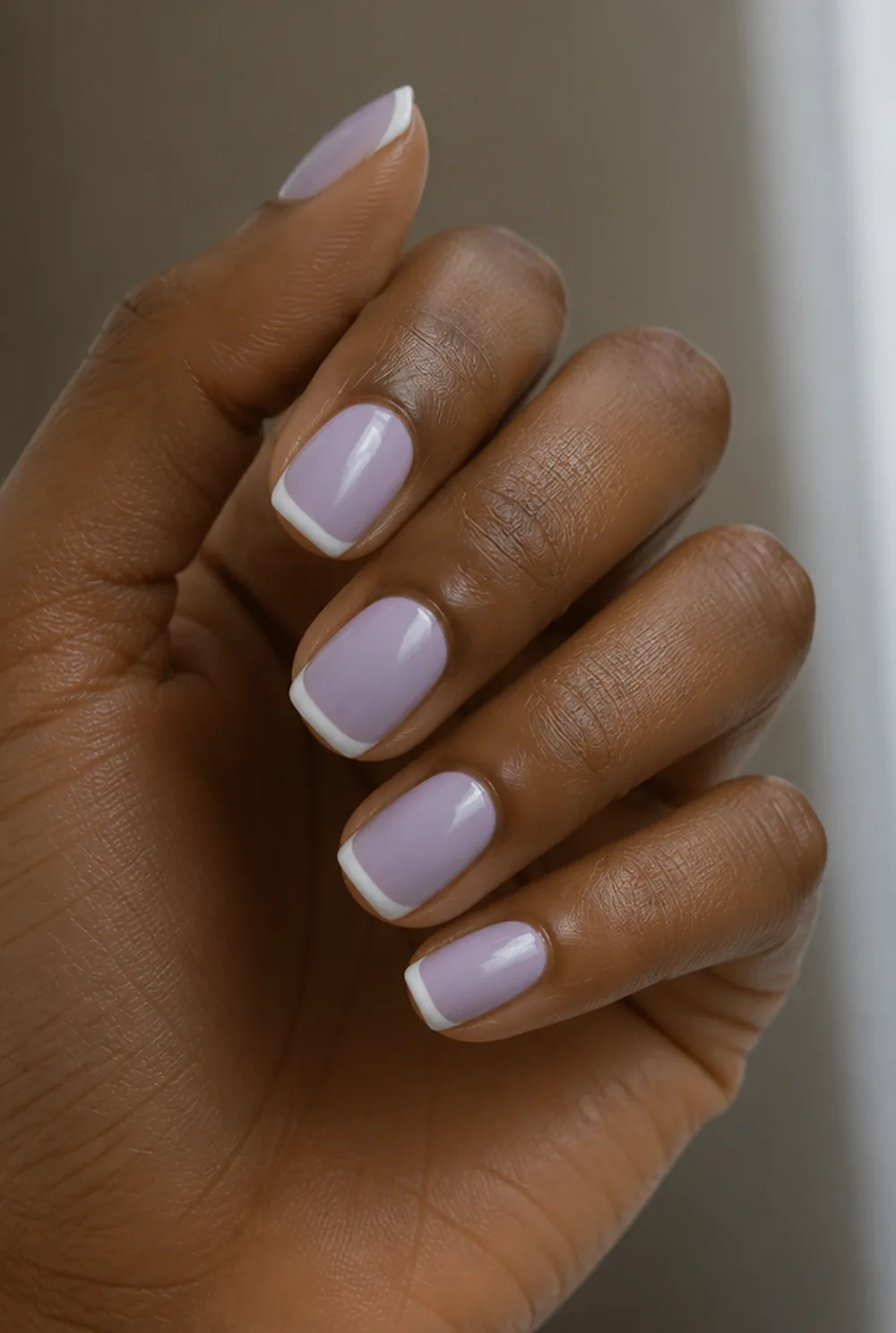
French tip in colored polish, cherry red or black or lilac
Same shape, any color. Cherry red, black and lilac all work, and colored polish is easier to paint cleanly than white because it’s more pigmented. There’s a full set of alternatives in our colored French tip guide. For a two-tone take, our black and white nails list includes black French tips on a milky base and outlined French tips.
6. Double French
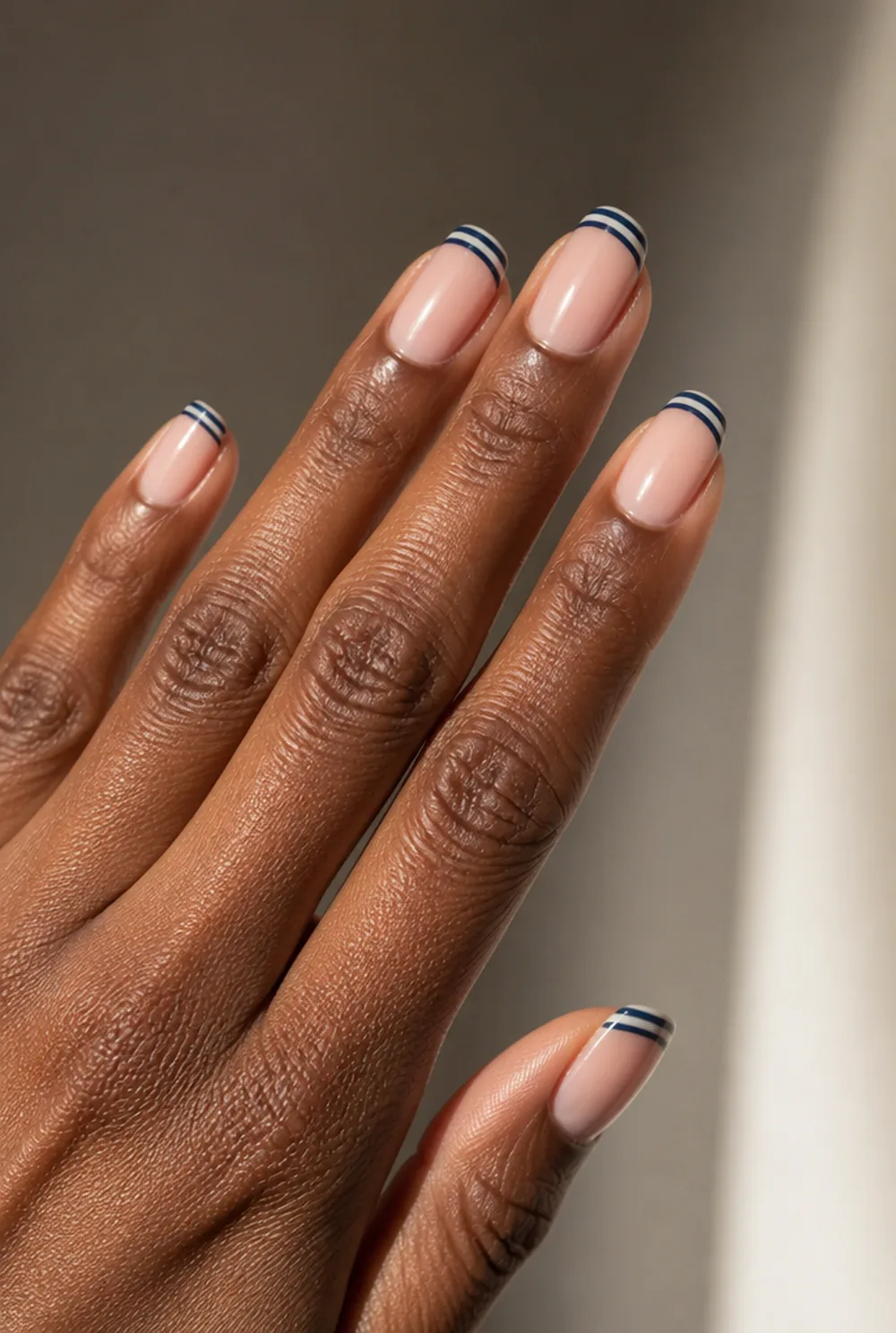
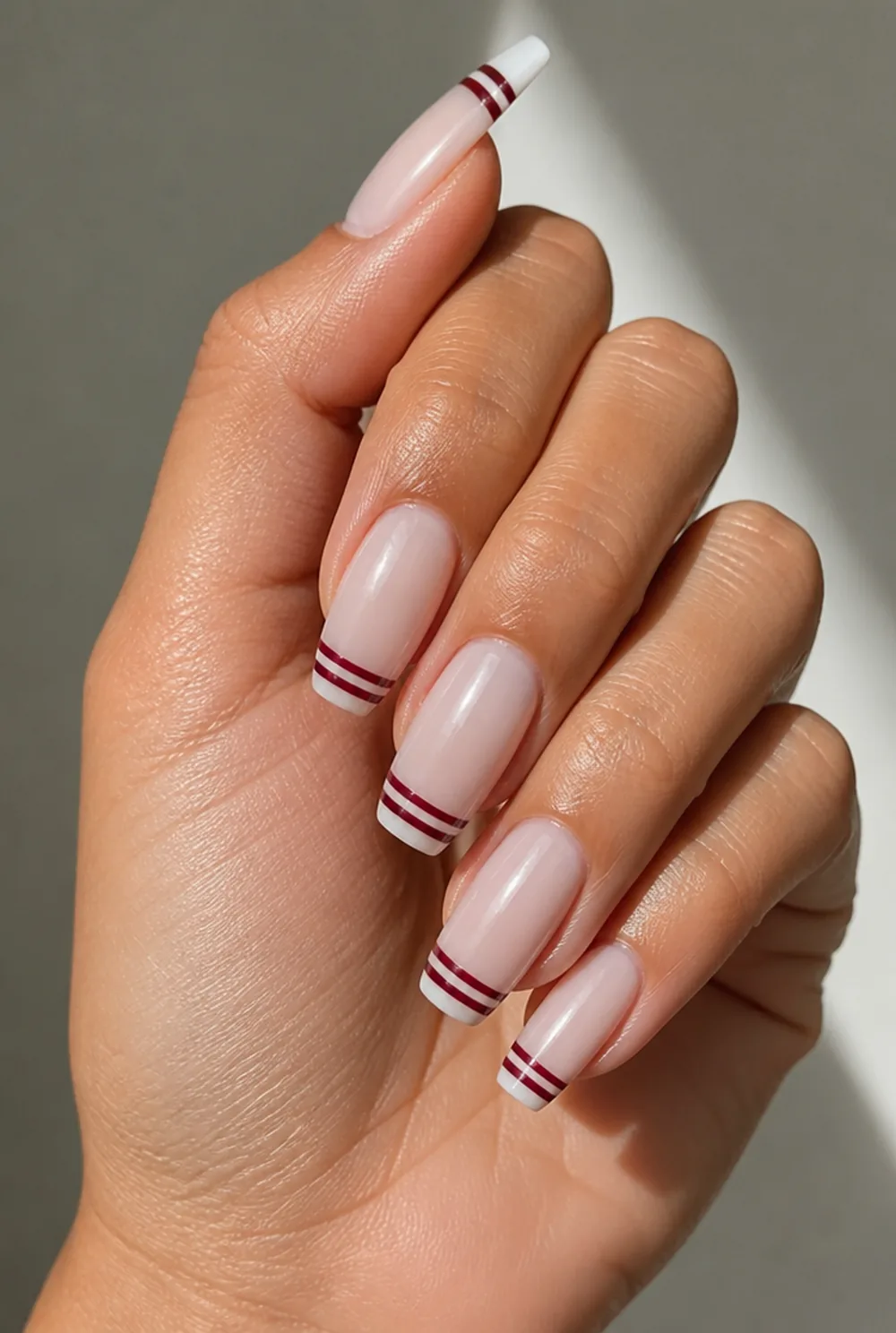
double French, two contrasting lines at tip
Two lines: a thin one at the very tip and a second, contrasting one just below it. Needs some length to avoid looking crowded.
7. Reverse French
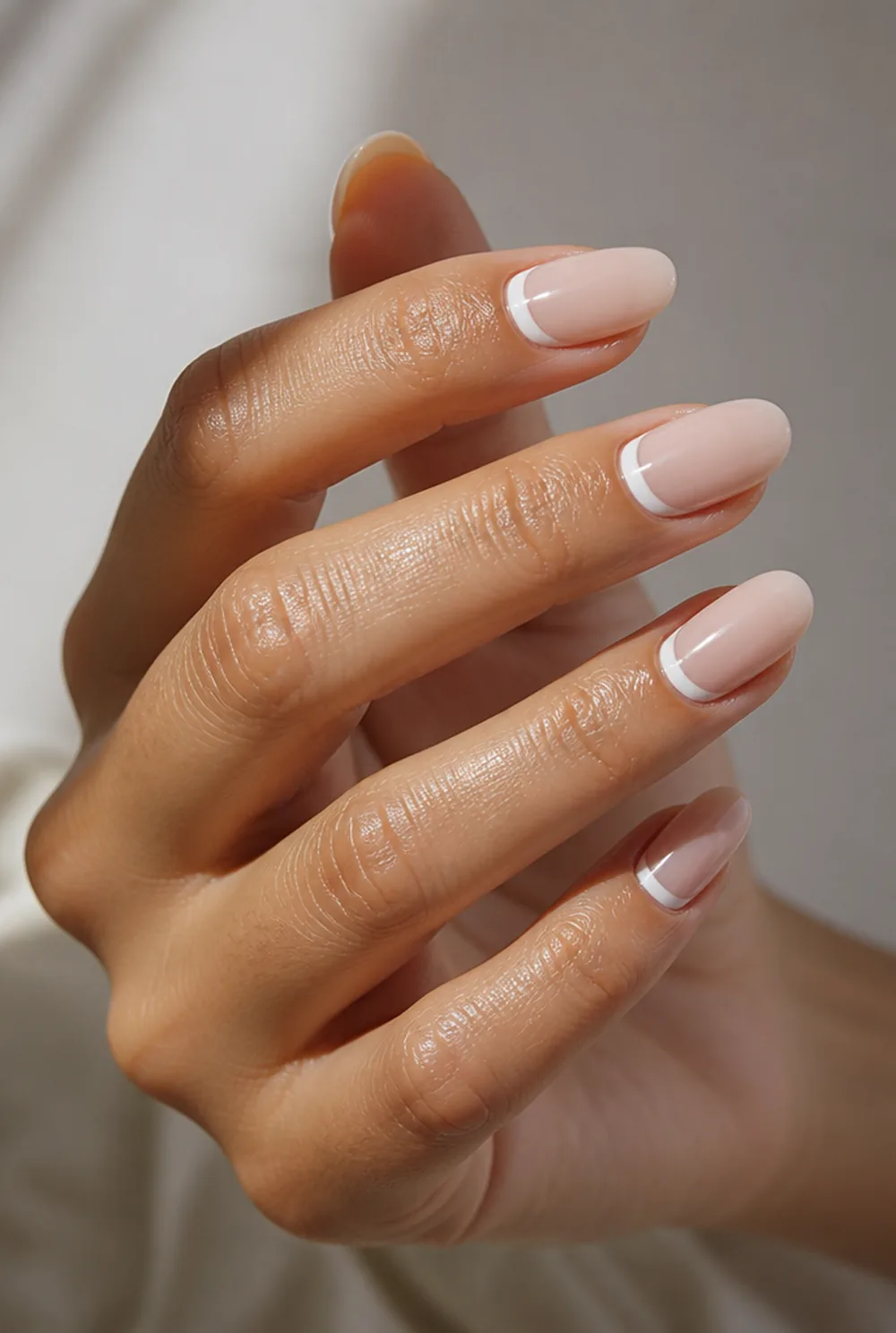
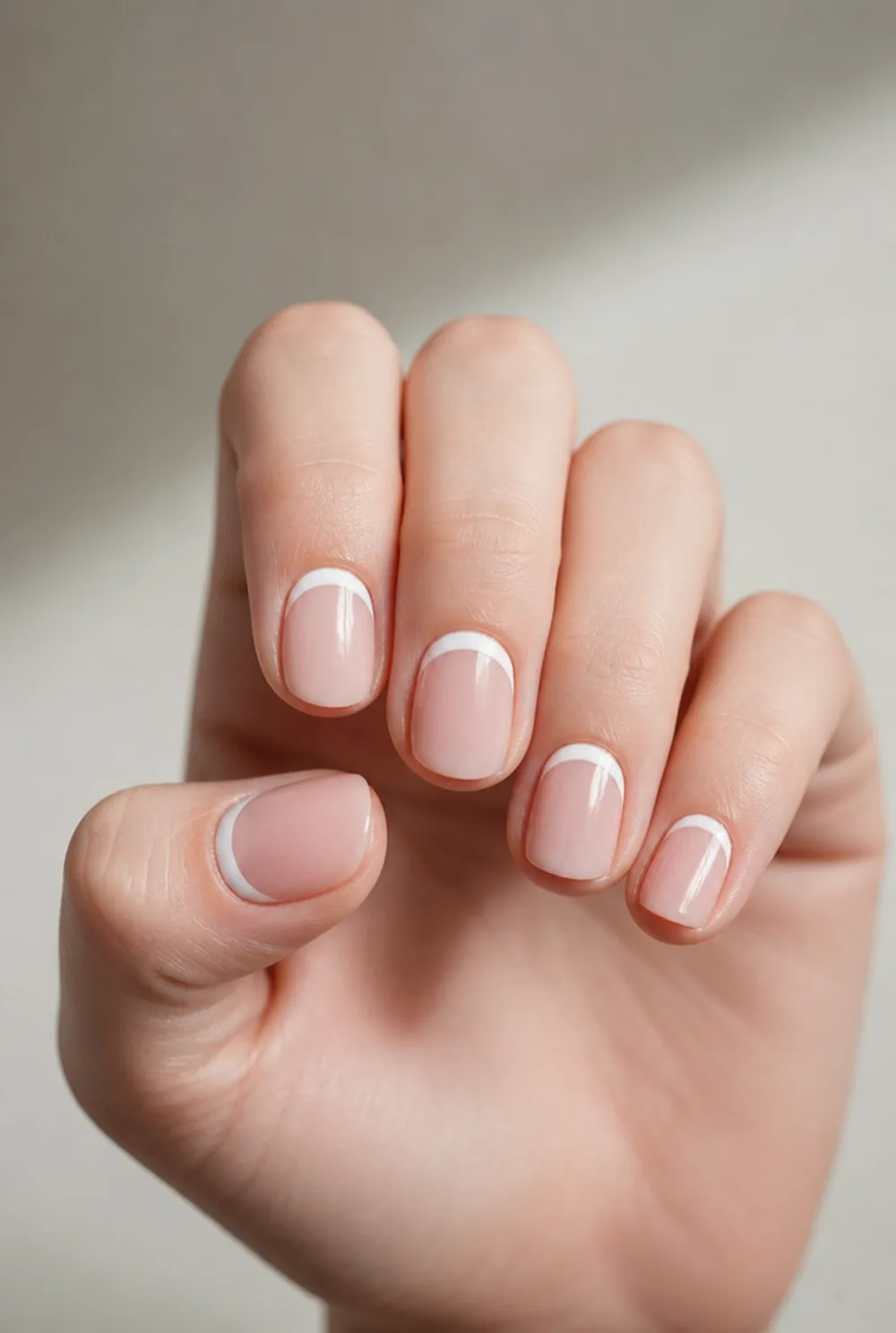
reverse French, curve at cuticle, hides wear
The curve sits at the cuticle rather than the tip. It suits shorter nails and hides tip wear entirely.
8. Ombre or baby boomer
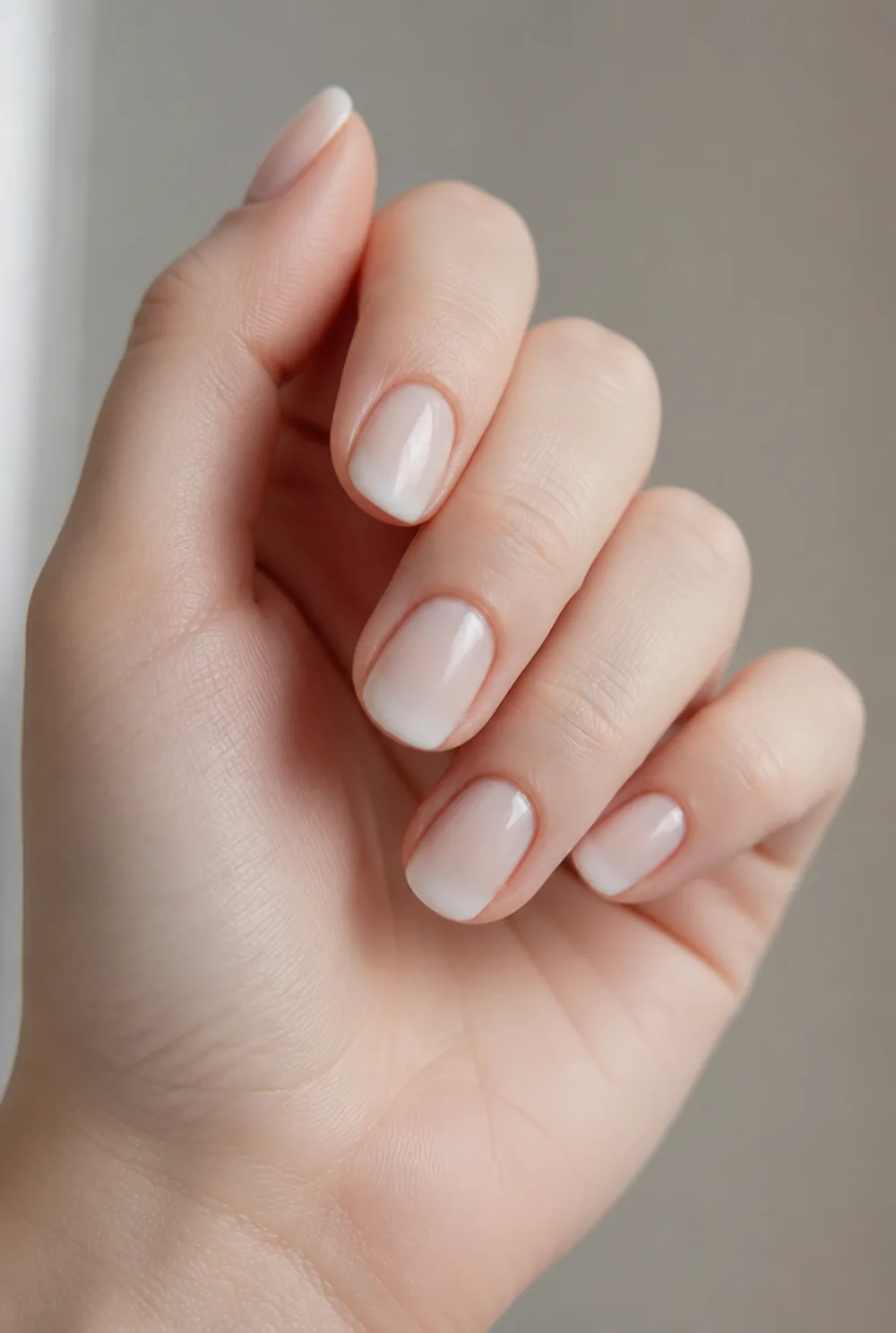
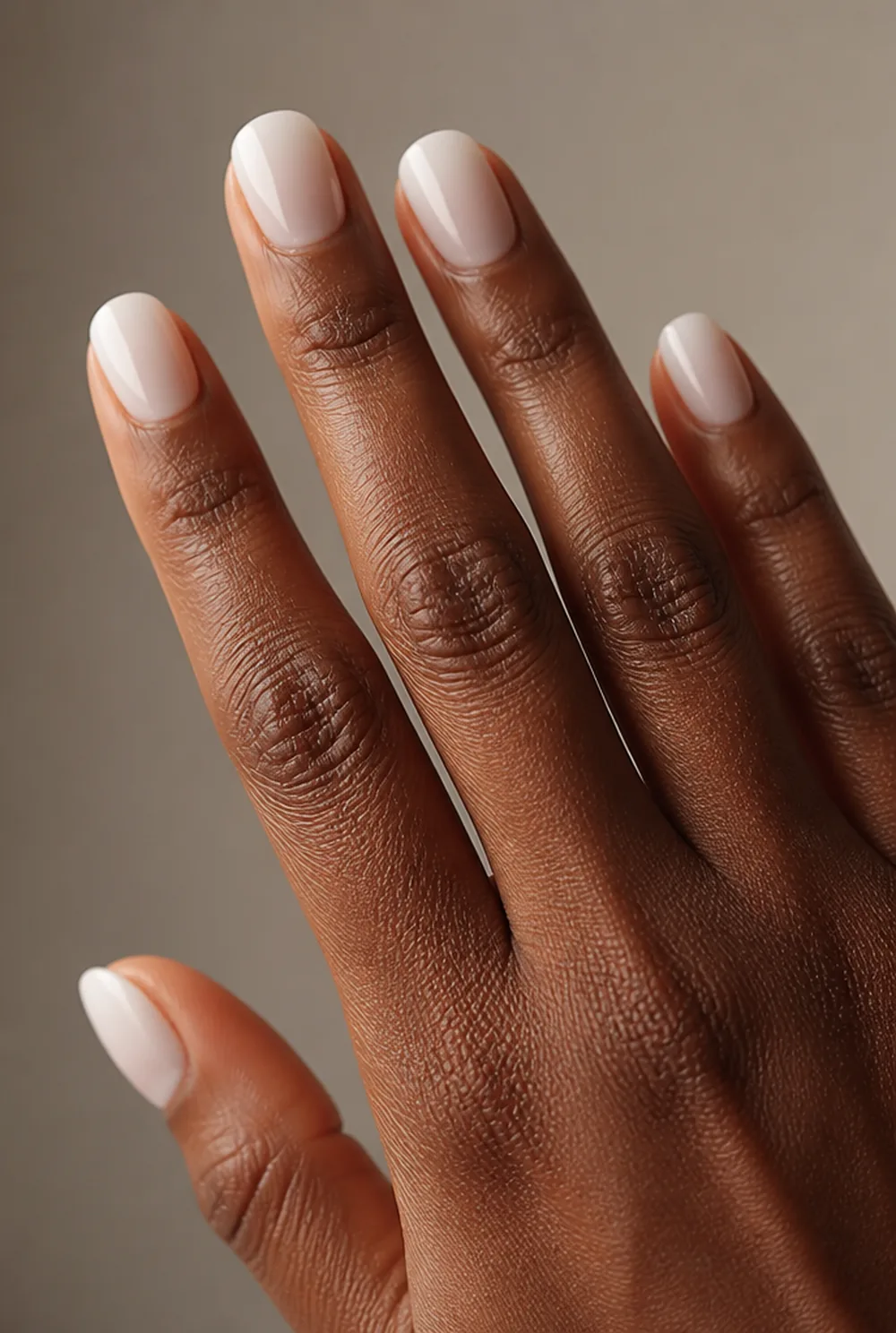
ombre or baby boomer French, blended white into base
The white is blended up into the base instead of ending in a line. Nearly always gel, because blending lacquer before it sets is difficult. If yours is gel, the Skin Cancer Foundation recommends broad spectrum sunscreen on your hands 20 minutes before the lamp.
Finishes
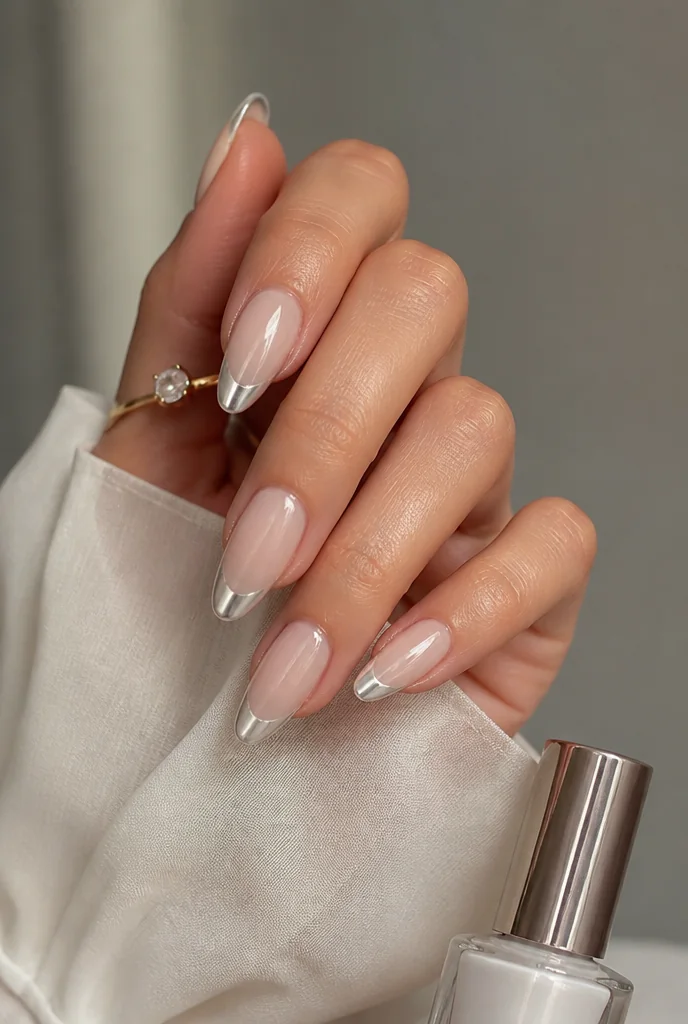
9. Chrome French
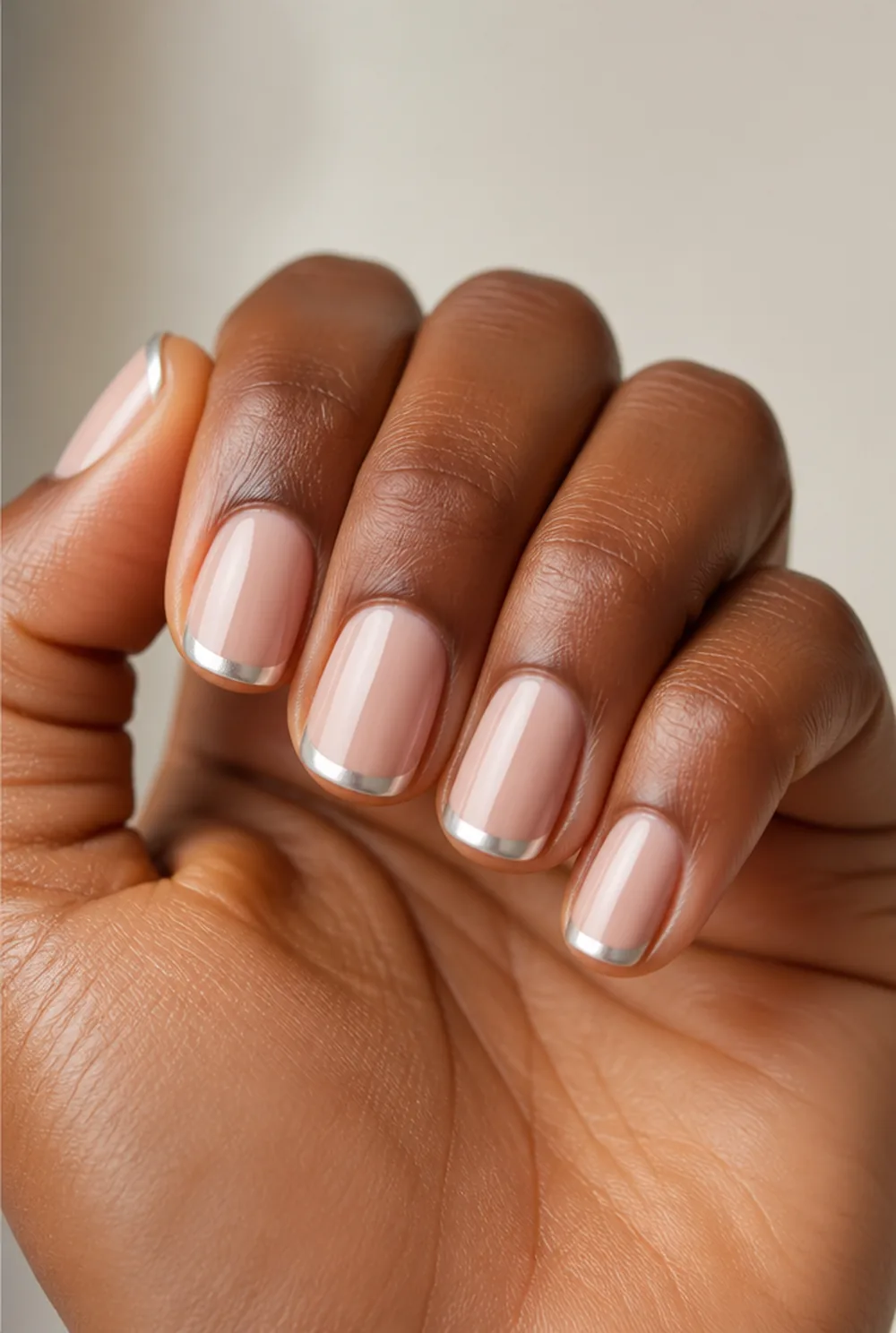
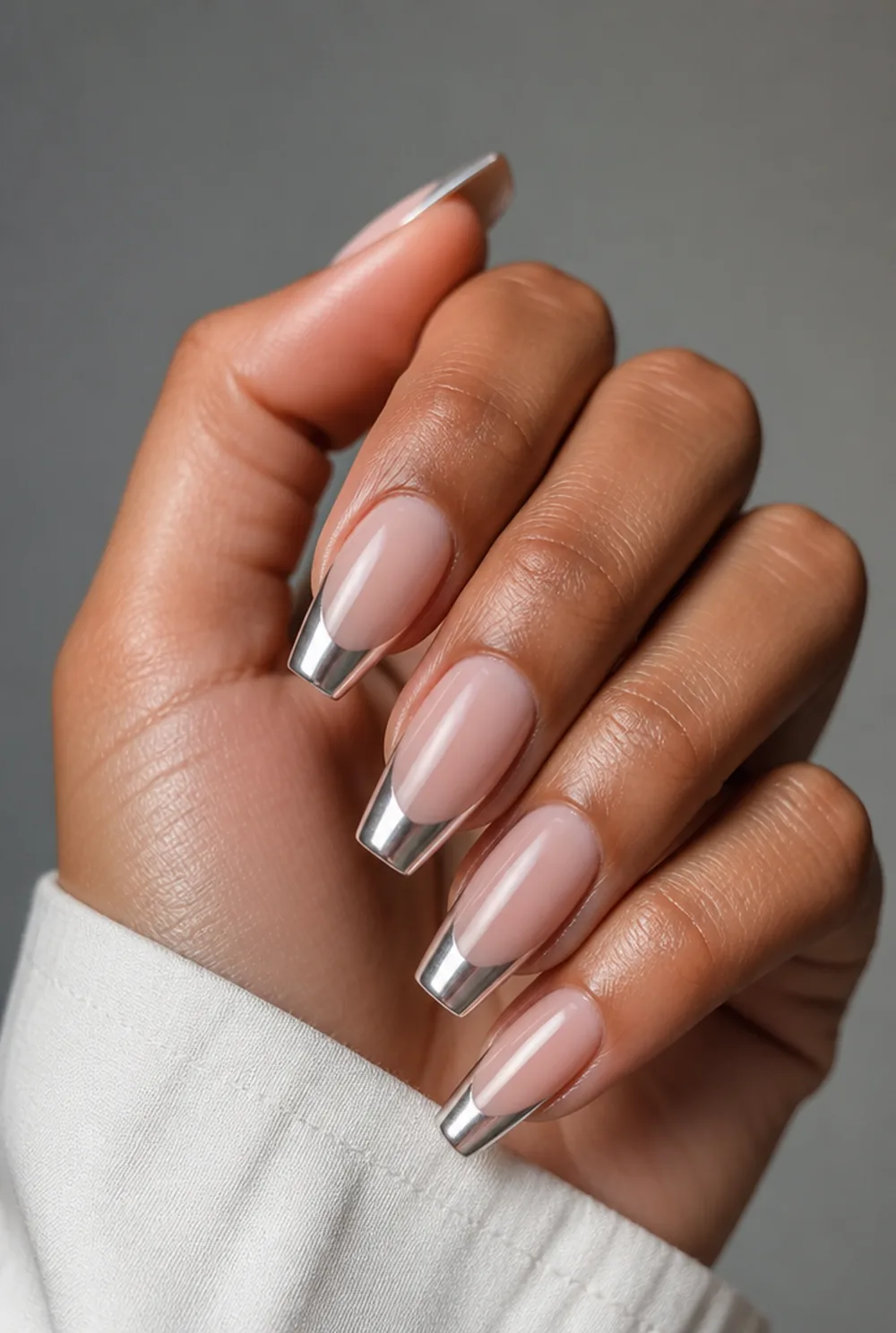
chrome French tip, pearl or silver powder, sealed
A pearl or silver chrome powder buffed over the tip and sealed. It photographs better than it wears, so ask whether they top-coat over chrome. See chrome French nails for the detail.
10. Glitter tip

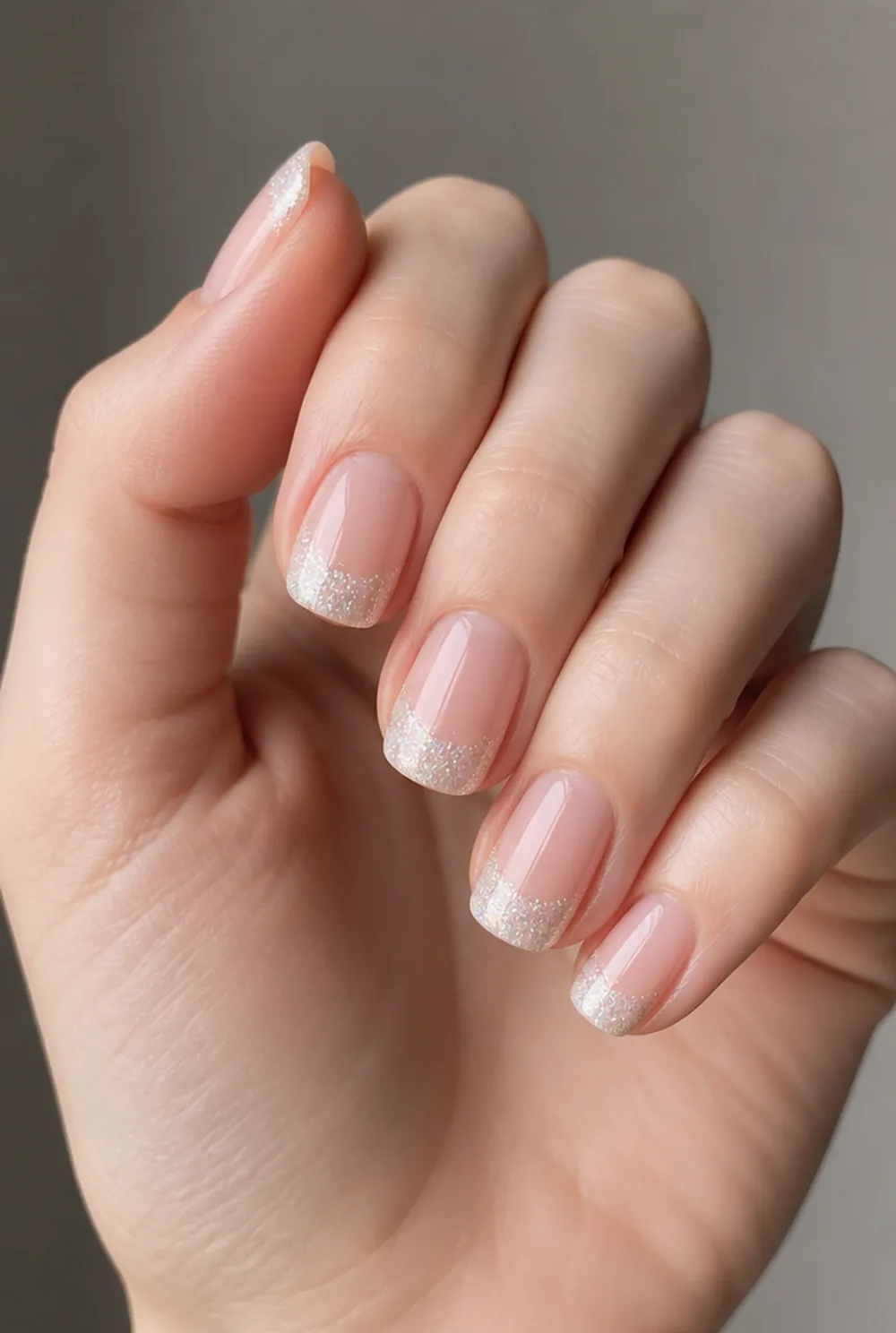
glitter French tip instead of white
Glitter instead of white, which hides an uneven line and survives longer between fills.
11. V-French
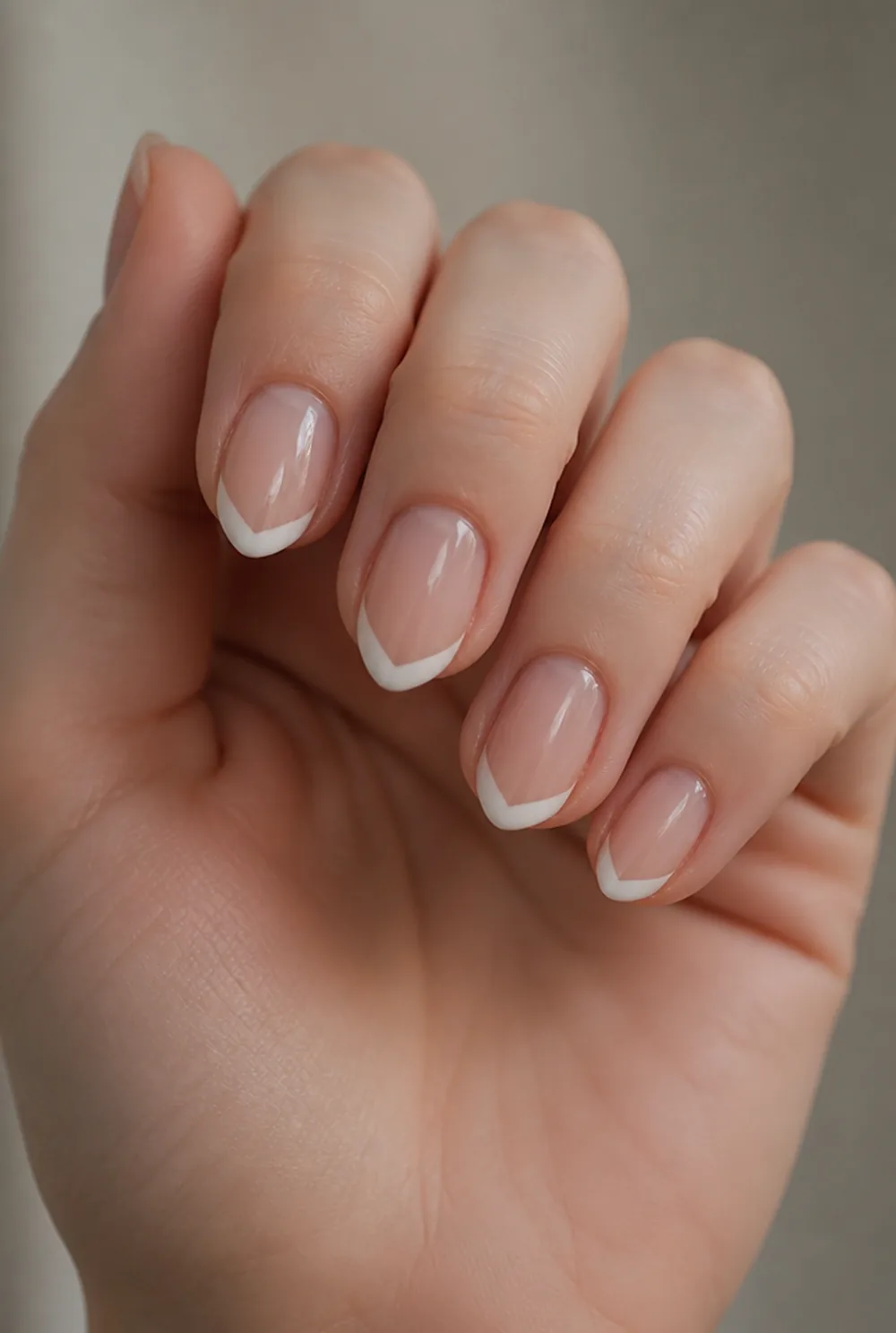
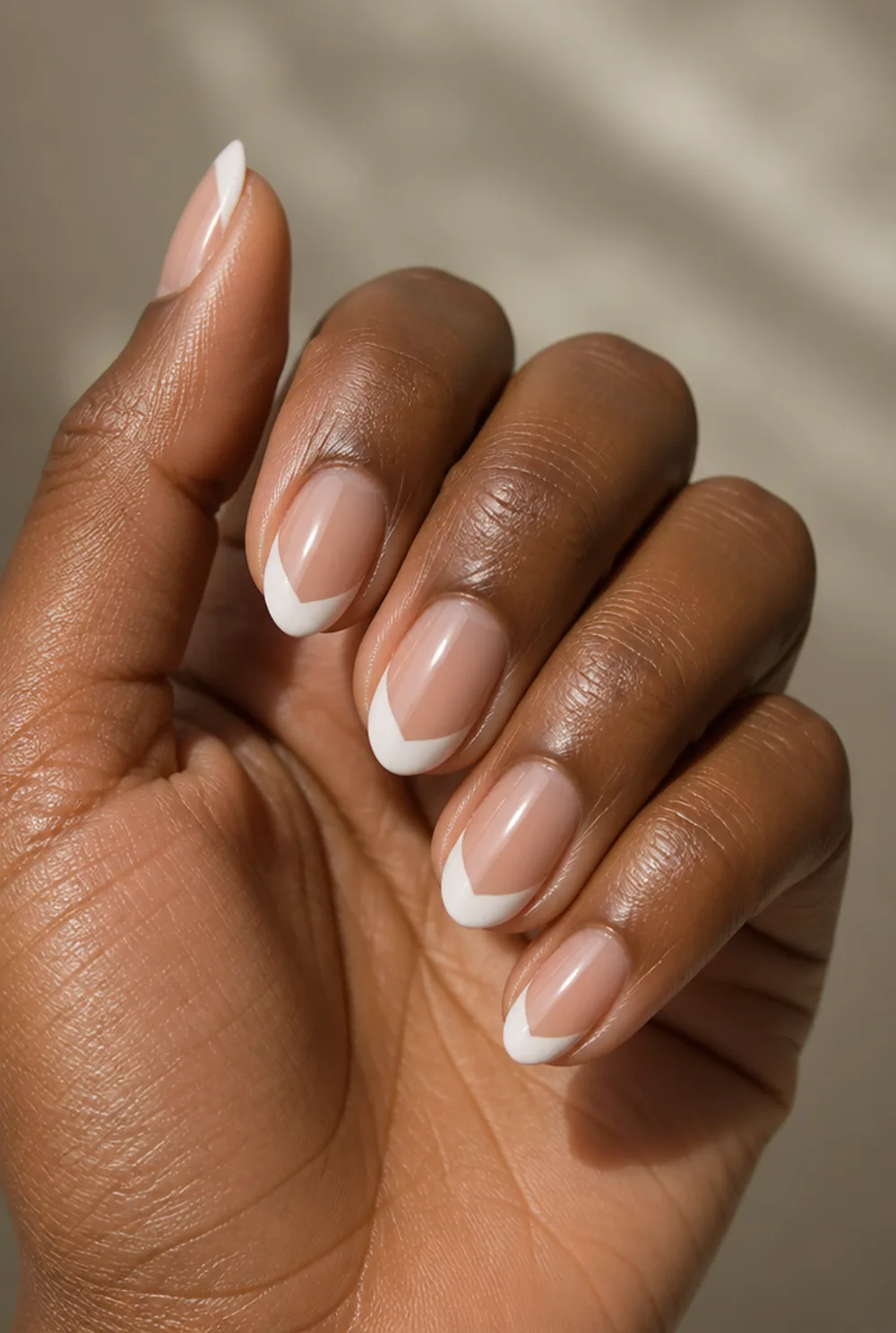
V-French, pointed tip in the middle
The tip comes to a point in the middle rather than curving. Best on almond or stiletto shapes, where the point follows the nail.
12. Outlined French
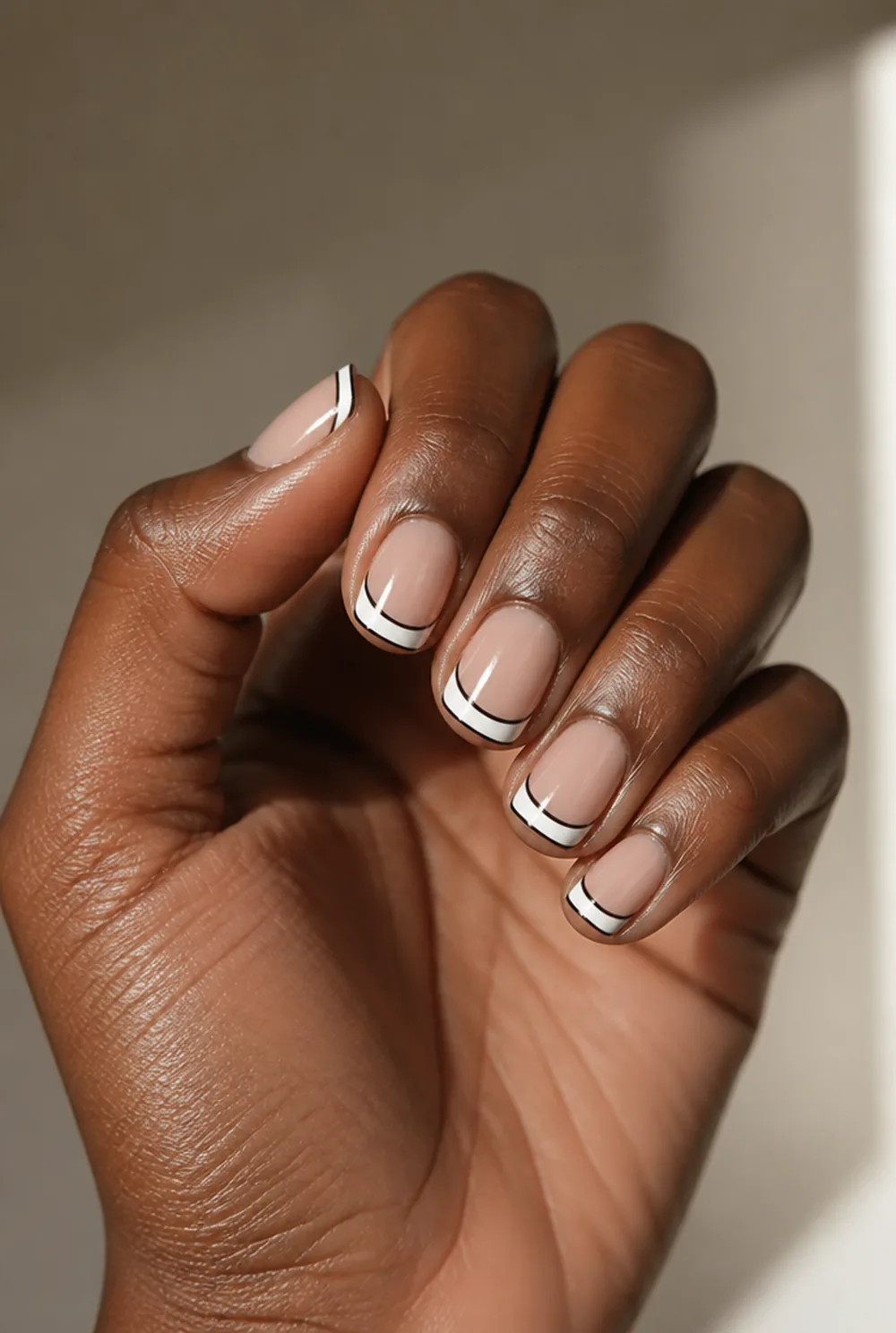
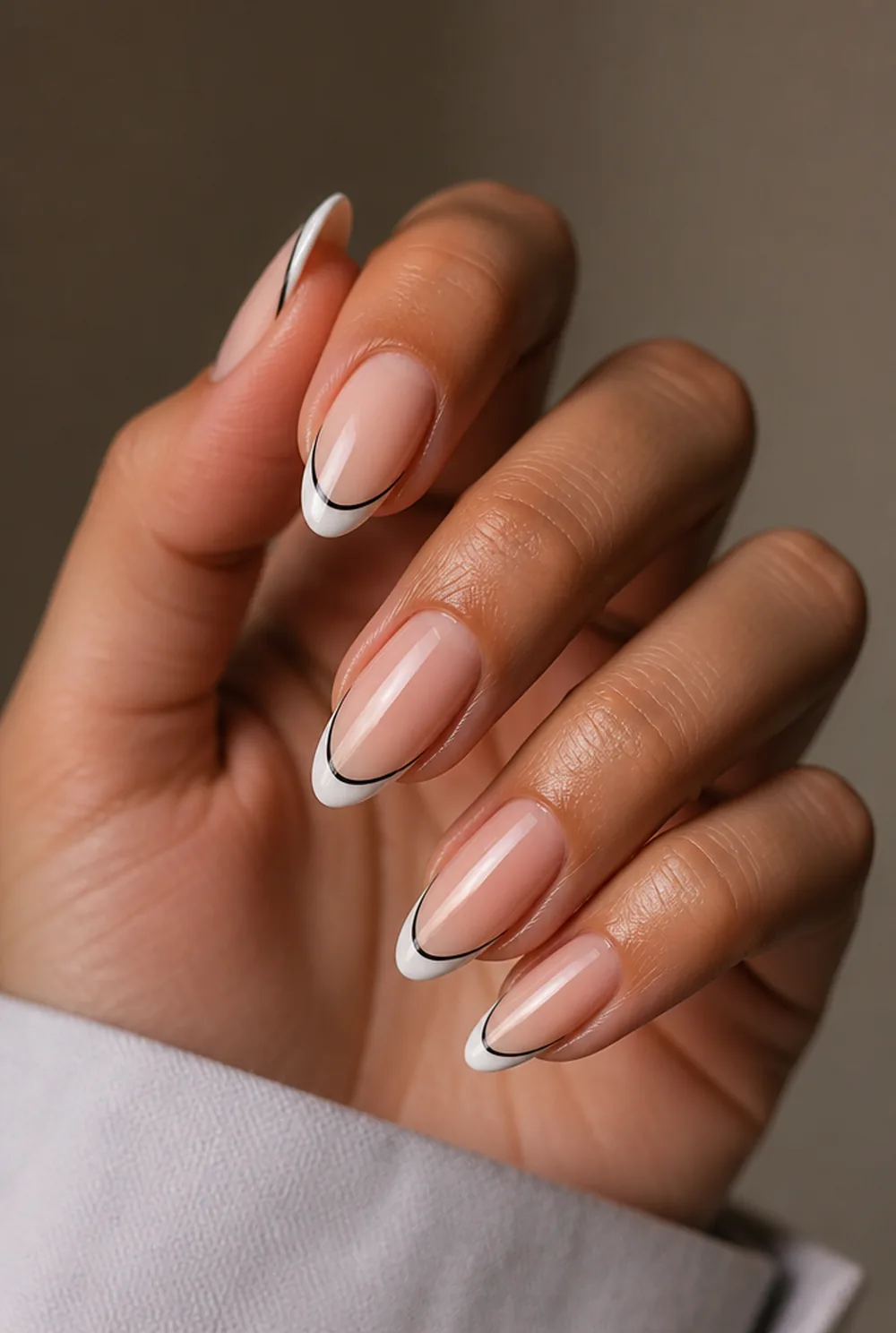
outlined French, thin dark line around white tip
A thin dark line traced around the white tip. Fussy to paint, very sharp in photos, and it needs a steady hand or a gel pen brush.
Choosing by nail length
| Length | Works well | Avoid |
|---|---|---|
| Very short | Micro, reverse, squoval classic | Deep tips, double French |
| Medium | Classic, colored, ombre, chrome | Very deep tips |
| Long | Double, V-French, outlined, glitter | Hairline micro, which disappears |
What to say in the salon
Bring a photo, then name three things: the depth of the tip, the color of the base, and whether you want the line crisp or blended. Those are the variables techs actually adjust. Asking for ‘a French’ without them is how people end up with a 1998 white tip.
If you’re painting it yourself, our guide to painting French tips covers the smile line technique.
FAQ
What is the difference between a French and an American manicure?
The line. A French tip is crisp and usually whiter; an American manicure uses a softer cream tip with a deliberately blurred edge, which makes grow-out less visible.
Which French style suits short nails?
The micro French and the reverse French. Both keep the tip thin or move it away from the edge, so the nail doesn’t look sectioned.
Are French tips still in style?
Yes, though the bright white deep tip isn’t. Most of what’s booked now is a thin ivory or colored tip, plus chrome versions for events.
What is a baby boomer manicure?
The ombre French: the white is blended up into the base rather than ending in a line. It’s usually done in gel because the blend has to be worked before the layer sets.
How much does a French manicure cost?
Roughly $30 to $45 for regular polish and $45 to $70 for gel in most US salons, with chrome or hand-painted versions adding $5 to $15.