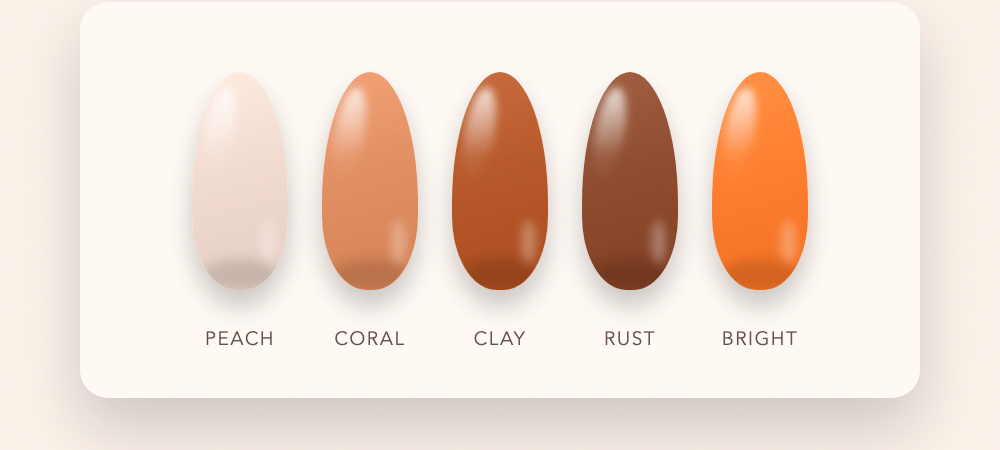
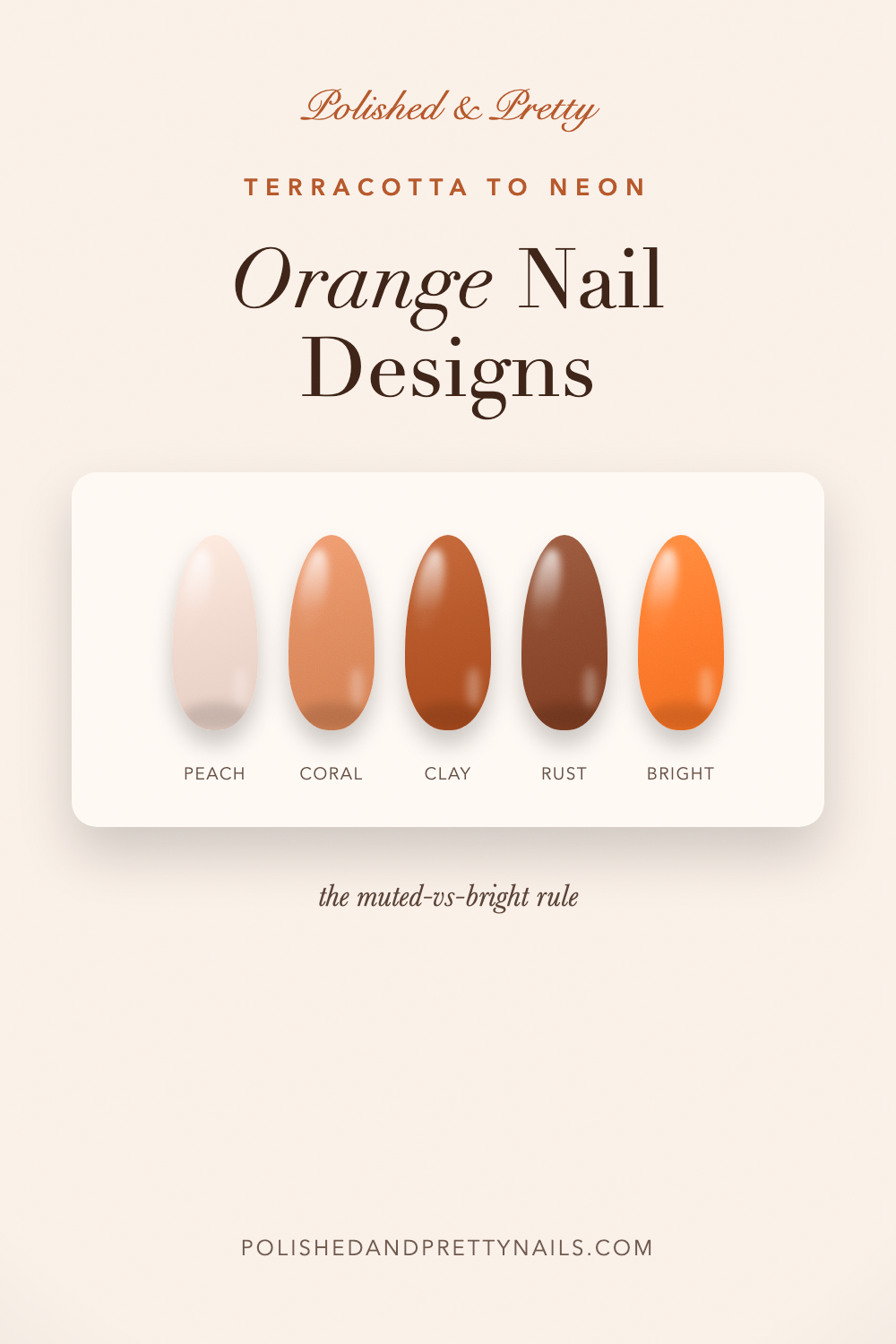
Orange is the colour people write off fastest, usually after one bad experience with a bright pumpkin shade that made their hands look sunburnt. That is a real thing and it is entirely fixable: orange splits into muted and bright, and the muted half behaves like a neutral on almost every hand. Terracotta is not the same colour as neon in any way that matters.
Here are 22 orange nail designs from the palest peach through terracotta and rust to full brights, plus the muted-versus-bright rule, which oranges suit which skin tones, and why orange is the most seasonal colour on the site. If you want the warm neighbour, my brown nail designs guide covers where orange goes when you deepen it.
22 orange nail designs
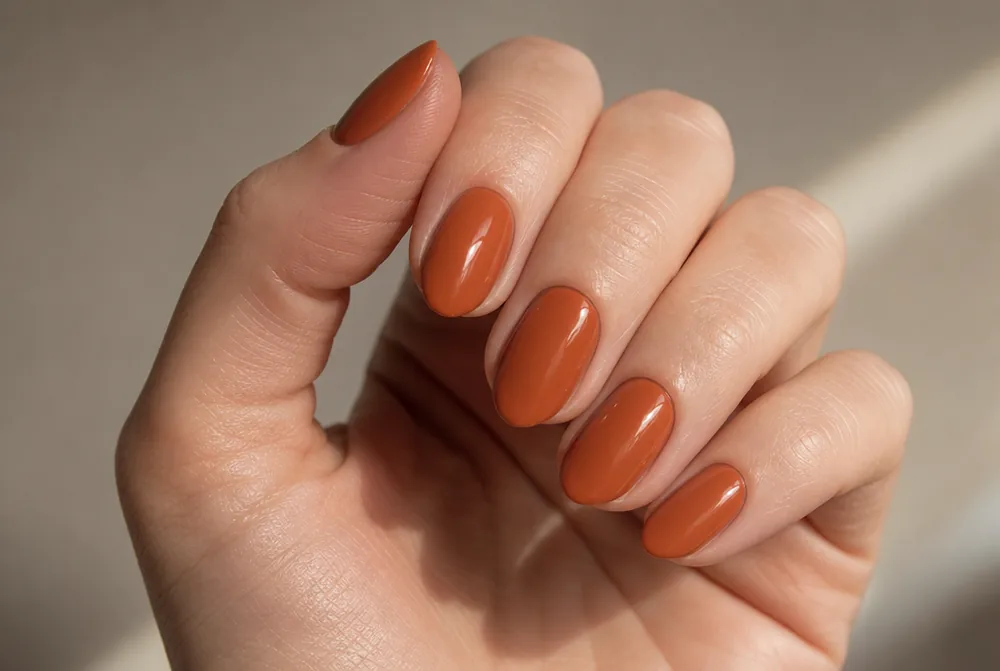
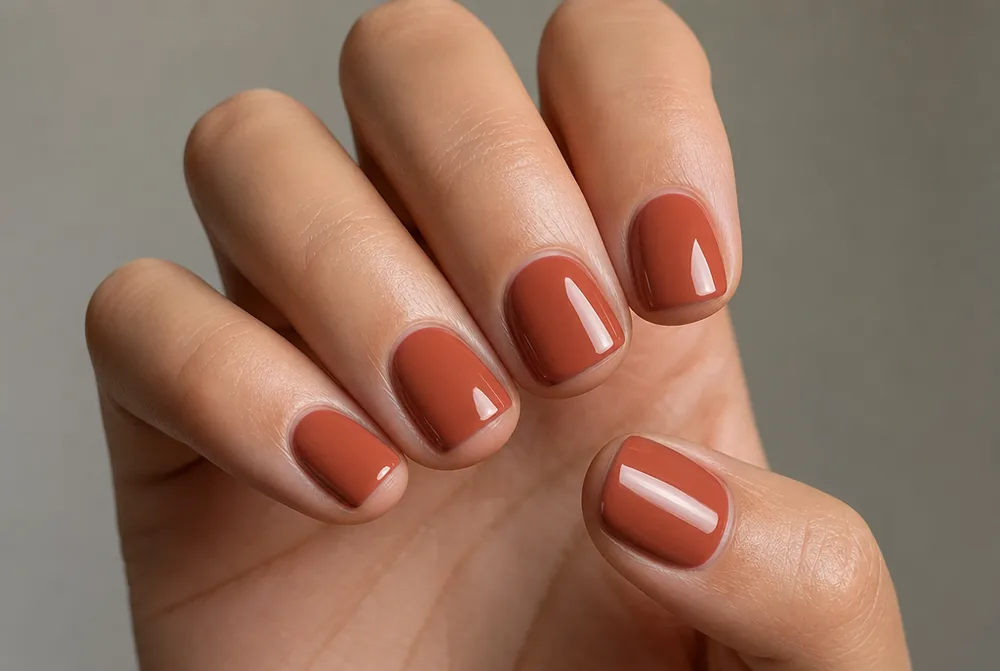
1. Terracotta
Burnt orange with brown and grey in it, muted enough to behave like a neutral. It is the orange I would hand anyone who says orange is not for them, and it flatters far more hands than a bright one does.
2. Rust
Deeper and browner than terracotta, closer to a spice than a citrus. It is the single most autumnal colour there is and it carries September through November. More seasonal shades in my autumn nail colors post.
3. Coral
Orange pulled toward pink, which is the friendliest version of the family. It looks best against tanned hands and it is the summer default. More in my coral nail designs guide.
4. Peach
Orange cut right back with white and pink, soft enough to read as a nude on warm hands. It is the least demanding thing here. More in my peach nail designs guide.
5. Bright Tangerine
True bright orange, fully opaque, kept short and square. Short is what stops a bright orange reading as a costume, and the gloss is what makes it look like enamel rather than paint.
6. Orange French Tip
Sheer nude with the white swapped for orange, kept thin. It is the way to wear a bright without committing the whole nail to it. More in my colored French tip guide.
7. Orange Chrome
Orange base with a copper-shift chrome powder over it, so it flips between orange and bronze. It is the warmest chrome there is and it suits golden hands especially. Needs gel.
8. Sheer Orange Jelly
Three thin coats of a translucent orange, like a slice of citrus held to the light. It is the softest way to wear a bright and the most modern. Stop at three coats. More in my jelly nails guide.
9. Terracotta Matte
Terracotta under a matte top coat, which turns it into something closer to clay. Matte suits the muted oranges and kills the bright ones. More on the finish in my matte nails guide.
10. Orange Ombre
Nude at the base fading into rust at the tip. Orange fades smoothly because the family has so many mid-tones between pale peach and deep rust. Technique in my ombre nails guide.
11. Orange and Brown
Alternating rust and espresso, both glossy. It is a tonal pairing that reads considered rather than indecisive, and it is the most autumn thing you can do with two bottles.
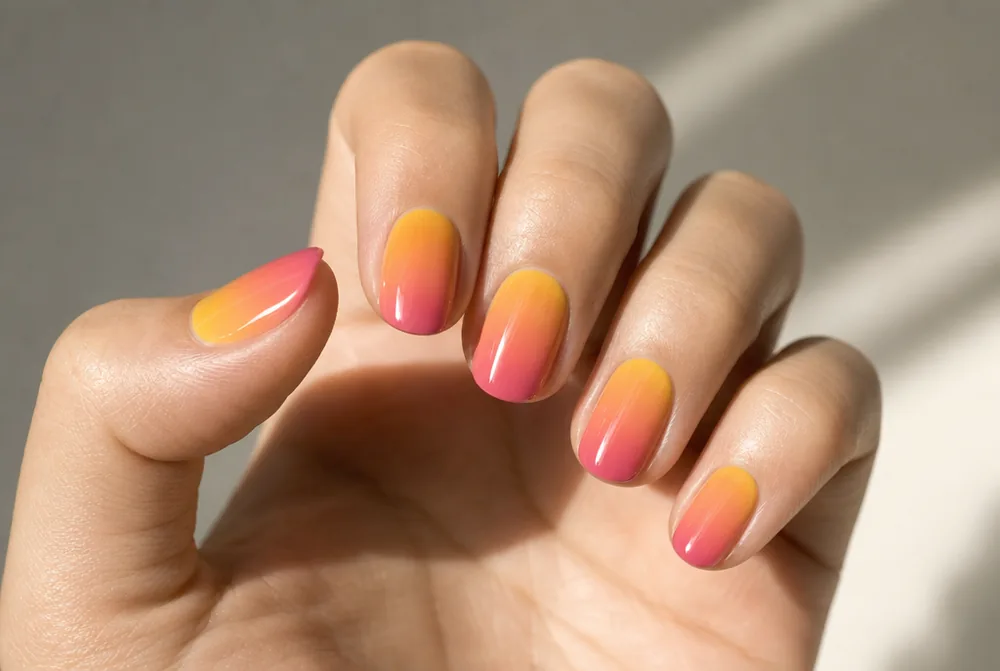
12. Sunset Ombre
Yellow into orange into pink, running the length of the nail. It is the most work here and the most striking. Ask for it on a longer shape; three colours need room.
13. Orange Aura
A blurred orange halo on a warm nude base, fading to nothing at the edges. It is the warmest aura and it reads like light rather than colour. Technique in my aura nails guide.
14. Orange Micro French
A hairline of bright orange at the very edge of a bare nail. It is the smallest possible amount of a difficult colour and it works on hands that cannot wear a full orange.
15. Tortoiseshell
Amber and dark brown blotched over a caramel base, like a hair clip. Keep the blotches irregular or it turns into leopard, and keep it to two accent nails.
16. Orange with Gold Foil
Torn gold leaf on two rust nails, edges deliberately ragged. Gold against warm orange is one of the richest pairings in nails. More placements in my gold nail designs post.
17. Papaya
A creamy mid orange sitting between coral and tangerine, warm without being loud. It is the summer orange for people who find coral too pink.
18. Orange Cat Eye
Magnetic amber gel pulled into a vertical band of light, like tiger’s eye. It is the most expensive-looking orange here. Technique in my cat eye nails post.
19. Orange and White Dots
Small white dots on a bright orange base, limited to two nails. Keep the dots small and irregularly spaced or it reads as gift wrap. More in my polka dot nails guide.
20. Neon Orange
Full neon, which needs a white base underneath or it goes patchy and dull. It is a summer and holiday colour and it looks best on short nails and tanned hands. Two coats of white first, then two of neon.
21. Orange Toes
Orange on a pedicure, which is where the bright end of this family genuinely belongs. Feet carry saturated colour better than hands and a pedicure lasts four to six weeks. More in my toe nail designs guide.
22. Short Terracotta Squoval
Very short, soft square corners, one perfect terracotta. It is the most wearable orange manicure there is and it passes anywhere. My short gel nails post has more.
Muted orange versus bright orange
This is the distinction that decides whether orange works on you, and almost nobody names it in a shop.
Muted oranges have brown, grey, or pink mixed in: terracotta, rust, papaya, peach, coral. They sit against skin rather than on top of it, and they flatter nearly every hand because the added depth stops them competing with the skin’s own warmth.
Bright oranges are pure pigment with nothing softening them: tangerine, neon, true pumpkin. They read as a deliberate statement, they photograph beautifully, and on pale or ruddy hands they can genuinely make the skin look sunburnt.
The test is to hold the bottle against the back of your hand. If the skin around it suddenly looks redder, that is a bright orange on a hand that wants a muted one. Terracotta will fix it.
Which orange suits your skin tone
Orange is a warm colour by definition, so the usual rules apply more strictly here than with most families.
Warm and golden undertones, meaning green-ish veins and skin that tans, own this whole page. Terracotta, rust, papaya, tangerine, and amber all look alive on those hands. This is the family where warm skin has the most options.
Cool undertones should stay in the pink-leaning half: coral, peach, and a rosy terracotta all have enough pink to bridge the gap. A true tangerine on very cool skin tends to fight the hand.
Deep skin tones look extraordinary in saturated tangerine and true rust, where a pale peach can go chalky. Very fair hands should go muted and slightly deeper, since bright orange next to pale skin amplifies any redness.
Orange through the year
Orange is the most seasonal colour on this site, and the shade rather than the colour is what moves.
Peach and coral belong to spring and early summer, when they look fresh against skin that has not tanned yet. Papaya and tangerine belong to high summer and to holidays, where a bright reads as fun rather than loud.
Terracotta and rust belong to autumn, and they are the reason orange has its seasonal reputation at all. From September to November these behave like neutrals rather than like a colour choice.
Winter is the one stretch where orange is genuinely hard to place. If you want it in January, go deep and matte so it reads closer to brown, or move to the family next door entirely. My October nails guide covers where orange peaks.
Getting orange to apply evenly
Orange is one of the two worst families for patchy application, alongside yellow, and it is a pigment problem rather than a technique one.
Orange pigments have poor natural opacity, so a cheap bottle needs three or four coats to look like anything and still goes streaky. Buying a well-pigmented orange is worth more here than in almost any other colour family.
For neons specifically, use a white base coat underneath. Neon pigment is semi-transparent by nature, and painting it over a white layer is the only way to get the colour to read at full strength rather than looking dull and uneven.
Two thin coats two full minutes apart, brushed the same direction, and do not go back over a half-dry coat. That is what drags a low-opacity colour into visible lines.
Orange stains, and how to stop it
Bright orange is the single worst staining colour there is, worse than red and worse than emerald, and it is the reason people end up with visibly yellow nails.
Always use a base coat, and use two thin coats rather than one under anything brighter than a terracotta. With neon orange this is not optional at all; a single skipped base coat can stain a nail plate in one wear.
If staining happens, do not scrub or buff repeatedly. A few days bare with cuticle oil twice a day and it grows out faster than any whitening product works. One gentle pass with the finest side of a four-way file takes off the top layer if you are impatient.
Gel stains less than regular polish because the cured base layer acts as a barrier, which is a genuine argument for gel if bright orange is a shade you wear often.
Orange by length and shape
Length changes orange more than it changes most colours, because the brights get louder with every millimetre of surface.
Short square is where bright orange belongs. There is not enough surface for it to shout, and the straight edge gives it a hard boundary that reads graphic rather than loud. Neon in particular should be short.
Medium almond suits the muted end best. The taper softens terracotta and rust and makes them read expensive, and it is the combination I would pick for autumn.
Long nails and bright orange is the one pairing to avoid, since it is the most costume-adjacent combination in this whole family. If you have length, go terracotta or use the French and micro French versions. My nail shapes guide covers picking a shape.
What goes with orange nails
Orange sits well against more of a wardrobe than people expect, with two clear exceptions.
Gold is the metal. Warm orange and gold jewellery is one of the easiest pairings in nails, and it is a large part of why rust photographs so well in autumn. Silver against a warm orange fights unless the orange is a coral.
In clothing, orange works beautifully with cream, camel, denim, white, olive, and every brown. It is the nail colour I would pick to go with a khaki or tan wardrobe, since they share an undertone.
What to avoid is orange against cool pink or true purple, where the undertones argue openly. If you want colour alongside orange, keep it warm: rust, burgundy, olive, or a deep red.
The oranges worth owning
Two bottles cover this whole page, and orange is a family where the cheap end genuinely shows.
One terracotta is the workhorse and the one that behaves like a neutral. Essie and OPI both sit at $10 to $12 here and both go opaque in two coats, which is the test that matters with a low-opacity pigment.
One coral covers spring, summer, and holidays, and it is the version that suits the widest range of hands. Olive & June sits around $9 and their formula is genuinely good.
Skip buying a neon unless you have a specific holiday in mind, and if you do, buy a white base coat at the same time. For gel, DND and Beetles both make oranges around $8 with good payoff.
FAQ
Do orange nails suit everyone?
Muted oranges like terracotta, rust, coral, and peach suit almost every hand, because the brown or pink in them stops the colour competing with the skin’s own warmth. Bright tangerine and neon are more particular and suit warm undertones and deep skin tones best. If orange has made your hands look sunburnt before, you tried a bright one and want a muted one.
Why does orange nail polish stain my nails?
Orange pigments are among the most staining there are, and bright and neon shades are the worst offenders on the whole shelf. Always use two thin coats of base coat under anything brighter than a terracotta. If staining has happened, a few days bare with cuticle oil twice a day clears it faster than any whitening product.
What season are orange nails for?
The shade decides it rather than the colour. Peach and coral read spring, papaya and tangerine read summer, and terracotta and rust read autumn, which is when orange peaks. Winter is the only stretch where orange is hard to place, and a deep matte terracotta is the way to do it.
Why is my orange polish streaky?
Orange pigment has poor natural opacity, so cheap bottles go patchy no matter how carefully you apply them. Buy a well-pigmented one that covers in two coats, and for neons paint a white base coat underneath first. Two thin coats two minutes apart, brushed in the same direction, and never go back over a half-dry coat.
If you are trying orange for the first time, buy a terracotta and keep it short. And if it still reads too warm on your hands, my red nail designs guide covers the cooler family next door.