Almond is the shape I recommend more than any other, and it’s not close. The taper narrows the end of the finger, which makes the whole hand look longer, and it does that at any length. Square nails make short fingers look shorter and stiletto nails only work on a narrow slice of people. Almond just works, on almost everyone, which is a rare thing in nails.
Here are 22 almond nail designs from bare nude to full chrome, plus what almond actually is versus oval and stiletto, how to ask for it so you get what you pictured, and how to stop the tapered sides from snapping. If you want the shortest version of this shape specifically, my short almond nail ideas post covers it in detail.
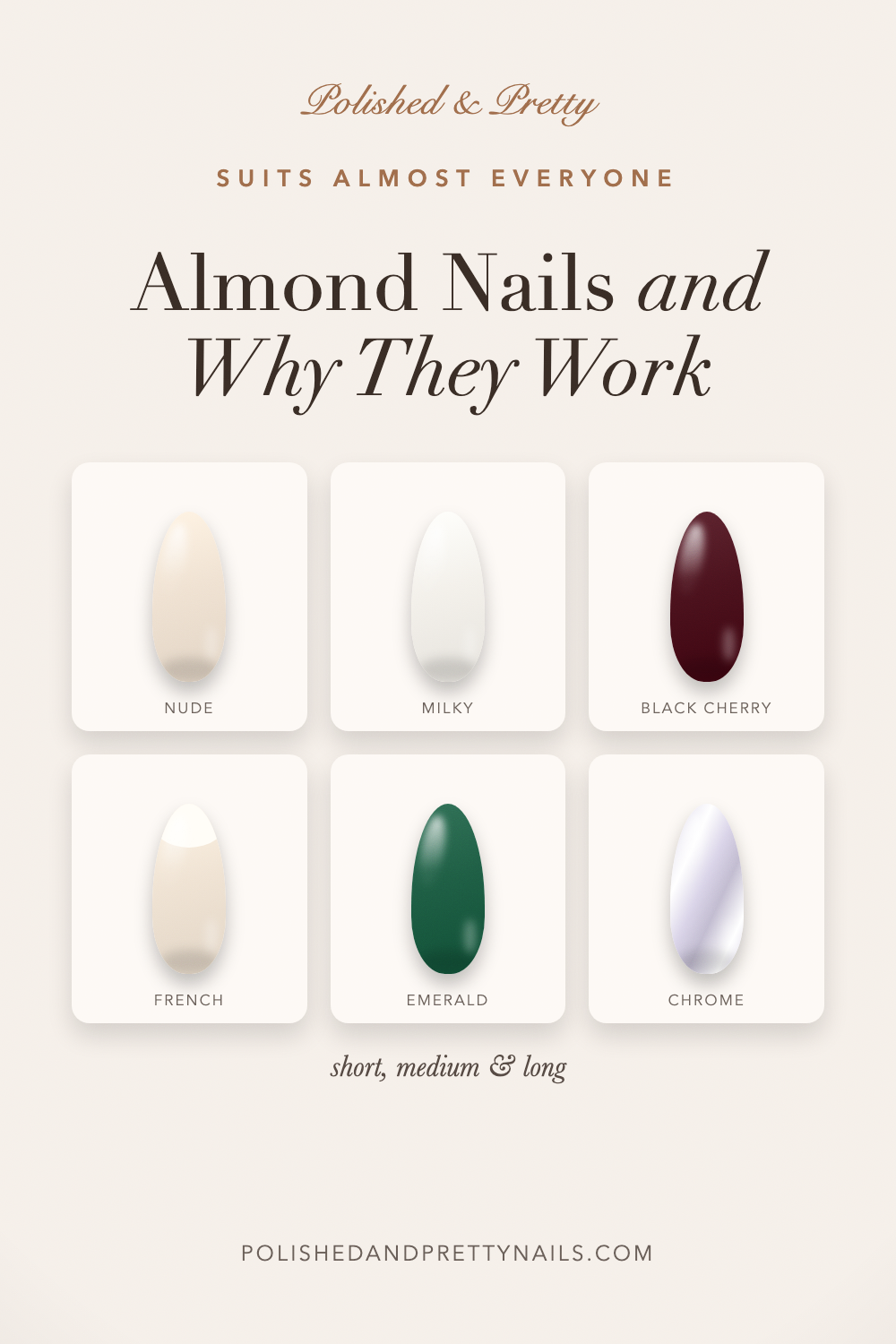
22 almond nail designs
1. Long Nude Almond
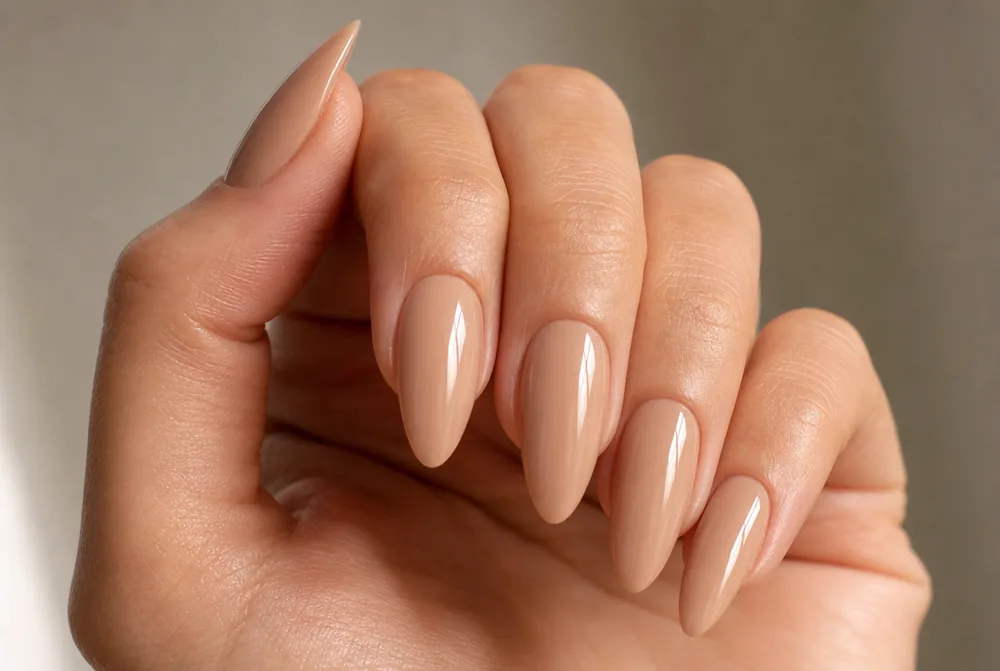
Long almond in a nude matched to your skin, which is the single most-photographed manicure on the internet. The shape plus the matched color makes fingers look impossibly long. Getting the nude right matters more than the length; my nude nail designs guide covers matching.
2. Short Almond Milky White
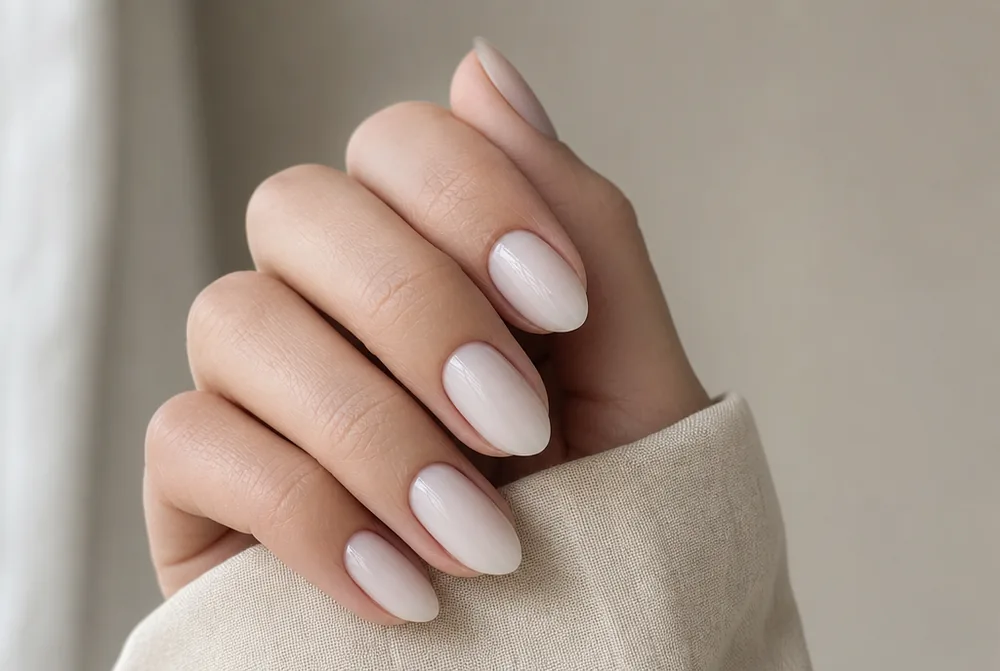
Short almond with a semi-opaque milky white wash. It’s the clean-girl manicure and the most low-maintenance thing on this list. The soft shape keeps it from looking blunt at short length.
3. Almond French Tip
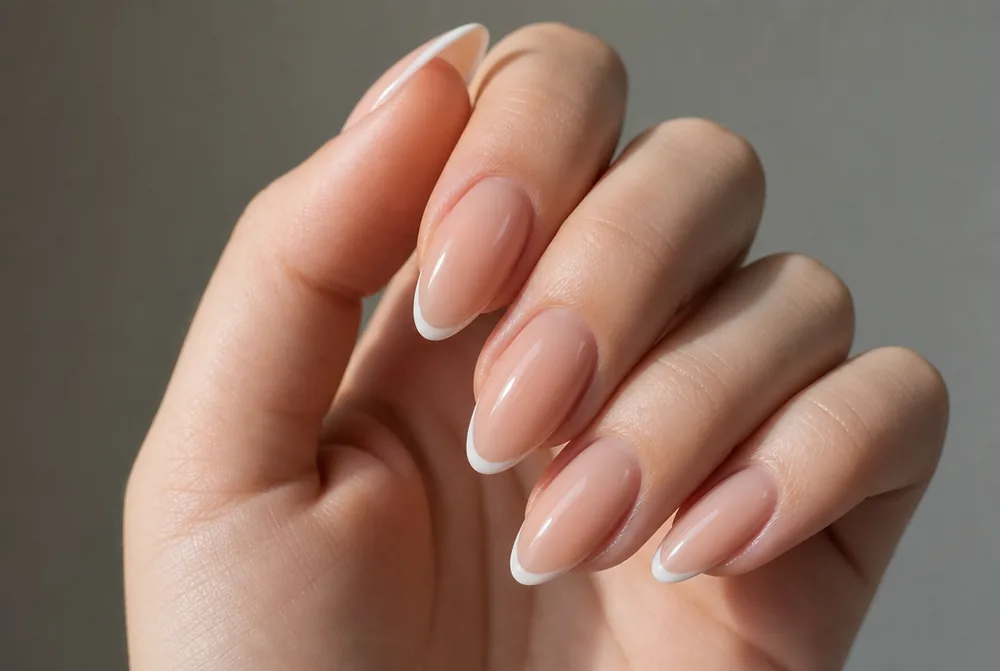
A French tip on almond curves with the shape rather than sitting flat, which is why it looks softer than a square French. Keep the tip thin so the taper still reads. My French manicure guide covers the smile line.
4. Blackened Cherry Almond
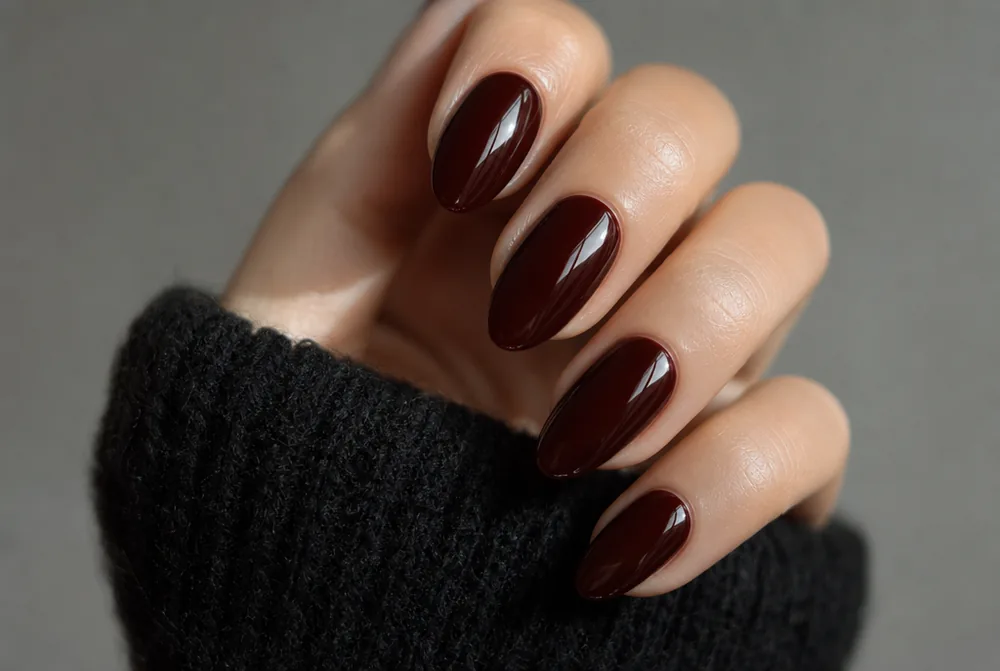
Deep red with black in it on a medium almond. The taper softens a dark color that would read severe on a square nail. This is my default when I want to look pulled together.
5. Almond Chrome
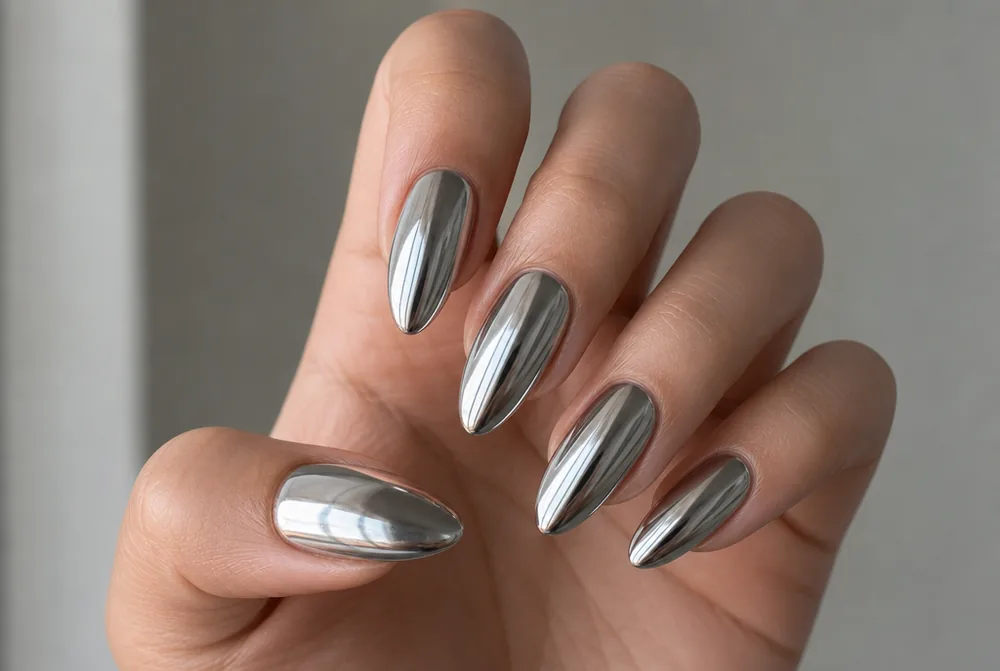
Mirror chrome on almond catches light differently along the curve than it does on a flat square, so the whole nail looks lit. It’s the shape chrome was made for. Needs gel to hold the powder.
6. Almond Cat Eye
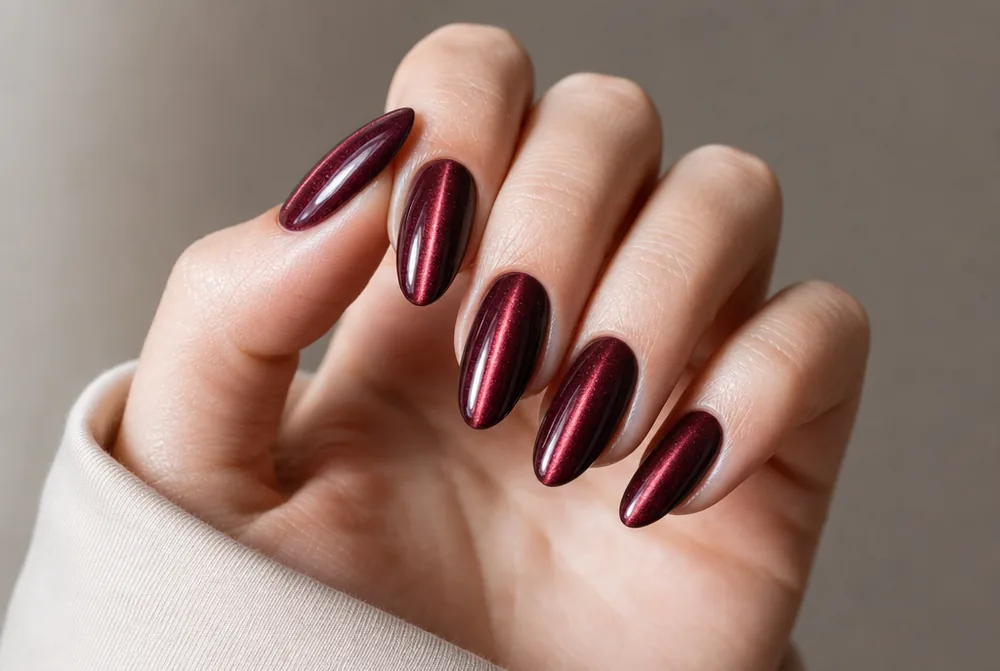
A magnetic cat eye on almond, with the light band running down the length of the taper. The shape stretches the stripe, which makes the effect stronger than on a short square. Technique in my cat eye nails post.
7. Almond Ombre Fade
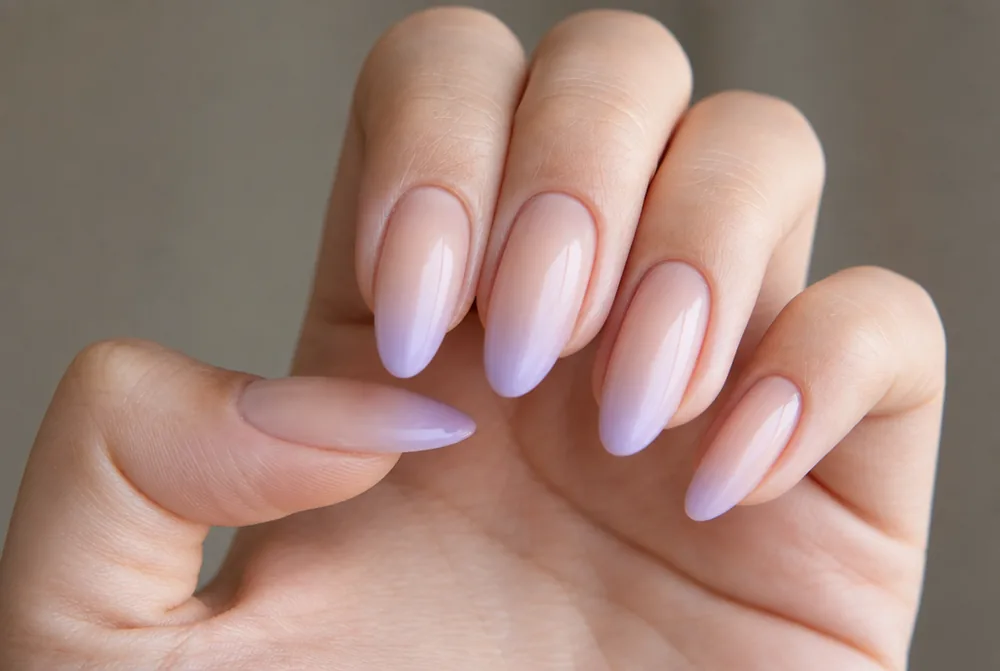
A gradient running from nude at the base to color at the tip, following the taper. Grow-out is invisible, which is the practical case. Sponge in three light passes and let each set.
8. Almond with Micro French
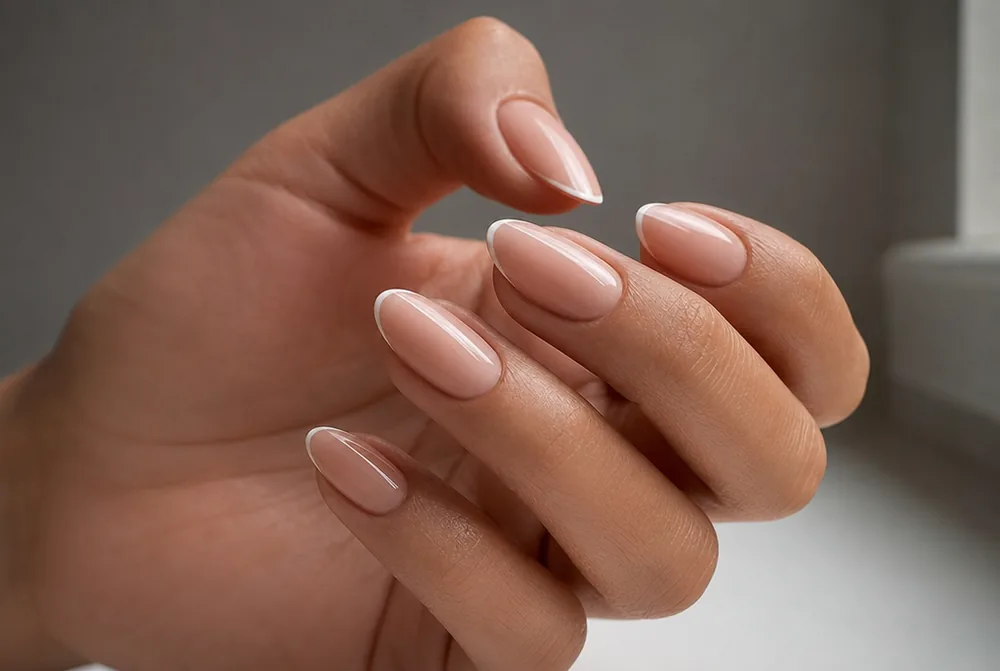
A hairline of white right at the tip of a bare almond nail. It’s the most minimal design here and it exaggerates the taper. Best on a well-filed nail, since there’s nowhere to hide.
9. Almond Glazed Pearl
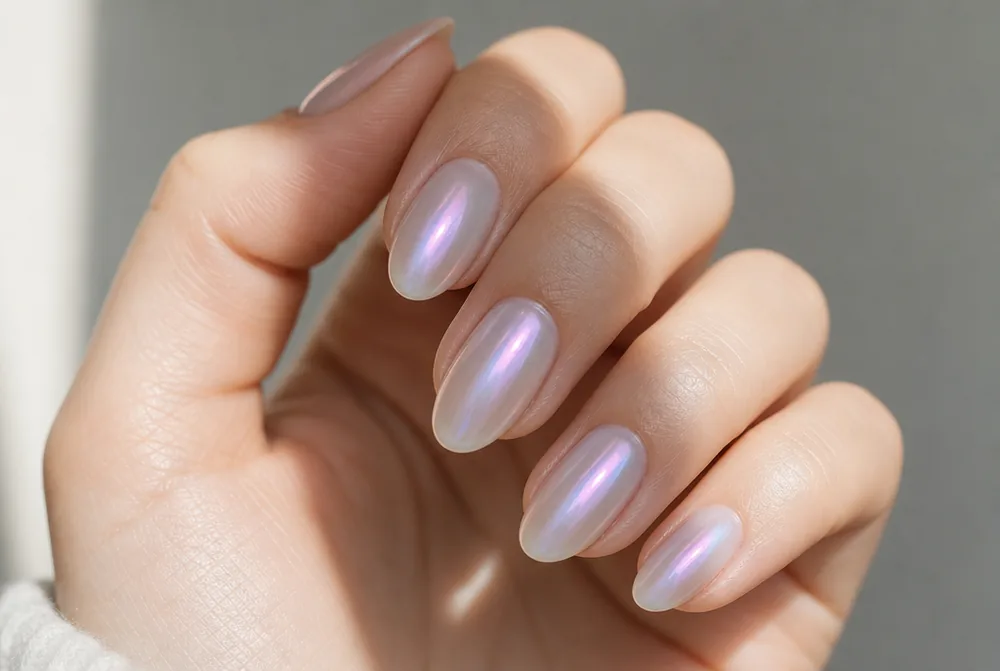
Milky base under pearl powder for the wet-glazed look. On almond the shift travels along the curve as your hand moves. Full method in my chrome and glazed donut nails guide.
10. Almond Aura
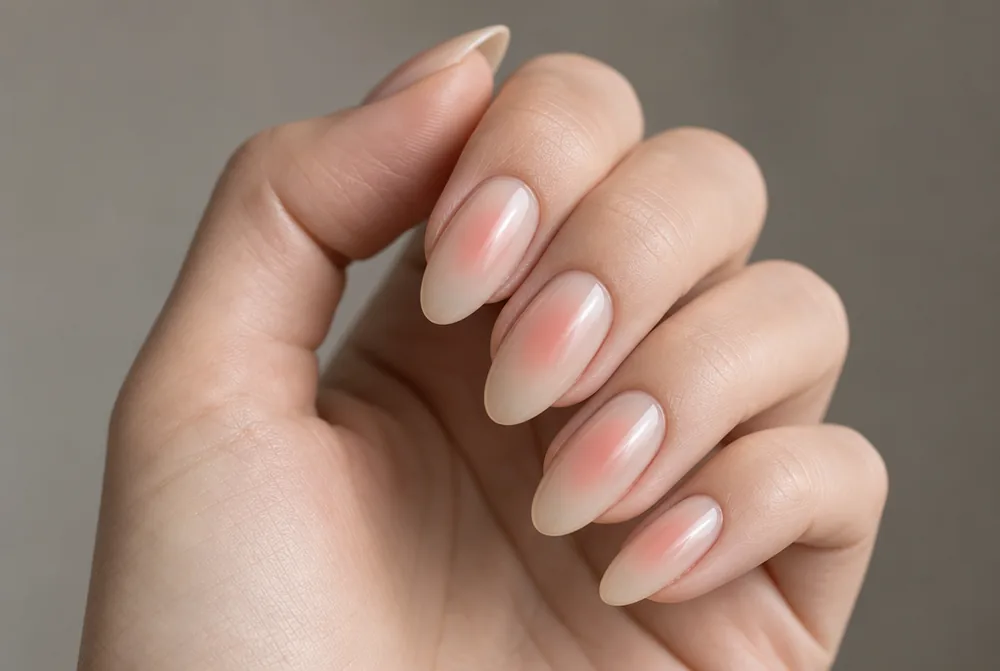
A blurred halo of color glowing from the middle of the nail. The oval field of an almond nail suits a round aura better than a square nail does. Airbrush is easiest; a sponge works.
11. Almond Velvet Matte
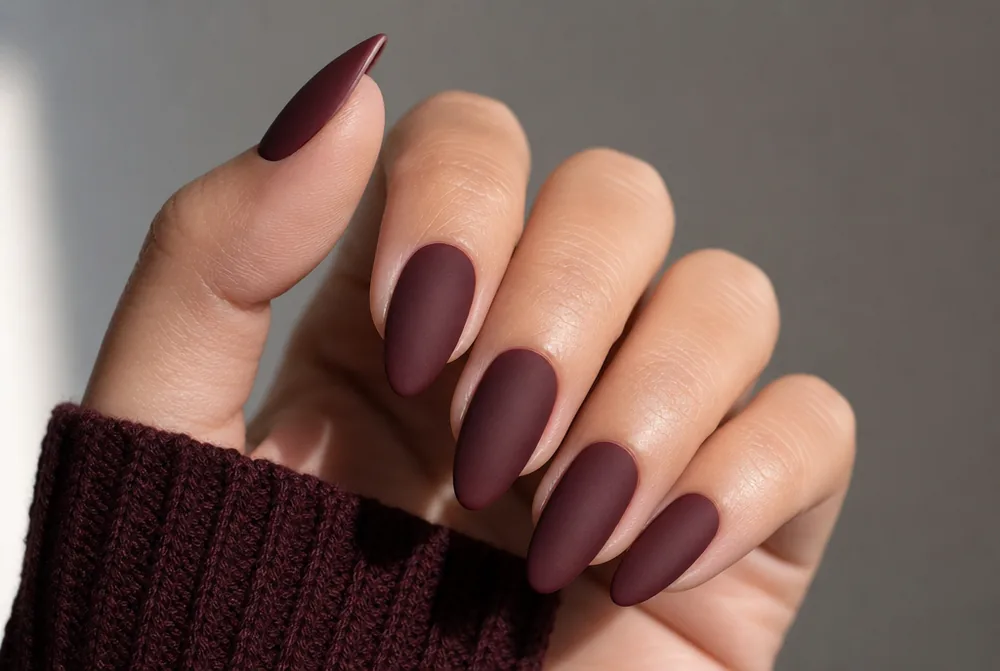
Any deep shade under a matte top coat. Matte on almond looks like suede stretched over the curve, and it hides ridges better than gloss. Refresh the matte coat every five days.
12. Almond with Gold Line
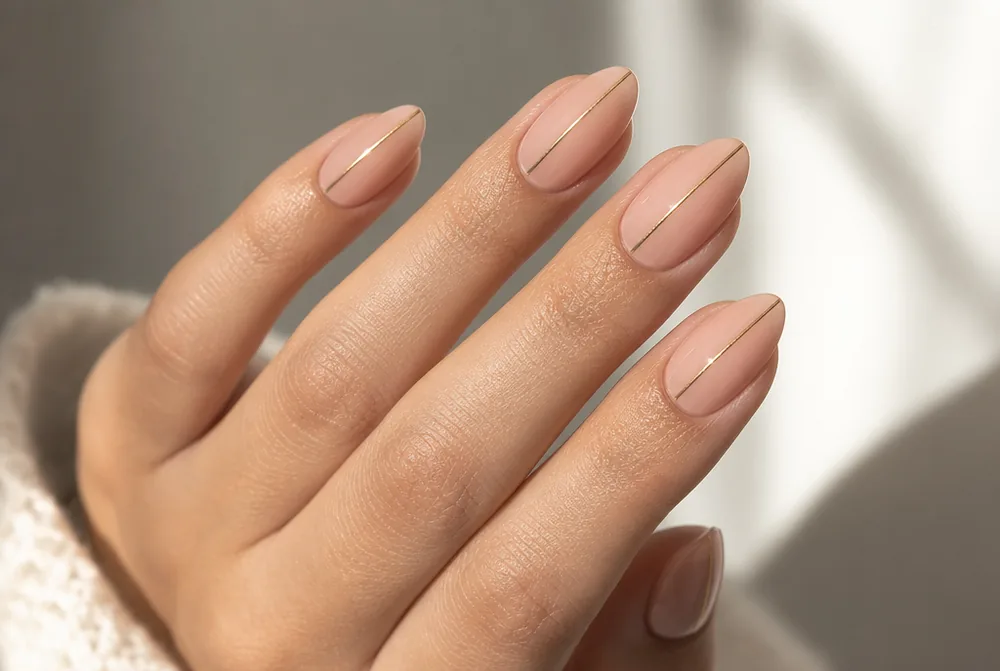
One thin gold line running the length of the nail, which follows and emphasizes the taper. It’s the smallest nail art there is and it works especially well on this shape. More in my gold nail designs post.
13. Emerald Almond
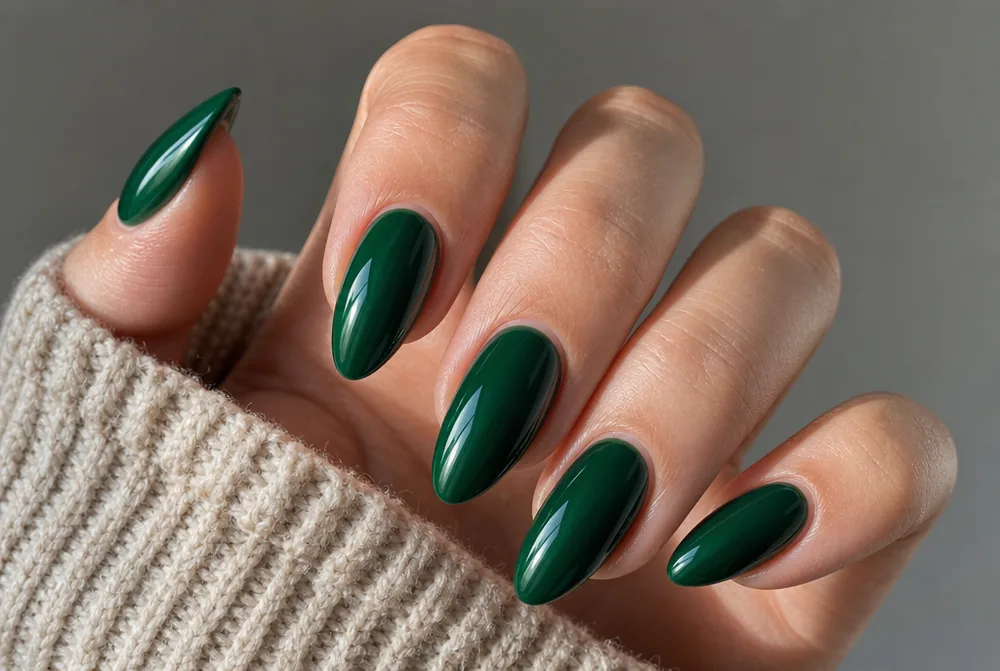
Saturated emerald on a medium almond, which looks like a stone set in a ring. The shape is what turns a flat green into something jewel-like. Full range in my emerald green nails guide.
14. Almond Swirl
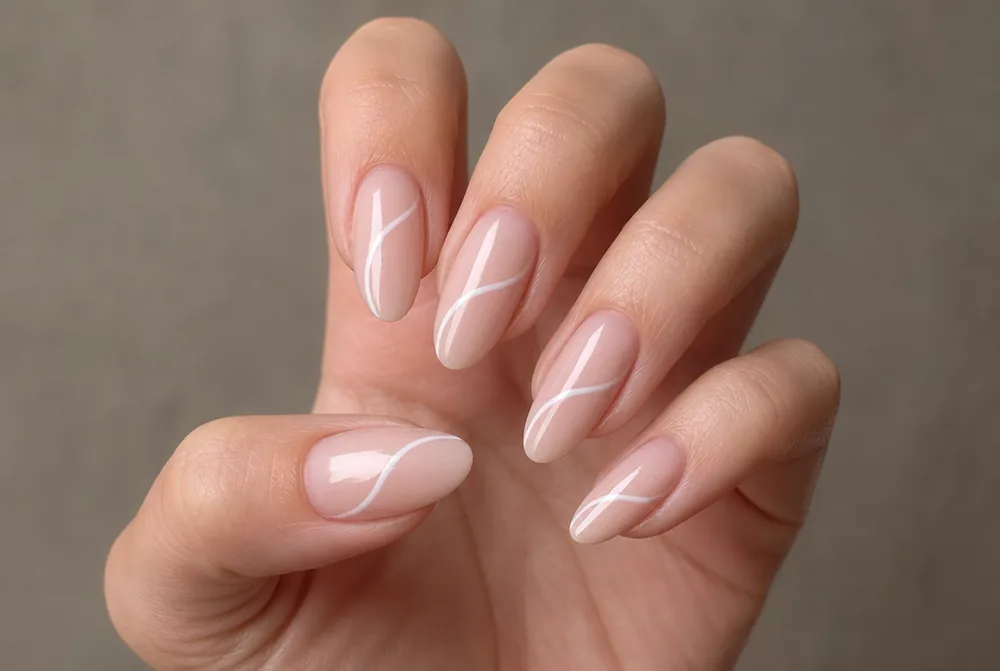
A single curved white line sweeping across the nail. The curve of an almond nail gives the swirl somewhere to go, which is why the design started on this shape. One confident stroke each.
15. Almond Glitter Tip
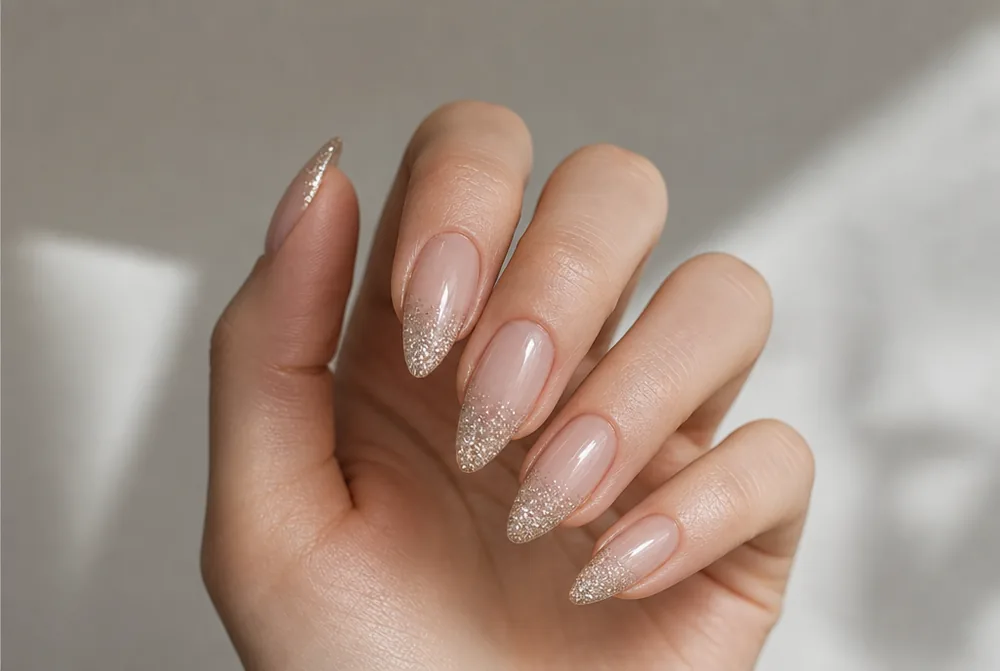
Fine glitter packed at the tip fading down. On almond the glitter concentrates at the narrowest point, which reads more delicate than the same design on a square. Fine glitter, not chunky.
16. Almond with Chrome Tips
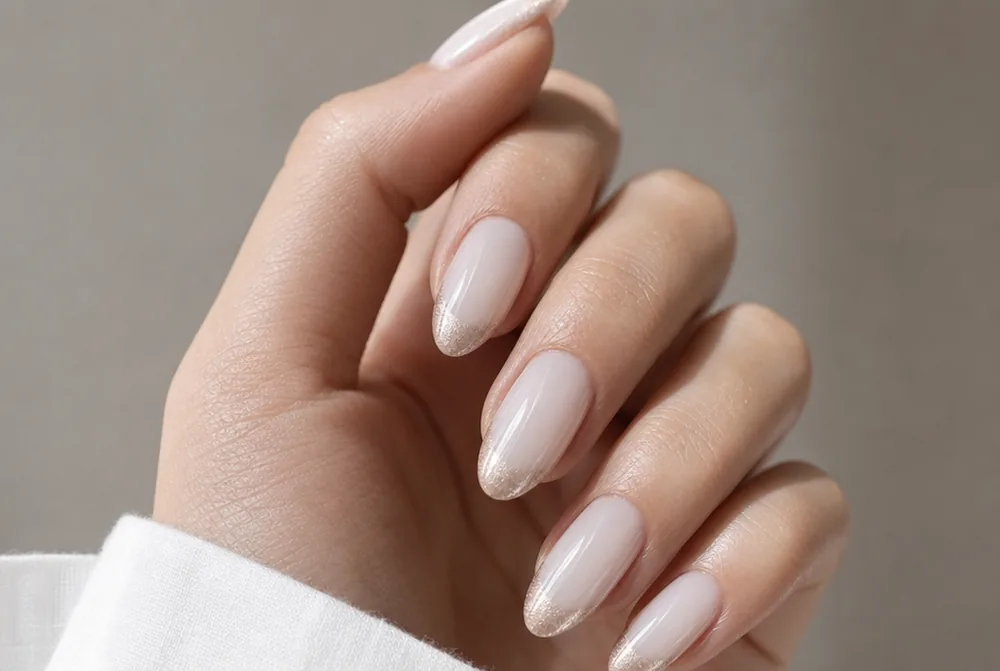
Chrome on the free edge only, so the point looks dipped in metal. It’s the modern replacement for a French and it flatters the shape especially. Needs gel to hold the powder.
17. Hot Pink Almond
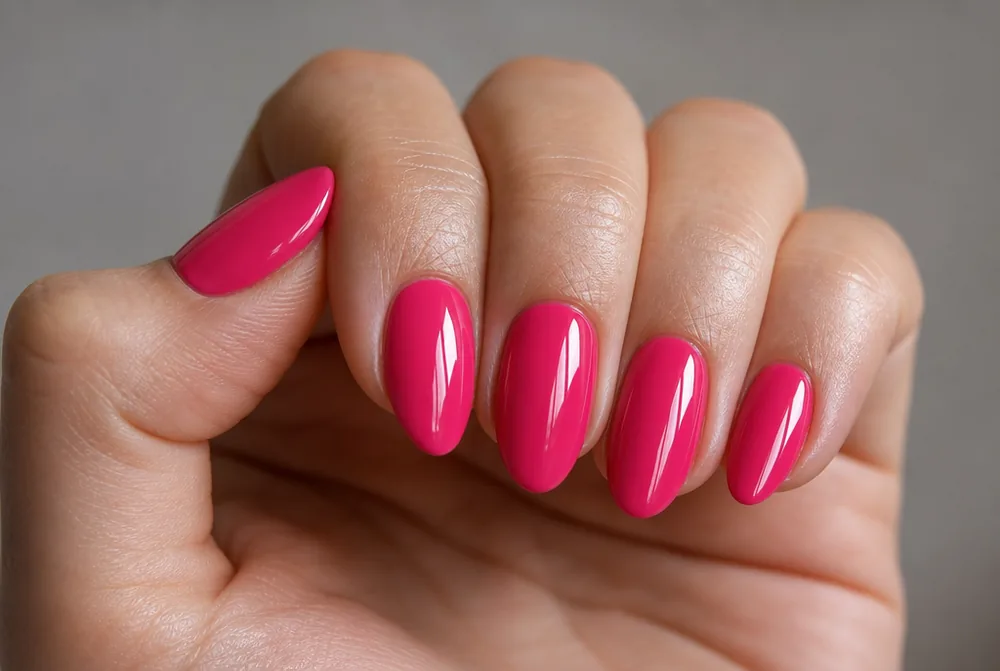
Saturated pink on a medium almond, which is where a bright color is most flattering. The taper softens the intensity so it doesn’t read loud. More in my pink nail designs post.
18. Almond with Rhinestone Cuff
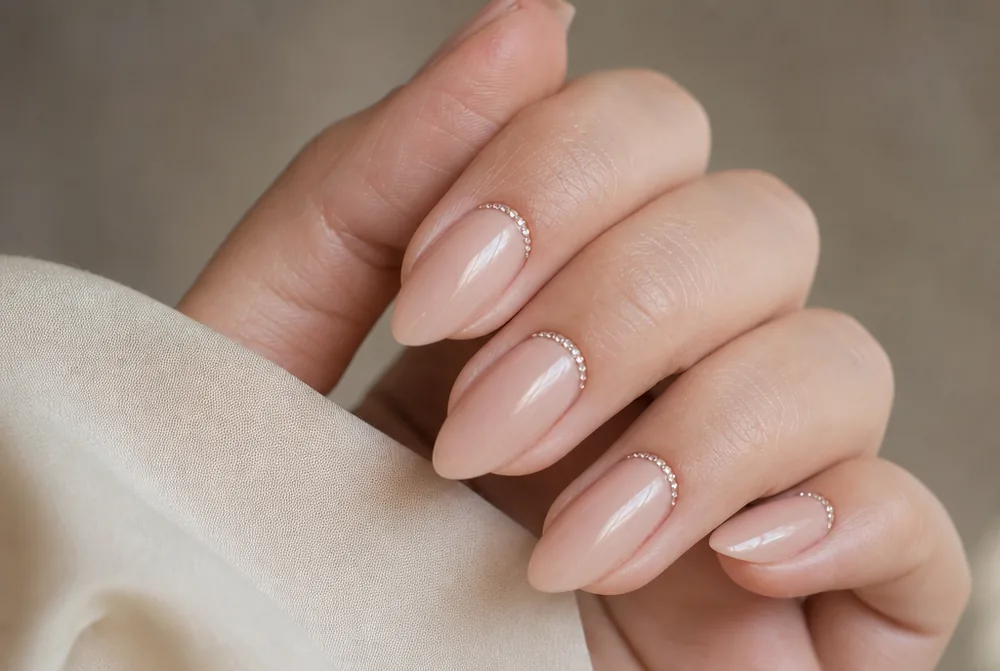
A thin row of tiny crystals at the cuticle on two nails. At the base rather than the tip, which keeps them off sleeves and works with rather than against the taper. Ask for gel sealing all round.
19. Almond Black Gloss
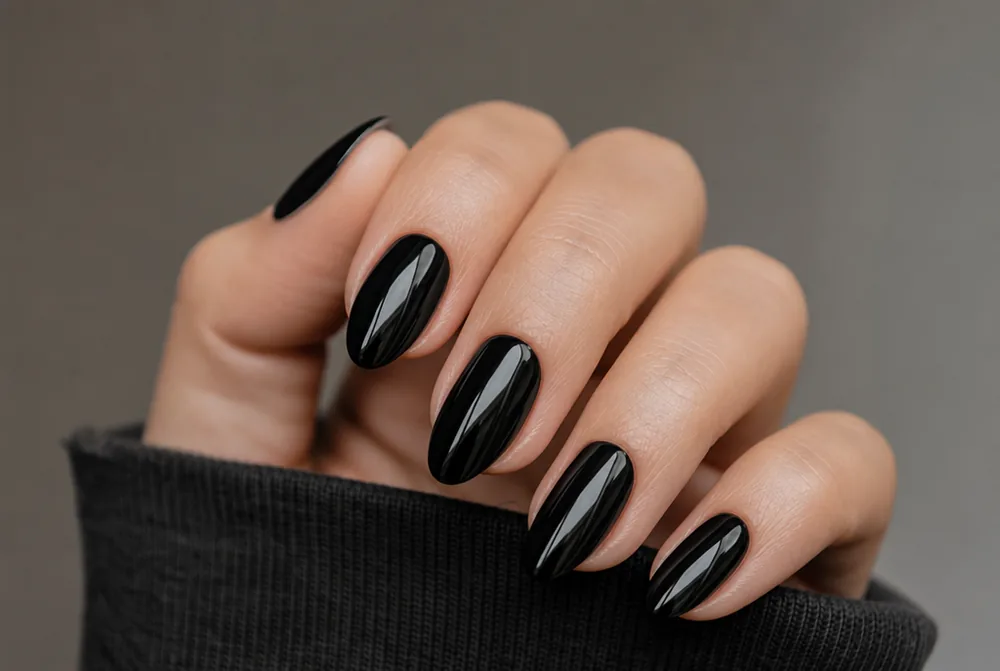
True black on a medium almond, which is one of the sharpest manicures there is. The taper stops black reading as costume the way a long square can. My black nail ideas post has more.
20. Almond Marble
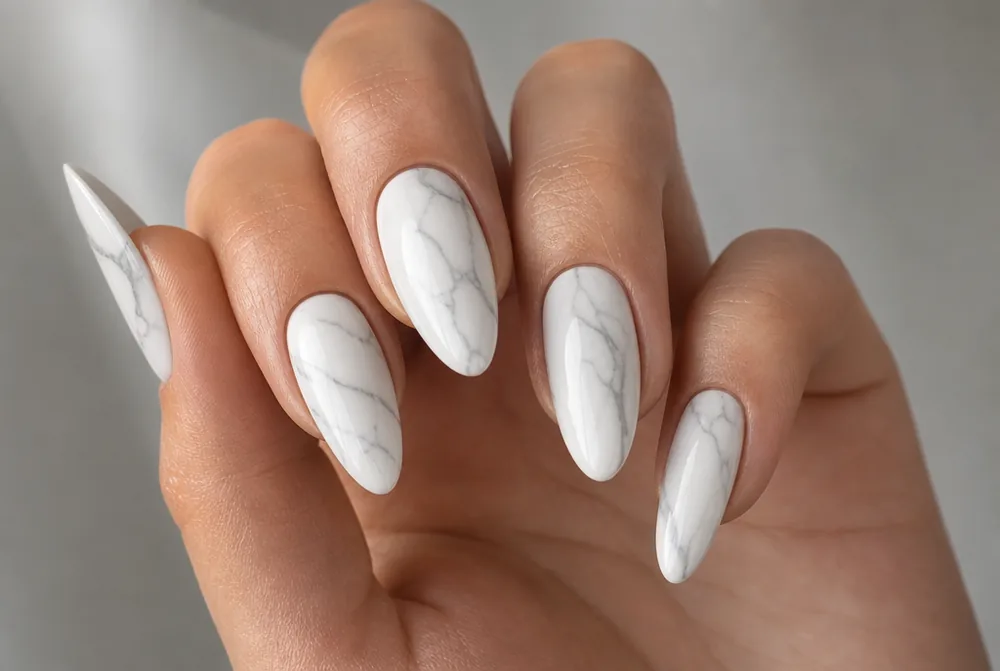
White base with fine veining pulled through it like stone. Veining follows the curve of an almond nail more naturally than it does a square corner. Bring a photo, since marbling varies by tech.
21. Almond Tortoiseshell
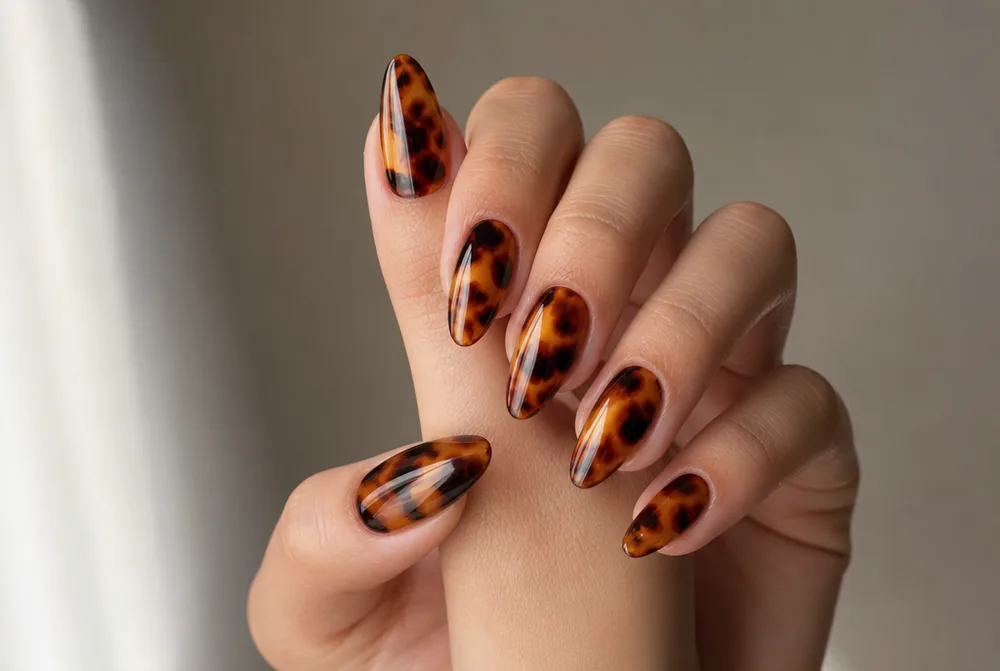
Amber and brown blotching over a caramel base, like a hair clip. It’s the most autumnal design here and it suits warm undertones especially. Keep the blotches irregular or it looks like leopard.
22. Almond Toe Match
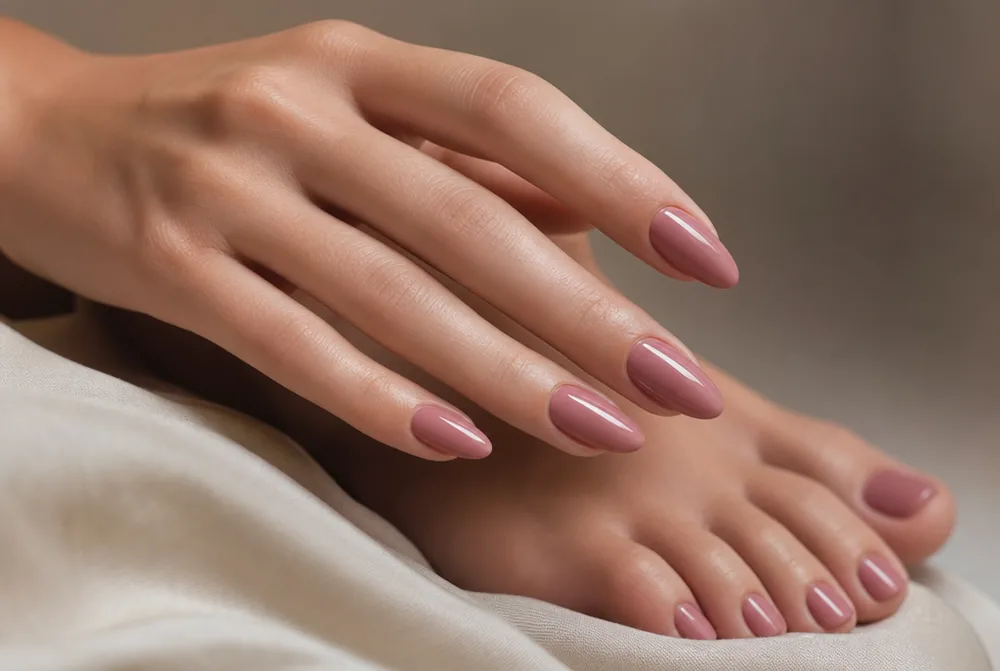
The same shade on hands and feet, with the hands filed almond. Toes can’t be almond, but matching the color ties the two together. Pedicures hold four to six weeks, so pick a shade you’ll want that long.
Almond, oval, and stiletto are different shapes
These three get confused constantly, and the confusion is why people leave the salon with something they didn’t ask for.
Almond tapers along the sides and finishes in a soft rounded point, like the nut. The tip is narrower than the base but it’s still curved rather than sharp. That soft point is the defining feature.
Oval keeps the sides straight and just rounds the tip, so the nail is the same width all the way up. It looks similar in a photo and behaves completely differently, since there’s no taper to elongate the finger.
Stiletto tapers to an actual sharp point. It needs real length and it breaks constantly. If a tech starts filing your sides in hard and the tip is going pointed rather than rounded, stop them; that’s stiletto, not almond.
How to ask for almond nails
Say “almond, with a soft rounded tip, not pointed” and you’ll get it right most of the time. Bring a photo anyway, because almond is filed differently in different salons.
Specify how much taper you want on the sides. Heavy tapering looks dramatic and weakens the nail; light tapering is stronger and still elongates. If you use your hands a lot, ask for a gentle taper.
Length is the other half. Almond works from very short to very long, but a very short almond needs a gentle taper or the sides get filed into nothing. Ask the tech to keep the sidewalls rather than filing them in.
If your natural nails are wide and flat, say so. A wide nail bed needs a longer free edge to make an almond read properly, and a good tech will tell you that before filing.
Stopping almond nails from breaking
Almond breaks more than square does, and it’s always the same failure: the tapered sidewall gives out where it’s thinnest.
The fix is to file less aggressively at the sides. Every millimetre you take off the sidewall is structure you don’t get back, and a gently tapered almond is nearly as flattering as a sharply tapered one while being far stronger.
File in one direction rather than sawing back and forth. Sawing creates micro-tears along the edge and those are where breaks start. A glass file is gentler than an emery board and lasts years.
Cuticle oil twice a day genuinely matters here. Dry nails are brittle nails, and a brittle taper snaps where a flexible one bends. If you break almonds constantly, go shorter before you give up on the shape.
Who almond flatters most
Almond suits more hands than any other shape, but there are a few cases where it’s a particularly good call.
Short or wide fingers benefit most, since the taper does the elongating that the finger doesn’t. This is the single best shape if you’ve ever thought your hands look stubby in photos.
Wide nail beds work well with almond too, as long as there’s enough free edge for the taper to happen. If your nails are wide and you keep them very short, a soft squoval may serve you better until they grow.
Narrow nail beds are the one case to be careful with. Heavy tapering on an already narrow nail can look spindly, so ask for a gentle taper. My nail shapes guide walks through matching shape to hand.
Filing an almond shape at home
Almond is one of the few shapes you can genuinely file yourself, as long as you work from a centre line rather than eyeballing each side.
Start by filing the tip straight across, square, at the length you want. That flat edge becomes your reference, and skipping it is why home almonds come out crooked. Do all ten nails to the same length before you shape any of them.
Then file each corner in toward an imaginary point above the centre of the nail, alternating sides so you take the same amount off each. Four or five passes per side, then check the nail head on. Symmetry is easier to judge looking down the finger than from above.
Finish by softening the tip so it curves rather than points. A glass file costs about $10, lasts for years, and is far gentler on the free edge than a paper emery board. File in one direction only.
Almond at short, medium, and long
Almond behaves like three different shapes depending on length, which is part of why it suits so many people.
Short almond reads practical and tidy. There is no length to catch on anything, and the gentle taper still lengthens the finger. This is the version for anyone who types, cooks, or has small children, and my short gel nails post covers what holds up at that length.
Medium almond is the most flattering overall and the length I would pick if I could only have one. There is enough free edge for the taper to be obvious without the fragility that comes with real length.
Long almond is the editorial version, and it is where nude and chrome finishes look their best. It also breaks the most, so it needs gel or a builder overlay for structure rather than natural nail alone.
FAQ
Do almond nails suit everyone?
Almond flatters more hands than any other shape because the taper elongates the finger, and it works at short, medium, and long lengths. It’s especially good on short or wide fingers. The one adjustment worth making is a gentler taper if your nail beds are narrow.
What is the difference between almond and oval nails?
Almond tapers along the sides to a soft rounded point, while oval keeps the sides straight and only rounds the tip. That taper is what makes almond elongate the finger, which oval doesn’t do. Ask for “almond with a soft point” rather than just “almond” to avoid getting an oval.
Are almond nails hard to maintain?
Slightly more than square, because the tapered sidewall is the weakest point and it’s where breaks happen. Filing the sides gently rather than aggressively solves most of it, along with cuticle oil twice a day. If you break them regularly, go shorter before switching shapes.
Can you have short almond nails?
Yes, and short almond is one of the most practical shapes there is, since it keeps the elongating taper without any length to catch. Ask the tech to keep the sidewalls and use a gentle taper, or a very short almond ends up filed into an oval. There’s a full set of them in my short almond nail ideas post.
If you’re switching shapes for the first time, go medium length and gentle taper before committing to anything longer. And if almond turns out to be too soft for what you want, my coffin nail designs guide covers the sharper alternative.
Related and worth a look: stiletto nails and ombre nails.
If almond keeps breaking on you, the fix is usually to stop just short of the point. My oval nails guide covers that shape, which gives you most of the elegance and survives a normal week.