Matte nails do one thing no glossy manicure can: they hide ridges. A shine reflects every bump in the nail plate, and a matte finish absorbs the light instead, so an uneven nail reads as smooth suede. That alone is why I reach for a matte top coat more often as I get older, and it has nothing to do with the trend.
Here are 24 matte nail designs, plus an honest comparison of matte versus glossy, which colours actually suit the finish, and the maintenance problem nobody warns you about. There’s also a section on mixing matte and gloss on the same nail, which is where the finish gets genuinely interesting. If you want the opposite end, my chrome and glazed donut nails guide covers maximum shine.
24 matte nail designs
1. Matte Black
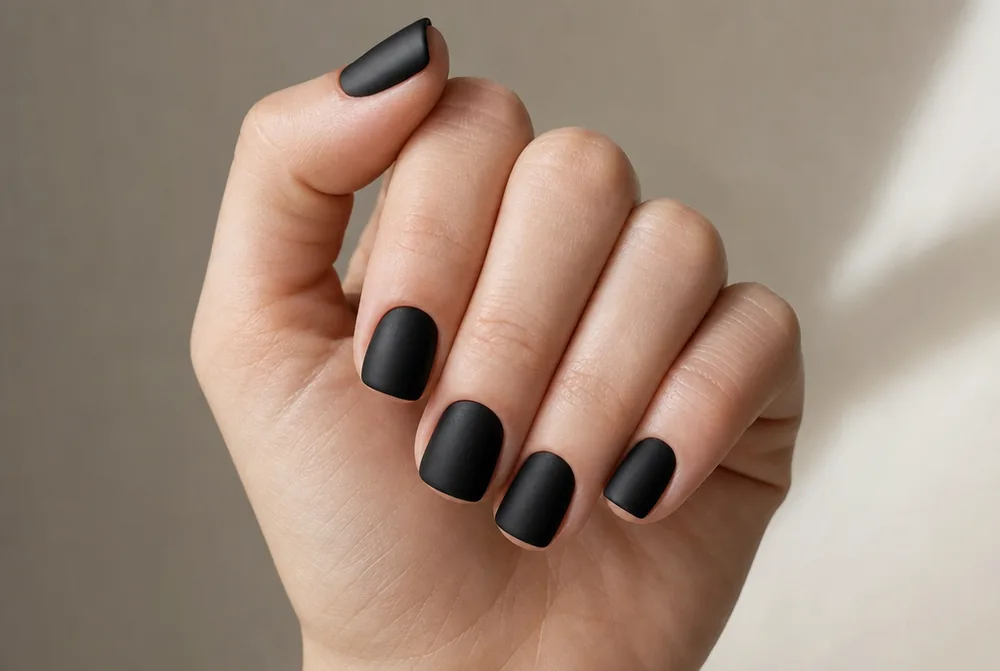
True black under a matte top coat, which turns it from severe into soft. It’s the single most-requested matte manicure and it’s best kept short. More in my black nail ideas post.
2. Matte Nude
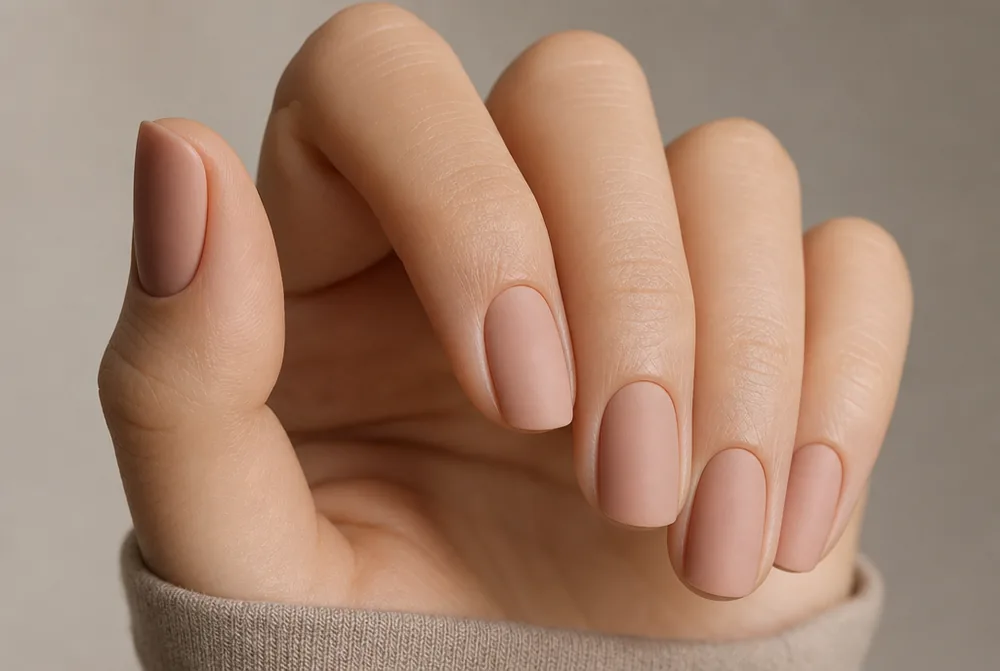
A matched nude with the shine taken off, which reads like skin rather than polish. It’s the most flattering matte here and the one that hides an uneven nail plate best. My nude nail designs guide covers matching.
3. Matte Burgundy
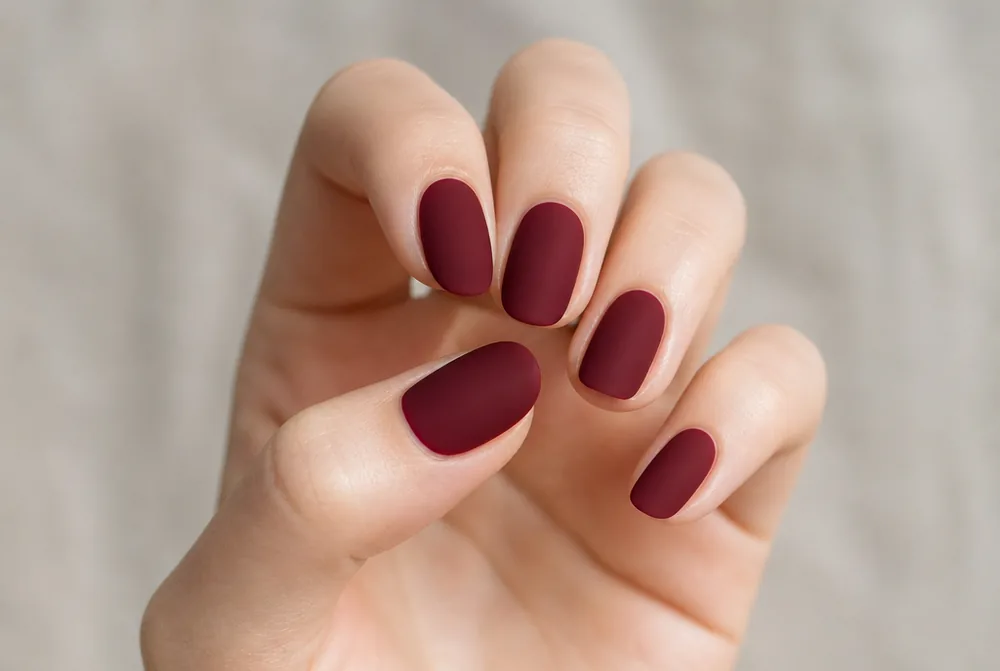
Deep wine under matte, which reads closer to lipstick than polish. It’s the most autumnal thing on this page and it stays right through winter. Full range in my burgundy nails guide.
4. Matte with Glossy Tips
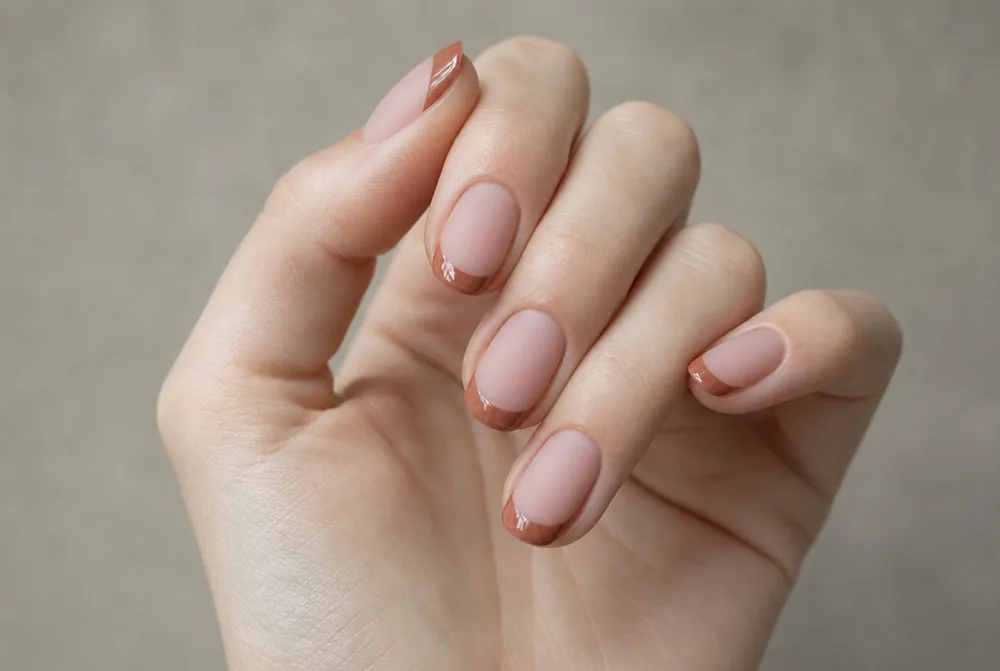
A matte base with the tip left glossy, so the French is texture rather than colour. It only shows when the light hits, which is exactly what makes it good. Paint the gloss after the matte coat, never before.
5. Matte Taupe Suede
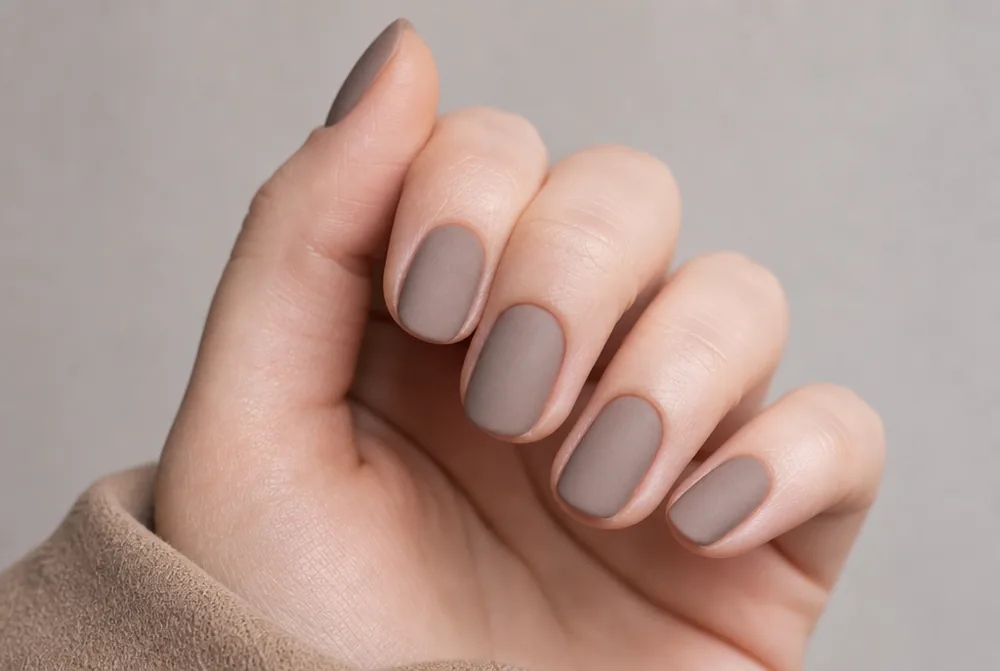
Warm taupe under matte, which genuinely looks like fabric. It’s the least attention-seeking manicure on the site and the one I wear most in January.
6. Matte Plum
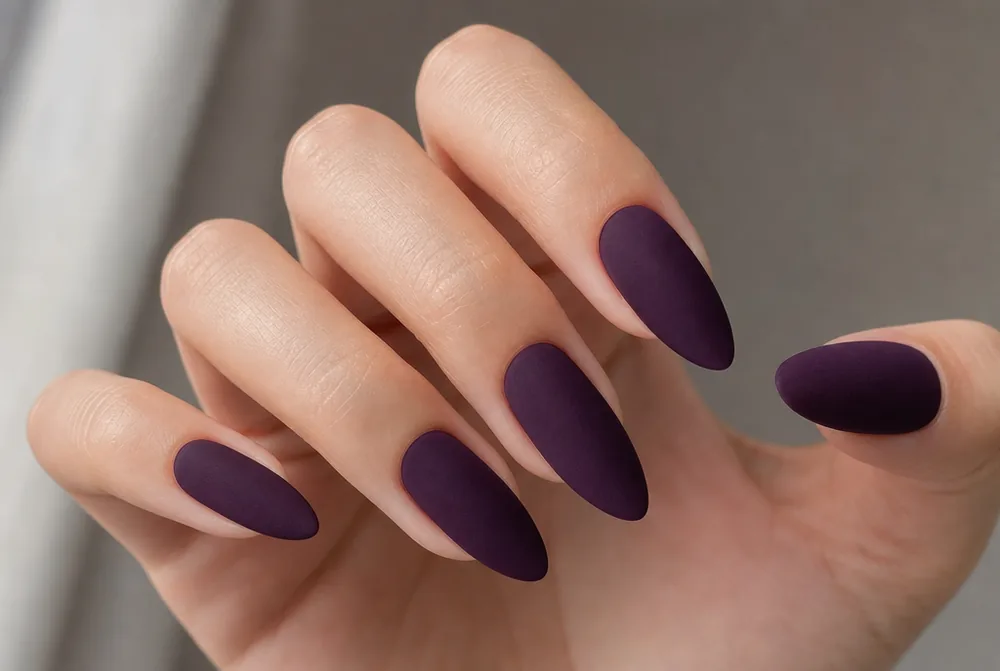
Deep plum with the shine removed, which is the moodiest colour here that still reads as a colour. Pairs with silver and badly with gold, in my experience. More shades in my purple nail ideas post.
7. Matte with Glossy Design
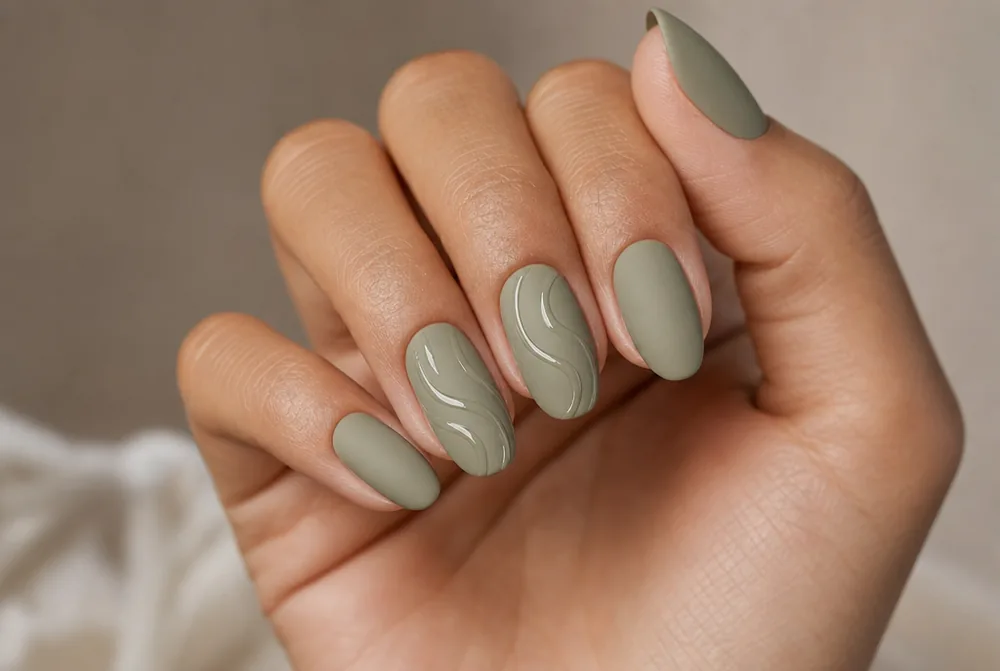
A design painted in clear glossy top coat over a matte base, so it’s invisible until the light catches it. It’s the subtlest nail art there is. Works with swirls, dots, or a single line.
8. Matte White
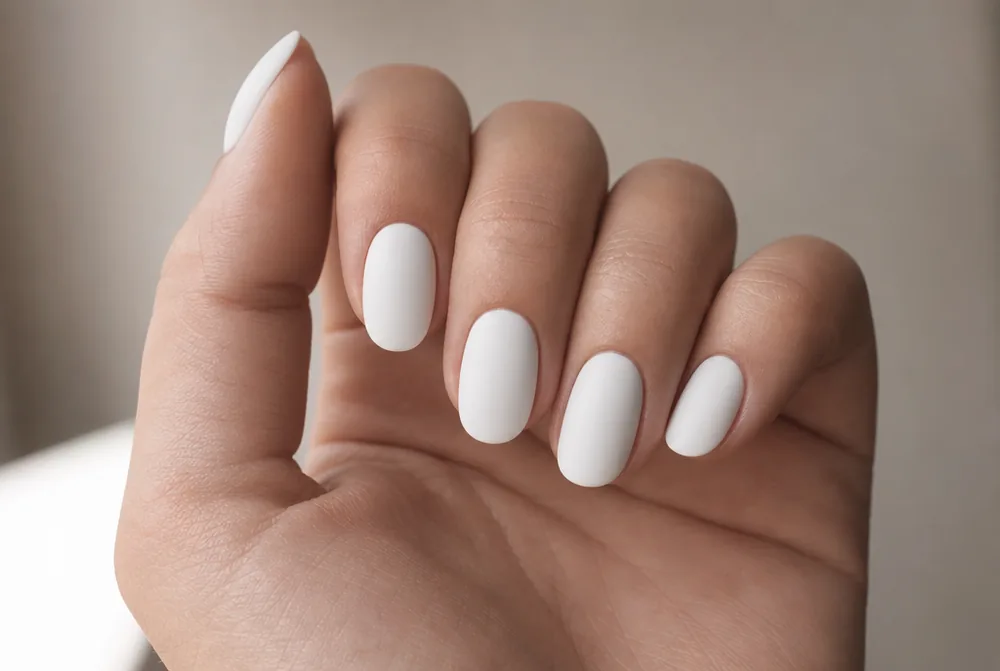
Opaque white under matte, which looks like unglazed porcelain. It’s softer than a glossy white and it suits fair hands better. More in my white nail designs guide.
9. Matte Forest Green
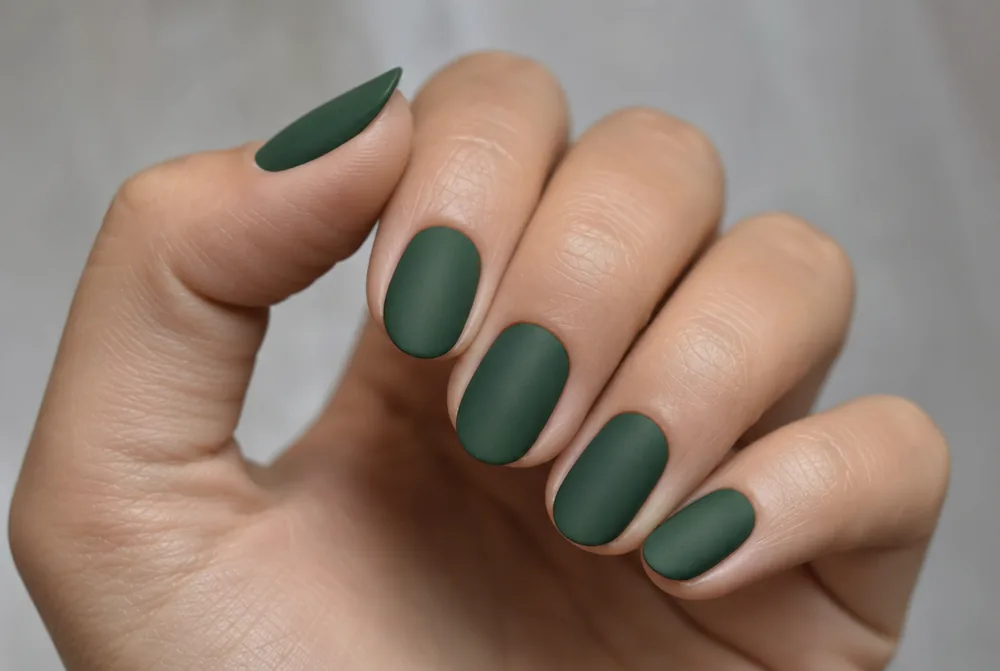
Deep pine under matte, which reads like felt. Green is one of the colours that gains the most from losing its shine. More in my green nail designs guide.
10. Matte Grey
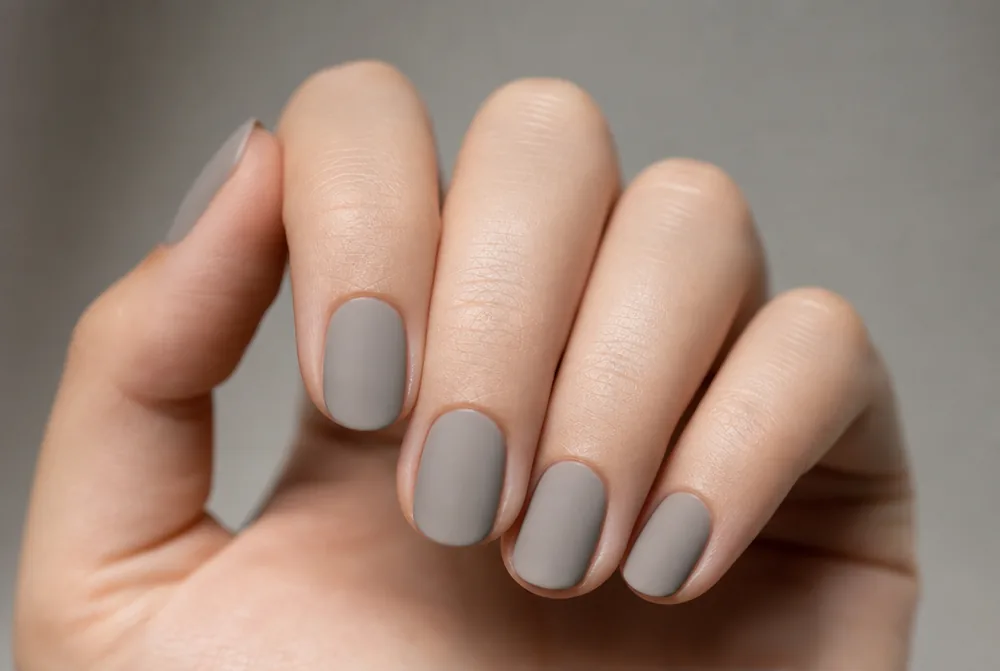
Mid grey with no shine, which is about as understated as a manicure gets. It’s the one I’d pick for a week of meetings.
11. Matte Red
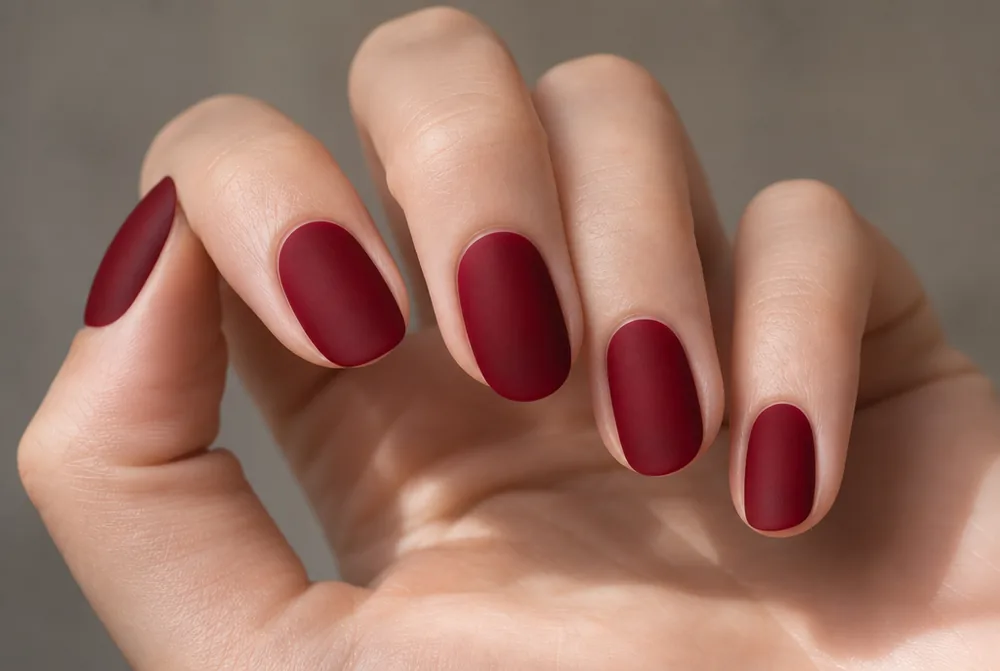
A cool red under matte, which is the closest a nail gets to a matte lipstick. It’s dressier than it sounds and it photographs well under warm light. More in my red nail designs guide.
12. Matte Croc Print
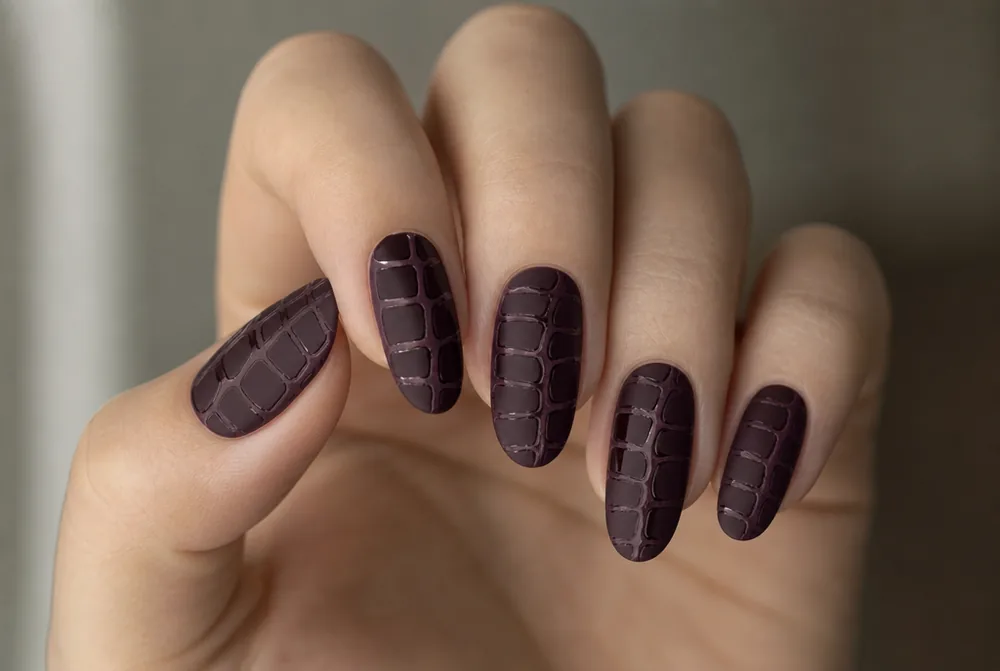
A crocodile texture done in gloss over a matte base, tonal rather than contrasting. It only reads when the light moves, which keeps it from looking loud. Ask for tonal, not contrast.
13. Matte Navy
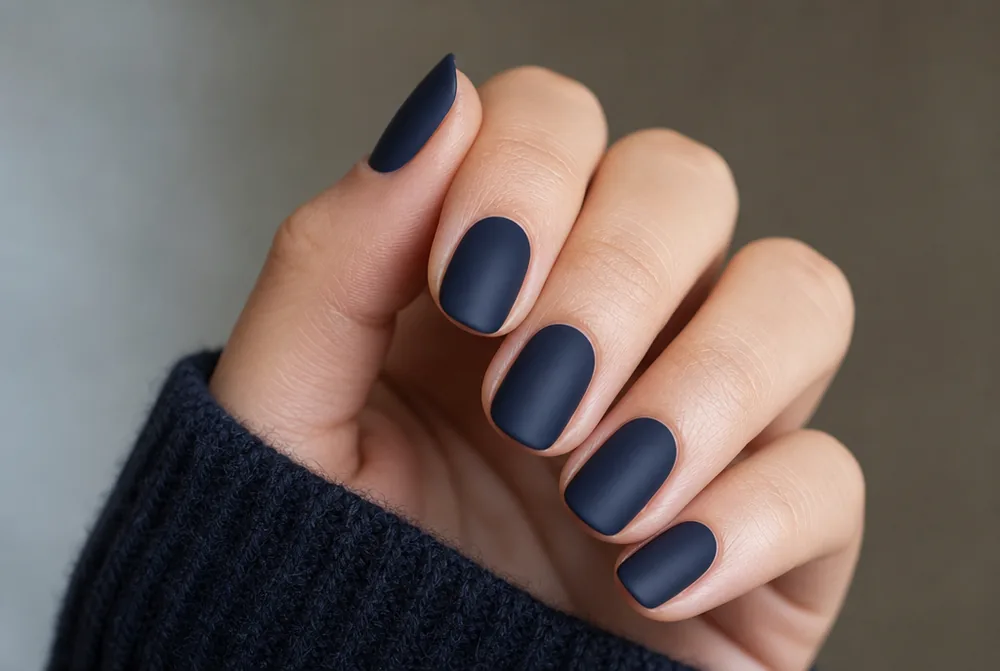
Navy with the shine off, which reads more like fabric than a dark colour. It’s the softest way to wear a near-black. More in my blue nail designs guide.
14. Matte Pink
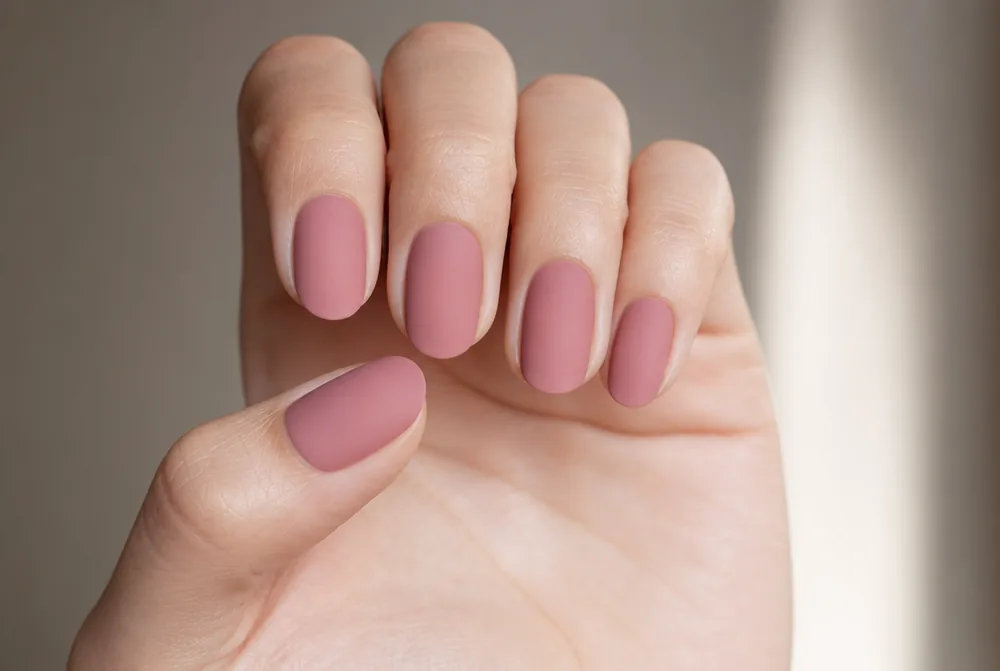
A dusty rose under matte, which strips the sweetness out of pink entirely. If you find pink too girlish, this is the version that fixes it. More shades in my pink nail designs post.
15. Matte and Glossy Alternating
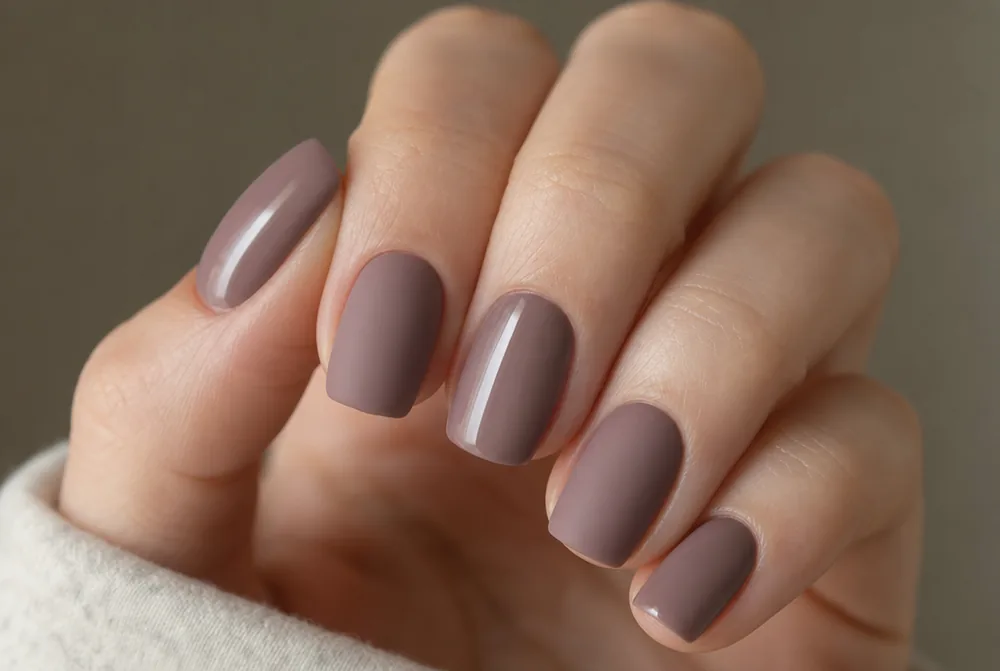
The same colour on every nail with the finish alternating matte, gloss, matte. One bottle, two manicures, and it reads as a deliberate design. The easiest clever thing on this page.
16. Matte Espresso
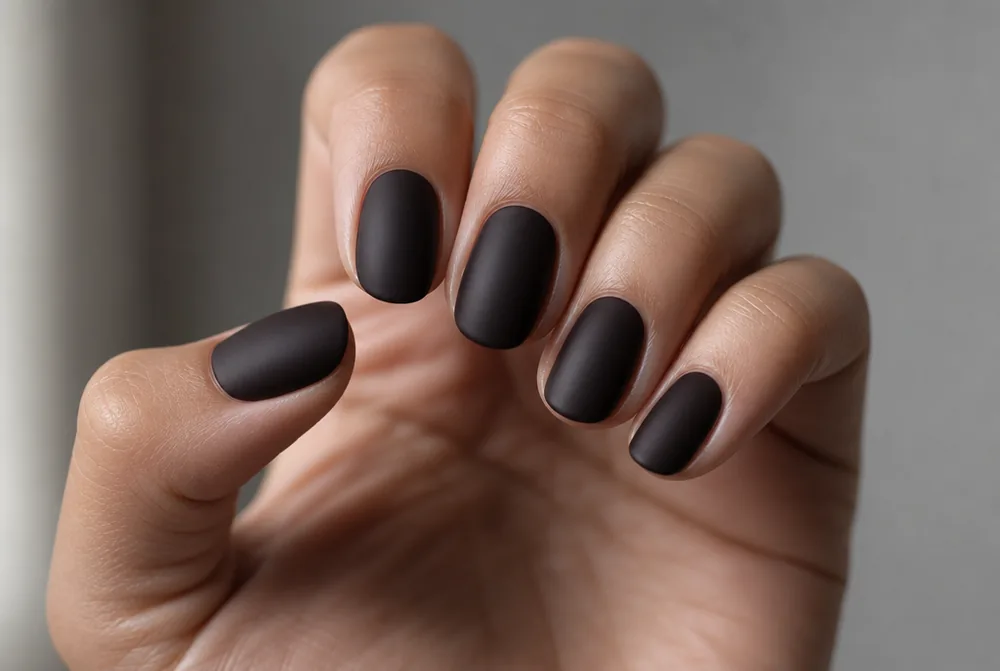
Deep coffee brown under matte, which is warmer on the hand than a matte black. It’s my pick when black feels too hard. More in my brown nail designs guide.
17. Matte with Rhinestone Accent
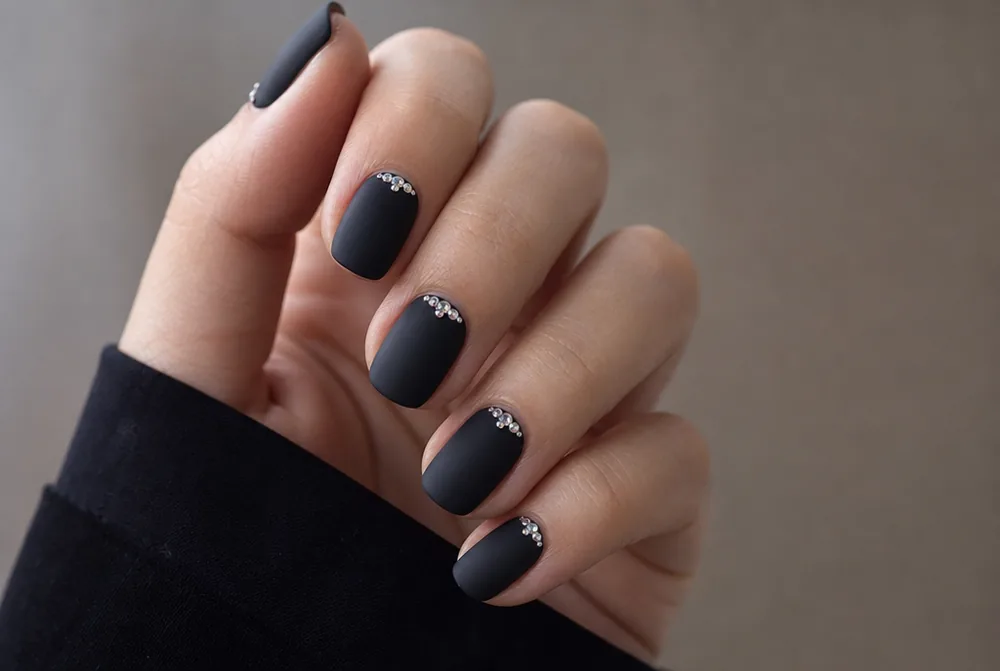
A few crystals set into a matte base, where the contrast between flat and sparkle does all the work. Matte makes rhinestones look far more expensive than gloss does. Two nails only.
18. Matte Olive
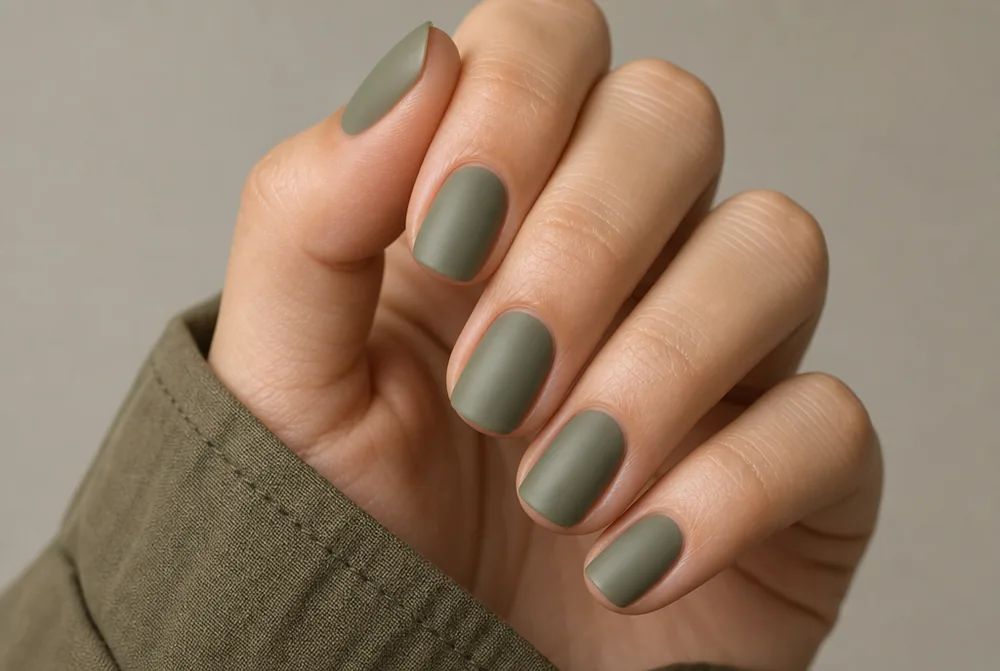
Muted olive with no shine, which suits warm and olive undertones better than almost anything. It’s an unexpected colour that reads as a neutral in practice.
19. Matte French Tip
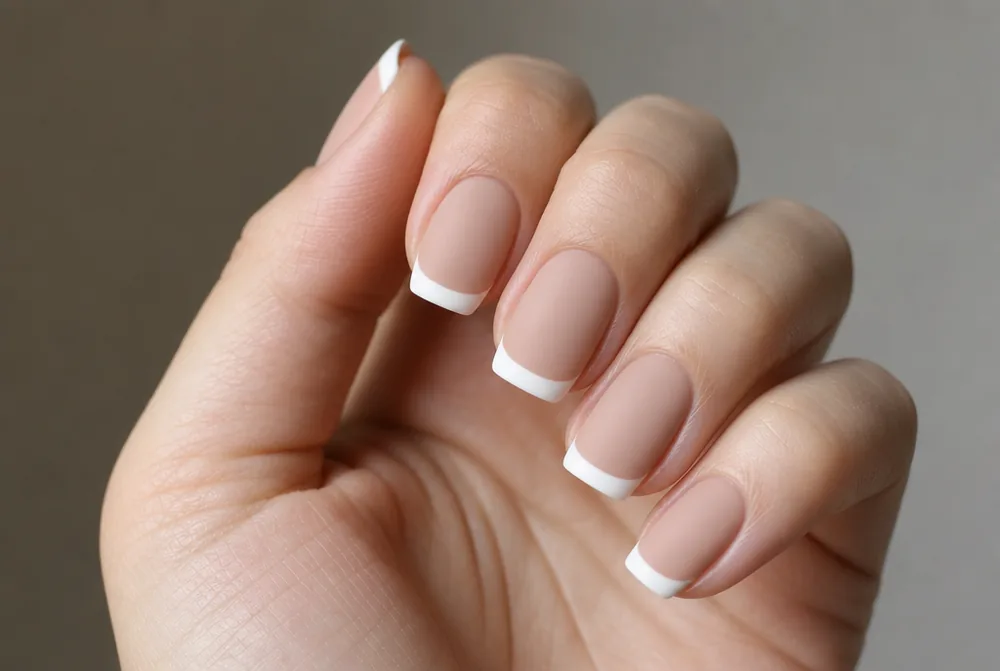
A standard French with both the base and the tip left matte. Losing the shine on both makes the smile line read softer, which suits mature hands. My French manicure for mature hands post covers why.
20. Matte Terracotta
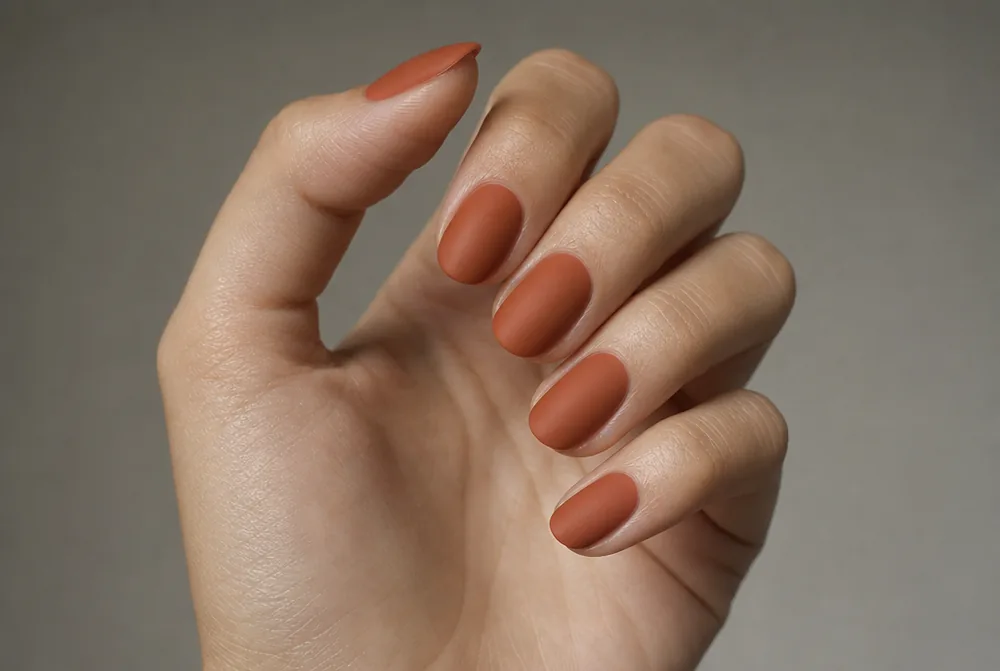
Burnt orange under matte, which turns a loud colour into a soft one. It’s the most autumnal shade here after burgundy. More seasonal shades in my autumn nail colors post.
21. Matte with Gold Line
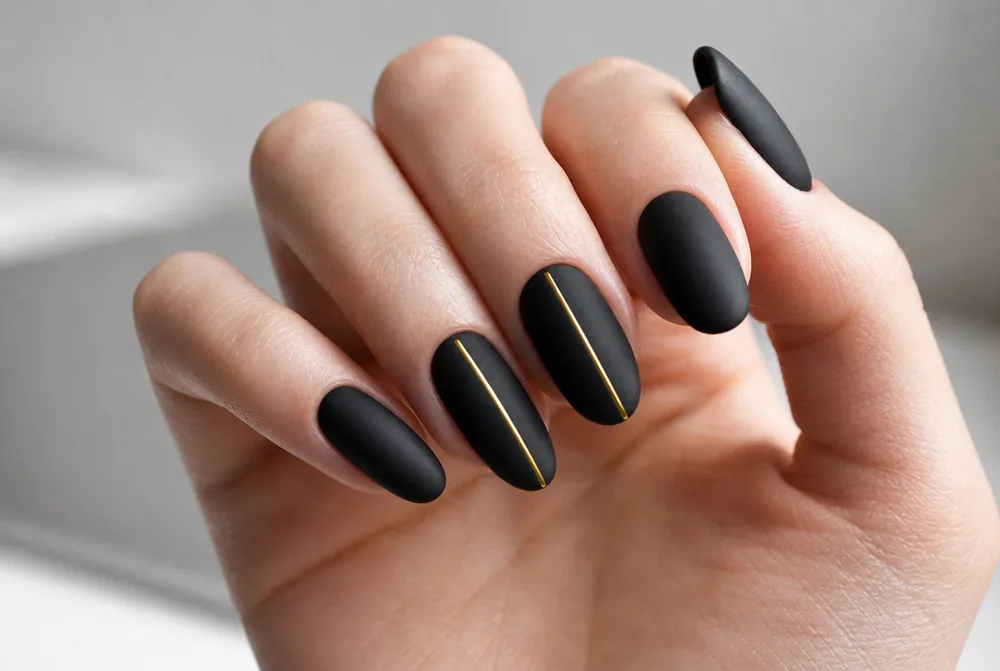
One thin metallic line over a matte base, where the shine of the gold against the flat colour is the whole design. More placements in my gold nail designs post.
22. Matte Lavender
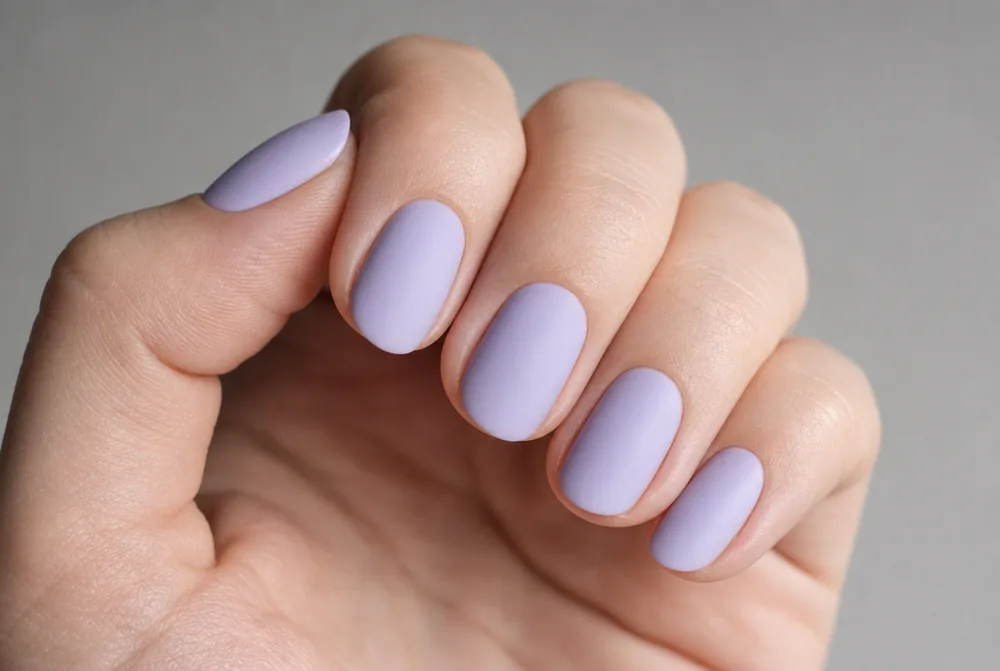
Pale lavender with the shine off, which reads chalky in the good way. It’s the one pastel that gains from being matte rather than losing to it.
23. Matte Toes
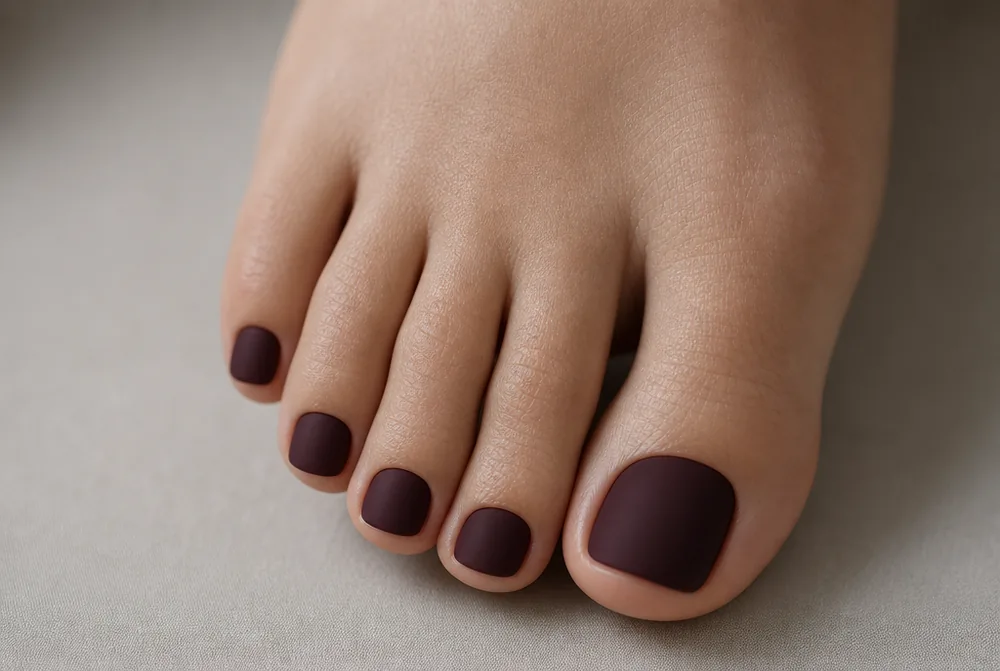
Matte on a pedicure, where the finish lasts far better than it does on hands because feet touch less. Four to six weeks is normal. More in my toe nail designs guide.
24. Matte Long Coffin
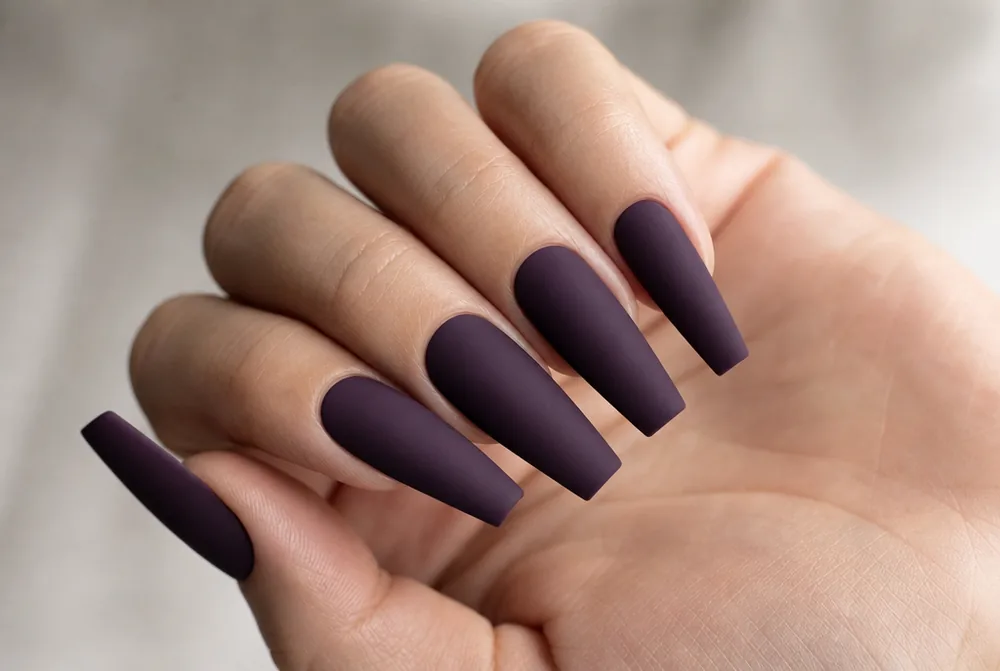
Long coffin in a matte deep shade, which is the most dramatic thing on this page. Matte on a long nail reads sculptural rather than glossy and artificial. Shape details in my coffin nail designs guide.
Matte vs glossy, honestly
This is the comparison people actually search for, and neither finish wins outright. They’re good at different things.
Matte hides texture. Ridges, dents, and an uneven nail plate all disappear under a flat finish, because there’s no reflection to trace them. If your nails are ridged, matte is genuinely more flattering, and no ridge-filling base coat matches it.
Glossy hides wear. A chip or a scuff on a shiny nail catches light the same way the rest of the nail does, so it reads later. On matte, any scuff shows as a shiny patch immediately, which is the finish’s real weakness.
Glossy also makes colour look deeper. A saturated red or emerald loses some richness under matte, because depth in polish is largely a reflection effect. If the colour is the point, go glossy; if the texture is the point, go matte.
The matte maintenance problem
Nobody warns you about this at the salon and it’s the main reason people try matte once and go back to gloss.
Matte top coat wears at the points of contact, which means the tips and the high point of each nail start going shiny within about five days. It doesn’t chip, it just stops being matte, and a half-matte nail looks worse than either finish on its own.
The fix is to buy your own matte top coat and reapply over the whole nail every four or five days. A bottle runs about $9 and takes two minutes to apply. This works over gel as well as polish, which surprises people.
Hand cream is the other culprit. Oily creams leave a residue that reads as shine on a matte surface, so it’s worth wiping the nails with a little rubbing alcohol before you top up. Matte also picks up marks from oil and food more visibly than gloss.
Which colours suit matte
Matte flatters some colour families and flattens others, and the split is fairly predictable.
Deep, muted, and earthy shades gain the most. Burgundy, espresso, olive, taupe, forest green, and plum all read as fabric under matte rather than as polish. This is where the finish earns its reputation.
Bright saturated colours lose. A hot pink or a cobalt goes slightly dusty and chalky without its shine, which reads as faded rather than deliberate. If you want a bright matte, pick one with real pigment depth and accept it will look softer.
Metallics and chromes cannot be matte, since their whole effect is reflection. A matte top coat over chrome kills it entirely. If someone offers you matte chrome, they mean a satin finish, which is a different product.
Mixing matte and gloss on one nail
This is where matte stops being a finish and becomes a design, and it’s the most underused idea in nails.
The order is always the same: colour, then matte top coat over everything, then glossy top coat painted on top in whatever shape you want. Doing it the other way round means the matte coat flattens your gloss.
A glossy French tip over a matte base is the easiest version and the most wearable. A glossy swirl, a single glossy line, or glossy dots all work the same way. Because the design is clear, it’s invisible in a photo and obvious in person.
With gel you need a no-wipe glossy top coat for the design layer, cured separately. With regular polish, any clear top coat works, as long as the matte layer underneath is fully dry. More designs that use this in my minimalist nails guide.
Getting a matte finish at home
Matte is the cheapest way to double the size of your polish collection, because every colour you own becomes two.
All you need is one bottle of matte top coat, around $9. Essie Matte About You and OPI Matte Top Coat are the two that have been around longest and both work over any colour. There is no such thing as needing a matte polish; the top coat does the work.
Apply it over a fully dry colour, not a tacky one, and use one generous coat rather than two thin ones. Matte top coats are the exception to the thin-coats rule, because a thin layer can dry patchy and leave shiny streaks.
Do not add a glossy top coat over it afterward out of habit. That is the most common mistake and it undoes the whole thing. If you want to cap the free edge for durability, do it with the matte coat itself.
Matte, satin, and velvet are different
Salons use these three words loosely and they describe visibly different finishes, which is worth knowing before you book.
Matte is fully flat with no reflection at all. It is the most dramatic of the three and the one that hides ridges best. This is what a standard matte top coat gives you.
Satin sits between matte and gloss, with a soft sheen rather than a shine. It wears better than full matte because there is less contrast when a patch rubs shiny, so it is the practical choice if you found matte high-maintenance.
Velvet usually means a magnetic gel with a soft directional shimmer, which is closer to a cat eye than to matte. If a salon offers velvet nails, ask whether they mean flat or magnetic, since my cat eye nails guide covers the magnetic version and it is a completely different service.
FAQ
Is matte or glossy better for nails?
Matte is better if your nails are ridged or uneven, because a flat finish absorbs light instead of tracing every bump. Glossy is better if you want the colour to look deep or you need wear to stay invisible, since scuffs show immediately on matte as shiny patches. Neither lasts longer than the other.
How do you keep matte nails from getting shiny?
Reapply a matte top coat over the whole nail every four or five days, since the finish wears down at the tips and high points first. Wipe the nails with a little rubbing alcohol before you top up, because hand cream residue reads as shine. A bottle of matte top coat runs about $9 and works over gel as well as polish.
Can you put matte top coat over gel?
Yes, and there are two ways. A gel matte top coat is cured under the lamp at the salon and lasts the life of the set apart from tip wear. A regular air-dry matte top coat also works over cured gel, which is how you top it up at home between appointments.
Are matte nails still in style?
Yes, though the current use is mixed rather than full. Matte-with-glossy-detail, velvet textures, and matte on deep autumn shades are all in regular rotation, while a fully matte bright colour has faded. I track the wider picture in my 2026 nail trends report.
If you’re trying matte for the first time, do it over a deep shade you already own rather than buying a new colour, since the finish changes what you have. And buy your own top coat, because the five-day shine is what makes people give up on it.