

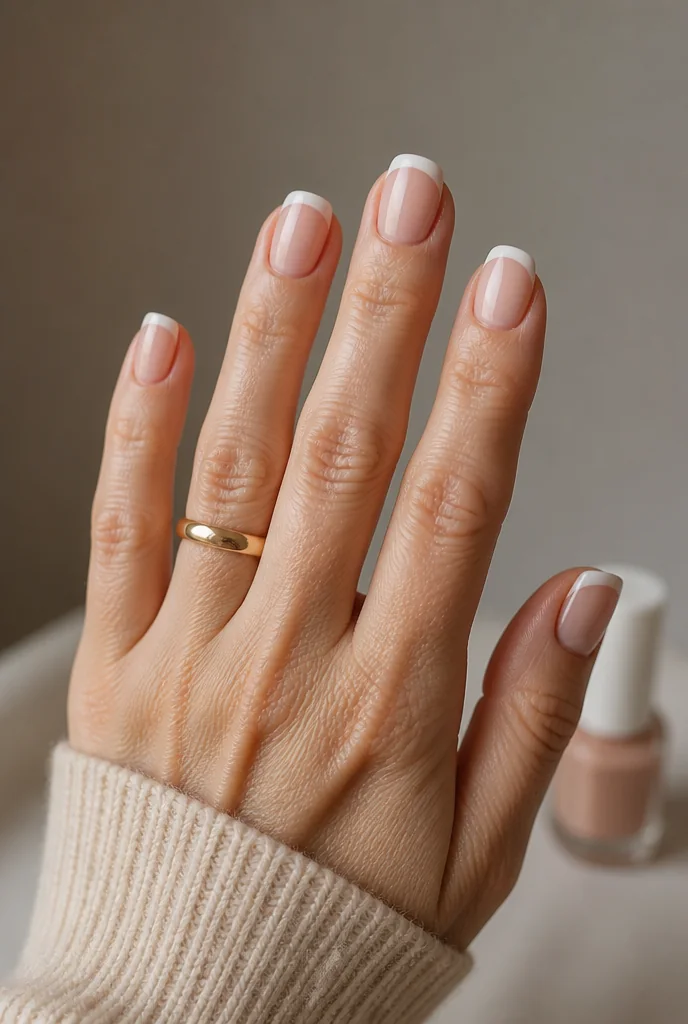
Nails change with age in ways that have nothing to do with how well you look after them. The plate gets thinner, vertical ridges get deeper, and the skin around the nail holds less water. A French manicure can work with all of that, but the 1990s version of it, bright white and deep, fights it.
Here’s what to change, and why each change helps.

What actually changes
Vertical ridges get more obvious from around the forties and are close to universal by seventy, which is why dermatologists treat them as an expected finding rather than a problem (Cleveland Clinic). Growth also slows, so a damaged nail takes longer to grow out.
Repeated wetting and drying is the biggest cause of brittleness at any age, and gloves for wet work help more than any product (American Academy of Dermatology). Nail hardeners can backfire and leave nails more likely to snap (peer-reviewed review).
Three changes that do the work
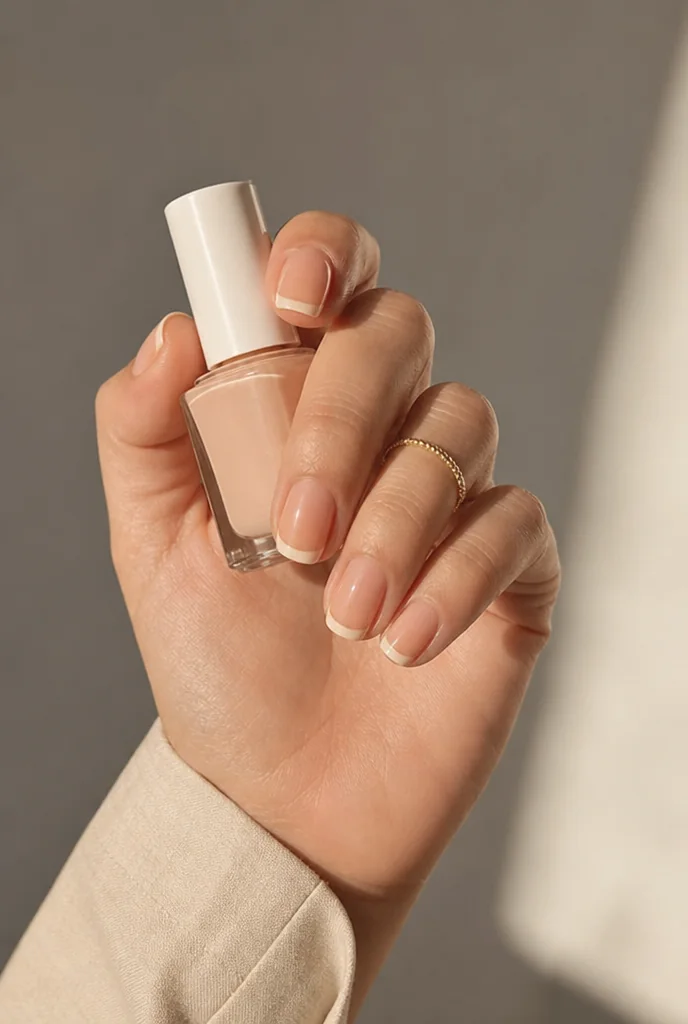
Warm the base. Cool pinks emphasize blue tones in the skin. A warm beige, peach or soft caramel base sits better against mature hands. Soften the white. Ivory or cream instead of bright white; the contrast is what looks harsh, not the style. Keep it short. Short nails with a thin tip look deliberate. Length draws attention to the knuckle rather than the nail.
Ridges: fill, don’t file
A ridge-filling base coat levels the surface and costs about $9. Buffing ridges flat works for a day and thins an already thinner plate, which is a bad trade at any age and a worse one here.
Dryness around the nail
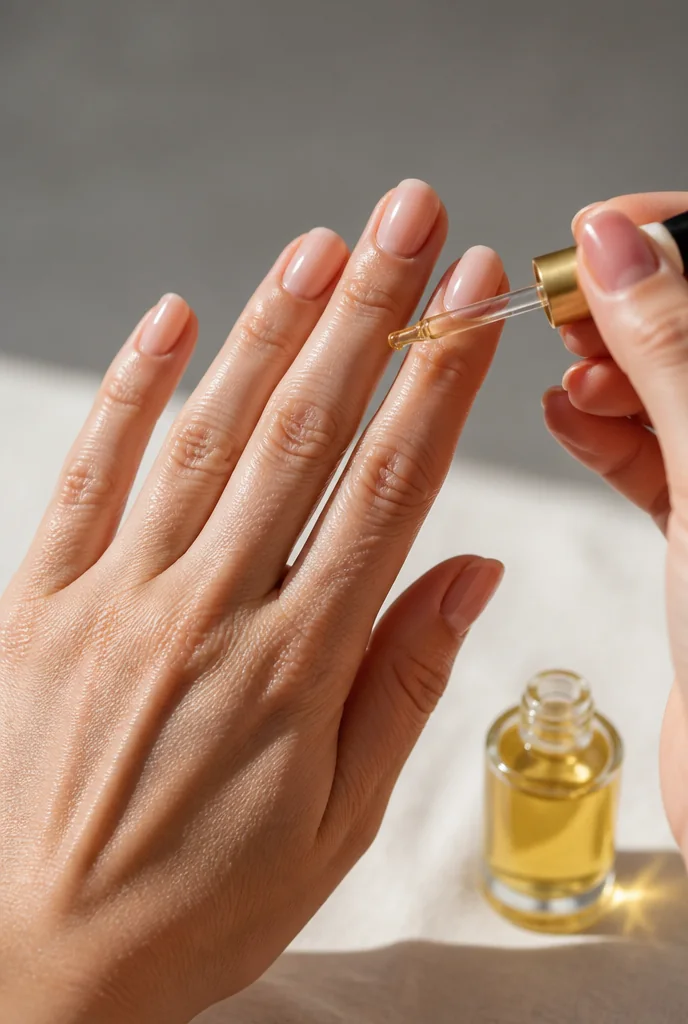
The skin at the nail folds is what ages the look of a manicure fastest. Cuticle oil at night and hand cream after every wash do more for the finished look than any polish choice. Push the cuticle back gently when it’s soft and leave it attached (American Academy of Dermatology).
Gel or regular polish
Gel is easier to live with in one way: it doesn’t chip, so you’re not repairing it. The trade is removal, and thinner nails are less forgiving of a bad soak-off. If you use gel, have it soaked off properly rather than picked, and take the filing gently (American Academy of Dermatology).
| Choice | Better for mature hands | Why |
|---|---|---|
| Base color | Warm beige, peach, caramel | Works with skin tone instead of against it |
| Tip color | Ivory, cream | Softer contrast than bright white |
| Length | Short to medium | Keeps the eye on the nail |
| Tip depth | 2-3 mm | Avoids the stubby look |
| Base coat | Ridge filler | Levels without thinning the nail |
For the painting technique, see our guide to French tips. For wear, making a manicure last longer covers the routine.
FAQ
What color French manicure suits mature hands?
A warm beige, peach or caramel base with an ivory tip. Warm bases work with the skin tone, while cool pinks and bright white create the contrast that reads harsh.
How do you deal with ridged nails under a French manicure?
Use a ridge-filling base coat rather than buffing the ridges away. Ridges deepen with age and are considered a normal finding, but buffing thins a plate that is already thinner.
Should older nails be kept short?
Short to medium generally flatters more, and short nails are also less likely to snap as the plate thins. A thin tip on a short nail looks deliberate rather than dated.
Is gel a good idea on thinner nails?
It can be, because it doesn’t chip and so doesn’t get picked at. The risk is in removal, so have it soaked off properly with the top coat filed first, never peeled. The Skin Cancer Foundation recommends a broad spectrum sunscreen on your hands 20 minutes before they go under the lamp.
What helps brittle nails the most?
Keeping them out of water. Repeated wetting and drying is the biggest cause of brittleness, and gloves for washing up help more than hardeners, which can make nails snap more easily.