

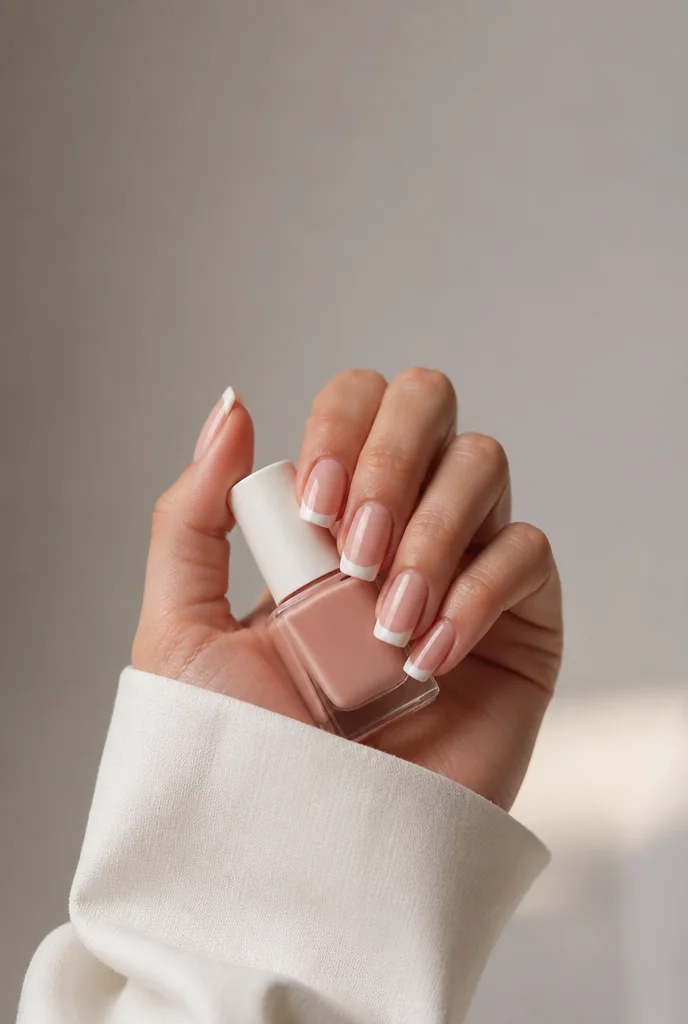
A gel French at a salon runs $45 to $70. The kit to do it yourself costs about $60 once, and after the second set you’re ahead. What you’re really buying is three weeks of a tip that doesn’t chip.
The technique is the same as a painted French. What changes is that gel stays wet until you cure it, so you can take your time on the smile line, and that removal is a real process rather than a wipe.
What you actually need
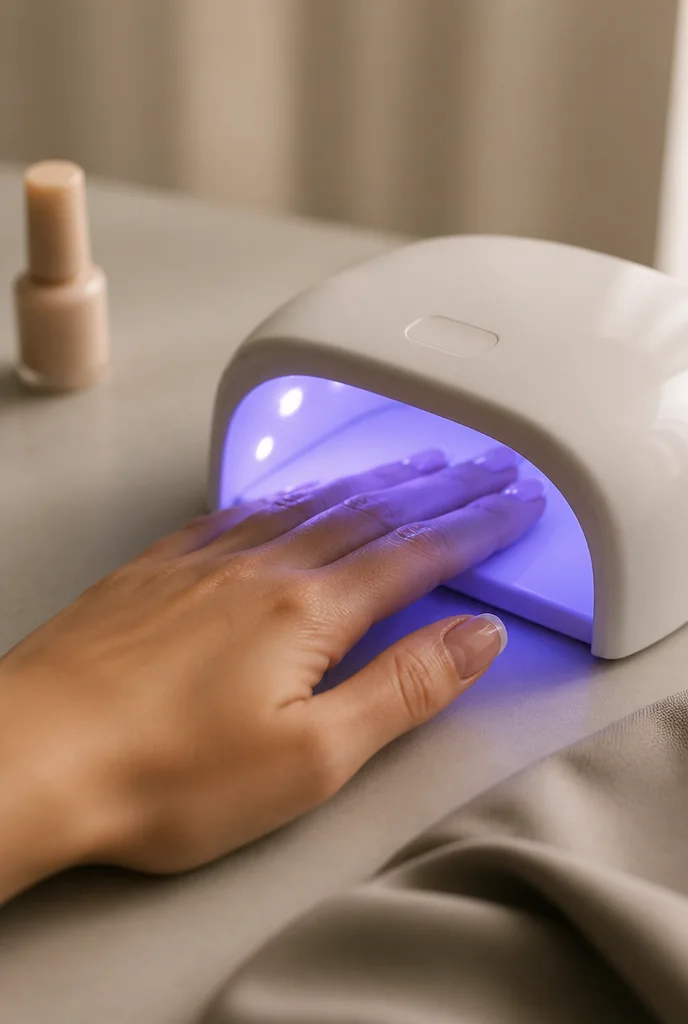
An LED lamp, gel base, a sheer pink or beige gel, a dense white gel, gel top coat, a lint-free wipe and 100% acetone. A $25 lamp cures the same as a $90 one for polish-thickness layers.
Buy the white gel carefully. A thin, watery white is the main reason home gel Frenchies look streaky, and no amount of layering fixes a bad formula.
Step by step, with the timings
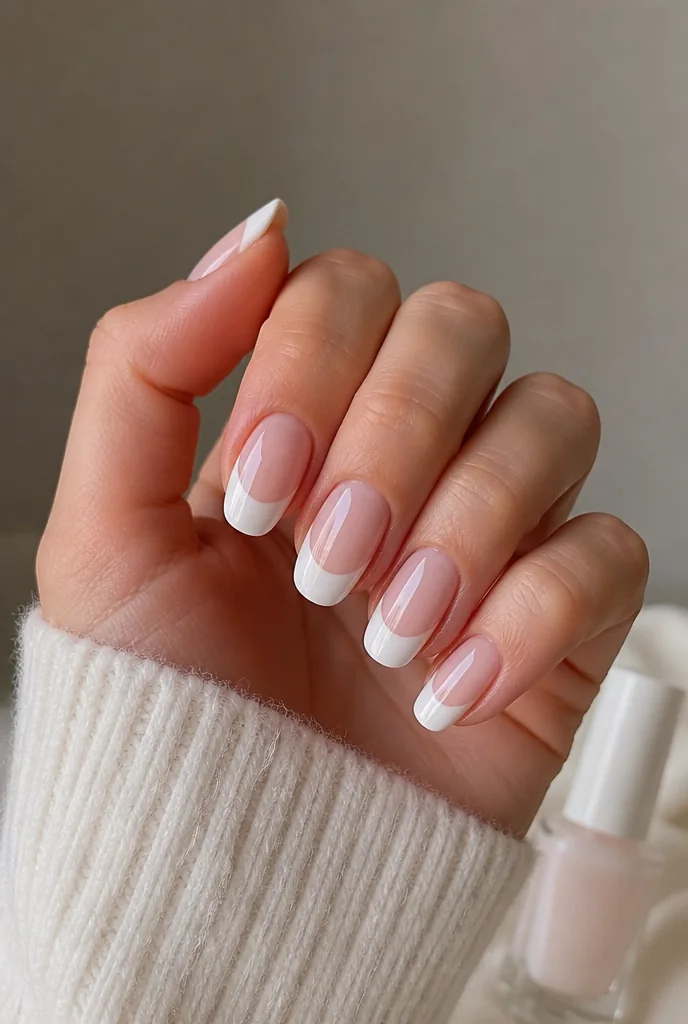
Prep (10 min). Push back cuticles, shape, buff the shine off very lightly, wipe with acetone. Base (1 min). Thin layer, capped, cure 30 seconds LED. Sheer color (2 x 1 min). Two thin coats, curing between them. The tip (5 min). Paint the white on one nail, correct it with a clean-up brush dipped in alcohol, then cure. Do them one at a time; gel doesn’t dry on you, so there’s no rush. Top coat (1 min). Cap the edge, cure 60 seconds, wipe the sticky layer with alcohol.
Curing one nail at a time for the white is the trick that makes home gel look professional. You get one clean line, cure it, and move on.
Lamp position matters more than lamp price
Fingers need to sit flat and central, all four at the same depth. Thumbs cure separately, and a thumb cured at an angle is the usual reason one nail stays tacky or peels on day three.
On lamp safety: UV exposure from nail lamps is generally considered low risk, and the research is still developing rather than settled (International Journal of Dermatology review). Fingerless UV gloves cost about $6 if you’d rather not think about it.
Removal, which is where nails get wrecked
File the shiny top coat off first. Not the nail, just the gloss. Then soak cotton in acetone, wrap each fingertip in foil, and wait ten to fifteen minutes.
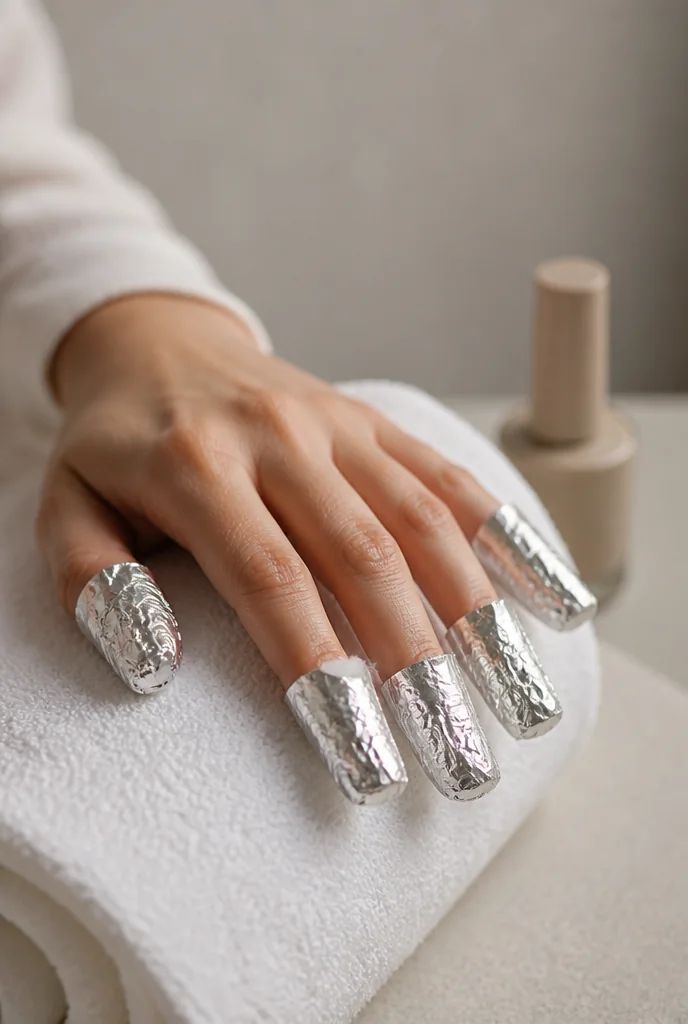
Cured gel is a plastic polymer, and acetone breaks it down once that shiny top coat is off. It cannot get through an intact top coat, which is why ‘the acetone isn’t working’ is nearly always ‘the top coat is still there’.
If it doesn’t slide off, rewrap for another five minutes. Never peel it: peeling takes layers of the nail plate with it, and that’s the damage people blame on gel itself (American Academy of Dermatology). Gel sitting on top of the nail doesn’t harm it; removal is where the harm happens (American Academy of Dermatology).
Keep acetone away from a flame or a gas hob, because it’s highly flammable (US Food and Drug Administration). There’s more detail in our guide to removing gel nails at home.
Cost, honestly
| Route | Up front | Per set | Time |
|---|---|---|---|
| Salon gel French | $0 | $45-70 | 60-75 min |
| Home kit, first set | ~$60 | ~$60 | 45-60 min |
| Home kit, later sets | $0 | $2-4 | 40 min |
FAQ
How long does a gel French manicure last?
Two to three weeks. Grow-out at the cuticle usually ends it before the tip wears, because cured gel doesn’t chip the way lacquer does.
Why is my gel French streaky?
The white gel is too thin, or it’s being applied in one thick coat. Use a dense white and build it in two thin layers, curing between them.
Can I cure gel without a lamp?
No. Gel cures through a light-triggered reaction, so air, sunlight, cold water and hairdryers do nothing. Polishes sold as no-lamp gels are lacquers with a gel-like finish.
How do I stop a nail staying sticky after curing?
Check the lamp position. A finger sitting at an angle, and thumbs cured with the other four, are the usual causes. The thin tacky layer left after the top coat is normal and wipes off with alcohol.
Is it cheaper to do gel at home?
After two sets, yes. The kit is about $60 and each set after that costs $2 to $4 in product against $45 to $70 in a salon.