
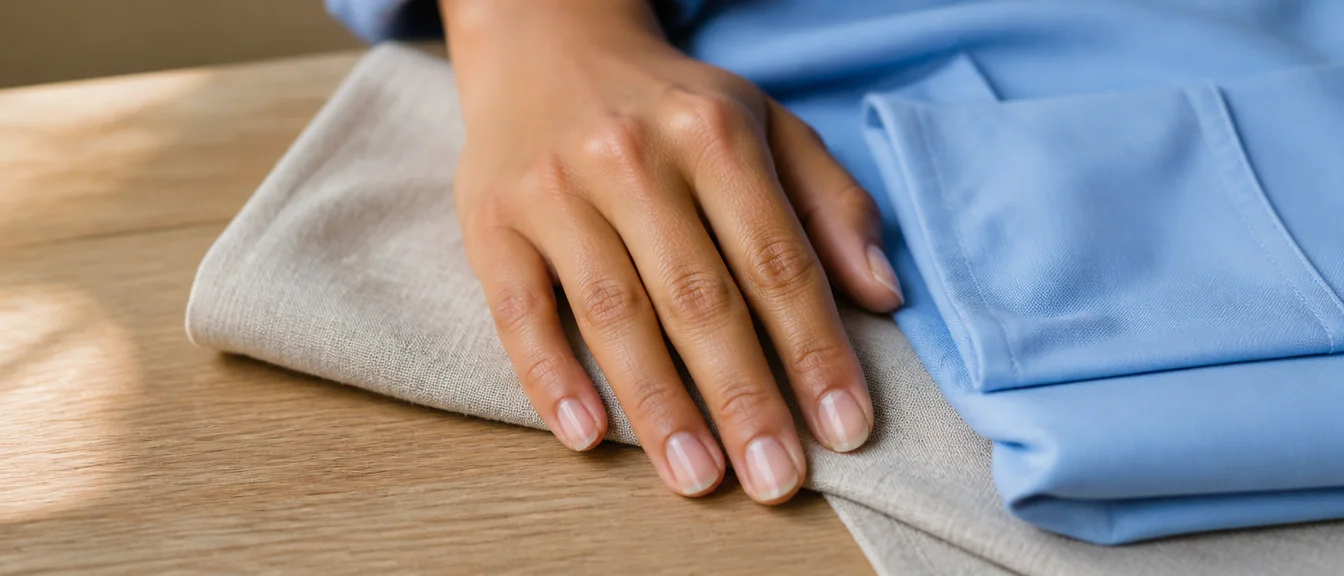
Most healthcare employers ban artificial nails outright for anyone in direct patient contact, and cap natural nail length at about a quarter of an inch past the fingertip. That covers acrylics, gel extensions, press-ons, and tips. Gel polish on natural nails sits in a gray area that varies by employer.
Here is why those rules exist, what is generally allowed, and what genuinely survives a twelve-hour shift with constant hand washing. This is general guidance rather than a substitute for your own trust or hospital policy, which is the only thing that actually governs you.
Why the rules exist
These are infection control rules rather than dress code, which is why they tend to be enforced far more strictly than jewelry or hair policies.
Longer nails hold more organisms under the free edge, and hand hygiene is measurably less effective at removing them. The space under a long nail is difficult to clean and stays damp, which is a good environment for bacteria.
Artificial nails add a second problem, which is the join between product and natural nail. Any lifting creates a sealed damp gap that cannot be cleaned or reached by hand gel, and that gap has been linked to outbreaks in high-risk settings such as neonatal and intensive care units.
Chipped polish is the third issue, since the rough surface and the loose flakes both interfere with effective hand hygiene.
What is usually banned
Policies vary, and the following are close to universal for staff in direct patient contact.
Artificial nails of every kind: acrylic, gel extensions, gel-X, dip powder over tips, press-ons, wraps, and silk. The category is usually written broadly enough to cover anything that extends or overlays the natural nail with a separate product.
Nail jewelry, charms, rhinestones, and anything raised off the surface. Chipped or damaged polish of any kind.
Length beyond a quarter of an inch, roughly 6mm, measured from the fingertip. Some employers set it shorter.
Where gel polish sits
This is the question that comes up most and the honest answer is that it depends on your employer.
Gel polish applied directly to a short natural nail, with no tip or extension, is permitted in many settings and prohibited in others. The argument for allowing it is that it does not chip the way lacquer does, so it stays intact for weeks. The argument against is that lifting at the edges creates the same damp gap as an artificial nail, and it is harder to notice. One study of health care workers wearing gel polish found alcohol hand gel cut bacteria on natural nails and regular polish, but not on gel polish.
If your employer allows it, keep it short, keep it clear or pale so you can see lifting, and remove it properly the moment any edge starts to lift. My gel lifting post covers spotting it early.
Check the written policy rather than what colleagues are doing. Enforcement varies far more than the rules do.
Round is the shape

Shape is not usually specified in policy and one is clearly best in practice.
Round is the standard healthcare shape because it follows the curve of the fingertip, leaves no corners to catch on gloves, and has no point to trap anything under. It is also the strongest shape, which matters when your hands take constant contact.
Square nails catch and tear gloves at the corners, which is a genuine practical problem rather than a theoretical one. Almond and stiletto are both out on length and shape grounds.
File in one direction with a fine file and keep the edge smooth. My round nails post covers the shape.
What survives a twelve-hour shift
Assuming polish is permitted, the practical question is what lasts through repeated hand washing and alcohol gel.
Regular polish does not, and this is worth being blunt about. Alcohol hand gel dissolves lacquer, and a nurse using it thirty times a shift will have visibly chipped polish within two days. Since chipped polish is itself a policy breach, regular polish is often more trouble than it is worth.
Gel polish is unaffected by alcohol gel and holds up for two to three weeks, which is why it is the format most nurses ask about.
A clear gel overlay is the compromise that often works best: it is not a color, it protects nails from splitting, and it survives everything. My short gel nails post covers it.
Colors that stay compliant
If color is permitted, pale shades are the practical choice for a reason beyond taste.
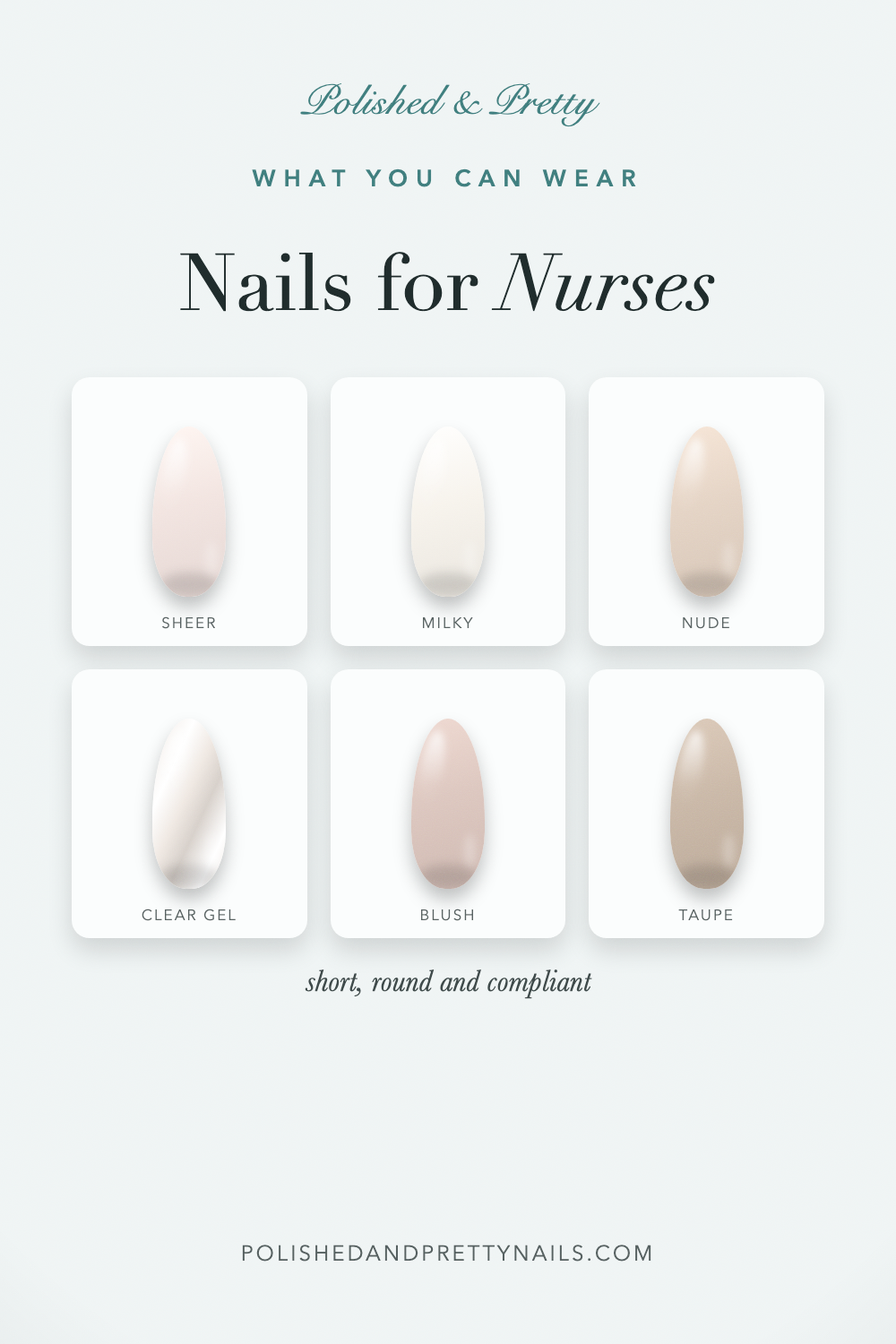
A chip in a sheer pink or a nude is nearly invisible, so a manicure stays presentable and compliant for longer. A chip in a dark red or a navy is obvious immediately, which means you are either redoing them constantly or working in breach of policy.
Pale shades also let you see lifting at the edges of gel, which is the thing you most need to catch early.
Sheer pink, milky white, and a matched nude are the three that get worn most. My milky white nails post covers that finish.
Looking after hands that are washed constantly
The bigger issue for most healthcare staff is not what color they can wear, it is the state of their hands.
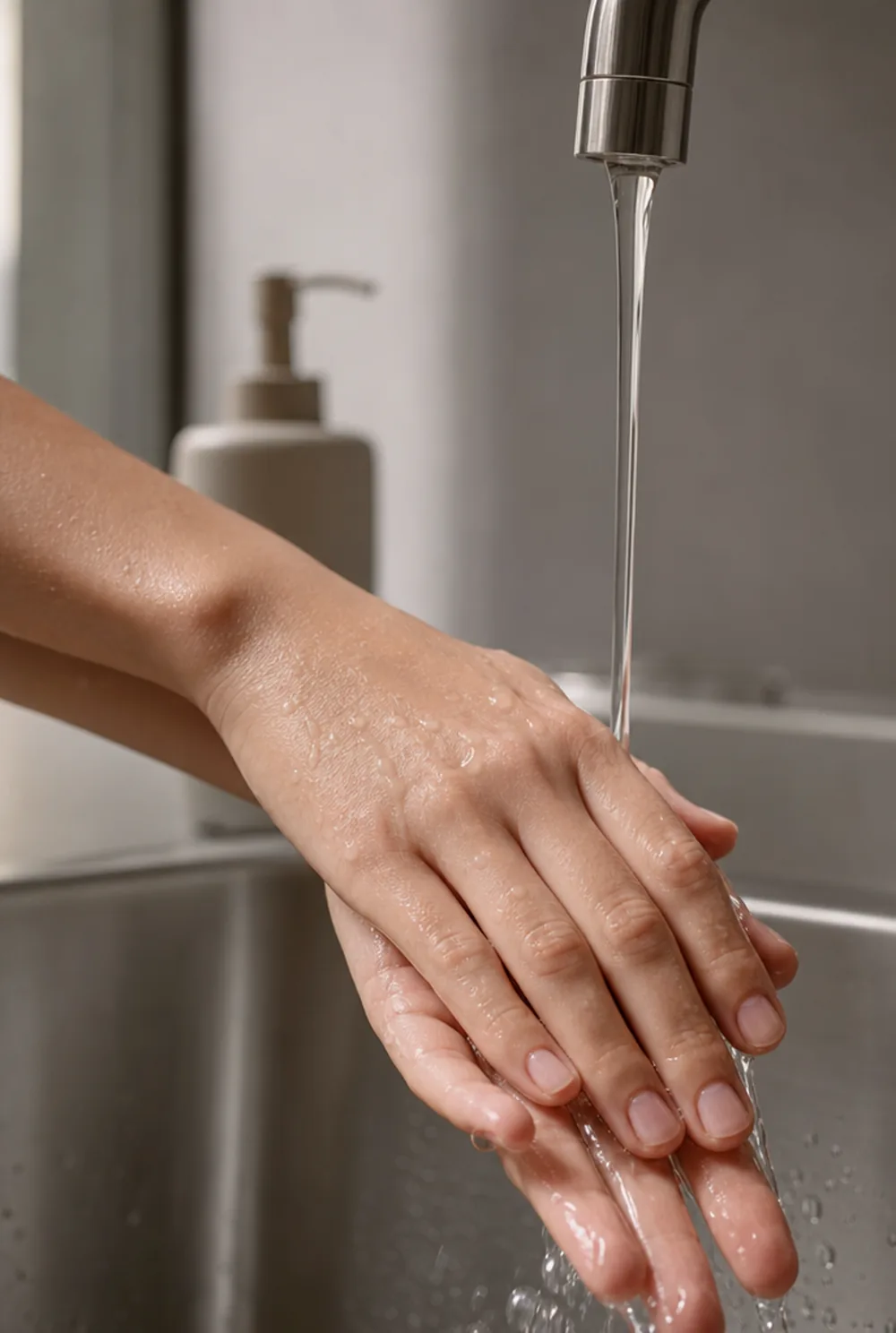
Repeated washing and alcohol gel strip the natural oils from skin and nails, which causes splitting, peeling, hangnails, and dry cracked cuticles. Nails that are constantly wet and then dried also expand and contract, which weakens them.
Cuticle oil at the end of every shift and hand cream in your pocket does more than anything else. Alcohol gel is actually less drying than soap and water for the skin, so use gel where it is clinically appropriate rather than washing unnecessarily.
If your nails are already splitting, our brittle nails post covers recovery.
If your nails keep breaking on shift
Breakage is the most common complaint from anyone working twelve-hour shifts, and the cause is usually water rather than impact.
A nail plate absorbs water and swells slightly, then contracts as it dries. Doing that thirty times a shift, every shift, works the layers of keratin apart, and the result is nails that split horizontally at the free edge or peel in sheets. It is the same mechanism that affects hairdressers and chefs.
Keeping nails very short helps most, because there is less free edge to flex and less nail exposed to the cycle. A clear gel overlay is the other genuine fix, since it stops the water reaching the nail plate at all and takes the mechanical stress instead.
Oil is the third. Applying cuticle oil at the end of a shift rather than the start lets it absorb overnight, and it does more for nail flexibility than any hardener. Avoid formaldehyde-based hardeners, which make nails more brittle rather than less.
A note on other roles
The same reasoning applies well beyond nursing, and the rules are often similar.
Food handling, dentistry, care work, veterinary work, and laboratory roles all commonly restrict artificial nails and length for the same infection control and contamination reasons. Anyone working with their hands in water all day faces the same durability problem regardless of policy.
Short round nails with a clear gel overlay is the answer that works across all of them.
Options for days off
If you want something more for a weekend or an occasion, press-ons are the answer that does not compromise anything.
They go on in fifteen minutes, come off cleanly, and leave your natural nails exactly as they were for Monday. That is a far better option than getting acrylics you then have to have removed.
Use the adhesive tabs rather than glue if you want them off after a day or two. My making press-ons last post covers both methods.
FAQ
Can nurses wear gel nails?
Gel polish on short natural nails is permitted by many healthcare employers and prohibited by others, so check your written policy. Gel extensions and gel-X are artificial nails and are banned almost universally for staff in direct patient contact.
How long can nurses’ nails be?
Typically no more than a quarter of an inch, around 6mm, past the fingertip, and some employers set it shorter. Longer nails hold more organisms under the free edge and make hand hygiene measurably less effective.
Why can’t nurses wear acrylic nails?
The join between the product and the natural nail creates a sealed damp gap when it lifts, which cannot be cleaned or reached by hand gel. That gap has been linked to infection outbreaks in high-risk settings such as neonatal and intensive care units.
Can nurses wear regular nail polish?
Where policy allows it, though it is impractical. Alcohol hand gel dissolves lacquer, so polish chips within a day or two of normal shift use, and chipped polish is itself usually a policy breach. Gel polish or a clear gel overlay holds up far better.
Check your own employer’s written policy before booking anything. My extra short nail ideas post covers making a compliant length look deliberate.