
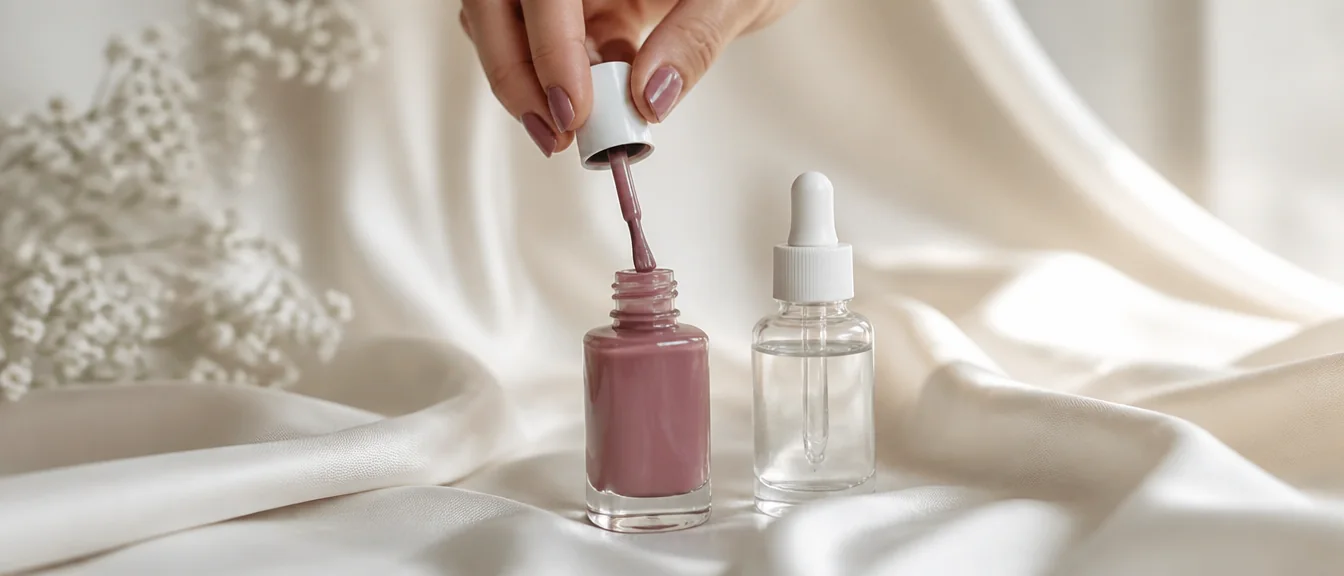
Thick nail polish is fixed with nail polish thinner, two or three drops at a time, rolled rather than shaken. It is a five-minute job that rescues a bottle you would otherwise throw away, and the one thing that ruins it permanently is using nail polish remover instead.
Here is the method, why remover destroys a polish rather than thinning it, and the storage habits that stop bottles thickening in the first place. A thick bottle is also the hidden cause behind most of the problems in our streaky nail polish post.
Why polish thickens
Nail polish is pigment and resin suspended in solvent, and it stays liquid only while that solvent is present.
Every time you open the bottle, some solvent evaporates. It also escapes slowly past the cap threads even when closed, especially if polish has dried in the neck and stops the cap sealing. Over months and years the ratio shifts, and what is left is the same amount of pigment and resin in less liquid.
That is why thickening is gradual and why it accelerates. A bottle with a crusty neck loses solvent far faster than a clean one, so the last third of a bottle usually thickens much quicker than the first two thirds did.
Nothing has gone wrong chemically. You are just missing an ingredient, and that ingredient can be put back.
Never use nail polish remover
This is the most common piece of bad advice in nail care and it destroys bottles.
Remover is acetone or ethyl acetate, and its job is to break down the resin system that makes polish a hard film. Thinner is a blend of the solvents that were in the polish to begin with, usually butyl acetate and ethyl acetate in the right proportions, and its job is to replace what evaporated.
Add remover and the polish will look thinner for a few days. Then it stops drying properly, dries gummy, chips within a day, and often separates in the bottle. The damage is permanent, because the resin has been chemically altered rather than diluted.
The same goes for acetone, alcohol, water, and lighter fluid, all of which turn up in internet advice. None of them are what was in the bottle.
The method
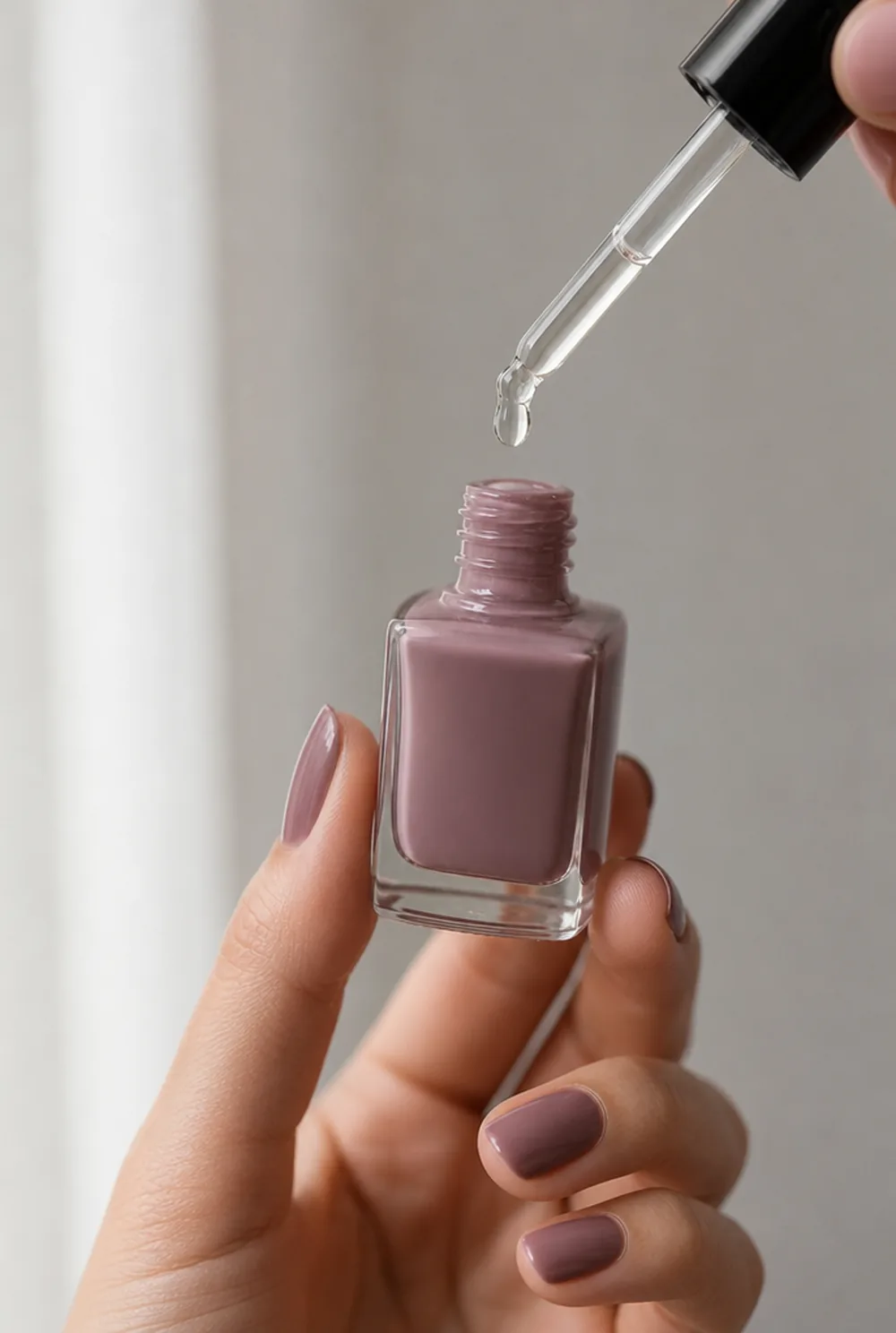
Nail polish thinner costs about $6 and one bottle will restore dozens of polishes over several years.
Start with two or three drops. That is genuinely all most bottles need, and it is far less than people expect. Put the cap back on, then roll the bottle between your palms for about a minute. Do not shake it, which whips in air.
Let it stand for ten minutes, then check by brushing a stroke onto a piece of paper. If it still drags, add two more drops and repeat. Work up slowly, because over-thinned polish is sheer and streaky and cannot be undone.
Glitters and heavily pigmented shades often need a little more. Sheer and jelly formulas need less.
Clean the neck and the cap
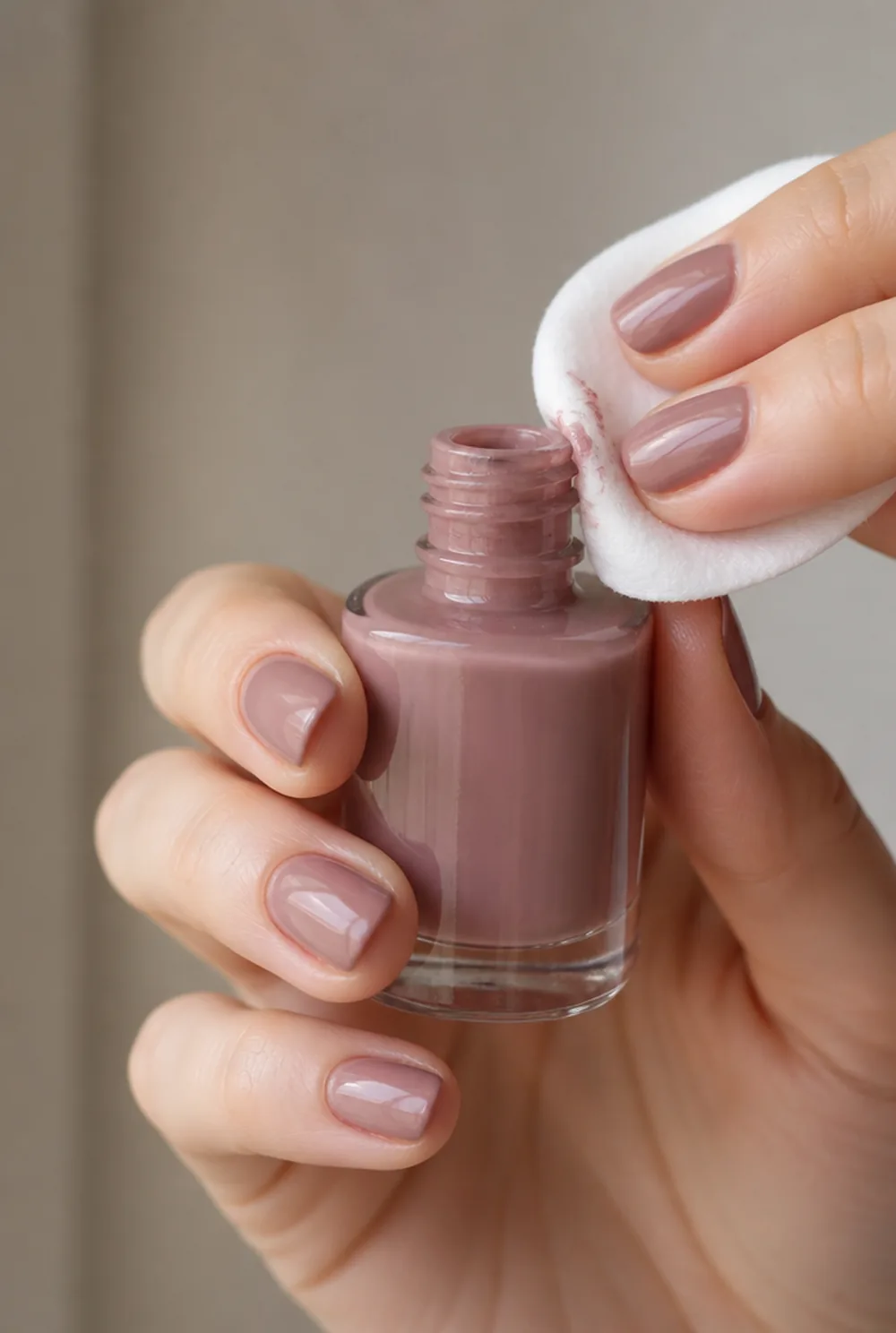
Doing this at the same time is what stops the problem coming straight back.
Dried polish in the bottle neck holds the cap slightly open, and a cap that cannot seal loses solvent continuously. It is also what makes a bottle impossible to open six months later.
Wipe the threads and the inside of the cap with a tissue dampened in remover. This is one of the few correct uses for remover around a polish bottle, since none of it is going inside.
Do this every few uses and bottles last years longer.
Warming a bottle
If a polish is only slightly stiff rather than genuinely thick, temperature may be all it is.
Cold polish is noticeably more viscous. A bottle stored in a cold room or brought in from a car will drag on the nail and refuse to level, and it will behave normally once it warms up.
Stand it in a mug of warm, not hot, water for two or three minutes, or simply hold it in your hand for a minute. Do not use boiling water or a radiator, which can damage the formula and, in a sealed glass bottle, is genuinely a bad idea.
That caution is well founded, because the US Food and Drug Administration warns that some nail products can easily catch fire if they are exposed to a flame or another heat source.
Try this before reaching for thinner. It costs nothing and it is the answer more often than people expect.
Thinning glitter polish
Glitters are the polishes most worth rescuing and the ones that thicken fastest, so they deserve a note of their own.
A glitter is a lot of solid particles in relatively little liquid to begin with, so losing even a small amount of solvent makes a dramatic difference. They are also usually the most expensive bottles in a collection and the ones worn least often, which is exactly the combination that leads to a gloopy bottle two years later.
Use four or five drops rather than two or three, and roll for longer, at least two minutes, so the glitter redistributes evenly rather than settling at the bottom. Then let it stand upright for half an hour before testing.
Store glitters upside down for a few minutes before use rather than shaking them. My glitter nail designs post covers getting them onto the nail evenly.
When a polish cannot be saved
Thinner fixes thickness. It does not fix everything.
If the polish has separated into distinct layers that will not recombine after several minutes of rolling, the emulsion has broken and it is finished. If it has turned rubbery or stringy, or comes out of the bottle in a lump rather than flowing, it is past the point thinner can reach.
A change in smell is another sign. Polish that smells sour or noticeably different from when it was new has degraded rather than dried out.
My does nail polish expire post covers the difference between old polish and dead polish in more detail.
Stopping it thickening
Prevention is mostly about limiting how much air gets in and how warm the bottle gets.
Close the cap firmly straight after use rather than leaving the bottle open while you do all ten nails. That open time across a whole manicure is where most solvent is lost.
Store bottles upright, somewhere cool and dark. A bathroom is the worst place, because heat and humidity swing constantly. A drawer in a bedroom is better than a shelf in a bathroom every time. My nail polish storage post covers this properly.
Buy smaller bottles of colors you rarely wear. A 15ml bottle of a shade you use twice a year will thicken long before you finish it.
Gel is different
Everything above applies to regular lacquer only, and it is worth being clear about that.
Gel polish contains no evaporating solvent. It thickens for other reasons, mostly partial curing from ambient light exposure over time, and there is no gel equivalent of thinner. Adding anything to gel will stop it curing correctly and can leave uncured monomer against your skin.
The British Association of Dermatologists warns that allergies to these chemicals can develop when uncured gel touches the skin, and that gel which is not cured properly raises that risk.
A gel that has thickened past the point of laying down a thin even coat needs replacing. Keeping caps tight and bottles out of light is the only prevention. My gel polish bubbling post covers what thick gel does on the nail.
FAQ
Can you use nail polish remover to thin nail polish?
No, and it permanently ruins the bottle. Remover is designed to break down the resin that forms the film, so the polish will stop drying properly, dry gummy, and chip within a day. Use proper nail polish thinner, which replaces the solvents that evaporated.
How many drops of thinner do you need?
Start with two or three, roll the bottle for a minute, and let it stand ten minutes before testing. Add two more if it still drags. Work up slowly, because over-thinned polish is sheer and streaky and cannot be reversed.
Why does my nail polish get thick so fast?
Usually dried polish in the bottle neck stopping the cap sealing, so solvent escapes continuously. Wipe the threads and the inside of the cap with a tissue dampened in remover every few uses. Storing polish in a warm bathroom rather than a cool dark drawer also speeds it up considerably.
Can you thin gel polish?
No. Gel contains no evaporating solvent, so there is nothing to replace, and adding any liquid stops it curing correctly and can leave uncured monomer against your skin. A gel too thick to apply in a thin even coat needs replacing.
Buy a bottle of thinner before you throw away another polish. My nail polish storage post covers keeping the rest of your collection usable.