
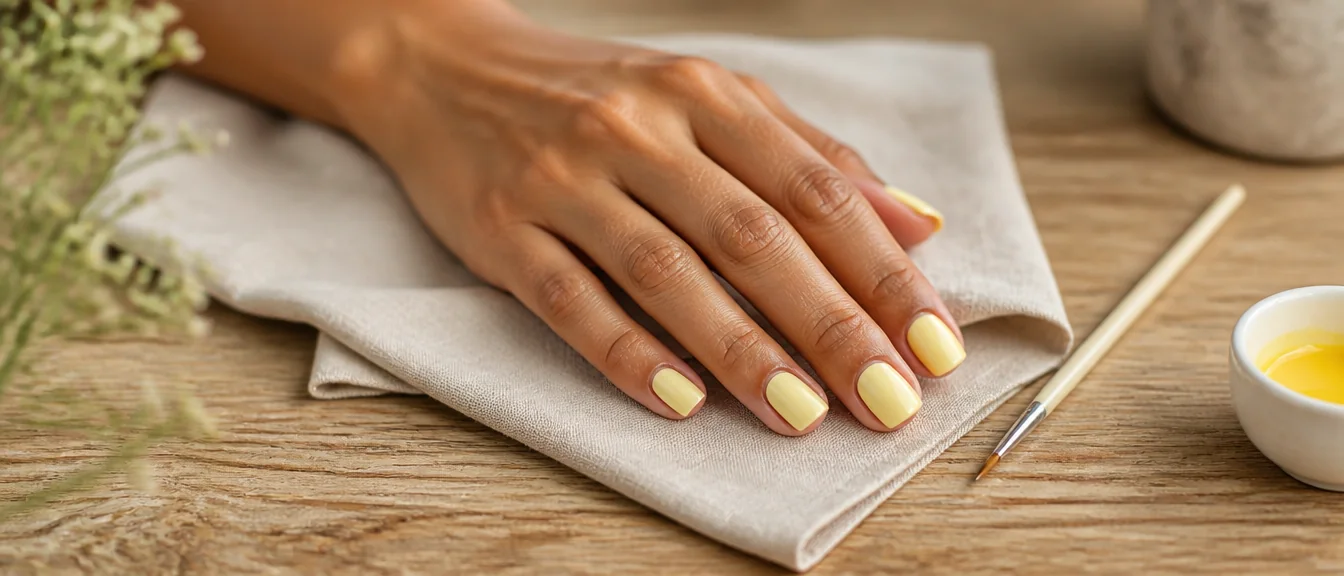
Nail polish goes streaky when the coat is too thin to level itself out, or when the brush disturbs a layer that has already started to set. Those two causes look identical on the nail and they need opposite fixes, which is why the problem is so frustrating to solve by trial and error.
Here are the six real causes, how to tell which is yours, and the application method that fixes almost all of it. If you are working in gel rather than lacquer, our streaky gel polish post covers that, and the fixes are genuinely different.

1. Coats that are too thin
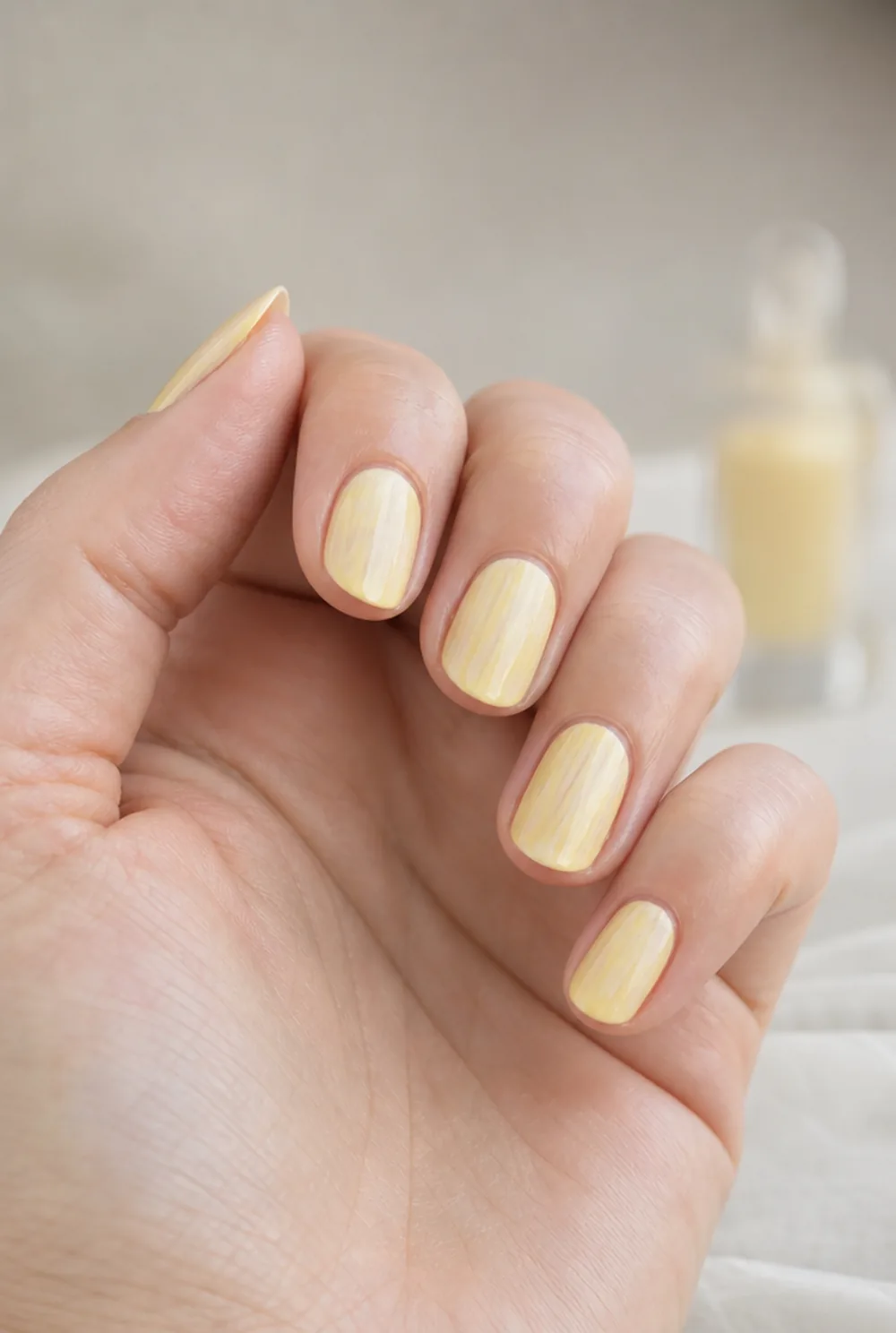
This is the most common cause and it comes from good advice taken too far.
Polish levels itself as the solvent evaporates, but it needs enough body to do it. A coat scraped on too thinly does not have the volume to flow, so every brush mark stays exactly where it was left and the pigment sits unevenly.
Wipe one side of the brush against the neck of the bottle and leave the other side loaded. That bead of polish on the loaded side is what you lay onto the nail, and it should flow off the brush rather than being scrubbed on.
Two properly loaded coats beat four scraped ones, and they dry faster because there are fewer layers.
2. Going back over a setting coat
This is the second most common cause and it is the one people do without noticing.
Polish starts to skin over within about fifteen seconds. Once that surface has formed, dragging a brush across it tears it, pulls pigment sideways, and leaves a dragged patch that no amount of further brushing repairs.
Three strokes per nail. One down the center, one down each side, all in the same direction. Then stop and leave it alone, however uneven it looks. The coat will level as it dries and the next coat covers the rest.
If you have already dragged a coat, do not try to fix it. Let it dry fully and put a proper coat over the top.
3. Not waiting between coats
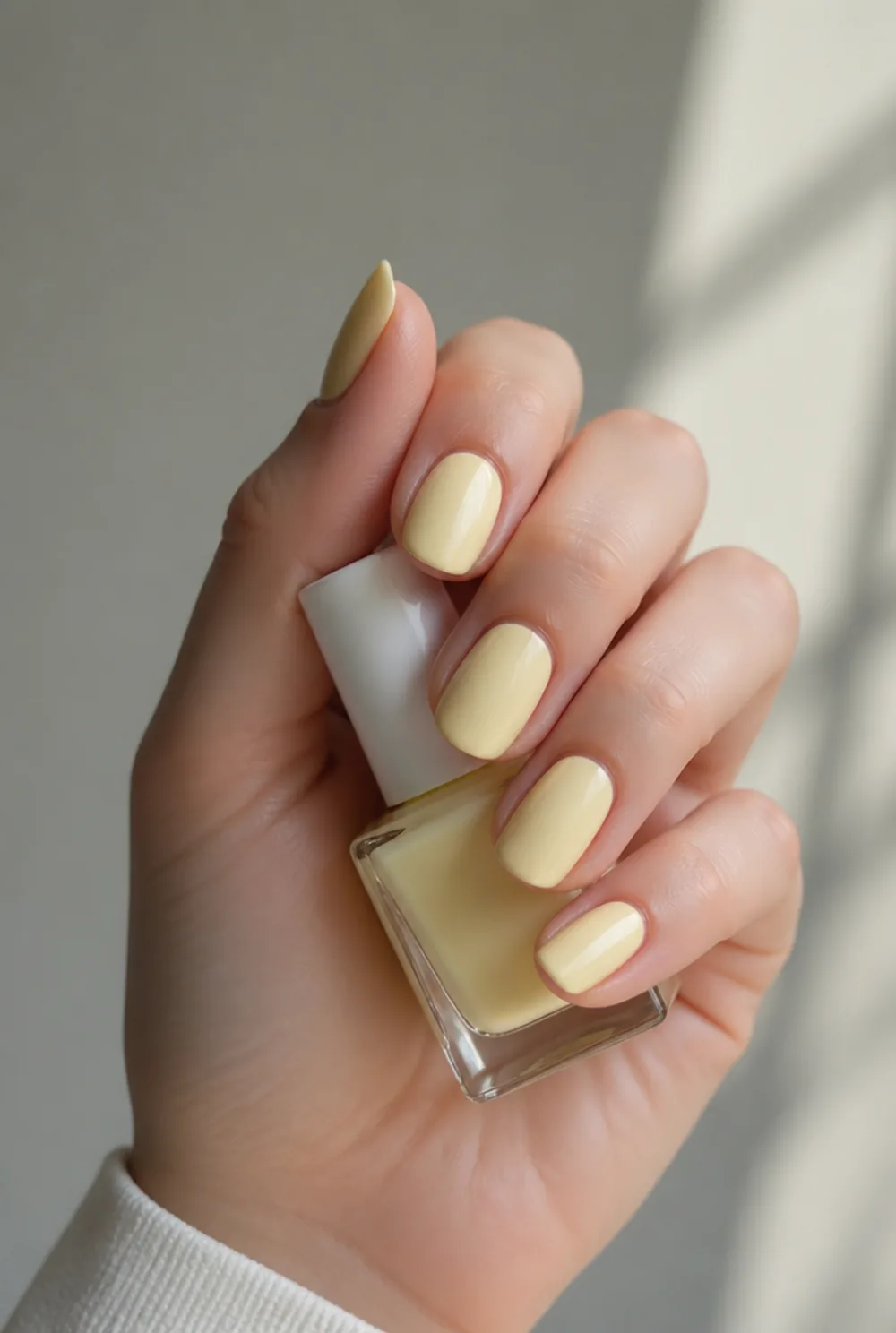
A second coat applied too early dissolves the first one.
Polish is pigment suspended in solvent. Fresh polish contains fresh solvent, and putting it onto a coat that is still soft re-liquefies the layer underneath. The two coats mix unevenly and the result reads as streaking, often with visible drag lines.
Two minutes between coats is the minimum and three is better. It feels slow and it is faster overall than redoing the nail.
4. Old, thickened polish
Polish thickens as solvent escapes past the cap, and thick polish cannot level.
You can usually tell by how it comes off the brush. Fresh polish flows; thickened polish clings in a blob and drags. It also dries far faster on the nail, which shortens the window in which it could have leveled.
Two or three drops of proper nail polish thinner restores it. Never use remover, which contains acetone or ethyl acetate and will break the formula permanently. My thick nail polish post covers the full method.
5. The color itself
Some shades streak regardless of technique, and it is worth knowing which before you blame yourself.
Whites are the worst by a distance. White pigment is heavy and has poor covering power for its density, so it needs more product to look solid, which works against thin coats. Pale nudes, pastels, and grays have the same problem to a lesser degree.
Neons streak because neon pigments are semi-transparent by nature. They need an opaque white base underneath, and skipping it is why they look patchy and dull.
Deep reds, navies, and blacks are usually the easiest, because dense pigment covers in one or two coats. Shimmers and glitters hide streaking entirely. My white nail designs post covers working with the hardest color of all.
6. No base coat
A base coat does more than protect the nail from staining.
The American Academy of Dermatology notes that wearing red nail polish without a base coat can turn your nails yellow.
A bare nail plate has an uneven surface with grooves, ridges, and slightly porous patches. Polish soaks into the porous areas and sits on top of the smooth ones, so the color looks patchy even when the coat is perfectly applied.
A base coat fills and seals that surface so the color has one uniform thing to sit on. A ridge-filling base does more of the same job if your nails are noticeably uneven.
The method that fixes most of it
Put together, this is what a clean two-coat manicure looks like.
One thin base coat, two minutes to dry. Wipe one side of the brush, load the other. Place the bead of polish about 2mm from the cuticle, push it gently back toward the cuticle with the brush tip, then draw down to the free edge in one stroke. Repeat down each side. Cap the tip.
Stop. Wait two to three minutes. Second coat the same way, which is the one that evens everything out. Wait two minutes, then top coat.
The whole thing is under ten minutes and the finish is better than four rushed coats.
Streaks in the top coat
Sometimes the color is fine and the top coat is what ruined it.
Top coat applied over color that has not fully dried drags the pigment, and it is most visible with dark shades over pale bases. Quick-dry top coats are the worst offenders because their high solvent content attacks the layer underneath on contact.
Float the top coat rather than brushing it. Load the brush generously, touch it down in the middle of the nail, and let it spread outward with almost no pressure.
Give color a full five minutes before top coat if you are using a quick-dry formula.
Streaking on one nail only
If nine nails look right and one is always patchy, the problem is the nail rather than the polish. The usual culprit is residue on the plate: hand cream, cuticle oil, or the natural oil that resurfaces fastest on thumbs. Polish will not adhere evenly over an oily patch, and the coat breaks up into islands as it dries. Wipe every nail with alcohol or remover immediately before base coat, even on clean-looking nails.
The other common cause is a nail with a dent, a ridge, or a healing injury. Polish pools in the low spot and thins on the high one, so the color reads darker in the dip. A ridge-filling base coat levels that out, and it costs about $9 for a bottle that lasts a year.
Thumbs also get painted with your non-dominant hand more awkwardly than any other nail, so some of this is simply angle. Turn your hand rather than your brush.
Temperature and where you paint
Polish is sensitive to conditions in a way that surprises people, and it explains why the same bottle behaves differently on different days.
Cold polish is thicker and will not level. If your bottles live somewhere cold, hold one in your hand for a minute before use. Very warm rooms cause the opposite problem: solvent flashes off faster, the skin forms sooner, and the window in which the coat can level shrinks to almost nothing.
Humidity matters too. Painting nails in a steamy bathroom straight after a shower traps moisture in the film, which shows up as cloudiness or streaking as it dries. Give it twenty minutes in a normal room instead, and avoid a fan blowing directly on wet polish, which sets the surface before the layer beneath has leveled.
Can you fix streaks without starting over?
Usually yes, and it depends on how dry the polish is.
If the coat is still wet, leave it completely alone and let it level. Most mild streaking disappears on its own within a minute, and interfering is what makes it permanent.
If it has dried streaky, wait until it is fully hard, then apply another properly loaded coat over the whole nail rather than spot-treating the thin areas. Patching individual patches always shows.
If three coats have not fixed it, the polish is too thick or too old and no technique will save it.
FAQ
Why is my white nail polish streaky?
White pigment has poor covering power for its density, so it needs more product on the nail than a dark shade to look solid. Use properly loaded coats rather than thin scraped ones, allow three minutes between them, and expect three coats. A white base coat underneath also helps.
Does thinner fix streaky nail polish?
Yes, if the cause is thickened polish, which is common in any bottle more than a year old. Add two or three drops of proper nail polish thinner and roll the bottle to mix. Never use nail polish remover, which permanently breaks the formula.
How many coats of nail polish should you use?
Two for most shades, three for whites, pastels, and neons. More coats is not the fix for streaking; properly loaded coats and enough drying time between them is. Four thin scraped coats will look worse than two good ones.
Should you brush nail polish back and forth?
No. Polish begins skinning over within about fifteen seconds, and brushing back across that surface tears it and drags pigment sideways. Use three strokes per nail in one direction, then leave it alone and let it level on its own.
Load the brush properly and stop after three strokes. That fixes most streaking on its own. My manicure longevity post covers making the result last.